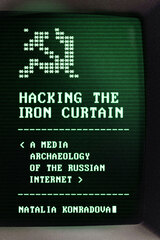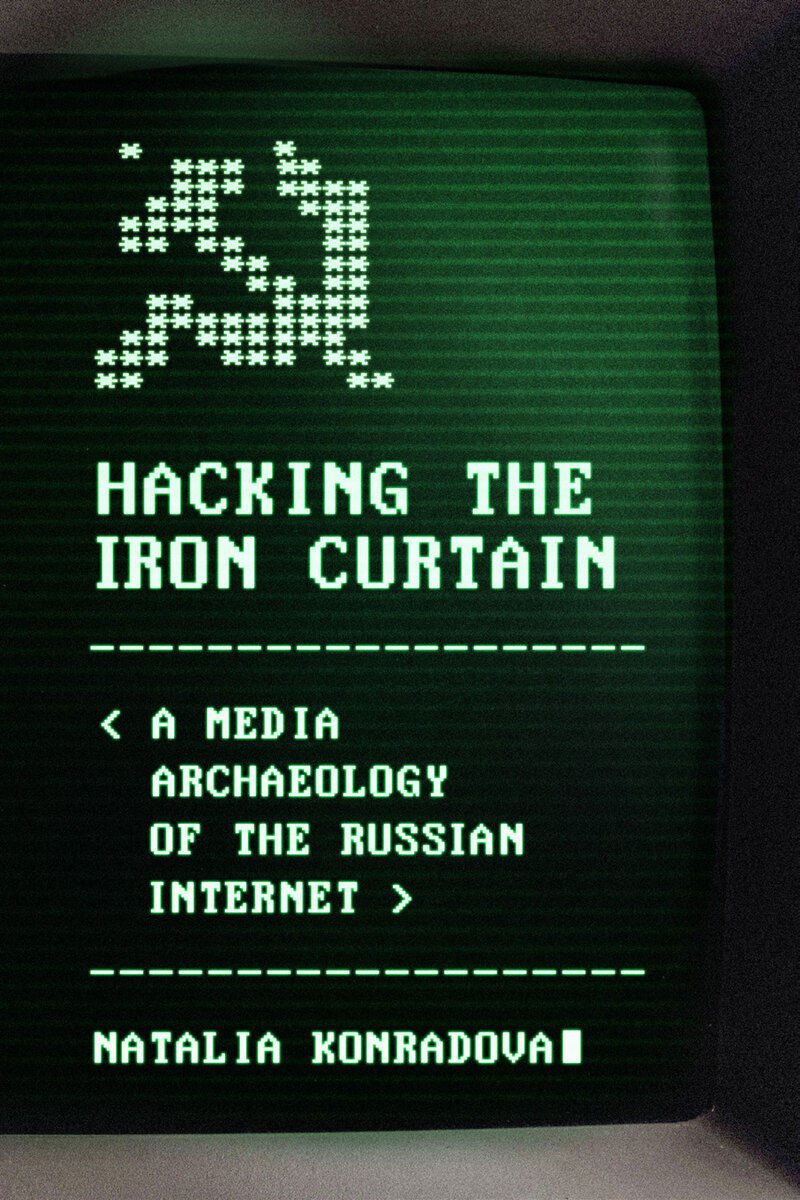
Hacking the Iron Curtain: A Media Archaeology of the Russian Internet
University of Wisconsin Press, 2026
Cloth: 978-0-299-35400-8 | eISBN: 978-0-299-35408-4 (ePub) | eISBN: 978-0-299-35403-9 (PDF)
Library of Congress Classification HM851.K6664 2025
See other books on: Cold War | Hacking | Internet | Iron Curtain | Russia (Federation)
See other titles from University of Wisconsin Press
Cloth: 978-0-299-35400-8 | eISBN: 978-0-299-35408-4 (ePub) | eISBN: 978-0-299-35403-9 (PDF)
Library of Congress Classification HM851.K6664 2025
ABOUT THIS BOOK | AUTHOR BIOGRAPHY | REVIEWS | TOC | REQUEST ACCESSIBLE FILE
ABOUT THIS BOOK
For decades before the internet existed, scientists, technologists, novelists, and enthusiasts of all descriptions dreamed of instantaneous, worldwide communication systems. What forms such systems might take and what technologies could be used to accomplish this goal were open questions—questions asked by people around the world, including in the Cold War–era superpowers of the United States and the Soviet Union.
Media archaeologist Natalia Konradova examines the history of the internet in Russia and its predecessor state, cutting through layers of technological history and dusting off conceptual artifacts of the past. Inspired by the fundamental question of how Soviets imagined future technologies, she investigates experiments with telepathy alongside the (then equally improbable) dream of a global, digitally connected computer network. Since the story of the Russian internet is inextricably wound up with Soviet society and the history of the Cold War, Hacking the Iron Curtain is as much a cultural and political history as it is a technological one—a history that illustrates how collective dreams can challenge geopolitical ambitions and inspire world-changing technologies.
Media archaeologist Natalia Konradova examines the history of the internet in Russia and its predecessor state, cutting through layers of technological history and dusting off conceptual artifacts of the past. Inspired by the fundamental question of how Soviets imagined future technologies, she investigates experiments with telepathy alongside the (then equally improbable) dream of a global, digitally connected computer network. Since the story of the Russian internet is inextricably wound up with Soviet society and the history of the Cold War, Hacking the Iron Curtain is as much a cultural and political history as it is a technological one—a history that illustrates how collective dreams can challenge geopolitical ambitions and inspire world-changing technologies.
See other books on: Cold War | Hacking | Internet | Iron Curtain | Russia (Federation)
See other titles from University of Wisconsin Press