 A SCHOLARLY BOOK REPOSITORY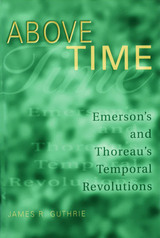
In Above Time, James R. Guthrie explores the origins of the two preeminent transcendentalists' revolutionary approaches to time, as well as to the related concepts of history, memory, and change. Most critical discussions of this period neglect the important truth that the entire American transcendentalist project involved a transcendence of temporality as well as of materiality. Correspondingly, both writers call in their major works for temporal reform, to be achieved primarily by rejecting the past and future in order to live in an amplified present moment.
Emerson and Thoreau were compelled to see time in a new light by concurrent developments in the sciences and the professions. Geologists were just then hotly debating the age of the earth, while zoologists were beginning to unravel the mysteries of speciation, and archaeologists were deciphering the Egyptian hieroglyphs. These discoveries worked collectively to enlarge the scope of time, thereby helping pave the way for the appearance of Darwin's Origin of Species in 1859.
Well aware of these wider cultural developments, Emerson and Thoreau both tried (although with varying degrees of success) to integrate contemporary scientific thought with their preexisting late-romantic idealism. As transcendentalists, they already believed in the existence of "correspondences"—affinities between man and nature, formalized as symbols. These symbols could then be decoded to discover the animating presence in the world of eternal laws as pervasive as the laws of science. Yet unlike scientists, Emerson and Thoreau hoped to go beyond merely understanding nature to achieving a kind of passionate identity with it, and they believed that such a union might be achieved only if time was first recognized as being a purely human construct with little or no validity in the rest of the natural world. Consequently, both authors employ a series of philosophical, rhetorical, and psychological strategies designed to jolt their readers out of time, often by attacking received cultural notions about temporality.

"To confront American culture is to feel oneself encircled by a thin but strong presence. I call it Emersonian, an imprecise term but one that directs us to a dominant spirit in the national experience." Thus Irving Howe, America's distinguished social critic and a longtime reader of the Sage of Concord, begins this illuminating discussion of Emerson and his disciples and doubters. What is the Emersonian spirit? What inspired it, what propelled it? And what does it mean to us today?
History gave Emerson his opportunity and then took it away. Coming to manhood during the 1830s and 1840s, the time of "the newness" when Americans beheld the world with unbounded expectations, Emerson became the spokesman for the self-reliant new man he believed had arisen, ready to thrust aside mossy traditions and launch a new revolution of freewheeling thought. But the rapid pace of the American experience overtook the Emersonian vision; in the 1850s, the rising problems of slavery, a boom-and-bust economy, the vulgarity of mass culture overwhelmed the idealist. His satellite spirits wavered and shrouded the Emersonian optimism: Hawthorne, with his stories of moral breakdown; Thoreau, rooted in nature yet inclined to the cranky and fanatical; Melville, his fathomless blackness waiting beneath archetypal fables of innocence and evil also Walt Whitman, Orestes Brownson, Twain--all were influenced by, yet reacted against, the Emersonian "newness."
Howe identifies three kinds of response: the literature of work (Melville and Mark Twain),the literature of Edenic fraternity (James Fenimore Cooper, Whitman, Twain again), and the literature of loss (all the post-Civil War writers). He lays before us the intellectual and personal tragedy of the first great American man of letters, yet also shows that Emerson's belief in the untapped power of free men pervades not only the lives and works of his contemporaries but is also a permanent part of the American psyche.
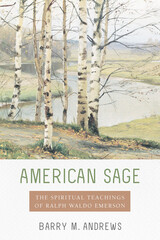
Unitarian minister Barry M. Andrews has spent years studying Emerson, finding wisdom and guidance in his teachings and practices, and witnessing how the spiritual lives of others are enriched when they grasp the many meanings in his work. In American Sage, Andrews explores Emerson's writings, including his journals and letters, and makes them accessible to today's spiritual seekers. Written in everyday language and based on scholarship grounded in historical detail, this enlightening book considers the nineteenth-century religious and intellectual crosscurrents that shaped Emerson's worldview to reveal how his spiritual teachings remain timeless and modern, universal and uniquely American.
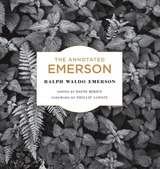
A brilliant essayist and a master of the aphorism (“Our moods do not believe in each other”; “Money often costs too much”), Emerson has inspired countless writers. He challenged Americans to shut their ears against Europe’s “courtly muses” and to forge a new, distinctly American cultural identity. But he remains one of America’s least understood writers. And, by his own admission, he spawned neither school nor follower (he valued independent thought too much). Now, in this annotated selection of Emerson’s writings, David Mikics instructs the reader in a larger appreciation of Emerson’s essential works and the remarkable thinker who produced them.
Full of color illustrations and rich in archival photographs, this volume offers much for the specialist and general reader. In his running commentaries on Emerson’s essays, addresses, and poems, Mikics illuminates contexts, allusions, and language likely to cause difficulty to modern readers. He quotes extensively from Emerson’s Journal to shed light on particular passages or lines and examines Emerson the essayist, poet, itinerant lecturer, and political activist. Finally, in his Foreword, Phillip Lopate makes the case for Emerson as a spectacular truth teller—a model of intellectual labor and anti-dogmatic sanity.
Anyone who values Emerson will want to own this edition. Those wishing to discover, or to reacquaint themselves with, Emerson’s writings but who have not known where or how to begin will not find a better starting place or more reliable guide than The Annotated Emerson.
In the spring of 1871, Ralph Waldo Emerson boarded a train in Concord, Massachusetts, bound for a month-and-a-half-long tour of California—an interlude that became one of the highlights of his life. On their journey across the American West, he and his companions would take in breathtaking vistas in the Rockies and along the Pacific Coast, speak with a young John Muir in the Yosemite Valley, stop off in Salt Lake City for a meeting with Brigham Young, and encounter a diversity of communities and cultures that would challenge their Yankee prejudices.
Based on original research employing newly discovered documents, The California Days of Ralph Waldo Emerson maps the public story of this group’s travels onto the private story of Emerson’s final years, as aphasia set in and increasingly robbed him of his words. Engaging and compelling, this travelogue makes it clear that Emerson was still capable of wonder, surprise, and friendship, debunking the presumed darkness of his last decade.
Letters and Social Aims, published in 1875, contains essays originally published early in the 1840s as well as those that were the product of a collaborative effort among Ralph Waldo Emerson, his daughter Ellen Tucker Emerson, his son Edward Waldo Emerson, and his literary executor James Eliot Cabot. The volume takes up the topics of “Poetry and Imagination,” “Social Aims,” “Eloquence,” “Resources,” “The Comic,” “Quotation and Originality,” “Progress of Culture,” “Persian Poetry,” “Inspiration,” “Greatness,” and, appropriately for Emerson’s last published book, “Immortality.”The historical introduction demonstrates for the first time the decline in Emerson’s creative powers after 1865; the strain caused by the preparation of a poetry anthology and delivery of lectures at Harvard during this time; the devastating effect of a house fire in 1872; and how the Emerson children and Cabot worked together to enable Emerson to complete the book. The textual introduction traces this collaborative process in detail and also provides new information about the genesis of the volume as a response to a proposed unauthorized British edition of Emerson’s works.Historical Introduction by Ronald A. Bosco
Notes and Parallel Passages by Glen M. Johnson
Text Established and Textual Introduction and Apparatus by Joel Myerson
The essays in this book, first published in 1860, were developed from a series of lectures on "The Conduct of Life" delivered by Emerson during the early 1850s. Some of the original lectures were dropped and the rest were considerably revised, with new topics introduced. The published essays, on "Fate," "Power," "Wealth," "Culture," "Behavior," "Worship," "Considerations by the Way," "Beauty," and "Illusions," show Emerson's interest in many practical aspects of human life, and reflect his increasing involvement in politics--chiefly in the antislavery movement--during the decade before the Civil War.
This edition is based on Emerson's holograph manuscripts and published sources. The text incorporates Emerson's later corrections and revisions, and shows us what he actually wrote (or, perhaps in some cases, intended to write).
The historical introduction traces the book's development and its relation to Emerson's own personal growth and political awareness. Joseph Slater's explanatory notes help the modern reader to understand many of Emerson's references and allusions that may not be readily apparent.
Historical Introduction by Barbara L. Packer
Notes by Joseph Slater
Text Established and Textual Introduction and Apparatus by Douglas Emory Wilson
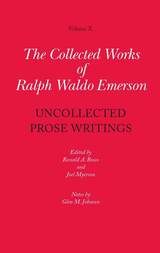
With the appearance of the tenth and final volume of Collected Works, a project fifty years in the making reaches completion: the publication of critically edited texts of all of Emerson’s works published in his lifetime and under his supervision. The Uncollected Prose Writings is the definitive gathering of Emerson’s previously published prose writings that he left uncollected at the time of his death.
The Uncollected Prose Writings supersedes the three posthumous volumes of Emerson’s prose that James Elliot Cabot and Edward Waldo Emerson added to his canon. Seeing as their primary task the expansion of the Emerson canon, they embellished and improvised. By contrast, Ronald A. Bosco and Joel Myerson have undertaken the restoration of Emerson’s uncollected prose canon, printing only what Emerson alone wrote, authorized for publication, and saw into print.
In their Historical Introduction and Textual Introduction, the editors survey the sweep of Emerson’s uncollected published prose. The evidence they marshal reveals Emerson’s progressive reliance on lectures as forerunners to his published prose in major periodicals and clarifies what has been a slowly emerging portrait of the last decade and a half of his life as a public intellectual.
At his death in 1882, Ralph Waldo Emerson was counted among the greatest poets in nineteenth-century America. This variorum edition of all the poems Emerson chose for publication during his lifetime offers readers the opportunity to situate Emerson’s poetic achievement alongside his celebrated essays and to consider their interrelationship.
Decades before Walt Whitman and Emily Dickinson took their places in the firmament of American poets, Emerson was securely enthroned. Though his reputation as essayist now eclipses his reputation as poet, Emerson self-identified as a writer of verse and worked out his transcendental philosophy in this genre, establishing his belief in the authority of individual experience and in the essential metaphoric nature of language. Albert J. von Frank’s historical introduction traces the development of Emerson the poet, considering how life events, as well as his reading of German philosophy and Sufi poetry, influenced his thought and expression. Alongside accounts of the critical reception of his poems are public and private writings that reveal Emerson’s own estimation of his poetic project and achievement.
The textual introduction and apparatus make transparent the theoretical and practical concerns that inform these critical texts. Also included are a chronological lists of variants and texts constituting the historical collation, notes clarifying obscure allusions, and headnotes identifying sources and context.
Emerson traveled broadly in England and Scotland in 1833 and again on lecture tour fifteen years later. Drawing on his experiences there as well as his wide reading in British history, he set forth in English Traits his view of the English as a nation. Published in 1856, this was one of his most popular books, perhaps because of its playfulness and wit and clarity of style.
English Traits is a searching and distinctive portrayal of English culture that today offers a revealing perspective on American viewpoints and preoccupations in the mid-nineteenth century. It is notable, too, for revealing an interesting side of Emerson's complex character; here we find Emerson the practical Yankee, analyzing English power, resourcefulness, determination, and materialism.
The historical introduction to this fullscale critical edition, places English Traits in the context of Emerson's career and travels, and discusses the book's contemporary reception. The explanatory notes provide a treasury of helpful information. This is the definitive scholarly edition of English Traits.
Historical Introduction by Philip Nicoloff
Notes by Robert E. Burkholder
Text Established and Textual Introduction and Apparatus by Douglas Emory Wilson
In 1845 Emerson delivered a series of lectures entitled "Uses of Great Men; Plato, or the Philosopher; Swedenborg, or the Mystic; Montaigne, or the Skeptic; Shakespeare, or the Poet; Napoleon, or the Man of the World; and Goethe, or the Writer." Emerson's approach to his great men stands in interesting contrast to that of his friend Carlyle in his Heroes and Hero Worship of 1841.
Although by 1845 Emerson had been lecturing for over ten years, Representative Men, published in 1850, was the first of his works to consist of his lectures as delivered, with only minima! revision and expansion. The book retains the immediacy of the spoken word, and the freedom and daring inspired by a live audience.
This critical edition is based on Emerson's holograph manuscript, which served as printer's copy for the first American edition, collated with subsequent editions and with Emerson's own corrections. The historical introduction relates the book to Emerson's life and times and discusses its literary origins, composition, and contemporary reception. A textual introduction and apparatus have been provided by the textual editor, and there are full informational notes. The volume has been awarded the seal of the Center for Scholarly Editions
Joseph Slater, General Editor
Douglas Emory Wilson, Textual Editor
Ralph Waldo Emerson’s second collection of essays appeared in 1844, when he was forty-one. It includes eight essays—“The Poet,” “Experience,” “Character,” “Manners,” “Gifts,” “Nature,” “Politics,” and “Nominalist and Realist”—and one address, the much misunderstood “New England Reformers.” Essays: Second Series has a lightness of tone and an irony absent from the earlier writings, but it is no less memorable: “a sermon to me,” Carlyle wrote, “a real word.”
The present edition, drawing on the vast body of Emerson scholarship of the last forty years, incorporates all the textual changes Emerson made or demonstrably intended to make after 1844. It records variant wordings and recounts the development of the text before and after publication. A list of parallel passages makes it possible to trace Emerson’s extensive use of material from his journals, notebooks, and lectures. Endnotes provide information about people, events, and now-obscure terms. A brief historical introduction places the book in the context of the years during which it was written, the time of Brook Farm, The Dial, and the death of Emerson’s five year-old son.
Historical Introduction and Notes by Joseph Slater
Text Established by Alfred R. Ferguson and Jean Ferguson Carr
Textual Introduction and Apparatus by Jean Ferguson Carr
Some of Ralph Waldo Emerson’s finest and most famous essays, such as “Self-Reliance,” “Compensation,” and “The Over-Soul,” appeared in his Essays of 1841, published when he was thirty-seven years old. Preceded by the slim volume Nature, it was his first full-length book.
The present edition provides for the first time an authoritative text of the Essays, together with an introduction, notes, and supplementary material of great value for the study of Emerson’s creative processes. A list of hundreds of parallel passages in his earlier journals and lectures makes it possible to examine in detail how he drew upon those manuscripts (now published), especially the voluminous journals, as grist for the twelve essays. His subsequent alterations of the essays, particularly in the revised edition of 1847, give evidence of the evolution of his thought and style at this stage of his career. While the text incorporates his revisions, so as to represent his final intention, the earlier versions are given at the end of the book.
Introduction and Notes by Joseph Slater
Text Established by Alfred R. Ferguson and Jean Ferguson Carr
In 1849 Ralph Waldo Emerson collected in one volume all of his published work he thought worthy of preservation that had not been contained in the two series of Essays (1841, 1844) and the Poems (1847). Included were the essay Nature (1836); four orations, “The American Scholar,” “The Divinity School Address,” and two others; and five lectures which had appeared in The Dial.
As the first volume of a projected new Collected Works, this edition of Nature, Addresses, and Lectures now provides for the first time a definitive text based on collation of all editions in which Emerson might have had a hand, together with a wholly new introduction and extensive notes. The recently published Journals and Lectures from this period help bring to this volume a fresh perspective on the first and formative stage of Emerson’s career as a public figure and man of letters.
Introduction and Notes by Robert E. Spiller; Text Established by Alfred R. Ferguson
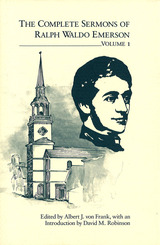
This inaugural volume of a four-volume set marks the beginning of the publication of all 180 of the extant sermons composed and delivered by Emerson between the start of his ministerial career in 1826 and his final retirement from the pulpit in 1838.
Edited from manuscripts in the Houghton Library, Harvard University, the sermons are presented in chronological order in a clear text approximating as nearly as possible the original version read by Emerson to his congregation. The historical introduction by David M. Robinson gives a significant appraisal of Emerson's life between 1826 and 1838 and of his absorption in and reaction against the religious culture of his time.
Volume 2 includes a detailed chronology of the events in Emerson's life during the months between July 1829 and October 1830. Explanatory footnotes, textual endnotes, and a comprehensive index further add to this significant contribution to our understanding of one of America's foremost thinkers.
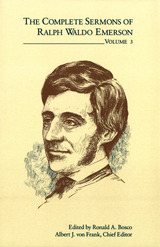
The forty-five sermons collected in Volume 3 were composed and first delivered between October 1830 and November 1831. During that time Emerson's first wife, Ellen Tucker Emerson, died of tuberculosis, a loss that deeply affected Emerson.
Transcribed and edited from manuscripts in Harvard's University's Houghton Library, the sermons are presented in a clear text approximating as nearly as possible the original version delivered to Emerson's congregation. As well as the detailed chronology, explanatory footnotes, and textual endnotes found in previous volumes, this one contains a comprehensive index.
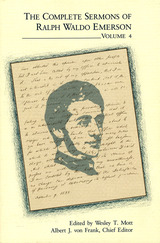
The final volume in the series focuses on a crossroads in Emerson's life, the year 1832, when he resigned from his ministry at the Second Church of Boston. It includes a new and more accurate text of the single most important of Emerson's sermons, "The Lord's Supper Sermon." For the first time, this sermon has been transcribed from the manuscript Emerson actualy read from on the occasion of its only delivery. The sermon was not only pivotal in Emerson's career, it was historically important because of the controversy that ensued over formalism in religion.
Volume 4 presents annotated texts of eight occasional sermons in addition to twenty-seven regular sermons, and an annotated text of relevant portions of the official records of the Second Church of Boston during Emerson's ministry. The sermons-most appearing in print for the first time-provide a thorough understanding of the evolution of Emerson's thought in the years immediately preceding the 1836 publication of Nature, a treatise of central importance to nineteenth-century American literature.
Transcribed and edited from manuscripts in Harvard's University's Houghton Library, the sermons are presented in a clear text approximating as nearly as possible the original version delivered to Emerson's congregation. As well as the detailed chronology, explanatory footnotes, and textual endnotes found in previous volumes, this one contains a comprehensive index to the entire four-volume collection. Such outstanding textual scholarship makes this edition a unique entrance into the spiritual life of a man who so profoundly influenced American thought.
"Cavell's 'readings' of Wittgenstein and Heidegger and Emerson and other thinkers surely deepen our understanding of them, but they do much more: they offer a vision of what life can be and what culture can mean. . . . These profound lectures are a wonderful place to make [Cavell's] acquaintance."—Hilary Putnam
The notable link between Ralph Waldo Emerson’s journals and his essays is formed by the lectures that reflected his developing views on issues of his time. This second volume of a welcome edition of the early lectures follows the earlier experimental series of lectures and presents the works of Emerson the now professional lecturer who revealed to his audience central ideas and themes which later crystallized into Essays, First Series.
“The Philosophy of History,” a series of 12 lectures, explores the nature of man in his society, past and present, and singles out the individual as the center of society and history. A second series of 10 lectures on “Human Culture” begins with the duty and the right of the individual to cultivate his powers and proceeds to consider various means by which this cultivation can be accomplished. The occasional “Address on Education,” which Emerson delivered between these two series, may be seen as a link between them.
Of the twenty-three lectures in this volume, only three have been previously published. The lectures have been reproduced from Emerson’s manuscripts, approximating as nearly as possible the original version read by the author to his audience.
Famous first as a lecturer, Ralph Waldo Emerson molded his books on the rostrum. Yet relatively few of his hundreds of lectures have ever been published. Now, in a projected series of three volumes of which this is the first, the complete surviving lectures of Emerson’s earlier years are made available. In a readable and critical text, these volumes will establish an important step in Emerson’s creative process—that which lies between the notes jotted down in the journals and the finished text of the essays as prepared for print.
The lectures, more sustained and organized than the journals and fresher and more direct than the essays, represent the vital missing middle panel in the total picture of Emerson’s literary achievement. It is in the early lectures, fruits of those vigorous and formative years, that we find the first ordering of his journal thoughts. To see his mind at its most sustained activity in these crucial few years when he was first exploring his own proper world of thought and growing with a sense of “power and hope,” we need above all to have the complete, original texts of the lectures.
For the years covered by this volume, all passages later published elsewhere by Emerson and others are included together with much new material. The lectures are the immediate source of much in his essays, whose composition cannot be understood without them. As important in their own right as either journals or essays, the lectures also have a coordinate interest and should be studied with the other two forms of his writing.
This volume contains among others the lectures on Science, Biography, and English Literature. The editors have supplied extensive textual and informational notes, invaluable for an intelligent reading of material originally intended for oral communication.
A radical rereading of Emerson that posits African- American culture, literature, and jazz as the very continuation and embodiment of pragmatic thought and democratic tradition
Emancipating Pragmatism is a radical rereading of Emerson that posits African- American culture, literature, and jazz as the embodiment of pragmatic thought and democratic tradition. It traces Emerson's philosophical legacy through the 19th and 20th centuries to discover how Emersonian thought continues to inform issues of race, aesthetics, and poetic discourse.
Emerson’s pragmatism derives from his abolitionism, Michael Magee argues, and any pragmatic thought that aspires toward democracy cannot ignore and must reckon with its racial roots. Magee looks at the ties between pragmatism and African-American culture as they manifest themselves in key texts and movements, such as William Carlos Williams’s poetry; Ralph Ellison’s discourse in Invisible Man and Juneteenth and his essays on jazz; the poetic works of Robert Creeley, Amiri Baraka, and Frank O'Hara; as well as the “new jazz” being forged at clubs like The Five Spot in New York.
Ultimately, Magee calls into question traditional maps of pragmatist lineage and ties pragmatism to the avant-garde American tradition.
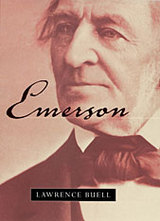
"An institution is the lengthened shadow of one man," Ralph Waldo Emerson once wrote--and in this book, the leading scholar of New England literary culture looks at the long shadow Emerson himself has cast, and at his role and significance as a truly American institution. On the occasion of Emerson's 200th birthday, Lawrence Buell revisits the life of the nation's first public intellectual and discovers how he became a "representative man."
Born into the age of inspired amateurism that emerged from the ruins of pre-revolutionary political, religious, and cultural institutions, Emerson took up the challenge of thinking about the role of the United States alone and in the world. With characteristic authority and grace, Buell conveys both the style and substance of Emerson's accomplishment--in his conception of America as the transplantation of Englishness into the new world, and in his prodigious work as writer, religious thinker, and philosopher. Here we see clearly the paradoxical key to his success, the fierce insistence on independence that acted so magnetically upon all around him. Steeped in Emerson's writings, and in the life and lore of the America of his day, Buell's book is as individual--and as compelling--as its subject. At a time when Americans and non-Americans alike are struggling to understand what this country is, and what it is about, Emerson gives us an answer in the figure of this representative American, an American for all, and for all times.
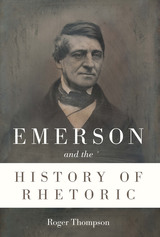
Moving beyond dominant literary critical thinking, Thompson argues that for Emerson, rhetoric was both imaginative and nonsystematic. This book covers the influences of rhetoricians from a range of periods on Emerson’s model of rhetoric. Drawing on Emerson’s manuscript notes, journal entries, and some of his rarely discussed essays and lectures as well as his more famous works, the author bridges the divide between literary and rhetorical studies, expanding our understanding of this iconic nineteenth-century man of letters.
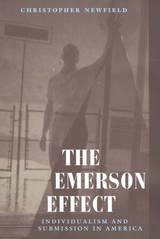
Christopher Newfield analyzes the interplay of liberal and authoritarian impulses in Emerson's work in various domains: domestic life, the changing New England economy, theories of poetic language, homoerotic friendship, and racial hierarchy. Focusing on neglected later writings, Newfield shows how Emerson explored the tensions between autonomy and community—and consistently resolved these tensions by "abandoning crucial elements of both" and redefining autonomy as a kind of liberating subjection. He argues that in Emersonian individualism, self-determination is accompanied by submission to authority, and examines the influence of this submissive individualism on the history of American liberalism. In a provocative reading of Emerson's early and neglected later works, Newfield analyzes Emerson's emphasis on collective, or "corporate", world-building, rather than private possession. Tracing the development of this corporate individualism, he illuminates contradictions in Emerson's political outlook, and the conjunctions of liberal and authoritarian ideology they produced.
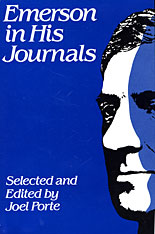
This long-awaited volume offers the general reader the heart of Emerson’s journals, that extraordinary series of diaries and notebooks in which he poured out his thoughts for more than fifty years, beginning with the “luckless ragamuffin ideas” of his college days.
Emerson as revealed in his journals is more spontaneous, more complex, more human and appealing than he appears in the published works. This man is the seeker rather than the sage; he records the turmoil, struggle, and questioning that preceded the serene and confident affirmations of the essays. He is honest, earthy, tough-minded, self-critical (“I am a lover of indolence, & of the belly”), warm in his enthusiasms, a witty and sharp observer of people and events. Everything is grist for his mill: personal experiences, his omnivorous reading, ruminations on matters large and small, his doubts and perplexities, public issues and local gossip. There are abrupt shifts in subject and tone, reflecting the variousness of his moods and the restless energy of his mind.
Drawing from Harvard’s sixteen-volume scholarly edition of the journals—but omitting the textual apparatus that makes it hard to read—Joel Porte presents a sympathetic selection that brings us close to Emerson the man.
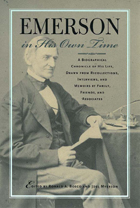
Remembrances from Elizabeth Peabody, Sophia Hawthorne, Oliver Wendell Holmes, Ralph Waldo Emerson, Bronson Alcott, Rebecca Harding Davis, and twenty others printed in Hawthorne in His Own Time follow him from his childhood in Salem, through his years of initial literary obscurity, his days in the Boston and Salem Custom Houses, his service as U.S. Consul to Liverpool and Manchester and his life in the Anglo-American communities at Rome and Florence, to his late years as the “Great Romancer.”
In their enlightening introduction, editors Ronald Bosco and Jillmarie Murphy assess the postmortem building of Hawthorne’s reputation as well as his relationship to the prominent Transcendentalists, spiritualists, Swedenborgians, and other personalities of his time. By clarifying the sentimental associations between Hawthorne’s writings and his actual personality and moving away from the critical review to the personal narrative, these artful and perceptive reminiscences tell the private and public story of a remarkable life.
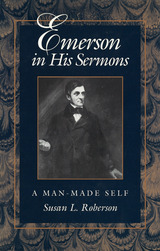
Ralph Waldo Emerson is universally recognized as one of America's most influential authors and thinkers. Before achieving eminence as lecturer, essayist, and poet, though, he was a Unitaarian preacher. Emerson in His Sermons is the first major study of the sermons since the publication of The Complete Sermons of Ralph Waldo Emerson. Susan Roberson examines Emerson's ministerial career from 1826 to 1832, shedding new light on those early, crucial years in Emerson's personal and intellectual development.
Treating the sermons extensively as an autobiographical text, Roberson establishes that Emerson's years in the pulpit were pivotal and that his sermons are key texts in revealing the essential development of his thought. Central to Roberson's explication of the sermons is Emerson's conception of self-reliance, his invention of a new hero for a new age, and his merging of his own identity with that heroic idea.
Roberson focuses on Emerson's reaction to what was perhaps the most signifcant event in his personal life: the death of his young wife, Ellen, of tuberculosis in 1831, after only sixteen months of marriage. Roberson's correlation of the sermons written during that time with the complexity of Emerson's emotional and intellectual response to the tragedy of Ellen's illness and death is the most detailed and sophisticated treatment of that material to date.
Roberson understands Emerson's emergence from the ministry as his rejection of ready-made institutions and sytems of thought. Through her careful readings of the sermons, Roberson finds that Emerson's objective was less the translation of his life into writing than the translation of his life through writing. By considering the sermons in this way, Roberson is able to enrich our understanding of the private and passionte impulses of this seminal thinker.
Emerson in His Sermons offers the first real look at how the sermons fit into Emerson's own development and will have a far-reaching impact on Emerson scholarship. Anyone concerned with the cultural and religious history of America will find this book invaluable.
In 1832, Ralph Waldo Emerson had come to a critical pass. He had lost his wife and was on the brink of leaving his career as a minister. In this reduced state he traveled to New Hampshire, where he made his famous decision to pursue wholeness--in his life and in his writing. This book reveals how Emerson went about achieving this purpose--and how he conceived a uniquely American literary practice.
Central to this project were the aims and methods of natural science, which Emerson discovered in spectacular form at the Museum of Natural History (Jardin des Plantes) in Paris exactly a year after his momentous decision. Lee Rust Brown describes Emerson's use of these scientific techniques to integrate a disparate, constantly enlarging field of subject matter--ultimately, to reconceive himself as an institution of private research and public presentation not unlike the museum itself, methodically gathering specimens from the exotic frontiers of experience and setting them out, in their manifold affinities, on common ground.
The Emerson Museum shows how this undertaking transformed the legacy of European romanticism into a writing project answerable to American urgencies. The natural science of the time was itself informed by romantic demands for wholeness of prospect, and its methods offered Emerson a way to confront an American reality in which any manifestation of unity--literary, political, philosophical, psychological--had to embrace an expanding and fragmenting field of objective elements. In the experimental format of Emerson's essays, Brown identifies the evolution of this new approach and the emergence of wholeness as a national literary project.
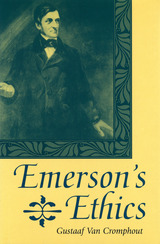
Everyone knows that Emerson was a moralist, but what does that really mean? In an attempt to answer that question, Gustaaf Van Cromphout provides in Emerson's Ethics a detailed and philosophically grounded discussion of Emerson's moral thought. In this first comprehensive study of Emerson's ethics in the broader context of ethical theory, Van Cromphout explores Emerson's answers to what he considered the basic question facing any thinking human being: "How should I live?"
Van Cromphout begins by examining Emerson's college essays on ethics—essays that reflect his response to the moral thought prevailing in his intellectual environment. He then discusses the mature Emerson's attempt to establish ethics on a surer foundation than the religion inherited from his forebears, showing that Emerson was influenced significantly by Kant's moral thought.
He goes on to examine Emerson's search for a morally competent self in an age when the very notion of "self" was under serious threat. The ethical dimension of Emerson's politics and his theories of friendship and love, as well as the quest for a life worth living in the modern world, are also addressed. The last chapters are devoted to nature and literature. Van Cromphout explores Emerson's understanding of nature as a focus of ethical responsibility, and he examines the corruptibility of language, the ethics of self- expression, and the moral responsibilities of writers toward their audiences. Emerson believed that ethics permeated every aspect of human life. By examining Emerson's understanding of ethics and his contribution to ethical thought, Emerson's Ethics shows one of the truly great minds in American culture confronting issues of fundamental relevance to all human beings. Filling an important gap in Emerson studies, this book will appeal not only to readers interested in Emerson and his significance in American thought and literature but also to readers concerned with ethics and, more generally, with the interrelations of literature and philosophy.
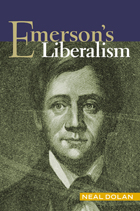
Neal Dolan offers the first comprehensive and historically informed exposition of all of Ralph Waldo Emerson’s writings as a contribution to the theory and practice of liberal culture. Rather than projecting twentieth-century viewpoints onto the past, he restores Emerson’s great body of work to the classical liberal contexts that most decisively shaped its general political-cultural outlook—the libertarian-liberalism of John Locke, the Scottish Enlightenment, the American founders, and the American Whigs.
In addition to in-depth consideration of Emerson’s journals and lectures, Dolan provides original commentary on many of Emerson’s most celebrated published works, including Nature, the “Divinity School Address,” “History,” “Compensation,” “Experience,” the political addresses of the early 1840s, “An Address . . . on . . . The Emancipation of the Negroes in the British West Indies,” Representative Men, English Traits, and The Conduct of Life. He considers Emerson’s distinctive elaborations of foundational liberal values—progress, reason, work, property, limited government, rights, civil society, liberty, commerce, and empiricism. And he argues that Emerson’s ideas are a morally bracing and spiritually inspiring resource for the ongoing sustenance of American culture and civilization, reminding us of the depth, breadth, and strength of our common liberal inheritance.
In this provocative study, Christopher Windolph analyzes Emersonian naturalism from the standpoint of nonlinearity, offering new ways of reading and thinking about Emerson’s stance toward naturalism and the influence of science on his thought. Drawing on ideas in perspective theory, architecture, and nonlinear dynamics to argue that Emerson’s natural philosophy follows from his analysis of the development of organic forms, Windolph breaks new ground in Emerson studies by exploring how considerations of shape and the act of seeing underpin all of Emerson’s theories about nature.
Bringing to his study a focused attention to the history of Western science and philosophy, Windolph reexamines Emerson’s understanding of how the act of seeing occurs and of the eye’s ability to see through appearances to organizing principles, showing how Emerson’s naturalism extends beyond the narrow confines of traditional linear science. Through extensive readings of Emerson’s journals, essays, and lectures, Windolph shows that Emerson was an empirical idealist who integrated a scientific approach to nature with an exploration of nonlinear principles, revealing him to be more prescient in his writings about certain recent developments in scientific thought than has been realized.
This work makes a major contribution to the ongoing study of Emerson and science, expanding Emerson’s role as a major American philosopher while rebutting those who see him primarily as a rhetorician or poetic propagandist. Emerson’s Nonlinear Nature opens new ways of thinking about Emerson’s work in its nineteenth-century contexts, reassesses his reception in twentieth-century criticism, and makes a strong case for his continuing relevance in the century ahead.
Ralph Waldo Emerson, Alfred Kazin observes in his Introduction, “was a great writer who turned the essay into a form all his own.” His celebrated essays—the twelve published in Essays: First Series (1841) and eight in Essays: Second Series (1844)—are here presented for the first time in an authoritative one-volume edition, which incorporates all the changes and corrections Emerson made after their initial publication.
The text is reproduced from the second and third volumes of The Collected Works of Ralph Waldo Emerson, a critical edition which draws on the vast body of Emerson scholarship of the last half century. Alfred R. Ferguson was founding editor of the edition, followed by Joseph Slater (until 1996).
In The Ethics of Oneness, Jeremy David Engels reads the Bhagavad Gita alongside the works of American thinkers Ralph Waldo Emerson and Walt Whitman. Drawing on this rich combination of traditions, Engels presents the notion that individuals are fundamentally interconnected in their shared divinity. In other words, everything is one. If the lessons of oneness are taken to heart, particularly as they were expressed and celebrated by Whitman, and the ethical challenges of oneness considered seriously, Engels thinks it is possible to counter the pervasive and problematic American ideals of hierarchy, exclusion, violence, and domination.
Emerson advised that “the way to write is to throw your body at the mark when your arrows are spent.” First We Read, Then We Write contains numerous such surprises—from “every word we speak is million-faced” to “talent alone cannot make a writer”—but it is no mere collection of aphorisms and exhortations. Instead, in Robert Richardson’s hands, the biographical and historical context in which Emerson worked becomes clear. Emerson’s advice grew from his personal experience; in practically every moment of his adult life he was either preparing to write, trying to write, or writing. Richardson shows us an Emerson who is no granite bust but instead is a fully fleshed, creative person disarmingly willing to confront his own failures. Emerson urges his readers to try anything—strategies, tricks, makeshifts—speaking not only of the nuts and bolts of writing but also of the grain and sinew of his determination. Whether a writer by trade or a novice, every reader will find something to treasure in this volume. Fearlessly wrestling with “the birthing stage of art,” Emerson’s counsel on being a reader and writer will be read and reread for years to come.
In July 1841, Ralph Waldo Emerson wrote to Thomas Carlyle: “My whole philosophy…teaches acquiescence and optimism.” The journals in this volume, beginning in the summer of 1841, record the spiritual history of two years that can be viewed as the most critical test in Emerson’s life of his ability to maintain the two aspects of that philosophy.
Early in 1842 his son Waldo died, and the man who only months before had described himself as “professor of the joyous Science” found himself once again confronting the full implications of grief. Seeking to comprehend the loss, he used his journals to articulate and rediscover the vital faith upon which his philosophy rested. In passages that went eventually into “Experience,” and in the earliest drafts of the poem “Threnody,” which appear for the first time in these pages, he discovered that even this harsh event had its “compensations.” Waldo’s death forced a reassessment of the convictions that gave life to his earlier writings. He transformed his numb responses into his most moving poetry and prose, giving new and significant meaning to his “old motto”: “I am Defeated all the time, yet to Victory I am born.”
Emerson’s motto is revealing, for its concepts display aptly the bipolarity that characterizes so much of his thought during these crucial years. He carried on at length an internal debate between the active and passive life styles. He saw his friends committed in their various ways to a more emphatic practice of their philosophies than he was able to undertake. Moving between engagement and withdrawal, commitment and aloofness, action and passivity, he consistently sought that point of equilibrium where the opposing forces of his thought could be held in creative tension.
As Emerson’s private experience deepened, he was becoming more completely the public man of letters: writing, publishing, editing The Dial, and lecturing. His travels brought him in contact with the leading men of his day, and with sights and exposures which even his beloved New England could not offer. Amidst the public duties, however, it was Concord which remained the still, vital center of his life. A brilliant and widely diversified range of visitors brought the world to Emerson’s home and inspired him to explore personal and literary issues which he would develop in his journals and later utilize in lectures and essays.
Emerson saw his calling as that of a poet; these journals are abundant in verse. Working versions of some of his most noted poems reveal the complex relationship between his private and literary life and the manner in which he attempted to fuse the diversities of his thought. In the eight regular journals and three miscellaneous notebooks of this volume is the record of these fusions. This period of his life closes, as it opened, with “acquiescence and optimism.” But the creative skepticism which is so characteristic of the second series of essays and the poems of 1841–1843 is the mark of a “very real philosophy,” tempered and tried by adversity, by success, and by “Experience.”
The final volume of the Harvard edition presents the journals of Ralph Waldo Emerson’s last years. In them, he reacts to the changing America of the post–Civil War years, commenting on Reconstruction, immigration, protectionism in trade, and the dangers of huge fortunes in few hands—as well as on baseball and the possibilities of air travel. His role as a Harvard Overseer evokes his thoughts on education during crucial years of reform in American universities.
His travels take him to Europe for the third time, and for the first time he encounters the new garden of California and the enigma of Egypt. He continues to lecture, and a second volume of poems and two more collections of essays, culled from his manuscripts, are published. Finally, his late journals show Emerson confronting his loss of creative vigor, husbanding his powers, and maintaining his equanimity in the face of decline.
This concluding volume thus gives a complex picture of Emerson in his last sixteen years, facing old age but still the advocate of “newness” throughout the world.
The Civil War is a pervasive presence in the journals in this volume. “The war searches character,” Ralph Waldo Emerson wrote. Both his reading and his writing reflected his concern for the endurance of the nation, whose strength lay in the moral strength of the people. He read military biographies and memoirs, while turning again to Persian, Chinese, and Indian literature. The deaths of Clough, Thoreau, Hawthorne, and his aunt Mary Moody Emerson prompted him to reread their letters and journals, remembering and reappraising.
These were stirring, poignant years for Emerson. The times were hard, his lecturing was curtailed, and a new book seemed out of the question. He felt the losses, fears, and frustrations that come to those who believe in a cause they are too old to fight for. But his respected position as a man of letters brought him some unusual experiences, such as a trip to Washington in which he met President Lincoln, Secretaries Seward and Chase, and other key figures in the government. Inspecting West Point as a member of the Board of Visitors, he was deeply impressed by the character and spartan training of the cadets who were soon to see action.
At the war’s end, busy again with a heavy lecture schedule and feeling his age a little, he took a long look back at the conflict and concluded that war “heals a deeper wound than any it makes.”
The journals from 1854 to 1861 show the ripeness of Ralph Waldo Emerson’s thought overshadowed by the gravest problem of his time—slavery. In addition to completing English Traits (1856) and Conduct of Life (1860), Emerson wrote many of the lectures and articles that made up his next book, Society and Solitude. He also contributed often to The Atlantic Monthly after helping to found that magazine in 1857. Throughout these years he extended his strenuous trips as a lyceum lecturer, crossing and recrossing the frozen Mississippi several times each winter. In Concord, he continued his omnivorous reading, his beloved walks, and his friendships with Alcott, Channing, and Thoreau, but at home or away he saw America’s future darkening daily. In 1856, Emerson wrote to his brother William, “But what times are these, & how they make our studies impertinent, & even ourselves the same! I am looking into the map to see where I shall go with my children when Boston & Massachusetts surrender to the slave-trade.”
Influenced by events such as the murder of New England men in bloody Kansas and the assault on Charles Sumner in the U.S. Congress in 1856, by a growing friendship with Theodore Parker, and by John Brown’s visits to Concord in 1857 and 1859, Emerson became one of the most notable speakers against slavery. He armed himself for his emergence from the study by marshalling his thoughts on liberty as he would have ranged his thoughts on any other topic. Notebook WO Liberty, rediscovered in the Library of Congress in 1964, collects his ideas on slavery and human liberty. Probably begun in 1854 it contains drafts or records of seven antislavery speeches, including his major antislavery address, “American Slavery,” first given in January, 1855. These notebooks and journals bring the philosopher of "the infinitude of the private man" to January 1861 and the brink of war.
The journals printed in this volume, covering the years 1852 to 1855, find Emerson increasingly drawn to the issues and realities of the pragmatic, hard-working nineteenth century. His own situation as a middle-aged, property-owning New Englander with a large household to support gave him a strong sense of everyday financial necessity, and his wide reading for his projected book on the English impressed him deeply with the worldly success that had come to that unphilosophical people. The growing crisis over slavery at home, moreover, demanded the attention of every citizen, even one as reluctant to engage in social issues as Emerson.
Emerson's extensive reading about the English, which ranged from Camden's Britannia through the diaries of Samuel Pepys and Thomas Moore to the latest issues of the London Times, convinced him that, despite its materialism, England was "the best of actual nations." The robust physical health of the English, their common sense, and their instinct for fair play insured that the future belonged to them and their transatlantic cousins, the Americans.
Yet the facts of American political life often led Emerson to wonder whether his country had any future at all. So long as his fellow citizens were willing to countenance the evil of slavery, they could not play their proper role in the world, the pages of his journals indicate, Emerson, like an increasing number of other Americans, was coming to believe that the issue had to he resolved, whatever the cost.
In faithfully reproducing all of Ralph Waldo Emerson’s handwritten journals and notebooks, this edition is succeeding in revealing Emerson the man and the thinker. The old image of the ideal nineteenth-century gentleman, created by editorial omission of his spontaneous thoughts, is replaced by the picture of Emerson as he really was. His frank and often bitter criticisms of men and society, his “nihilizing,” his views of woman, his ideas of the Negro, of religion, of God—these and other expressions of his private thought and feeling, formerly deleted or subdued, are here restored. Restored also is the full evidence needed for studies of his habits of composition, the development of his style, and the sources of his ideas. Canceled passages are reproduced, misreadings are corrected, and hitherto unpublished manuscripts are now printed.
Here is the twelfth volume, which makes available nine of Emerson’s lecture notebooks, covering a span of twenty-seven years, from 1835 to 1862, from apprenticeship to fame. These notebooks contain materials Emerson collected for the composition of his lectures, articles, and essays during those years, a complex mixture of index-like surveys of his journals, lists of possible topics and titles, salvaged journal passages and revisions, new drafts ranging from brief paragraphs to several pages in length, notes and translations from his reading, working notes, and partial outlines. In them we see Emerson at work, balancing his aspirations as orator and writer against the practicalities of deadlines, finances, and audiences.
Like Goethe, Ralph Waldo Emerson wanted to be the cultural historian and interpreter of his age—its business, politics, discoveries. The journals and notebooks included in this volume and covering in depth the years 1848 to 1851 reflect Emerson’s preoccupations with the events of these often turbulent years in America.
On his return to Concord from his successful lecture trip to England and visit to Paris in 1847–1848, Emerson resumed his familiar life of writer, thinker, and lecturer. Impressions of his recent European travels appear in passages in this volume which are used later in English Traits (1856). He writes of technological and scientific discoveries in America and abroad—one of which, the discovery of ether, was to involve his brother-in-law in legal embroilment. He ponders the meaning, for “the age” or “the times,” of reports on the Dew textile mills in Lawrence, Massachusetts, of faster steamers daily breaking records, of new geological and paleontological findings, of theories of race, and many other matters that were coming increasingly to the fore in the mid-nineteenth century. Many passages on these topics, used first in lectures, later appear in his essays “Fate,” “Wealth,” and “Power” in Conduct of Life (1860). He was also adding to his critical biographies for Representative Men (1850), with special attention to Swedenborg, always a source of particular interest for Emerson.
Between 1850 and 1853, Emerson traveled farther west to lecture than he had hitherto ventured—to Pittsburgh, Cincinnati, St. Louis, and many other cities in the midwest. One notebook in the present volume records his customary percipient observations of places and people encountered during these western trips.
The tragic drowning of Margaret Fuller Ossoli and her family on her return from Italy in 1850 prompted Emerson to consider a collaboration on her life and writings, and another notebook printed here contains her memorabilia, including original entries by Emerson. Memoirs of Margaret Fuller Ossoli by Emerson, William Henry Charming, and James Freeman Clarke, was published in 1852.
Passage of the Fugitive Slave Law in 1850 brought to a boil something in Emerson that had long been simmering. Concerned with slavery, freedom, and the future of the black population in America more than his public record had shown, he now delivered himself of an outburst—pained, vitriolic, ironic—a more sustained response to a single issue than appears elsewhere in all his journals. In this latest move in a compounding national tragedy he could see only chicanery and deterioration, the crumbling of America’s moral fiber. He saw the Fugitive Slave Law in a larger context of a sick age; like Tennyson and Arnold in England, he lamented in moods of spite and chagrin the loss of faith and of an old world where political men of honor stood firm for the moral law. Most of his journal outburst went into his addresses “The Fugitive Slave Law,” 1851 and 1854.
Emerson's journals of 1847-1848 deal primarily with his second visit to Europe, occasioned by a British lecture tour that began at Manchester and Liverpool in November of 1847, took him to Scotland in the following February, and concluded in London during June after he had spent a month as a sightseer in Paris. The journals of these years, along with associated notebooks and letters, recorded the materials for lectures that Emerson composed while abroad, for additional lectures on England and the English that he wrote shortly after his return to Concord, and ultimately, for English Traits, the book growing out of his travels that he was to publish in 1856.
Travel abroad provided a needed change for Emerson in 1847 as it had done on previous occasions, though with his usual discounting of the values of mere change of place he was slow in deciding to make the trip. Discouragement with the prevailing political climate at the time of the Mexican War and the old uncertainty about his own proper role in the "Lilliput" of American society were much on his mind as the year began. In March he thought of withdrawing temporarily "from all domestic & accustomed relations"--preferably to enjoy "an absolute leisure with books," though he also recognized the want of some "stated task" to stimulate his flagging vitality; in July he finally agreed to accept a long-standing invitation to visit England as a lecturer. As matters turned out, a full schedule of lectures and travel, unexpectedly heavy social engagements along the way, and proliferating correspondence left Emerson little time for reading but did not prevent him from filling his journals with sharp observations on the passing scene.
As Emerson moved about England his acknowledged admiration for the English rose every day, though he was careful to distinguish their less admirable qualities.
The Englishman's "stuff or substance seems to be the best of the world," he told Margaret Fuller. "I forgive him all his pride. My respect is the more generous that I have no sympathy with him, only an admiration." He took a wry amusement from the new experience of being lionized by his hosts. In his journals are lively portraits of those who entertained him, such as Richard Monckton Milnes, his particular sponsor in the society of London and Paris, and sketches of literary notables including Rogers, Dc Quincey, Wilson, Tennyson, and Dickens. He renewed acquaintance with Wordsworth and recorded in detail the pronouncements of his old friend Carlyle. Settling in London in March and April of 1848, he divided his time between work at his desk, visits to nearby points of interest, and the mixed pleasures of a busy social life. In May he went to France just as an abortive uprising against the new provisional government was brewing. Four weeks in Paris served to correct his old "prejudice" against the French, who on closer acquaintance rose in his estimation just as the English had done. In June he returned to London to lecture, and in July, after visiting Stonehenge with Carlyle, he sailed home. As the journals reveal, he reached Concord refreshed and renewed by the change of scene, the new acquaintance, and the generous reception that the trip had brought him, and with an enlarged perspective that revealed to him once again the "proper glory" of his own country.
The pages of these five journals covering the years 1843 to 1847 are filled with Ralph Waldo Emerson’s struggle to formulate the true attitude of the scholar to the vexing question of public involvement. Pulled between his belief that a disinterested independence was a requisite for the writer and the public demands heaped upon him as a leading intellectual figure, he notes to himself that he “pounds…tediously” on the “exemption of the writer from all secular works.”
Although Emerson concluded his editorship of The Dial in 1844, he was continually beset by calls for public service, most of which drew their impetus from the reformist syndrome of the 1840s. In response to such issues as the Temperance Movement, the utopian communities, and Henry Thoreau’s experiment in self-reliance at Walden Pond, Emerson exercised sympathetic skepticism and held a growing conviction that the society of the day was not the lost cause many of his contemporaries believed it to be.
These journals record Emerson’s optimistic attitudes and show how later they existed side-by-side with concerns that, under the impulse of abolition, Texas, and the Mexican War, led him to some bitter conclusions about the state of the nation. Thoreau’s refusal to pay his poll tax in demonstration against slavery and the war particularly horrified him, and he confides in his journal that Thoreau’s action diverted attention from the possibility of real reform.
The moral ambivalence and cynicism of the day strengthened Emerson’s belief that the self-reliant individual was the only answer. These individuals—men like Garrison, Phillips, and Carlyle—were, in Emerson’s estimation, destined to set the standards by which society would be judged. Encouraged by the prospective publication of his first volume of poetry in 1846, Emerson also spent much of this period composing verse. Among the poems in these journals are “Uriel,” “Merlin,” “Ode to Beauty,” and a section from “Initial, Daemonic, and Celestial Love.”
In anticipation of his second visit to Europe, Emerson began preparing a lecture series on “Mind and Manners of the Nineteenth Century.” In these lectures he would take to the Old World his observations on the complexities of the times.
When Ralph Waldo Emerson began these journals in June of 1838, he “had achieved initial success in each of his main forms of public utterance. The days of finding his proper role and public voice were now behind him…and his…personal life had healed from earlier wounds.” Now he was married to Lydia Jackson of Plymouth and was the father of a young son, Waldo. They lived in a large, comfortable house in Concord, only a half-day’s drive from Boston but close to the solitude of nature. Still to come was the controversy he would create by his address to the graduating class at Harvard Divinity School, an address in which he would say that the Divinity School trained ministers for a dead church. These journals record his responses to the severe criticism and trace his struggles as he overcame the stings of attack with a growing confidence in himself as a thinker, lecturer, and writer.
In addition to introspective writings, the journals contain Emerson’s observations on his reading, on his country, especially during the presidential campaign of 1840, on slavery, on art and nature, on religion and the need for a new understanding of its meaning, and on love. His relations with such close friends as Bronson Alcott and Margaret Fuller also are reflected here, as are his developing friendships with Thoreau, Jones Very, Samuel Ward, Caroline Sturgis, and William Ellery Channing, the poet.
During this period he gave three series of lectures and published his second book, Essays, which contains some of his greatest work: “Self Reliance,” “Compensation,” and “The Over-Soul.” The major workshop for Essays, these journals are indispensable for the study of Emerson’s creative processes. Many entries are published here for the first time, including experimental lists of topics for Essays and possibly the earliest draft of the poem “The Sphinx.”
For Emerson, the journal was one of the most important of literary genres. His own journals not only formed his “artificial memory,” but became “a living part of him.” He later wrote, “The man is only half himself, the other half is his expression.”
Volume VI in this series contains quotation books and miscellaneous notebooks that Ralph Waldo Emerson kept between 1824 and 1838, and to which he added occasionally as late as the 1860s. With some attempt at a systematic listing, but more often at random, he set down an enormous variety of entries from Burke, Montaigne, Madame de Staël, Bacon, Plutarch, Jeremy Taylor, and a host of other writers both famous and obscure, with frequent comments of his own.
One book contains Emerson’s lengthy translations of Goethe, while another is devoted to his brother Charles, who died in 1836, and includes, among other items, excerpts from Charles’s letters to his fiancée. A third contains an interview with a survivor of the battle of Concord and household accounts from the fall and winter of 1835, just after Emerson’s marriage to Lydia Jackson.
Frequent annotations show that Emerson referred to several of these books in composing the sermons he began to give late in 1826, and that many of the entries found their way into his public lectures, into Nature, and into Essays: First Series. These pages are a fascinating indication of the sources on which Emerson drew steadily in his writing and thinking, and reflect clearly, although indirectly, his own characteristic philosophy.
The journals of 1835–1838, perhaps the richest Ralph Waldo Emerson had yet written, cover the pivotal years when he brought to Concord his second wife, Lydia Jackson of Plymouth, published Nature (1836), and wrote “The American Scholar” (1837) and the Divinity School Address (1838). As he turned from the pulpit to the lecture platform in the 1830’s, the journals became more and more repository for the substance of future lectures; his annual winter series, particularly those dealing with The Philosophy of History, in 1836–1837, and Human Culture, in 1837–1838, were drawn largely from materials contained in this volume.
Along with lecture material, the journals of these years include Emerson’s notes on his extensive reading, expressions of his griefs and joys, and his perennial reflections on man and his relation to nature and the divine. The birth of his son Waldo in October of 1836 compensated perhaps for the death of his beloved brother Charles the previous May. New friendships with Margaret Fuller, Henry Thoreau, and especially Bronson Alcott (whom Emerson called “the highest genius of the time”) replaced to a degree the close intellectual companionship he had enjoyed with Charles.
Printed here for the first time are the complete texts of these journals. They reveal the continuity of Emerson’s development and add to the understanding both of his thought and of his methods of literary composition.
Ralph Waldo Emerson’s decision to quit the ministry, arrived at painfully during the summer and fall of 1832, was accompanied by illness so severe that he was forced to give up any immediate thought of a new career. Instead, in December, he embarked on a tour of Europe that was to take him to Italy, France, Scotland, and England. Within a year after his return in the fall in 1833, his health largely restored, he went to live in the town of Concord, his home from then on.
The record of Emerson’s ten months in Europe which makes up a large part of this book is unusually detailed and personal, actually a diary recording what Emerson saw and did as well as what he thought. He describes cities, scenes, and buildings that he found striking in one way or another and he gives impressions of the people he met. During his travels he made the acquaintance of Landor, of Lafayette, and of Carlyle, Wordsworth, and Coleridge, all of whom stimulated him. In Paris he was so much stirred by a visit to the Jardin des Plantes that he determined “to become a naturalist.”
On his return to America, still without a profession, he reverted in his journals to the more impersonal form they had taken in his days as a minister, focusing on his inner experiences rather than on external events. Notes start dotting the pages once again, this time not so much for future sermons—although for years he did a certain amount of occasional preaching as for the addresses of the public lecturer he would soon become.
Through the thirty-four months covered by this volume, the journals continue to he the advancing record of Emerson’s mind, demonstrating a growing maturity and firmness of style by compression and aphorism.
Ralph Waldo Emerson’s life from 1826 to 1832 has a classic dramatic structure, beginning with his approbation to preach in October 1826, continuing with his courtship, his brief marriage to Ellen Tucker, and his misery after her death, and concluding with his departure from the ministry.
The journals and notebooks of these years are far fewer than those in the preceding six years. Emerson noted down many ideas for sermons in his journals, but as time went on he wrote the sermons independently. Occasionally he wrote openly about family matters, but except for the passionate response to Ellen and her death the journals tell little about the impact upon him of other people and outside events. The pattern is consistent with the earlier journals: Emerson used them mainly to record his thought, to develop and express his ideas. His religious and intellectual interests were undergoing significant changes in orientation or emphasis. He was less concerned with the existence of God than with the nature and influence of Christ. He continued to reassert the truth of Christianity, but in his growing unorthodoxy he came to show less and less sympathy with the church, with forms and ritual, with convention. And he began to wonder whether it is not the worst part of the man that is the minister.
During these years, Emerson read more in Madame de Staël, Wordsworth, Gérando, and Coleridge, less in Milton, the Augustans, Dugald Stewart, and Scott. In style, he moved from a rambling, bookish rhetoric to the tautness and the cadences that mark his later Essays.
Ralph Waldo Emerson, the man and thinker, will be fully revealed for the first time in this new edition of his journals and notebooks. The old image of the ideal nineteenth-century gentleman, created by editorial omissions of his spontaneous thoughts, is replaced by the picture of Emerson as he really was. His frank and often bitter criticisms of men and society, his “nihilizing,” his anguish at the death of his first wife, his bleak struggles with depression and loneliness, his sardonic views of woman, his earthy humor, his ideas of the Negro, of religion, of God—these and other expressions of his private thought and feeling, formerly deleted or subdued, are here restored. Restored also is the full evidence needed for studies of his habits of composition, the development of his style, and the sources of his ideas.
The second volume prints the exact texts of nine journals and three notebooks. It reveals the shape of some of Emerson’s enduring interests, in embryo “essays” on the moral sense, moral beauty, taste, greatness and fame, friendship, compensation, and the unity of God and the universe. Restored from oblivion are suppressed passages on the Negro and revelations of acute melancholy and rebelliousness. These records of his developing thought are also the history of his early obscurity, when the fame he sought was still painfully remote.
Ralph Waldo Emerson, the man and thinker, will be fully revealed for the first time in this new edition of his journals and notebooks. The old image of the ideal nineteenth-century gentleman, created by editorial omissions of his spontaneous thoughts, is replaced by the picture of Emerson as he really was. His frank and often bitter criticisms of men and society, his “nihilizing,” his anguish at the death of his first wife, his bleak struggles with depression and loneliness, his sardonic views of woman, his earthy humor, his ideas of the Negro, of religion, of God—these and other expressions of his private thought and feeling, formerly deleted or subdued, are here restored. Restored also is the full evidence needed for studies of his habits of composition, the development of his style, and the sources of his ideas. Cancelled passages are reproduced, misreadings are corrected, and hitherto unpublished manuscripts are now printed. The text comes as close to a literal transcription as is feasible. A full apparatus of annotation, identification of quotations, and textual notes is supplied. Reproduced in this volume are twelve facsimile manuscript pages, many with Emerson’s marginal drawings.
The first volume includes some of the “Wide Worlds,” journals begun while Emerson was at Harvard, and four contemporary notebooks, mostly unpublished. In these storehouses of quotation, juvenile verse, themes, and stories are the first versions of Emerson’s “Valedictory Poem,” Bowdoin Prize Essays, and first published work. Together they give a faithful picture of Emerson’s apprenticeship as an artist and reveal the extent of his hidden and frustrated ambition—to become a writer.
George J. Stack traces the sources of ideas and theories that have long been considered the exclusive province of Friedrich Nietzsche to the surprisingly radical writings of the American essayist and poet, Ralph Waldo Emerson.
Nietzsche and Emerson makes us see Emerson’s writings in a new, more intensified light and presents a new perspective on Nietzsche’s philosophy. Stack traces how the rich theoretical ideas and literary images of Emerson entered directly into the existential dimension of Nietzsche’s thought and hence into the stream of what has been considered a distinctively European intellectual movement.

Presented in order of their first appearance, the articles in each volume constitute a revealing record of developing insights and important shifts of critical emphasis. Each article has opened a fresh line of inquiry, established a fresh perspective on a familiar topic, or settled a question that engaged the interest of experts.
Considering Emerson first and foremost as a daring and original thinker, The Other Emerson focuses on three Emersonian subjects-subjectivity, the political, and the nature of philosophy-and range in topic from Emerson's relationships to slavery and mourning to his place in the development of Romanticism as reread by contemporary systems theory. It is Emerson's appreciation of truth's instability that link him to the European philosophical tradition.
Contributors: Eduardo Cadava, Princeton U; Sharon Cameron, Johns Hopkins U; Russell B. Goodman, U of New Mexico; Paul Grimstad, Yale U; Eric Keenaghan, U at Albany, SUNY; Gregg Lambert, Syracuse U; Sandra Laugier, Université de Picardie Jules Verne; Donald Pease, Dartmouth College.
Levin draws on the pragmatist and neopragmatist writings of William James, John Dewey, George Santayana, Richard Rorty, and Cornel West to illuminate the work of modernist literature. In turn, he illuminates the poetic imperatives of pragmatism by tracing the ways in which Henry James, Gertrude Stein, and Wallace Stevens capture the moment of transition—a paradoxical moment that, once it is represented in language or art, requires its own perpetual overcoming. Throughout, he explores how modernist writers, who are masters at recording such “illegible” moments of transition in their poetry and prose, significantly contribute to an expanded understanding of pragmatism and its underlying aesthetics. By linking Emerson with the progressive philosophy of turn-of-the-century pragmatism and the experimentation of American literary modernism, Levin offers new insight into Emerson’s lasting influence on later American philosophers, novelists, and poets.
The Poetics of Transition will interest scholars and students in the fields of literary criticism, neopragmatism, literary modernism, and American literature.
Richard Poirier, one of America's most eminent critics, reveals in this book the creative but mostly hidden alliance between American pragmatism and American poetry. He brilliantly traces pragmatism as a philosophical and literary practice grounded in a linguistic skepticism that runs from Emerson and William James to the work of Robert Frost, Gertrude Stein, and Wallace Stevens, and on to the cultural debates of today.
More powerfully than ever before, Poirier shows that pragmatism had its start in Emerson, the great example to all his successors of how it is possible to redeem even as you set out to change the literature of the past. Poirier demonstrates that Emerson—and later William James—were essentially philosophers of language, and that it is language that embodies our cultural past, an inheritance to be struggled with, and transformed, before being handed on to future generations. He maintains that in Emersonian pragmatist writing, any loss—personal or cultural—gives way to a quest for what he calls “superfluousness,” a kind of rhetorical excess by which powerfully creative individuals try to elude deprivation and stasis. In a wide-ranging meditation on what James called “the vague,” Poirier extols the authentic voice of individualism, which, he argues, is tentative and casual rather than aggressive and dogmatic.
The concluding chapters describe the possibilities for criticism created by this radically different understanding of reading and writing, which are nothing less than a reinvention of literary tradition itself. Poirier's discovery of this tradition illuminates the work of many of the most important figures in American philosophy and poetry. His reanimation of pragmatism also calls for a redirection of contemporary criticism, so that readers inside as well as outside the academy can begin to respond to poetic language as the source of meaning, not to meaning as the source of language.
Published here in full are Ralph Waldo Emerson's nine poetry notebooks, the single greatest source of information about his creative habits in poetry. Emerson kept rough drafts, revised versions, and fair copies of hundreds of poems in these notebooks, so that the genesis and development of poems both famous and obscure can be traced closely. The notebooks have been remarkably little consulted, primarily because their unedited textual condition makes them difficult to use. This edition makes them accessible to scholars by presenting a faithful transcription of each notebook, a detailed analysis of the history of each poem, an introduction, and a cross-referenced index.
For this edition, the editors have followed the high standards of textual practice developed for Harvard University Press's edition of The Journals and Miscellaneous Notebooks of Ralph Waldo Emerson. That editorial approach makes possible a logical, clear presentation of material that Emerson often jotted down in segments or with multiple erasures and insertions.
Because it will allow scholars to examine as never before the many facets of Emerson the poet, The Poetry Notebooks of Ralph Waldo Emerson will be a major impetus to study of the man considered by many to be America's greates thinker.
Bauerlein extracts from Emerson, James, and Peirce an intellectual focus that can be used to advance the broad social and academic reforms that the new pragmatists hail. He claims that, in an effort to repudiate the phony universalism of much contemporary theory, the new generation of theorists has ignored the fact that its visions of pragmatic action are grounded in this "old" school, not just in a way of doing things but also in a way of thinking about things. In other words, despite its inclination to regard psychological questions as irrelevant, Bauerlein shows that the pragmatic method demands a pragmatic mind—that is, a concept of cognition, judgment, habit, and belief. He shows that, in fact, such a concept of mind does exist, in the work of the "old" pragmatists.
Ralph Waldo Emerson: The Major Poetry, like its companion prose volume, presents a selection of definitively edited texts drawn chiefly from the multivolume Collected Works. Accompanying each poem is a headnote prepared by Albert von Frank for the student and general reader, which serves as an entryway to the poem, offering critical and historical contexts. Detailed annotations provide further guidance.
A master of the essay form, a philosopher of moods and self-reliance, and the central figure in the American romantic movement, Emerson makes many claims on our attention. Ralph Waldo Emerson: The Major Poetry reminds us exactly why his poetry also matters and why he remains one of our most important theoreticians of verse. Emerson saw his poetry and philosophy as coordinate ways of seeing the world. “It is not metres,” he once declared, “but a metre-making argument, that makes a poem,—a thought so passionate and alive, that, like the spirit of a plant or an animal, it has an architecture of its own, and adorns nature with a new thing.”
All the major poems published in Emerson’s lifetime—chosen from Poems (1847), May-Day and Other Pieces (1867), and Selected Poems (1876) as well as uncollected poems—are represented here. Also included in an appendix is the first selection ever made of the poems and poetic fragments that Emerson addressed to his first wife, Ellen, during their courtship and marriage and concluding with the anguish of bereavement following her death on February 8, 1831, at the age of nineteen.
Upon its completion, The Collected Works of Ralph Waldo Emerson (1971–2013) was hailed as a major achievement of scholarship and textual editing. Drawing from the ten volumes of the Collected Works, Ronald A. Bosco and Joel Myerson have gathered some of Emerson’s most memorable prose published during his lifetime and under his direct supervision. The editors have enhanced those selections with additional writings to produce the only anthology that represents in a single volume the full range of Emerson’s written and spoken prose genres—sermons, lectures, addresses, and essays—that took on their public life in the pulpit or lecture hall, or on the printed page.
Ralph Waldo Emerson: The Major Prose demonstrates the remarkable scope of Emerson’s interests, from science, literature, art, philosophy, natural history, and religion to pressing social issues such as slavery and women’s rights, to the character of his contemporaries, including Lincoln and Thoreau. Emerson’s classic essays Nature, “Self-Reliance,” and “Experience” complement his less familiar but no less vital texts, including the deeply heterodox sermon on “The Lord’s Supper,” which effectively announced his resignation from the ministry, and late essays on “American Civilization,” “Character,” and “Works and Days.” Edited according to the most rigorous modern standards, Ralph Waldo Emerson: The Major Prose provides an authoritative compendium of writings by one of America’s most significant literary figures and public intellectuals.
Reconstituting the American Renaissance describes how Emerson and Whitman came into the period of their greatest productivity with different conceptions of the functions and political efficacy of the word in the world. It challenges Emerson’s position as Whitman’s necessary precursor and offers a cultural history that emphasizes the two writers’ differences in social class, cultural experience, and political perspective. In their writings between 1830 and 1855, the book finds contrasting conceptions of the relations between the “representative man” and the constituencies to whom, and for whom, he speaks. Reconstituting the American Renaissance opens up the canonical relationship between Emerson and Whitman and multiplies the historical and discursive contexts for understanding their published and unpublished works.
"At first reading, Representative Men seems the most alien of Emerson's books. First published in 1850 (having taken form over the five preceding years as a series of lectures intended as 'winter evening entertainments'), it was inspired by the romantic belief that there exists a 'general mind' that expresses itself with special intensity through certain individual lives. It was an appreciation of genius as a quality distributed to the few for the benefit of the many. When, according to Longfellow, Emerson began to speak on these themes in Boston in 1845, the Odeon theater was jammed with 'old men and young, bald heads and flowing transcendental locks, matrons and maidens, misanthropists and lovers.' The crowds were rapt and grateful, as were their counterparts two years later in England where the lecture series continued...
This edition of Representative Men is reproduced from the fourth volume of The Collected Works of Ralph Waldo Emerson, text established by Douglas Emory Wilson.

The great American thinker Ralph Waldo Emerson and the influential German philosopher Friedrich Nietzsche, though writing in different eras and ultimately developing significantly different philosophies, both praised the individual’s wish to be transformed, to be fully created for the first time. Emerson and Nietzsche challenge us to undertake the task of identity on our own, in order to see (in Nietzsche’s phrase) “how one becomes what one is.”
David Mikics’s The Romance of Individualism in Emerson and Nietzsche examines the argument, as well as the affinity, between these two philosophers. Nietzsche was an enthusiastic reader of Emerson and inherited from him an interest in provocation as a means of instruction, an understanding of the permanent importance of moods and transitory moments in our lives, and a sense of the revolutionary character of impulse. Both were deliberately outrageous thinkers, striving to shake us out of our complacency.
Rather than choosing between Emerson and Nietzsche, Professor Mikics attends to Nietzsche’s struggle with Emerson’s example and influence. Elegant in its delivery, The Romance of Individualism in Emerson and Nietzsche offers a significant commentary on the visions of several contemporary theorists whose interests intersect with those of Emerson and Nietzsche, especially Stanley Cavell, Jacques Lacan, Slavoj Zizek, and Harold Bloom.

Innovative, critically aware, and thoroughly engaging, Emerson’s essay is an indispensable tool in reading Swedenborg and understanding his subsequent influence on writers as established and respected as August Strindberg and Jorge Luis Borges. This accessible new edition includes a contextual introduction by Stephen McNeilly, a chronology of Swedenborg’s life and works, a chronology of Emerson’s life and works, endnotes, and an index.
Published here for the first time are seven of Emerson's topical notebooks, which served as a source for his lectures, essays, and books of the 1850s, 1860s, and 1870s. Concerned primarily with nature, art, philosophy, American culture, and his comtemporaries, the notebooks presented in this first of a three-volume editions afford fascinating insight into Emerson's creative practices. They will offer new perspectives for future readings of his completed works.
The editors provide faithful transcriptions of the notebooks using the highest standards of textual practice. Their detailed annotations describe and comment on erased or revised passages, translate Greek and Latin quotations, and identify books and articles referred to in the texts of the notebooks. References to similar passages in Emerson's journals, lectures, and published works are also provided in the annotations.
Publication of these notebooks will inable scholars to trace ideas that have gone unnoticed previously. The Topical Notebooks of Ralph Waldo Emerson, Volume 1, offers valuable insight into the art and philosophy of one of America's foremost thinkers. These volumes will be an important addition to any personal or institutional library of nine-teenth-century American literature.
Ralph Waldo Emerson, the magus of of American Transcendentalism, was an inveterate keeper of journals and notebooks, which he used as source and proving ground for his poems, lectures, and essays. This is the second in a three-volume edition that brings twelve of Emerson's topical notebooks and four other notebooks into print for the first time. These notebooks were Emerson's repositories for anecdotes, quotations, reminiscences, drafts of his poems, outlines for lectures, and observations on everything from daily life to profound cultural and philosophical issues.
Among the highlights of the five notebooks in Volume 2, "Orientalist" provides an unusual opportunity to view closely Emerson's adaptation of Eastern thought.
"Ralph Orth...has been indefatigable in giving us volumes of the highest accuracy and usefulness," said American Renaissance Literary Report. Volume 3 completes the series that brings twelve of Emerson's topical notebooks and four other notebooks into print for the first time. In this final volume, Glen Martin Johnson presents four of the topical notebooks dating from the mid 1840s through the early 1870s, the end of Emerson's productive life. The notebooks include diverse material from which Emerson wrote his lectures, essays, and books.
Each of the four notebooks illustrates some of the many uses Emerson made of these collections of quotations and ideas: OP Gulistan is a compendium of biographical information and anecdotes about dozens of Emerson's acquaintances; S Salvage takes stock of and preserves parts of his earlier writings; ZO was used in preparing the lectures that became "Poetry and Imagination"; and ML was employed for extensive notes on the moral law and religion, and as a resource in preparing lectures and readings during the late 1860s.
The publication of these notebooks renders an invaluable service to the scholarly community and to students of American literature. Collectively, they dipict in great detail the subtle changes that occurred in Emerson's thought from the beginning until the end of his career to give a complete picture of the man and the writer. The younger Emerson, whose writing abounds with enthusiasm, became someone whose darker wisdom about inevitable limitations was expressed in essays such as "Fate" and "Illusions." The notebooks in this volume will allow us to better understand the last three decades of Emerson's career, which have remained less than fully explored.
“Marvelous. . . . Edmundson’s book offers an extraordinary challenge both to practicing analysts and to a scholarly community which all too uncomplainingly inhabits and reinforces the Freudian paradigm of interpretation. Edmundson reinvents an adventurous and dissident Freud as an antidote to . . . weary psychoanalytic commonplaces.”—Malcolm Bowie, Raritan
“This book takes a distinguished place in the ongoing effort to recontextualize Freud by stressing the literary, rather than the scientific roots and character of his theory.”—Virginia Quarterly Review
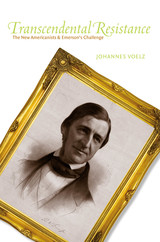
In the ongoing revision of American literary history, this traditional reading of the supposed anti-institutionalism of the Transcendentalists has been duly detailed and continually supported. Richard A. Grusin challenges both traditional and revisionist interpretations with detailed contextual studies of the hermeneutics of Ralph Waldo Emerson, Henry David Thoreau, and Theodore Parker. Informed by the past two decades of critical theory, Grusin examines the influence of the higher criticism of the Bible—which focuses on authorship, date, place of origin, circumstances of composition, and the historical credibility of biblical writings—on these writers. The author argues that the Transcendentalist appeal to the authority of the “self” is not an appeal to a source of authority independent of institutions, but to an authority fundamentally innate.
Before 1854, most Northerners managed to ignore the distant unpleasantness of slavery. But that year an escaped Virginia slave, Anthony Burns, was captured and brought to trial in Boston--and never again could Northerners look the other way. This is the story of Burns's trial and of how, arising in abolitionist Boston just as the incendiary Kansas-Nebraska Act took effect, it revolutionized the moral and political climate in Massachusetts and sent shock waves through the nation.
In a searching cultural analysis, Albert J. von Frank draws us into the drama and the consequences of the case. He introduces the individuals who contended over the fate of the barely literate twenty-year-old runaway slave--figures as famous as Richard Henry Dana Jr., the defense attorney, as colorful as Thomas Wentworth Higginson and Bronson Alcott, who led a mob against the courthouse where Burns was held, and as intriguing as Moncure Conway, the Virginia-born abolitionist who spied on Burns's master.
The story is one of desperate acts, even murder--a special deputy slain at the courthouse door--but it is also steeped in ideas. Von Frank links the deeds and rhetoric surrounding the Burns case to New England Transcendentalism, principally that of Ralph Waldo Emerson. His book is thus also a study of how ideas relate to social change, exemplified in the art and expression of Emerson, Henry Thoreau, Theodore Parker, Bronson Alcott, Walt Whitman, and others.
Situated at a politically critical moment--with the Whig party collapsing and the Republican arising, with provocations and ever hotter rhetoric intensifying regional tensions--the case of Anthony Burns appears here as the most important fugitive slave case in American history. A stirring work of intellectual and cultural history, this book shows how the Burns affair brought slavery home to the people of Boston and brought the nation that much closer to the Civil War.
READERS
Browse our collection.
PUBLISHERS
See BiblioVault's publisher services.
STUDENT SERVICES
Files for college accessibility offices.
RECENTLY PUBLISHED





UChicago Accessibility Resources
home | accessibility | search | about | contact us
BiblioVault ® 2001 - 2024
The University of Chicago Press