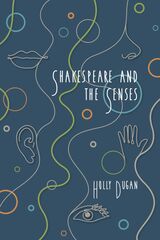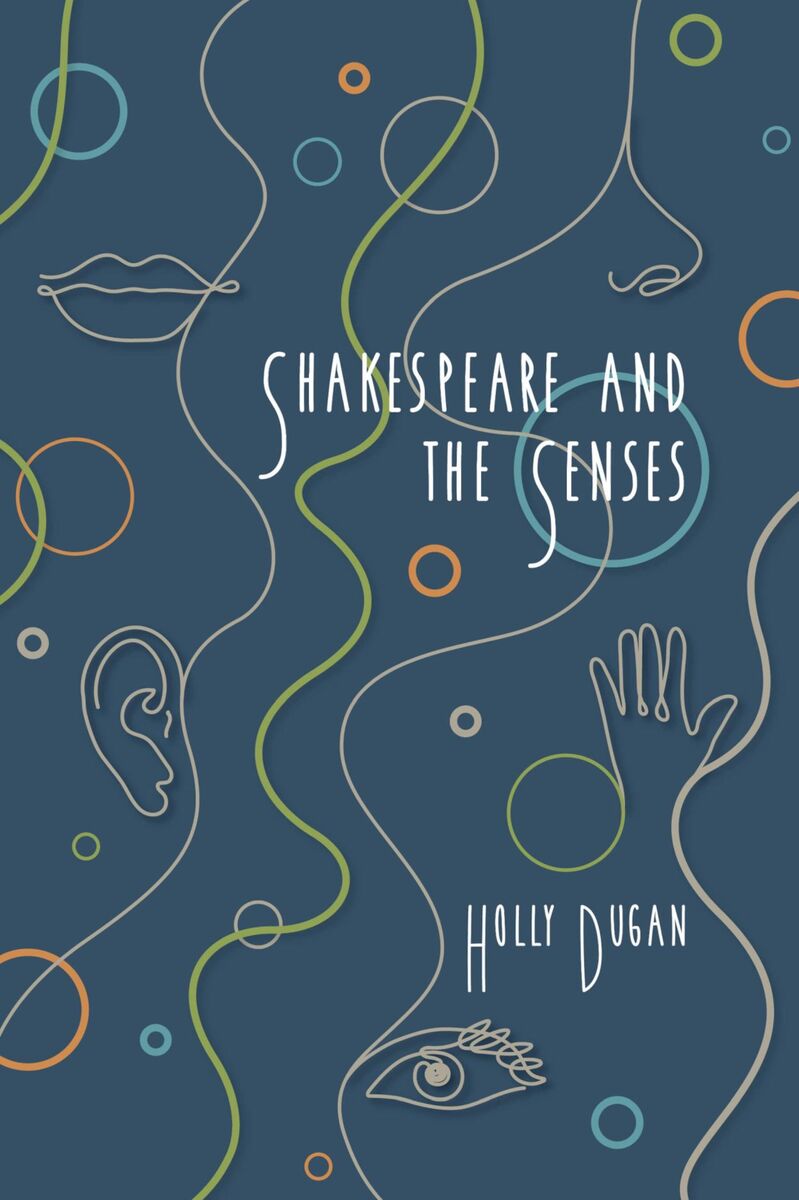
Shakespeare and the Senses
Arizona Center for Medieval and Renaissance Studies, 2024
Cloth: 978-0-86698-894-0 | Paper: 978-0-86698-696-0 | eISBN: 978-0-86698-697-7
Library of Congress Classification PR3069.S425D84 2026
Dewey Decimal Classification 822.33
Cloth: 978-0-86698-894-0 | Paper: 978-0-86698-696-0 | eISBN: 978-0-86698-697-7
Library of Congress Classification PR3069.S425D84 2026
Dewey Decimal Classification 822.33
ABOUT THIS BOOK | AUTHOR BIOGRAPHY | TOC
ABOUT THIS BOOK
A study of how audiences of Shakespeare’s time understood the sensual world of his plays.
Could something as seemingly natural as a smell, taste, sight, or sound be socially constructed and change over time? Shakespeare and the Senses argues that understanding the original conditions in which Shakespeare’s plays were performed allows us to explore the senses as both visceral, bodily experiences and constructed, social phenomena. As Ben Jonson famously wrote in the First Folio of 1623, Shakespeare can seem to be “not of an age, but for all time.” While this is clever marketing, Shakespeare did write his plays in a particular time and place far removed from our own. Many of his most powerful metaphors rely on sensory details—Aaron’s black hue; Cleopatra’s strange, invisible perfumes; Fluellen’s Welsh accent; Lady Macbeth’s overly scrubbed hands; Malvolio’s yellow stockings—which Elizabethan-era audiences may have understood very differently from us.
Shakespeare and the Senses draws on interdisciplinary research methods in the new field of sensory studies to expand our understanding of what Shakespeare meant to his first audiences.
Could something as seemingly natural as a smell, taste, sight, or sound be socially constructed and change over time? Shakespeare and the Senses argues that understanding the original conditions in which Shakespeare’s plays were performed allows us to explore the senses as both visceral, bodily experiences and constructed, social phenomena. As Ben Jonson famously wrote in the First Folio of 1623, Shakespeare can seem to be “not of an age, but for all time.” While this is clever marketing, Shakespeare did write his plays in a particular time and place far removed from our own. Many of his most powerful metaphors rely on sensory details—Aaron’s black hue; Cleopatra’s strange, invisible perfumes; Fluellen’s Welsh accent; Lady Macbeth’s overly scrubbed hands; Malvolio’s yellow stockings—which Elizabethan-era audiences may have understood very differently from us.
Shakespeare and the Senses draws on interdisciplinary research methods in the new field of sensory studies to expand our understanding of what Shakespeare meant to his first audiences.
See other books on: 1564-1616 | Senses | Shakespeare | Shakespeare, William | Tudor & Elizabethan Era (1485-1603)
See other titles from Arizona Center for Medieval and Renaissance Studies