front cover of Opening Minds, Improving Lives
Opening Minds, Improving Lives
Education and Women's Empowerment in Honduras
Erin Murphy-Graham
Vanderbilt University Press, 2012
Juanita was seventeen years old and pregnant with her first child when she began an activity that would "open" her mind. Living in a remote Garifuna village in Honduras, Juanita had dropped out of school after the sixth grade. In 1996, a new educational program, Sistema de Aprendizaje Tutorial (Tutorial Learning System or SAT), was started in her community. The program helped her see the world differently and open a small business.


Empowering women through education has become a top priority of international development efforts. Erin MurphyGraham draws on more than a decade of qualitative research to examine the experiences of Juanita and eighteen other women who participated in the SAT program. Their narratives suggest the simple yet subtle ways education can spark the empowerment process, as well as the role of men and boys in promoting gender equality.


Drawing on indepth interviews and classroom observation in Honduras and Uganda, MurphyGraham shows the potential of the SAT program to empower women through expanded access and improved quality of secondary education in Latin America and Africa. An appendix provides samples of the classroom lessons.


[more]

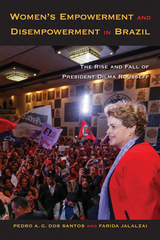
front cover of Women's Empowerment and Disempowerment in Brazil
Women's Empowerment and Disempowerment in Brazil
The Rise and Fall of President Dilma Rousseff
Pedro A. G. dos Santos and Farida Jalalzai
Temple University Press, 2021

In 2010, Dilma Rousseff was the first woman to be elected President in Brazil. She was re-elected in 2014 before being impeached in 2016 for breaking budget laws. Her popularity and controversy both energized and polarized the country. In Women’s Empowerment and Disempowerment in Brazil, dos Santos and Jalalzai examine Rousseff’s presidency and what it means for a woman to hold (and lose) the country’s highest power. 

The authors examine the ways Rousseff exercised dominant authority and enhanced women’s political empowerment. They also investigate the extent her gender played a role in the events of her presidency, including the political and economic crises and her ensuing impeachment. Emphasizing women’s political empowerment rather than representation, the authors assess the effects of women executives to more directly impact female constituencies—how they can empower women by appointing them to government positions; make policies that advance women’s equality; and, through visibility, create greater support for female politicians despite rampant sexism. 

Women’s Empowerment and Disempowerment in Brazil uses Rousseff’s presidency as a case study to focus on the ways she succeeded and failed in using her authority to empower women. The authors’ findings have implications throughout the world.

[more]


Send via email Share on Facebook Share on Twitter