
 A SCHOLARLY BOOK REPOSITORY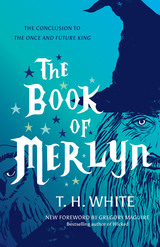
This magical account of King Arthur’s last night on earth, rediscovered in a collection of T. H. White’s papers at the Harry Ransom Center at the University of Texas at Austin, spent twenty-six weeks on the New York Times bestseller list following its publication in 1977. While preparing for his final, fatal battle with his bastard son, Mordred, Arthur returns to the Animal Council with Merlyn, where the deliberations center on ways to abolish war. More self-revealing than any other of White’s books, Merlyn shows his mind at work as he agonized over whether to join the fight against Nazi Germany while penning the epic that would become The Once and Future King. The Book of Merlyn has been cited as a major influence by such illustrious writers as Kazuo Ishiguro, J. K. Rowling, Helen Macdonald, Neil Gaiman, and Lev Grossman.
“Arriving from beyond the curve of time and apparently from the grave, The Book of Merlyn stirs its own pages, saying, wait: you didn’t get the whole story. . . . It gives us a final glimpse of those two immortal characters, Wart and Merlyn, up close, slo-mo, with a considered and affectionate scrutiny. The book is an elegiac posting from a master storyteller of the twentieth century. Its reissue in our next century is just as welcome as when it first arrived forty years ago. . . . Certainly the moral questions about the military use of force perplex the world still. . . . The efficacy of treaties, the trading of insults among the potentates of the day, the testing of weapons, the weaponizing of trade—these strategies are still front and center. Rather terrifyingly so. We do well to revisit what that old schoolteacher of children, Merlyn, has been trying to point out to us about power and responsibility.”
—Gregory Maguire, from the foreword
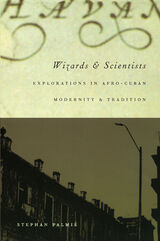
Highlighting the ways that Afro-Cuban discourses serve as a means of moral analysis of social action, Palmié suggests that the supposedly irrational premises of Afro-Cuban religious traditions not only rival Western rationality in analytical acumen but are integrally linked to rationality itself. Afro-Cuban religion is as “modern” as nuclear thermodynamics, he claims, just as the Caribbean might be regarded as one of the world’s first truly “modern” locales: based on the appropriation and destruction of human bodies for profit, its plantation export economy anticipated the industrial revolution in the metropolis by more than a century. Working to prove that modernity is not just an aspect of the West, Palmié focuses on those whose physical abuse and intellectual denigration were the price paid for modernity’s achievement. All cultures influenced by the transcontinental Atlantic economy share a legacy of slave commerce. Nevertheless, local forms of moral imagination have developed distinctive yet interrelated responses to this violent past and the contradiction-ridden postcolonial present that can be analyzed as forms of historical and social analysis in their own right.

A surging Republican populist.
The Democrat, hounded by corruption allegations; the Republican, dogged by business failures and ties to white supremacists.
The Republican turned out thousands of screaming supporters for speeches blaming illegal immigrants and crime on the Democrats, and the Democrat plummeted in the polls.
Sound familiar?
The '91 Louisiana Governor's race was supposed to be forgettable. But when former KKK Grand Wizard David Duke shocked the nation by ousting incumbent Republican Governor Buddy Roemer in the primary, the world took notice. Democrat Edwin Edwards, a former three-term governor and two-time corruption defendant, was left alone to face Duke in the general election—and he was going to lose.
Then a little-known state committeewoman stepped in with evidence of Duke's nefarious past. Could her evidence be enough to sway the minds of fired-up voters, or would Louisiana welcome a far-right radical into the highest office in the state?
Journalist Brian Fairbanks explores how the final showdown between Duke and Edwards in November 1991 led to a major shift in our national politics, as well as the rise of the radical right and white supremacist groups, and how history repeated itself in the 2016 presidential election. The story of these political "wizards," almost forgotten by history, remains eerily prescient and disturbingly relevant, and a compulsive page-turner.

A surging Republican populist.
The Democrat, hounded by corruption allegations; the Republican, dogged by business failures and ties to white supremacists.
The Republican turned out thousands of screaming supporters for speeches blaming illegal immigrants and crime on the Democrats, and the Democrat plummeted in the polls.
Sound familiar?
The '91 Louisiana Governor's race was supposed to be forgettable. But when former KKK Grand Wizard David Duke shocked the nation by ousting incumbent Republican Governor Buddy Roemer in the primary, the world took notice. Democrat Edwin Edwards, a former three-term governor and two-time corruption defendant, was left alone to face Duke in the general election—and he was going to lose.
Then a little-known state committeewoman stepped in with evidence of Duke's nefarious past. Could her evidence be enough to sway the minds of fired-up voters, or would Louisiana welcome a far-right radical into the highest office in the state?
Journalist Brian Fairbanks explores how the final showdown between Duke and Edwards in November 1991 led to a major shift in our national politics, as well as the rise of the radical right and white supremacist groups, and how history repeated itself in the 2016 presidential election. The story of these political "wizards," almost forgotten by history, remains eerily prescient and disturbingly relevant, and a compulsive page-turner.
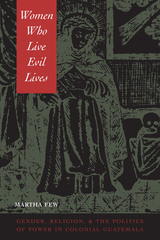
Women Who Live Evil Lives documents the lives and practices of mixed-race, Black, Spanish, and Maya women sorcerers, spell-casters, magical healers, and midwives in the social relations of power in Santiago de Guatemala, the capital of colonial Central America. Men and women from all sectors of society consulted them to intervene in sexual and familial relations and disputes between neighbors and rival shop owners; to counter abusive colonial officials, employers, or husbands; and in cases of inexplicable illness.
Applying historical, anthropological, and gender studies analysis, Martha Few argues that women's local practices of magic, curing, and religion revealed opportunities for women's cultural authority and power in colonial Guatemala. Few draws on archival research conducted in Guatemala, Mexico, and Spain to shed new light on women's critical public roles in Santiago, the cultural and social connections between the capital city and the countryside, and the gender dynamics of power in the ethnic and cultural contestation of Spanish colonial rule in daily life.
READERS
Browse our collection.
PUBLISHERS
See BiblioVault's publisher services.
STUDENT SERVICES
Files for college accessibility offices.
RECENTLY PUBLISHED



UChicago Accessibility Resources
home | accessibility | search | about | contact us
BiblioVault ® 2001 - 2026
The University of Chicago Press