
 A SCHOLARLY BOOK REPOSITORY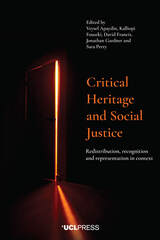
The first edited volume in the field of heritage to conceptualize and contextualize social justice in depth, both theoretically and through practical applications.
In this edited volume, scholars and practitioners working across heritage, museums, galleries, and cultural institutions explore how principles of social justice can be embedded within these spaces. Highlighting intersections between critical heritage studies and urgent global challenges, the book seeks to foster inclusive, community-engaged heritage practices. Applying Nancy Fraser’s theory of three-dimensional justice—redistribution, recognition, and representation—within the context of heritage studies, the authors reflect on global social, cultural, political, and environmental issues through an interdisciplinary heritage-focused approach.
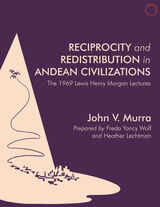
Murra intermixes a study of Andean ecology with an exploration of the ideal of economic self-sufficiency, stressing two foundational socioeconomic forces: reciprocity and redistribution. He shows how both enabled Andean communities to realize direct control of a maximum number of vertically ordered ecological floors and the resources they offered. He famously called this arrangement a “vertical archipelago,” a revolutionary model that is still examined and debated almost fifty years after it was first presented in these lecture. Written in a crisp and elegant style and inspired by decades of ethnographic fieldwork, this set of lectures is nothing less than a lost classic, and it will be sure to inspire new generations of anthropologists and historians working in South America and beyond.
READERS
Browse our collection.
PUBLISHERS
See BiblioVault's publisher services.
STUDENT SERVICES
Files for college accessibility offices.
RECENTLY PUBLISHED


UChicago Accessibility Resources
home | accessibility | search | about | contact us
BiblioVault ® 2001 - 2026
The University of Chicago Press