
 A SCHOLARLY BOOK REPOSITORY
8 start with L start with L
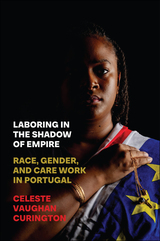
Laboring in the Shadow of Empire: Race, Gender and Care Work in Portugal examines the everyday lives of an African descendant care service workforce that labors in an ostensibly “anti-racial” Europe and against the backdrop of the Portuguese colonial empire. While much of the literature on global care work has focused on Asian and Latine migrant care workers, there is comparatively less research that explicitly examines African care workers and their migration histories to Europe. Sociologist Celeste V. Curington focuses on Portugal—a European setting with comparatively liberal policies around family settlement and naturalization for migrants. In this setting, rapid urbanization in the late twentieth century, along with a national push to reconcile work and family, have shaped the growth of paid home care and cleaning service industries. Many researchers focus on informal work settings where immigrant rights are restricted, and many workers are undocumented or without permanent residence status. Curington instead examined workers who have accessed citizenship or permanent residence status and also explores African women’s experiences laboring in care and service industries in the formal market, revealing how deeply colonial and intersectional logics of a racialized and international division of reproductive labor in Portugal render these women “hyper-invisible” and “hyper-visible” as “appropriate” workers in Lisbon.
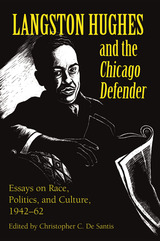
But it was as a columnist for the famous African-American newspaper the Chicago Defender that Hughes chronicled the hopes and despair of his people. For twenty years, he wrote forcefully about international race relations, Jim Crow, the South, white supremacy, imperialism and fascism, segregation in the armed forces, the Soviet Union and communism, and African-American art and culture. None of the racial hypocrisies of American life escaped his searing, ironic prose.
This is the first collection of Hughes's nonfiction journalistic writings. For readers new to Hughes, it is an excellent introduction; for those familiar with him, it gives new insights into his poems and fiction.
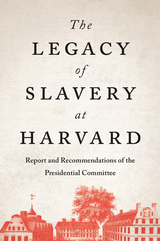
Harvard’s searing and sobering indictment of its own long-standing relationship with chattel slavery and anti-Black discrimination.
In recent years, scholars have documented extensive relationships between American higher education and slavery. The Legacy of Slavery at Harvard adds Harvard University to the long list of institutions, in the North and the South, entangled with slavery and its aftermath.
The report, written by leading researchers from across the university, reveals hard truths about Harvard’s deep ties to Black and Indigenous bondage, scientific racism, segregation, and other forms of oppression. Between the university’s founding in 1636 and 1783, when slavery officially ended in Massachusetts, Harvard leaders, faculty, and staff enslaved at least seventy people, some of whom worked on campus, where they cared for students, faculty, and university presidents. Harvard also benefited financially and reputationally from donations by slaveholders, slave traders, and others whose fortunes depended on human chattel. Later, Harvard professors and the graduates they trained were leaders in so-called race science and eugenics, which promoted disinvestment in Black lives through forced sterilization, residential segregation, and segregation and discrimination in education.
No institution of Harvard’s scale and longevity is a monolith. Harvard was also home to abolitionists and pioneering Black thinkers and activists such as W. E. B. Du Bois, Charles Hamilton Houston, and Eva Beatrice Dykes. In the late twentieth century, the university became a champion of racial diversity in education. Yet the past cannot help casting a long shadow on the present. Harvard’s motto, Veritas, inscribed on gates, doorways, and sculptures all over campus, is an exhortation to pursue truth. The Legacy of Slavery at Harvard advances that necessary quest.
Foreword by Kirby McCurtis
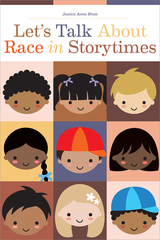
With the help of this book’s adaptable storytime activities, tools for self-reflection, and discussion starters, children’s librarians will learn how to put anti-racism work into their professional practice while fostering an environment that celebrates all identities.As the weekly lists of best-sellers demonstrate, many people want to engage with racial issues. But when it comes to talking about race, they often don’t know how or are hesitant to take the first steps. This includes children's librarians, who are taking seriously our profession’s calls for diversity, equity, and inclusion. They already know that popular storytimes can be an effective way to increase community representation and belonging at the library. Incorporating race into storytimes is an ideal way to foster inclusion by normalizing conversations about these issues. This book will help public and school librarians face their own biases, showing them how to have honest discussions with children, their caregivers, and storytime attendees, as well as their colleagues. In this book, you will discover
- several ready-to-use library storytimes that incorporate racial themes, complete with sample activities and booklists;
- an anti-oppression framework, based on the author’s own real-world practice, that is customizable for different settings and situations;
- concrete suggestions for overcoming fears and awkwardness when it comes to talking about race, with advice on practicing new language, making space to connect around appropriate cultural books for read alouds, and evaluating books for storytime;
- interactive self-reflecting worksheets which explore planning picture book introductions and songs for inclusive storytimes, providing age-appropriate glimpses into history, and suggested affirmations in describing skin tone, hair, and language;
- advocacy talking points centered on social justice that will encourage discussion with co-workers and other library staff; and
- guidance on community engagement, relationship building, and intentionally trying to diversify your world in order to truly become an anti-bias practitioner.
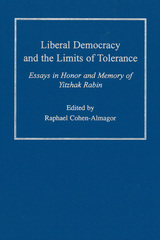
Written in the wake of the assasination of Yitzhak Rabin, this volume is thus dedicated to the question of boundaries: how should democracies cope with antidemocratic forces that challenge its system? How should we respond to threats that undermine democracy and at the same time retain our values and maintain our commitment to democracy and to its underlying values?
All the essays here share a belief in the urgency of the need to tackle and find adequate answers to radicalism and political extremism. They cover such topics as the dilemmas embodied in the notion of tolerance, including the cost and regulation of free speech; incitement as distinct from advocacy; the challenge of religious extremism to liberal democracy; the problematics of hate speech; free communication, freedom of the media, and especially the relationships between media and terrorism.
The contributors to this volume are David E. Boeyink, Harvey Chisick, Irwin Cotler, David Feldman, Owen Fiss, David Goldberg, J. Michael Jaffe, Edmund B. Lambeth, Sam Lehman-Wilzig, Joseph Eliot Magnet, Richard Moon, Frederick Schauer, and L.W. Sumner. The volume includes the opening remarks of Mrs.Yitzhak Rabin to the conference--dedicated to the late Yitzhak Rabin--at which these papers were originally presented. These studies will appeal to politicians, sociologists, media educators and professionals, jurists and lawyers, as well as the general public.
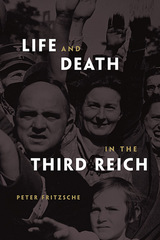
On January 30, 1933, hearing about the celebrations for Hitler’s assumption of power, Erich Ebermayer remarked bitterly in his diary, “We are the losers, definitely the losers.” Learning of the Nuremberg Laws in 1935, which made Jews non-citizens, he raged, “hate is sown a million-fold.” Yet in March 1938, he wept for joy at the Anschluss with Austria: “Not to want it just because it has been achieved by Hitler would be folly.”
In a masterful work, Peter Fritzsche deciphers the puzzle of Nazism’s ideological grip. Its basic appeal lay in the Volksgemeinschaft—a “people’s community” that appealed to Germans to be part of a great project to redress the wrongs of the Versailles treaty, make the country strong and vital, and rid the body politic of unhealthy elements. The goal was to create a new national and racial self-consciousness among Germans. For Germany to live, others—especially Jews—had to die. Diaries and letters reveal Germans’ fears, desires, and reservations, while showing how Nazi concepts saturated everyday life. Fritzsche examines the efforts of Germans to adjust to new racial identities, to believe in the necessity of war, to accept the dynamic of unconditional destruction—in short, to become Nazis.
Powerful and provocative, Life and Death in the Third Reich is a chilling portrait of how ideology takes hold.
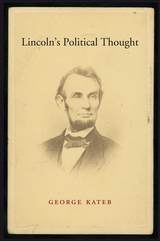
One of the most influential philosophers of liberalism turns his attention to the complexity of Lincoln’s political thought. At the center of Lincoln’s career is an intense passion for equality, a passion that runs so deep in the speeches, messages, and letters that it has the force of religious conviction for Lincoln. George Kateb examines these writings to reveal that this passion explains Lincoln’s reverence for both the Constitution and the Union.
The abolition of slavery was not originally a tenet of Lincoln’s political religion. He affirmed almost to the end of his life that the preservation of the Union was more important than ending slavery. This attitude was consistent with his judgment that at the founding, the agreement to incorporate slaveholding into the Constitution, and thus secure a Constitution, was more vital to the cause of equality than struggling to keep slavery out of the new nation. In Kateb’s reading, Lincoln destroys the Constitution twice, by suspending it as a wartime measure and then by enacting the Thirteenth Amendment to abolish slavery. The first instance was an effort to save the Constitution; the second was an effort to transform it, by making it answer the Declaration’s promises of equality.
The man who emerges in Kateb’s account proves himself adequate to the most terrible political situation in American history. Lincoln’s political life, however, illustrates the unsettling truth that in democratic politics—perhaps in all politics—it is nearly impossible to do the right thing for the right reasons, honestly stated.
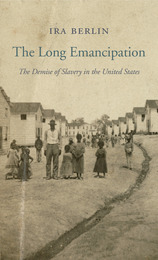
Perhaps no event in American history arouses more impassioned debate than the abolition of slavery. Answers to basic questions about who ended slavery, how, and why remain fiercely contested more than a century and a half after the passage of the Thirteenth Amendment. In The Long Emancipation, Ira Berlin draws upon decades of study to offer a framework for understanding slavery’s demise in the United States. Freedom was not achieved in a moment, and emancipation was not an occasion but a near-century-long process—a shifting but persistent struggle that involved thousands of men and women.
“Ira Berlin ranks as one of the greatest living historians of slavery in the United States… The Long Emancipation offers a useful reminder that abolition was not the charitable work of respectable white people, or not mainly that. Instead, the demise of slavery was made possible by the constant discomfort inflicted on middle-class white society by black activists. And like the participants in today’s Black Lives Matter movement, Berlin has not forgotten that the history of slavery in the United States—especially the history of how slavery ended—is never far away when contemporary Americans debate whether their nation needs to change.”
—Edward E. Baptist, New York Times Book Review
READERS
Browse our collection.
PUBLISHERS
See BiblioVault's publisher services.
STUDENT SERVICES
Files for college accessibility offices.
RECENTLY PUBLISHED




UChicago Accessibility Resources
home | accessibility | search | about | contact us
BiblioVault ® 2001 - 2024
The University of Chicago Press