
 A SCHOLARLY BOOK REPOSITORY
10 start with I start with I
“I regularly decide to quit talking to white people about racism,” writes Joof. Such discussions often feel unproductive, the occasional spark of hope coming at enormous personal cost. But not talking about it is impossible, a betrayal of self. The book is a self-examination as well as societal indictment. It is an open challenge to readers, to hear her as she talks about it, all the time.
Mihailovic investigates notable right-wing actors like Steve Bannon and Alexander Dugin and targets of right-wing ire such as globalization, LGBTQ+ activism, and mobilizations to remove controversial statues (that honor Confederate generals and Soviet leaders, for instance), but the argument extends beyond the specifics. How and why are radical right-wing movements developing along such similar trajectories in two nominally oppositional countries? How do religious sectarianism, the construction of whiteness, and institutionalized homophobia support each other in this transnational, informal, but powerful allegiance? Despite their appeals to populism and flamboyant theatrics, Mihailovic argues, much of the answer can be found in the mutual desire to justify and organize an illiberal vanguard of elite intellectuals, one that supports and advocates for a new authoritarianism.
As states have reduced funding to public universities, many of those institutions have turned to overseas students as a vital, alternative source of revenue. Students from India have especially been seen as among the most desirable populations, as they’re typically fluent in English and overwhelmingly enroll in professional fields deemed critical to the knowledge economy. The large numbers of these youth migrating for their education tend to be viewed as a shining example of the value of the contemporary global university and how it enables ambitious people to secure opportunities not available to them in their home nation.
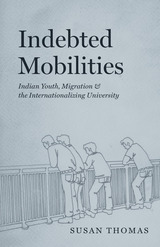
However, a deeper examination of these young people’s encounters reveals a more complicated story than glossy brochures and paeans to American higher education would suggest. Indebted Mobilities draws on Susan Thomas’s close shadowing of a group of middle-class Indian migrant men who attended a public university in New York just as the institution sought to “internationalize” its campus in the wake of ongoing withdrawal of state funding. Thomas takes the reader along with the young men as they study, work, and socialize, pursuing the successful futures they believed to be promised when they migrated for an American education. All the while, they must face their marginalization as they become enmeshed in the fraught inclusion politics of contemporary university life in the United States. At the heart of these encounters is these students’ relationship to debt—not just material ones that include student loans, but moral and affective debts as well. This indebtedness, which keeps them tied to both India and the United States, is meaningful to how Indian middle-class men make sense of their experiences as student-migrants. These youth long to be modern “men of the world.” Yet Thomas illuminates how the complex realities that arise for them, informed by the logic of US exceptionalism, force a reckoning with their anxieties about successful masculinities and the precarity of being drawn into the global knowledge economy as indebted migrants.
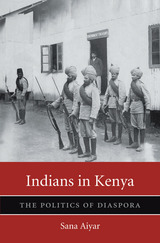
Working as merchants, skilled tradesmen, clerks, lawyers, and journalists, Indians formed the economic and administrative middle class in colonial Kenya. In general, they were wealthier than Africans, but were denied the political and economic privileges that Europeans enjoyed. Moreover, despite their relative prosperity, Indians were precariously positioned in Kenya. Africans usually viewed them as outsiders, and Europeans largely considered them subservient. Indians demanded recognition on their own terms. Indians in Kenya chronicles the competing, often contradictory, strategies by which the South Asian diaspora sought a political voice in Kenya from the beginning of colonial rule in the late 1890s to independence in the 1960s.
Indians’ intellectual, economic, and political connections with South Asia shaped their understanding of their lives in Kenya. Sana Aiyar investigates how the many strands of Indians’ diasporic identity influenced Kenya’s political leadership, from claiming partnership with Europeans in their mission to colonize and “civilize” East Africa to successful collaborations with Africans to battle for racial equality, including during the Mau Mau Rebellion. She also explores how the hierarchical structures of colonial governance, the material inequalities between Indians and Africans, and the racialized political discourses that flourished in both colonial and postcolonial Kenya limited the success of alliances across racial and class lines. Aiyar demonstrates that only by examining the ties that bound Indians to worlds on both sides of the Indian Ocean can we understand how Kenya came to terms with its South Asian minority.
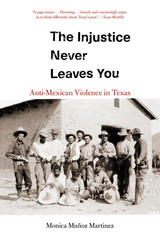
Winner of the Caughey Western History Prize
Winner of the Robert G. Athearn Award
Winner of the Lawrence W. Levine Award
Winner of the TCU Texas Book Award
Winner of the NACCS Tejas Foco Nonfiction Book Award
Winner of the María Elena Martínez Prize
Frederick Jackson Turner Award Finalist
“A page-turner…Haunting…Bravely and convincingly urges us to think differently about Texas’s past.”
—Texas Monthly
Between 1910 and 1920, self-appointed protectors of the Texas–Mexico border—including members of the famed Texas Rangers—murdered hundreds of ethnic Mexicans living in Texas, many of whom were American citizens. Operating in remote rural areas, officers and vigilantes knew they could hang, shoot, burn, and beat victims to death without scrutiny. A culture of impunity prevailed. The abuses were so pervasive that in 1919 the Texas legislature investigated the charges and uncovered a clear pattern of state crime. Records of the proceedings were soon filed away as the Ranger myth flourished.
A groundbreaking work of historical reconstruction, The Injustice Never Leaves You has upended Texas’s sense of its own history. A timely reminder of the dark side of American justice, it is a riveting story of race, power, and prejudice on the border.
“It’s an apt moment for this book’s hard lessons…to go mainstream.”
—Texas Observer
“A reminder that government brutality on the border is nothing new.”
—Los Angeles Review of Books

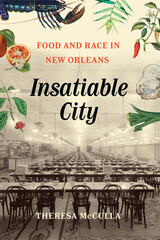
In Insatiable City, Theresa McCulla probes the overt and covert ways that the production of food and the discourse about it both created and reinforced many strains of inequality in New Orleans, a city significantly defined by its foodways. Tracking the city’s economy from nineteenth-century chattel slavery to twentieth-century tourism, McCulla uses menus, cookbooks, newspapers, postcards, photography, and other material culture to limn the interplay among the production and reception of food, the inscription and reiteration of racial hierarchies, and the constant diminishment and exploitation of working-class people. The consumption of food and people, she shows, was mutually reinforced and deeply intertwined. Yet she also details how enslaved and free people of color in New Orleans used food and drink to carve paths of mobility, stability, autonomy, freedom, profit, and joy. A story of pain and pleasure, labor and leisure, Insatiable City goes far beyond the task of tracing New Orleans's culinary history to focus on how food suffuses culture and our understandings and constructions of race and power.

“You are what you eat,” but what if you’re seen as a rat eater, bat lover, or MSG user? In Inscrutable Eating, Jennifer Lin LeMesurier considers how everyday assumptions about Asian food influence the perception of Asian and Asian American identity within the US racial landscape, demonstrating that beliefs about how certain people eat are inseparable from attitudes that support hierarchies around race, gender, and sexuality.
Drawing on rhetorical theory, affect theory, and Asian American studies, LeMesurier analyzes messages in US popular culture about Asian eating to develop the concept of gut orientations: rhetorically dominant ways of interacting with food that scale upward to feelings of desire and disgust toward social groups. Looking at examples from fears around MSG to uproar over wet markets as the source of COVID-19, she argues that these “gut” reactions establish certain racial views as common-sense truths rather than cultural biases, reinforcing dominant norms about what belongs on whose plate, or who belongs at what table. In demystifying marginalizing discourse around food and eating, LeMesurier shows how exposing the tacit, felt ideas of consumption is necessary to contest broader forms of discrimination.
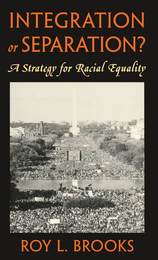
Integrated in principle, segregated in fact: is this the legacy of fifty years of "progress" in American racial policy? Is there hope for much better? Roy L. Brooks, a distinguished professor of law and a writer on matters of race and civil rights, says with frank clarity what few will admit--integration hasn't worked and possibly never will. Equally, he casts doubt on the solution that many African-Americans and mainstream whites have advocated: total separation of the races. This book presents Brooks's strategy for a middle way between the increasingly unworkable extremes of integration and separation.
Limited separation, the approach Brooks proposes, shifts the focus of civil rights policy from the group to the individual. Defined as cultural and economic integration within African-American society, this policy would promote separate schooling, housing, and business enterprises where needed to bolster the self-sufficiency of the community, without trammeling the racial interests of individuals inside or outside of the group, and without endangering the idea of a shared Americanness. But all the while Brooks envisions African-American public schools, businesses, and communities redesigned to serve the enlightened self-interest of the individual. Unwilling to give up entirely on racial integration, he argues that limited separation may indeed lead to improved race relations and, ultimately, to healthy integration.
This book appears at a crucial time, as Republicans dismantle past civil rights policies and Democrats search for new ones. With its alternative strategy and useful policy ideas for bringing individual African-Americans into mainstream society as first-class citizens, Integration or Separation? should influence debate and policymaking across the spectra of race, class, and political persuasion.

Dolores del Río first came to Hollywood from Mexico in 1925 and within a year had become an international star for her role in Raoul Walsh's 1926 film What Price Glory. She would go on to work with Hollywood’s top directors, including John Ford and King Vidor, and star opposite such leading men as Henry Fonda, Fred Astaire, Orson Welles (with whom she had a scandalous affair), and Elvis Presley. Voted by Photoplay magazine in 1933 as having "the most perfect feminine figure in Hollywood," del Río was billed as one of cinema’s most "exotic" and "aristocratic" beauties. This image-carefully crafted by her producers, her studio publicists, and by del Río herself-reveals many fascinating insights into Hollywood’s evolving attitudes toward race and femininity.
In The Invention of Dolores del Río, Joanne Hershfield explores the intersection of ethnicity, gender, and stardom in American popular culture through the lens of del Río’s successful and unusually lengthy career, which lasted until the 1960s. Hershfield offers close readings of del Río’s films—discussing in detail the roles she played, her costumes and makeup, the music and mise-en-scène, advertising, publicity, and reviews—that provide a nuanced understanding of how Hollywood constructed del Río as an exotic commodity and blunted the inherent challenge her sexual and ethnic image posed to both prevailing standards of white femininity and widespread injunctions against miscegenation. Throughout this astute and imaginative case study, Hershfield looks at del Río’s Hollywood films in relation to shifting ideologies about nationality, gender, and race between the 1920s and 1960s, offering an important contribution to the debate surrounding Hollywood’s ability to both reflect the nation’s racial and sexual obsessions and influence its perceptions about ethnic and gender identity.
READERS
Browse our collection.
PUBLISHERS
See BiblioVault's publisher services.
STUDENT SERVICES
Files for college accessibility offices.
RECENTLY PUBLISHED





UChicago Accessibility Resources
home | accessibility | search | about | contact us
BiblioVault ® 2001 - 2024
The University of Chicago Press