
 A SCHOLARLY BOOK REPOSITORY
13 start with B start with B
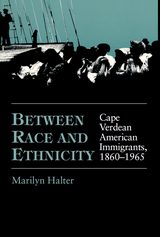
Marilyn Halter combines oral history with analyses of ships' records to chart the history and adaptation patterns of the Cape Verdean Americans. Though identifying themselves in ethnic terms, Cape Verdeans found that their African-European ancestry led their new society to view them as a racial group. Halter emphasizes racial and ethnic identity formation to show how Cape Verdeans set themselves apart from the African Americans while attempting to shrug off white society's exclusionary tactics. She also contrasts rural life on the bogs of Cape Cod with New Bedford’s urban community to reveal the ways immigrants established their own social and religious groups as they strove to maintain their Crioulo customs.
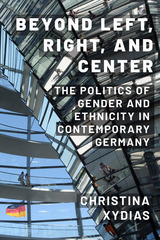
Christina Xydias shows that some right-leaning parties advocate for women’s rights and interests, while left- and right-leaning parties can be equally indifferent to lack of representation for women from marginalized groups. These findings follow from analyses of election results, transcripts from debates and speeches, and personal interviews, as well as from a close reading of intertwined military and citizenship policies that illustrate how women’s and ethnic minority groups’ rights are constructed.
Beyond Left, Right, and Center concludes with an analysis of women’s representation across OECD countries, showing that right-leaning parties are more likely to support women’s rights and interests in societies that are more egalitarian.
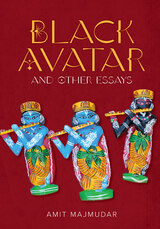
The eight pieces in this deeply engaging volume reflect author Amit Majmudar’s comprehensive studies of American, European, and Indian traditions, as well as his experiences in both suburban Ohio and the western Indian state of Gujarat. The volume begins with the title piece, a fifteen-part examination of “How Colorism Came to India.” Tracing the evolution of India’s bias in favor of light skin, Majmudar reflects on the effects of colonialism, drawing upon sources ranging from early Sanskrit texts to contemporary film and television.
Other essays illuminate subjects both timely and timeless. “The Ramayana and the Birth of Poetry” discusses how suffering is portrayed in art and literature (“The spectrum of suffering: slapstick on one end, scripture on the other, with fiction and poetry . . . in the vastness between them”), while in “Five Famous Asian War Photographs”—a 2018 Best American Essays selection—Majmudar analyzes why these iconic images of atrocity have such emotional resonance. In “Nature/Worship,” another multi-part piece, the author turns his attention to climate change, linking notions of environmentalism to his ancestral tradition of finding divinity within the natural world, connections that form the basis of religious belief.
Perhaps the greatest achievement of these wide-ranging essays is the prose itself—learned yet lively, erudite yet accessible—nimbly revealing the workings of a wonderfully original mind.
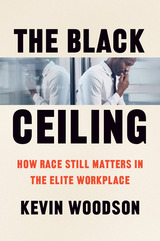
America’s elite law firms, investment banks, and management consulting firms are known for grueling hours, low odds of promotion, and personnel practices that push out any employees who don’t advance. While most people who begin their careers in these institutions leave within several years, work there is especially difficult for Black professionals, who exit more quickly and receive far fewer promotions than their White counterparts, hitting a “Black ceiling.”
Sociologist and law professor Kevin Woodson knows firsthand what life at a top law firm feels like as a Black man. Examining the experiences of more than one hundred Black professionals at prestigious firms, Woodson discovers that their biggest obstacle in the workplace isn’t explicit bias but racial discomfort, or the unease Black employees feel in workplaces that are steeped in Whiteness. He identifies two types of racial discomfort: social alienation, the isolation stemming from the cultural exclusion Black professionals experience in White spaces, and stigma anxiety, the trepidation they feel over the risk of discriminatory treatment. While racial discomfort is caused by America’s segregated social structures, it can exist even in the absence of racial discrimination, which highlights the inadequacy of the unconscious bias training now prevalent in corporate workplaces. Firms must do more than prevent discrimination, Woodson explains, outlining the steps that firms and Black professionals can take to ease racial discomfort.
Offering a new perspective on a pressing social issue, The Black Ceiling is a vital resource for leaders at preeminent firms, Black professionals and students, managers within mostly White organizations, and anyone committed to cultivating diverse workplaces.
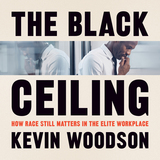
America’s elite law firms, investment banks, and management consulting firms are known for grueling hours, low odds of promotion, and personnel practices that push out any employees who don’t advance. While most people who begin their careers in these institutions leave within several years, work there is especially difficult for Black professionals, who exit more quickly and receive far fewer promotions than their White counterparts, hitting a “Black ceiling.”
Sociologist and law professor Kevin Woodson knows firsthand what life at a top law firm feels like as a Black man. Examining the experiences of more than one hundred Black professionals at prestigious firms, Woodson discovers that their biggest obstacle in the workplace isn’t explicit bias but racial discomfort, or the unease Black employees feel in workplaces that are steeped in Whiteness. He identifies two types of racial discomfort: social alienation, the isolation stemming from the cultural exclusion Black professionals experience in White spaces, and stigma anxiety, the trepidation they feel over the risk of discriminatory treatment. While racial discomfort is caused by America’s segregated social structures, it can exist even in the absence of racial discrimination, which highlights the inadequacy of the unconscious bias training now prevalent in corporate workplaces. Firms must do more than prevent discrimination, Woodson explains, outlining the steps that firms and Black professionals can take to ease racial discomfort.
Offering a new perspective on a pressing social issue, The Black Ceiling is a vital resource for leaders at preeminent firms, Black professionals and students, managers within mostly White organizations, and anyone committed to cultivating diverse workplaces.
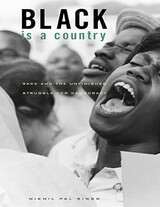
Despite black gains in modern America, the end of racism is not yet in sight. Nikhil Pal Singh asks what happened to the worldly and radical visions of equality that animated black intellectual activists from W. E. B. Du Bois in the 1930s to Martin Luther King, Jr. in the 1960s. In so doing, he constructs an alternative history of civil rights in the twentieth century, a long civil rights era, in which radical hopes and global dreams are recognized as central to the history of black struggle.
It is through the words and thought of key black intellectuals, like Du Bois, Ralph Bunche, C. L. R. James, Richard Wright, Ralph Ellison, Langston Hughes, and others, as well as movement activists like Malcolm X and Black Panthers, that vital new ideas emerged and circulated. Their most important achievement was to create and sustain a vibrant, black public sphere broadly critical of U.S. social, political, and civic inequality.
Finding racism hidden within the universalizing tones of reform-minded liberalism at home and global democratic imperatives abroad, race radicals alienated many who saw them as dangerous and separatist. Few wanted to hear their message then, or even now, and yet, as Singh argues, their passionate skepticism about the limits of U.S. democracy remains as indispensable to a meaningful reconstruction of racial equality and universal political ideals today as it ever was.
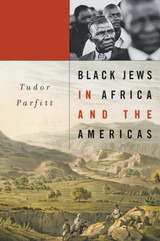
Black Jews in Africa and the Americas tells the fascinating story of how the Ashanti, Tutsi, Igbo, Zulu, Beta Israel, Maasai, and many other African peoples came to think of themselves as descendants of the ancient tribes of Israel. Pursuing medieval and modern European race narratives over a millennium in which not only were Jews cast as black but black Africans were cast as Jews, Tudor Parfitt reveals a complex history of the interaction between religious and racial labels and their political uses.
For centuries, colonialists, travelers, and missionaries, in an attempt to explain and understand the strange people they encountered on the colonial frontier, labeled an astonishing array of African tribes, languages, and cultures as Hebrew, Jewish, or Israelite. Africans themselves came to adopt these identities as their own, invoking their shared histories of oppression, imagined blood-lines, and common traditional practices as proof of a racial relationship to Jews.
Beginning in the post-slavery era, contacts between black Jews in America and their counterparts in Africa created powerful and ever-growing networks of black Jews who struggled against racism and colonialism. A community whose claims are denied by many, black Jews have developed a strong sense of who they are as a unique people. In Parfitt’s telling, forces of prejudice and the desire for new racial, redemptive identities converge, illuminating Jewish and black history alike in novel and unexplored ways.
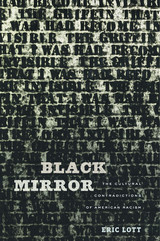
Blackness, as the entertainment and sports industries well know, is a prized commodity in American pop culture. Marketed to white consumers, black culture invites whites to view themselves in a mirror of racial difference, while at the same time offering the illusory reassurance that they remain “wholly” white. Charting a rich landscape that includes classic American literature, Hollywood films, pop music, and investigative journalism, Eric Lott reveals the hidden dynamics of this self-and-other mirroring of racial symbolic capital.
Black Mirror is a timely reflection on the ways provocative representations of racial difference serve to sustain white cultural dominance. As Lott demonstrates, the fraught symbolism of racial difference props up white hegemony, but it also tantalizingly threatens to expose the contradictions and hypocrisies upon which the edifice of white power has been built. Mark Twain’s still-controversial depiction of black characters and dialect, John Howard Griffin’s experimental cross-racial reporting, Joni Mitchell’s perverse penchant for cross-dressing as a black pimp, Bob Dylan’s knowing thefts of black folk music: these instances and more show how racial fantasy, structured through the mirroring of identification and appropriation so visible in blackface performance, still thrives in American culture, despite intervening decades of civil rights activism, multiculturalism, and the alleged post-racialism of the twenty-first century. In Black Mirror, white and black Americans view themselves through a glass darkly, but also face to face.
Richard Alba argues that the social cleavages that separate Americans into distinct, unequal ethno-racial groups could narrow dramatically in the coming decades. During the mid-twentieth century, the dominant position of the United States in the postwar world economy led to a rapid expansion of education and labor opportunities. As a result of their newfound access to training and jobs, many ethnic and religious outsiders, among them Jews and Italians, finally gained full acceptance as members of the mainstream. Alba proposes that this large-scale assimilation of white ethnics was a result of “non-zero-sum mobility,” which he defines as the social ascent of members of disadvantaged groups that can take place without affecting the life chances of those who are already members of the established majority.
Alba shows that non-zero-sum mobility could play out positively in the future as the baby-boom generation retires, opening up the higher rungs of the labor market. Because of the changing demography of the country, many fewer whites will be coming of age than will be retiring. Hence, the opportunity exists for members of other groups to move up. However, Alba cautions, this demographic shift will only benefit disadvantaged American minorities if they are provided with access to education and training. In Blurring the Color Line, Alba explores a future in which socially mobile minorities could blur stark boundaries and gain much more control over the social expression of racial differences.

Bright Radical Star traces the evolution of frontier Iowa from arguably the most racist free state in the antebellum Union to one of its most outspokenly egalitarian, linking these midwesterners' extraordinary collective behavior with the psychology and sociology of race relations. Diverse personalities from a variety of political cultures—Yankees and New Yorkers, Pennsylvanians and Ohioans, Southerners from Virginia and Maryland and North Carolina, immigrant Irish, Germans, Scandinavians—illuminate this saga, which begins in 1833 with Iowa officially opened to settlement, and continues through 1880, the end of the pioneer era.
Within this half-century, the number of Iowans acknowledging the justice of black civil equality rose dramatically from a handful of obscure village evangelicals to a demonstrated majority of the Hawkeye State's political elite and electorate. How this came about is explained for the first time by Robert Dykstra, whose narrative reflects the latest precepts and methods of social, legal, constitutional, and political history.
Based largely on an exhaustive use of local resources, the book also offers cutting-edge quantitative analysis of Iowa's three great equal rights referendums, one held just before the war, one just after, and one at the close of Reconstruction. The book will appeal to American historians, especially to historians of the frontier, the Civil War era, and African-American history; sociologists and others interested in historical perspectives on race relations in America will find it both stimulating and useful.
A Guardian Best Book of the Year
“A gripping study of white power…Explosive.”
—New York Times
“Helps explain how we got to today’s alt-right.”
—Terry Gross, Fresh Air
The white power movement in America wants a revolution.
Returning to a country ripped apart by a war they felt they were not allowed to win, a small group of Vietnam veterans and disgruntled civilians who shared their virulent anti-communism and potent sense of betrayal concluded that waging war on their own country was justified. The command structure of their covert movement gave women a prominent place. They operated with discipline, made tragic headlines in Waco, Ruby Ridge, and Oklahoma City, and are resurgent under President Trump. Based on a decade of deep immersion in previously classified FBI files and on extensive interviews, Bring the War Home tells the story of American paramilitarism and the birth of the alt-right.
“A much-needed and troubling revelation… The power of Belew’s book comes, in part, from the fact that it reveals a story about white-racist violence that we should all already know.”
—The Nation
“Fascinating… Shows how hatred of the federal government, fears of communism, and racism all combined in white-power ideology and explains why our responses to the movement have long been woefully inadequate.”
—Slate
“Superbly comprehensive…supplants all journalistic accounts of America’s resurgent white supremacism.”
—Pankaj Mishra, The Guardian
On February 19, 1942, following the Japanese bombing of Pearl Harbor and Japanese Army successes in the Pacific, President Franklin Delano Roosevelt signed a fateful order. In the name of security, Executive Order 9066 allowed for the summary removal of Japanese aliens and American citizens of Japanese descent from their West Coast homes and their incarceration under guard in camps. Amid the numerous histories and memoirs devoted to this shameful event, FDR's contributions have been seen as negligible. Now, using Roosevelt's own writings, his advisors' letters and diaries, and internal government documents, Greg Robinson reveals the president's central role in making and implementing the internment and examines not only what the president did but why.
Robinson traces FDR's outlook back to his formative years, and to the early twentieth century's racialist view of ethnic Japanese in America as immutably "foreign" and threatening. These prejudicial sentiments, along with his constitutional philosophy and leadership style, contributed to Roosevelt's approval of the unprecedented mistreatment of American citizens. His hands-on participation and interventions were critical in determining the nature, duration, and consequences of the administration's internment policy.
By Order of the President attempts to explain how a great humanitarian leader and his advisors, who were fighting a war to preserve democracy, could have implemented such a profoundly unjust and undemocratic policy toward their own people. It reminds us of the power of a president's beliefs to influence and determine public policy and of the need for citizen vigilance to protect the rights of all against potential abuses.
READERS
Browse our collection.
PUBLISHERS
See BiblioVault's publisher services.
STUDENT SERVICES
Files for college accessibility offices.
RECENTLY PUBLISHED



UChicago Accessibility Resources
home | accessibility | search | about | contact us
BiblioVault ® 2001 - 2024
The University of Chicago Press