
 A SCHOLARLY BOOK REPOSITORY
Winner of a NWSA/University of Illinois Press First Book Prize
Nishant Upadhyay unravels Indian diasporic complicity in its ongoing colonialist relationship with Indigenous peoples, lands, and nations in Canada. Upadhyay examines the interwoven and simultaneous areas of dominant Indian caste complicity in processes of settler colonialism, antiblackness, capitalism, brahminical supremacy, Hindu nationalism, and heteropatriarchy. Resource extraction in British Columbia in the 1970s–90s and in present-day Alberta offer examples of spaces that illuminate the dispossession of Indigenous peoples and simultaneously reveal racialized, gendered, and casted labor formations. Upadhyay juxtaposes these extraction sites with examples of anticolonial activism and solidarities from Tkaronto. Analyzing silence on settler colonialism and brahminical caste supremacy, Upadhyay upends the idea of dominant caste Indian diasporas as racially victimized and shows that claiming victimhood denies a very real complicity in enforcing other power structures. Exploring stories of quotidian proximity and intimacy between Indigenous and South Asian communities, Upadhyay offers meditations on anticolonial and anti-casteist ways of knowledge production, ethical relationalities, and solidarities.Groundbreaking and ambitious, Indians on Indian Lands presents the case for holding Indian diasporas accountable for acts of violence within a colonial settler nation.
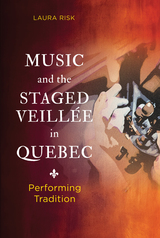
Fiddlers, step dancers, storytellers, traditional singers, and folklorists staged Montreal’s first veillée in 1919. All that was missing, announced one of the organizers, was a magic carpet to transport the audience into the countryside and a kiss of forgetfulness to erase the woes of modern life.
Laura Risk tells the story of the veillées and explores how these commercial performances of idealized rural life became part of Quebec’s cultural heritage. Her in-depth examinations of key performances and recordings follow traditional music and dance from the stage onto radio, records and other audio media, and television. Throughout, Risk documents how veillées redefined folklore in twentieth-century Quebec and illuminates how their distinctive framing of traditional musicians and repertoire impacts the performance and reception of the music to the present day.
Astute and evocative, Music and the Staged Veillée in Quebec reveals the music, dancing, call-and-response songs, and extramusical associations winding through century-long conversations about nation, culture, and identity in Quebec.
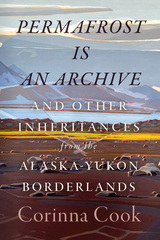
The Yukon Ice Patch Project reveals ancient lives. A road through the boreal forest reads like a map of climate upheaval. Those houses with broken doorknobs—a legacy of government regulation over Indigenous life. Corinna Cook, who was born white on Áak’w Kwáan Tlingit land in Juneau, Alaska, wrestles with the past and future into Canada’s Yukon Territory. With writing that blends research and reverie, her essays ask how we might come into right relations with our most difficult, shared histories. How can we carry the past together, in a good way, as the land melts? The answers—elusive as they are—carry global resonance, taking shape through a deeply personal lens combined with careful study of local arts, artifacts, maps, and the land we depend on.
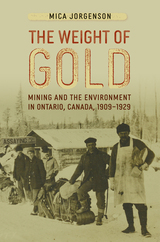
Mining in North America has long been criticized for its impact on the natural environment. Mica Jorgenson’s The Weight of Gold explores the history of Ontario, Canada’s rise to prominence in the gold mining industry, while detailing a series of environmental crises related to extraction activities. In Ontario in 1909, the discovery of exceptionally rich hard rock gold deposits in the Abitibi region in the north precipitated industrial development modeled on precedents in Australia, South Africa, and the United States. By the late 1920s, Ontario’s mines had reached their maturity, and in 1928, Minister of Mines Charles McRae called Canada “the mineral treasure house to [the] world.”
Mining companies increasingly depended upon their ability to redistribute the burdens of mining onto surrounding communities—a strategy they continue to use today—both at home and abroad. Jorgenson connects Canadian gold mining to its international context, revealing that Ontario’s gold mines informed extractive knowledge which would go on to shape Canada’s mining industry over the next century.
READERS
Browse our collection.
PUBLISHERS
See BiblioVault's publisher services.
STUDENT SERVICES
Files for college accessibility offices.
RECENTLY PUBLISHED



UChicago Accessibility Resources
home | accessibility | search | about | contact us
BiblioVault ® 2001 - 2026
The University of Chicago Press