
 A SCHOLARLY BOOK REPOSITORY
Noboru Ishikawa grounds his discussion of border zones in materials gathered during two years of archival research and fieldwork relating to the boundary that separates Malaysian from Indonesian territory in western Borneo. His book considers how the state maintains its national space and how people strategically situate themselves by their community, nation, and ethnic group designated as national territory. Examining these issues in the context of concrete circumstances, where a village boundary coincides with a national border, allows him to delineate the dialectical relationship between nation-state and borderland society both as history and as process. Scholars across the humanities and social sciences will learn from this masterful linking of history and ethnography, and of macro and micro perspectives.
Beyond Debt describes efforts to create a transnational economy free of debt. Based on ethnographic fieldwork in Malaysia, Daromir Rudnyckyj illustrates how the state, led by the central bank, seeks to make the country’s capital Kuala Lumpur “the New York of the Muslim world”—the central node of global financial activity conducted in accordance with Islam. Rudnyckyj shows how Islamic financial experts have undertaken ambitious experiments to create more stable economies and stronger social solidarities by facilitating risk- and profit-sharing, enhanced entrepreneurial skills, and more collaborative economic action. Building on scholarship that reveals the impact of financial devices on human activity, he illustrates how Islamic finance is deployed to fashion subjects who are at once more pious Muslims and more ambitious entrepreneurs. In so doing, Rudnyckyj shows how experts seek to create a new “geoeconomics”—a global Islamic alternative to the conventional financial network centered on New York, London, and Tokyo. A groundbreaking analysis of a timely subject, Beyond Debt tells the captivating story of efforts to re-center international finance in an emergent Islamic global city and, ultimately, to challenge the very foundations of conventional finance.

A collections of 70 poems from one of Malaya’s leading poets, that depict longing, loneliness, modernization, and insights in Malaysian culture.


This study attempts to relate questions of rural leadership to the constantly changing social and economic environment of a rural district in Malaysia during the twentieth century. The study itself began as an effort to analyze a single instance of structural change in Malay village leadership which occurred while the author worked in Sik District as a Peace Corps Volunteer (1968–1971). A research proposal was developed positing a traditional pattern of behavior which could be identified as traditional leadership, the better to contrast this with the bureaucratic style of the district’s new penghulus (headmen of a mukim, or subdistrict).
As research progressed, it became obvious that there was in fact no single traditional leadership pattern to be discovered, but rather that over time adaptations were regularly made whenever a significant change in Sik’s social and economic environment occurred. Although the study has retained rural leadership as a primary concern, it has been found necessary to relate it to Sik’s social and economic history.

Sanchun (a pseudonym) is a small rural market center in Malaysia made up of predominantly Chinese shopkeepers, wage laborers, and rubber tappers and small holders. It is one of the so-called “new villages” originally set up during the communist insurgency as forced relocation camps to contain rural Chinese. Judith Strauch lived in Sanchun for eighteen months, conducting lengthy socioeconomic family surveys, examining local records, documents, and census data, and participating in community life.
This study offers detailed analysis of the manipulative strategies of local rivals active over several decades in the competition for local status and power. But significantly, it treats relevant aspects of the broader Malaysian political environment as well, situating local-level politics firmly in the larger context of national politics. Special attention is given to a rural mass-mobilization movement undertaken by the major Chinese-Malaysian political party in the early 1970s. The focus is on the interconnections between the various levels of a modern multi-ethnic political system, demonstrating the ways in which local political actors are both constrained and supported by power structures and resources that lie outside the local system.
The book draws together in an innovative manner important intellectual strands of both anthropology and political analysis. It should be of interest not only to Southeast Asia area specialists and students of contemporary ethnic Chinese society but also to those concerned with the problems of plural societies everywhere.
Drawing on analyses of lyrics and music, interviews with musicians, and the content of Malay entertainment magazines, in an approach that spans ethnomusicology and cultural studies, he reveals this body of work to be a product of a musical and cultural cosmopolitanism in the service of a nation-making process based on ideas of Malay ethnonationalism, initially fluid but increasingly homogenized over time. Malay film music of the period covertly expressed radical sentiments despite being produced within a commercialized film industry.
Written in a lively style and illustrated with musical examples, the book will satisfy ethnomusicologists, composers, and film studies scholars interested in Southeast Asia and the Malay world. It will equally be of interest to scholars interested in the role of culture in nation-making more broadly.

Using historical and ethnographic data, Margaret Sarkissian reveals that this music and dance draws on an eclectic array of influences that span the Portuguese diaspora (one song conjures up images of Lucille Ball impersonating Carmen Miranda on "I Love Lucy"). Ironically, she shows, what began as a literate tradition in the 1950s has now become an oral one so deeply rooted in Settlement life that the younger generation, like the tourists, now see it as an unbroken heritage stretching back almost 500 years. A fascinating case of "orientalism in reverse," D'Albuquerque's Children illuminates the creative ways in which one community has adapted to life in a postcolonial world.
Malaysia interests development practitioners for many reasons, not least because of its remarkably rich natural environment. Environment and Development in a Resource-Rich Economy provides an invaluable analysis of major natural resource and environmental policy issues in the country during the 1970s and 1980s--a period of profound socioeconomic changes, rapid depletion of natural resources, and the emergence of serious air and water pollution problems.
What is path-breaking about this book is its emphasis on economics as a source of concepts and methods for analyzing natural resource and environmental issues and policy responses. The authors' access to unpublished data and key decision makers makes this account of extensive, field-based research an essential reference for policy makers and researchers concerned about environmental and natural resource management--both in Malaysia and throughout the globe. The book should be of particular interest for students who hope to understand more thoroughly the economic underpinnings of natural resource and environmental management policy.
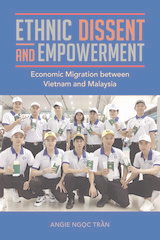
A rare study of labor migration in the Global South, Ethnic Dissent and Empowerment answers essential questions about why nations export and import migrant workers and how the workers protect themselves not only within the system, but by circumventing it altogether.

Although the Japanese interregnum was brief, its dramatic commencement and equally dramatic conclusion represented a watershed in the history of the young state of Sarawak.
In recent years, there has been a groundswell of interest in the war years, culminating in an attempt at reassessment of the Japanese occupation in Southeast Asia by Western and Japanese scholars as well as by those from Southeast Asia.
Presented here in a two-volume edition is a history of the Japanese occupation of Sarawak narrated through the compelling testimonies of the actual participants based on their recollections, memoirs, and correspondence.
This study confronts the double paradox of state-regulated labor migration: while markets benefit from open borders that allow them to meet the demand for migrant workers, the boundaries of citizenship impose a degree of limitation on cross-border migration. At the same time, the exclusivity of citizenship requires closed membership, yet civil and human rights undermine the state’s capacity to exclude foreigners once they are inside the country. By considering how Malaysia and Spain have responded to the demand for foreign labor, this book analyzes the unavoidable clash of markets, citizenship, and rights.
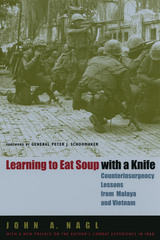
In examining these two events, Nagl—the subject of a recent New York Times Magazine cover story by Peter Maass—argues that organizational culture is key to the ability to learn from unanticipated conditions, a variable which explains why the British army successfully conducted counterinsurgency in Malaya but why the American army failed to do so in Vietnam, treating the war instead as a conventional conflict. Nagl concludes that the British army, because of its role as a colonial police force and the organizational characteristics created by its history and national culture, was better able to quickly learn and apply the lessons of counterinsurgency during the course of the Malayan Emergency.
With a new preface reflecting on the author's combat experience in Iraq, Learning to Eat Soup with a Knife is a timely examination of the lessons of previous counterinsurgency campaigns that will be hailed by both military leaders and interested civilians.
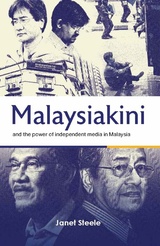
Founded in 1999 by Steven Gan and Premesh Chandran, Malaysiakini was one of many online portals that sprung up in the wake of Reformasi, a period of public protests sparked by Prime Minister Mahathir Mohammad’s 1998 firing of his deputy Anwar Ibrahim. At first, there was no reason to think that Malaysiakini would be anything momentous. However, Malaysiakini wanted to do something much more important than just reporting on Reformasi—its founders intended to bring independent journalism to Malaysia in hopes of changing the country for the better.
Based on more than fifteen years of observation of Malaysiakini's newsroom practices, Malaysiakini and the Power of Independent Media in Malaysia is an intimate portrait of the people and issues behind Malaysia’s only truly independent media outlet. The author illustrates Malaysiakini’s unique mix of idealism in action, studying how sensitive issues such as race, religion, politics, and citizenship are discussed in the newsroom. This attention to the inner workings of one of the most important media institutions in the region yields not only a deep newsroom ethnography but a nuanced, rich history of modern Malaysia.
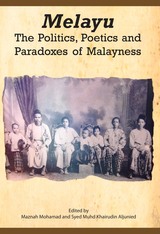
In Melayu: The Politics, Poetics and Paradoxes of Malayness, the contributors examine the checkered, wavering and changeable understanding of the word Melayu by considering hitherto unexplored case studies dealing with use of the term in connection with origins, nations, minority-majority politics, Filipino Malays, Riau Malays, Orang Asli, Straits Chinese literature, women's veiling, vernacular television, social dissent, literary women, and modern Sufism. Taken as a whole, this volume offers a creative approach to the study of Malayness while providing new perspectives to the studies of identity formation and politics of ethnicity that have wider implications beyond the Southeast Asian region.
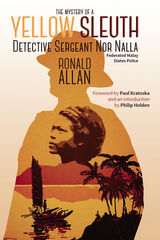
Nor Nalla is an anagram for Ron Allan, who spent four years working on a rubber plantation in Malaya shortly before World War I. Like Kipling’s famous colonial spy, Kim, the “yellow sleuth” is a master of undercover operations, and this reissued work explores vast locales, from the forests of Malaya to the ports of Java, from London’s underbelly to the camps of Chinese laborers in WWI Flanders. Throughout, readers are left to differentiate between fiction and fact, and ponder questions of authorship, in this “impossible fantasy of hybridity,” as Phillip Holden calls it in his perceptive introduction.
Contemporary readers will not only savor the book’s tales of adventure and detection, they will also appreciate the ways that the author brings to life— and reveals the contradictions of—late colonial society.
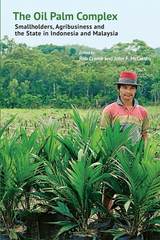
Based on detailed studies of specific communities and plantations and an analysis of the regional political economy of oil palm, this book unpicks the dominant policy narratives, business strategies, models of land acquisition, and labour-processes. It presents the oil palm industry in Malaysia and Indonesia as a complex system in which land, labour and capital are closely interconnected. Understanding this complex is a prerequisite to developing better strategies to harness the oil palm boom for a more equitable and sustainable pattern of rural development.
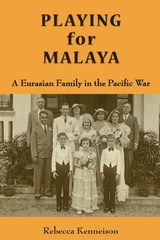
So begins a stunning personal account of a Eurasian family living in Malaya. One of the many gaps in Reggie's account of his family was that his mother was Eurasian. When Rebecca Kenneison discovered this omission after his death, she set out to learn more about her extended family on the other side of the world. Her voyage of discovery is compelling in itself, but Playing for Malaya has a much larger purpose. Set in the 1930s and 1940s, it recounts the experiences of an extended Eurasian family during the invasion and occupation of Malaya by the Japanese. Colonial society considered Eurasians insufficiently European to be treated as British, but they seemed all too European to the Japanese, who subjected the Eurasian community to discrimination and considerable violence. Because many Eurasians, including members of the Kenneison family, supported the Allied cause, their wartime experiences are an extraordinary account of tragedy, heroism and endurance, presented here with great consequence and clarity.
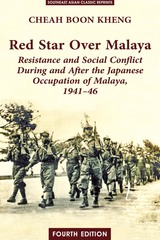
As Japanese forces withdrew from the countryside, the Chinese guerrillas of the communist-led resistance movement, the Malayan People's Anti-Japanese Army (MPAJA), emerged from the jungle and took control of some 70 per cent of the country's smaller towns and villages, seriously alarming the Malay population. When the British Military Administration sought to regain control of these liberated areas, the ensuing conflict set the tone for future political conflicts and marked a crucial stage in the history of Malaya. Based on extensive archival research, Red Star Over Malaya provides a riveting account of the way the Japanese occupation reshaped colonial Malaya, and of the tension-filled months that followed Japan's surrender. This book is fundamental to an understanding of social and political developments in Malaysia during the second half of the 20th century.
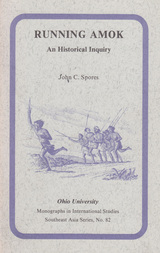
Spores presents a basic etiological distinction between reactive-motivated and a spontaneous, unmotivated amok; the one an intentional act capable of establishing or restoring dignity and self-respect; the other a result of organic disturbance. He also explores the social-psychological dynamics of engagement in the two types of solitary amok and suggests possible behavioral chains. Further, his study demonstrates the impact of social forces and processes of the late nineteenth and early twentieth century which significantly altered factors in traditional Malay society important in generating expressions of solitary amok.
Running amok demonstrates the utility of bringing historical data to bear on the examination of specific social phenomena, particularly suggesting that the understanding of some present-day forms of mental disorder or other aberrant or deviant behavior can be facilitated and enriched through such analysis.
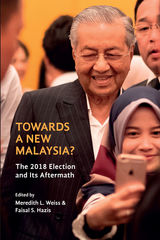
After the election, many Malaysians were optimistic about the possibility of a more representative, accountable, participatory, and equitable polity, but Meredith L. Weiss and Faisal S. Hazis do not see GE14 as a clear harbinger of full-on liberalization. While the political aftermath of the election continues to play out, the authors provide a clarion call for deeper, more critical, more comparative research on Malaysia’s politics. They upend commonly held beliefs about Malaysian politics and bring forward lesser-known theories, and they suggest agendas for empirically interesting, theoretically relevant further research. They also point to the broader insights Malaysia’s experience provides for the study of elections and political change in one-party dominant states around the world.
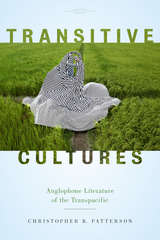
Texts written by Southeast Asian migrants have often been read, taught, and studied under the label of multicultural literature. But what if the ideology of multiculturalism—with its emphasis on authenticity and identifiable cultural difference—is precisely what this literature resists?
Transitive Cultures offers a new perspective on transpacific Anglophone literature, revealing how these chameleonic writers enact a variety of hybrid, transnational identities and intimacies. Examining literature from Malaysia, Singapore, and the Philippines, as well as from Southeast Asian migrants in Canada, Hawaii, and the U.S. mainland, this book considers how these authors use English strategically, as a means for building interethnic alliances and critiquing ruling power structures in both Southeast Asia and North America. Uncovering a wealth of texts from queer migrants, those who resist ethnic stereotypes, and those who feel few ties to their ostensible homelands, Transitive Cultures challenges conventional expectations regarding diaspora and minority writers.
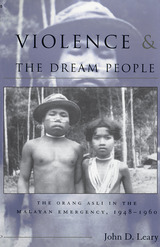
Violence and the Dream People is an account of a little-known struggle by the Malayan government and the communist guerrillas, during the 1948-1960 Malayan Emergency, to win the allegiance of the Orang Asli, the indigenous people of the peninsular Malaya. The author argues that the use of force by both sides in their attempts to woo or coerce the jungle dwellers to support one side or the other in the conflict, caused tensions among the Orang Asli that resulted in counter violence against the interlopers and internecine killings in the tribal groups.
This study challenges the depiction of the Orang Asli as naïve innocents, unwittingly manipulated by outsiders for their own purposes. Heavily outnumbered, they looked to their own resources to survive, in the face of relocation, conscription, random bombings, and haphazard killing. Leary argues that they were shrewd enough to recognize the winning side and backed their judgment with force where necessary.
Violence and the Dream People is an important study of a much neglected facet of the Malayan Emergency and of the history of the indigenous peoples of the Malay Peninsula.
READERS
Browse our collection.
PUBLISHERS
See BiblioVault's publisher services.
STUDENT SERVICES
Files for college accessibility offices.
RECENTLY PUBLISHED





UChicago Accessibility Resources
home | accessibility | search | about | contact us
BiblioVault ® 2001 - 2024
The University of Chicago Press