
 A SCHOLARLY BOOK REPOSITORY
Results by Title
3 books about Lopez, Lori Kido
3 books about Lopez, Lori Kido
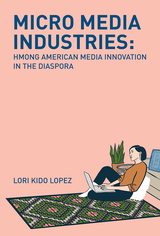
Micro Media Industries
Hmong American Media Innovation in the Diaspora
Lori Kido Lopez
Rutgers University Press, 2021
With the rise of digital tools used for media entrepreneurship, media outlets staffed by only one or two individuals and targeted to niche and super-niche audiences are developing across a wide range of platforms. Minority communities such as immigrants and refugees have long been pioneers in this space, operating ethnic media outlets with limited staff and funding to produce content that is relevant and accessible to their specific community. Micro Media Industries explores the specific case of Hmong American media, showing how an extremely small population can maintain a robust and thriving media ecology in spite of resource limitations and an inability to scale up. Based on six years of fieldwork in Hmong American communities in Wisconsin, Minnesota, and California, it analyzes the unique opportunities and challenges facing Hmong newspapers, radio, television, podcasts, YouTube, social media, and other emerging platforms. It argues that micro media industries, rather than being dismissed or trivialized, ought to be held up as models of media innovation that can counter the increasing power of mainstream media.
[more]
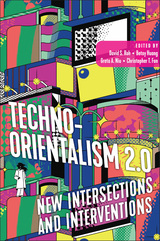
Techno-Orientalism 2.0
New Intersections and Interventions
David S. Roh
Rutgers University Press, 2025
Building on the groundbreaking Techno-Orientalism: Imagining Asia in Speculative Fiction, History, and Media, published by Rutgers University Press in 2015, Techno-Orientalism 2.0: New Intersections and Interventions addresses the impact of a volatile post-pandemic present on speculative futures by and about Asians. The backdrop of this highly anticipated follow-up is a world that is radically different than in 2015: COVID-19, threats of a “new cold war” with China, Russia’s invasion of Ukraine, and the reemergence of “strong man” politics around the world. An essential volume for this new critical juncture in Asian American history, Techno-Orientalism 2.0 catalogs intersectional dialogue with discourses such as Afrofuturism, Indigenous futurities, environmentalism, and disability studies. It also engages with recent high-profile and lesser-known works of Asian and Asian American speculative fiction, film, television, anime, art, music, journalism, architecture, state-sponsored policies and infrastructural projects, and the now-dominant China Panic.
[more]
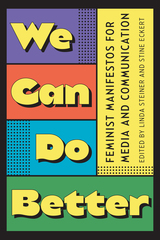
We Can Do Better
Feminist Manifestos for Media and Communication
Linda Steiner
Rutgers University Press, 2025
Feminist Manifestos for Media and Communication brings together evidence-based manifestos for media and communication that take a feminist perspective and add up to a provocative vision of feminist media practices and of feminist communication. The book discusses critical problems and complaints in ways that identify and make the case for actionable, concrete solutions to media problems and deficiencies; it shows how feminist thinking can be usefully and effectively applied to a wide range of journalism, media, and communication practices. The manifestos are not “only” about women but rather offer specific, feasible blueprints for restructuring media in ways that make them fairer and more equitable along many vectors of identity, so that media can better serve democracy. These manifestos give concrete solutions to specific problems that can and should be implemented by journalists, media practitioners, students, faculty, and scholars. The manifestos are organized around three sets of demands: for better media practices, for more participatory online spaces, and for more precise and appropriate language.
[more]
READERS
Browse our collection.
PUBLISHERS
See BiblioVault's publisher services.
STUDENT SERVICES
Files for college accessibility offices.
RECENTLY PUBLISHED






UChicago Accessibility Resources
home | accessibility | search | about | contact us
BiblioVault ® 2001 - 2026
The University of Chicago Press