
 A SCHOLARLY BOOK REPOSITORY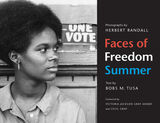
Witness the faces that defined a movement for freedom and equality
The old adage “One picture is worth ten thousand words” is definitely true for Faces of Freedom Summer. There are simply not enough words to describe the period in our history that is recorded by the pictures in this book.
As this book afirms, the resurgence of overt activities by hate groups—both the old traditional ones (e.g., the Ku Klux Klan) and the new ones (e.g., the Skin Heads)—however much the hard work and sacrifices of the modern civil rights movement humanized American society, much still remains to be done. The modern civil rights movement associated with the 1960s was not in vain, yet it did not eradicate from our society the evils of racism and sexism. While we activists made the United States more of an open society than it has ever been in its history, our vision and desire for the beloved community did not reach into all sectors of American society. “Freedom,” it has been said, “is a constant struggle, a work of eternal vigilance.”
Faces of Freedom Summer brings to life that there was such a time and there were such people and, if such a people were once, then they are still among us. Yet, they may only become aware of themselves when they are confronted with visible evidence, such as the evidence contained in the pictures of Herbert Randall.
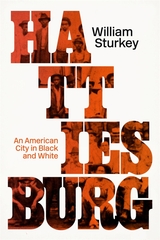
Winner of the Zócalo Public Square Book Prize
Benjamin L. Hooks Award Finalist
“An insightful, powerful, and moving book.”
—Kevin Boyle, author of Arc of Justice
“Sturkey’s clear-eyed and meticulous book pulls off a delicate balancing act. While depicting the terrors of Jim Crow, he also shows how Hattiesburg’s black residents, forced to forge their own communal institutions, laid the organizational groundwork for the civil rights movement.”
—New York Times
If you really want to understand Jim Crow—what it was and how African Americans rose up to defeat it—you should start by visiting Mobile Street in Hattiesburg, Mississippi, the heart of the historic black downtown. There you can still see remnants of the shops and churches where, amid the violence and humiliation of segregation, men and women gathered to build a remarkable community. Hattiesburg takes us into the heart of this divided town and deep into the lives of families on both sides of the racial divide to show how the fabric of their existence was shaped by the changing fortunes of the Jim Crow South.
“Sturkey’s magnificent portrait reminds us that Mississippi is no anachronism. It is the dark heart of American modernity.”
—Robin D. G. Kelley, author of Thelonious Monk
“When they are at their best, historians craft powerful, compelling, often genre-changing pieces of history…William Sturkey is one of those historians…A brilliant, poignant work.”
—Charles W. McKinney, Jr., Journal of African American History
READERS
Browse our collection.
PUBLISHERS
See BiblioVault's publisher services.
STUDENT SERVICES
Files for college accessibility offices.
RECENTLY PUBLISHED



UChicago Accessibility Resources
home | accessibility | search | about | contact us
BiblioVault ® 2001 - 2025
The University of Chicago Press