 A SCHOLARLY BOOK REPOSITORY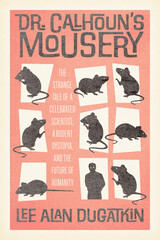
A bizarre and compelling biography of a scientist and his work, using rodent cities to question the potential catastrophes of human overpopulation.
It was the strangest of experiments. What began as a utopian environment, where mice had sumptuous accommodations, had all the food and water they could want, and were free from disease and predators, turned into a mouse hell. Science writer and animal behaviorist Lee Alan Dugatkin introduces readers to the peculiar work of rodent researcher John Bumpass Calhoun. In this enthralling tale, Dugatkin shows how an ecologist-turned-psychologist-turned-futurist became a science rock star embedded in the culture of the 1960s and 1970s. As interest grew in his rodent cities, Calhoun was courted by city planners and his work was reflected in everything from Tom Wolfe’s hard-hitting writing to the children’s book Mrs. Frisby and the Rats of NIMH. He was invited to meetings with the Royal Society and the pope and taken seriously when he proposed a worldwide cybernetic brain—a decade before others made the internet a reality.
Readers see how Calhoun’s experiments—rodent apartment complexes like “Mouse Universe 25”—led to his concept of “behavioral sinks” with real effects on public policy discussions. Overpopulation in Calhoun’s mouse (and rat) complexes led to the loss of sex drive, the absence of maternal care, and a class of automatons that included “the beautiful ones,” who spent their time grooming themselves while shunning socialization. Calhoun—and those who followed his work—saw the collapse of this mouse population as a harbinger of the ill effects of an overpopulated human world.
Drawing on previously unpublished archival research and interviews with Calhoun’s family and former colleagues, Dugatkin offers a riveting account of an intriguing scientific figure. Considering Dr. Calhoun’s experiments, he explores the changing nature of scientific research and delves into what the study of animal behavior can teach us about ourselves.
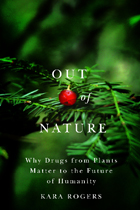
About half of all species under threat of extinction in the world today are plants. The loss of plant biodiversity is disturbing for many reasons, but especially because it is a reflection of the growing disconnect between humans and nature. Plants have been used for millennia in traditional systems of healing and have held a significant place in drug development for Western medicine as well. Despite the recent dominance of synthetic drug production, natural product discovery remains the backbone of drug development. As the diversity of life on Earth is depleted and increasing numbers of species become lost to extinction, we continue to lose opportunities to achieve advances in medicine.
Through stories of drug revelation in nature and forays into botany, human behavior, and conservation, Kara Rogers sheds light on the multiple ways in which humans, medicine, and plants are interconnected. With accessible and engaging writing, she explores the relationships between humans and plants, relating the stories of plant hunters of centuries past and examining the impact of human activities on the environment and the world's biodiversity. Rogers also highlights the role that plant-based products can play in encouraging conservation and protecting the heritage and knowledge of indigenous peoples.
Out of Nature provides a fresh perspective on modern drug innovation and its relationship with nature. The book delves into the complexity of biophilia—the innate human attraction to life in the natural world—and suggests that the reawakening of this drive is fundamental to expanding conservation efforts and improving medicine. Rogers's examination of plants, humans, and drug discovery also conveys a passionate optimism for the future of biodiversity and medicine. Including a collection of hand-drawn maps and plant illustrations created by the author, this well-researched narrative will inspire as well as inform.
READERS
Browse our collection.
PUBLISHERS
See BiblioVault's publisher services.
STUDENT SERVICES
Files for college accessibility offices.
RECENTLY PUBLISHED


UChicago Accessibility Resources
home | accessibility | search | about | contact us
BiblioVault ® 2001 - 2026
The University of Chicago Press