
 A SCHOLARLY BOOK REPOSITORY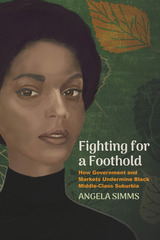
Prince George’s County, Maryland, is a suburban jurisdiction in the Washington, D.C., metropolitan area and is home to the highest concentration of Black middle-class residents in the United States. As such, it is well positioned to overcome White domination and anti-Black racism and their social and economic consequences. Yet Prince George’s does not raise tax revenue sufficient to provide consistent high-quality public goods and services. In Fighting for a Foothold, sociologist Angela Simms examines the factors contributing to Prince George’s financial troubles.
Simms draws on two years of observations of Prince George’s County’s budget and policy development processes, interviews with nearly 60 Prince George’s leaders and residents, and budget and policy analysis for Prince George’s County and its two Whiter, wealthier neighbors, Montgomery County, Maryland, and Fairfax County, Virginia. She argues legacy and ongoing government policies and business practices—such as federal mortgage insurance policy prior to 1968, local government reliance on property taxes, and private investment patterns—have resulted in disparities in wealth accumulation between Black and White Americans, not only for individuals and families but local jurisdictions as well. Prince George’s County has a lower cost of living than its Whiter, wealthier neighbors. As the most affordable county bordering D.C., it attracts a disproportionate share of the region’s core middle-class, lower middle-class, working class, and low-income residents, resulting in greater budget pressure.
Prince George’s uses the same strategies as majority-White jurisdictions to increase revenue, such as taxing at similar rates and vying for development opportunities but does not attain the same financial returns. Ultimately, Simms contends Prince George’s endures “relative regional burden” and that the county effectively subsidizes Whiter counties’ wealth accumulation. She offers policy recommendations for removing the constraints Prince George’s County and other majority-Black jurisdictions navigate, including increased federal and state taxes on wealthy Americans and corporations, which will enhance the capacity for government to distribute and redistribute resources equitably; increased state-level funding of public goods and services, which would decrease local jurisdictions’ reliance on locally-generated tax revenue; and the creation of equity funds to remediate harms inflicted upon Black Americans.
Fighting for a Foothold is an in-depth analysis of the fiscal challenges experienced by Prince George’s County and by the suburban Black middle-class and majority-Black jurisdictions, more broadly. The book reveals how race, class, and local jurisdiction boundaries in metropolitan areas interact to create different material living conditions for Americans.
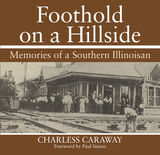
In a style reminiscent of the master storytellers of yore, Charless Caraway recounts the story of his life, as a man and a boy, on small farms in Saline and Jackson counties, particularly around Eldorado, Makanda, and Etherton Switch. He makes no bones about the hardships of those "old days," first helping his father eke out a living from the land, then scrambling for a living as a sharecropper and fruit picker, as he scrimped and saved for the day when he and his young wife, Bessie Mae Rowan Caraway, could buy a piece of land of their own.
The one-room school, the general store, the trips by wagon over roads that choked you in summer and swallowed you in winter, the home that burned: all are described in a matter-of-fact yet moving way. Many of the locations, buildings, and people are represented in equally unromanticized photographs from the family’s collection. Some of the stories and photos recall the common disasters of the frontier: drought, flood, and the tornado of 1925.
It is clear from these stories that each aspect of life exacted a price, but the Caraways paid that price without regret and rallied to go on their way. Charless and his family and friends fill this book with courage, strength, and an unshakable faith in the value of human endeavor.
READERS
Browse our collection.
PUBLISHERS
See BiblioVault's publisher services.
STUDENT SERVICES
Files for college accessibility offices.
RECENTLY PUBLISHED




UChicago Accessibility Resources
home | accessibility | search | about | contact us
BiblioVault ® 2001 - 2026
The University of Chicago Press