
front cover of Fighting for a Foothold
Fighting for a Foothold
How Government and Markets Undermine Black Middle-Class Suburbia
Angela Simms
Russell Sage Foundation, 2026

Prince George’s County, Maryland, is a suburban jurisdiction in the Washington, D.C., metropolitan area and is home to the highest concentration of Black middle-class residents in the United States. As such, it is well positioned to overcome White domination and anti-Black racism and their social and economic consequences. Yet Prince George’s does not raise tax revenue sufficient to provide consistent high-quality public goods and services. In Fighting for a Foothold, sociologist Angela Simms examines the factors contributing to Prince George’s financial troubles.

Simms draws on two years of observations of Prince George’s County’s budget and policy development processes, interviews with nearly 60 Prince George’s leaders and residents, and budget and policy analysis for Prince George’s County and its two Whiter, wealthier neighbors, Montgomery County, Maryland, and Fairfax County, Virginia. She argues legacy and ongoing government policies and business practices—such as federal mortgage insurance policy prior to 1968, local government reliance on property taxes, and private investment patterns—have resulted in disparities in wealth accumulation between Black and White Americans, not only for individuals and families but local jurisdictions as well. Prince George’s County has a lower cost of living than its Whiter, wealthier neighbors. As the most affordable county bordering D.C., it attracts a disproportionate share of the region’s core middle-class, lower middle-class, working class, and low-income residents, resulting in greater budget pressure. 

Prince George’s uses the same strategies as majority-White jurisdictions to increase revenue, such as taxing at similar rates and vying for development opportunities but does not attain the same financial returns. Ultimately, Simms contends Prince George’s endures “relative regional burden” and that the county effectively subsidizes Whiter counties’ wealth accumulation. She offers policy recommendations for removing the constraints Prince George’s County and other majority-Black jurisdictions navigate, including increased federal and state taxes on wealthy Americans and corporations, which will enhance the capacity for government to distribute and redistribute resources equitably; increased state-level funding of public goods and services, which would decrease local jurisdictions’ reliance on locally-generated tax revenue; and the creation of equity funds to remediate harms inflicted upon Black Americans.

Fighting for a Foothold is an in-depth analysis of the fiscal challenges experienced by Prince George’s County and by the suburban Black middle-class and majority-Black jurisdictions, more broadly. The book reveals how race, class, and local jurisdiction boundaries in metropolitan areas interact to create different material living conditions for Americans. 

[more]

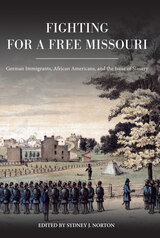
front cover of Fighting for a Free Missouri
Fighting for a Free Missouri
German Immigrants, African Americans, and the Issue of Slavery
Sydney J. Norton
University of Missouri Press, 2023
Missouri is well-known for its German American heritage, but the story of nineteenth-century German immigrant abolitionists is often neglected in discussions of the state’s history. This collection of ten original essays (with a foreword by renowned Missouri historian Gary Kremer), relates what unfolded when idealistic Germans, many of whom were highly educated and devoted to the ideals of freedom and democracy, left their homeland and settled in a pre–Civil War slave state. Fleeing political persecution during the 1830s and 1840s, immigrants such as Friedrich Münch, Eduard Mühl, Heinrich Boernstein, and Arnold Krekel arrived in the area now known as the Missouri German Heritage Corridor in hopes of finding a land more congenial to their democratic ideals. When they witnessed the state of enslaved Blacks, many of them became abolitionist activists and fervent supporters of Abraham Lincoln and the Union in the emerging Civil War. Editor Sydney Norton and the other contributing authors to Fighting for a Free Missouri explore the Germans’ abolitionist mission, their relationships with African Americans, and their activity in the radical wing of the Republican Party.

 
[more]

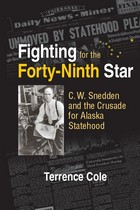
front cover of Fighting for the Forty-Ninth Star
Fighting for the Forty-Ninth Star
C. W. Snedden and the Crusade for Alaska Statehood
Terrence Cole
University of Alaska Press, 2010
When Alaskans in the 1950s demanded an end to "second-class citizenship" of territorial status, southern powerbrokers on Capitol Hill were the primary obstacles. They feared a forty-ninth state would tip the balance of power against segregation, and therefore keeping Alaska out of the Union was simply another means of keeping black children out of white schools.

C.W. "Bill" Snedden, the publisher of America's farthest north daily newspaper, the Fairbanks Daily News-Miner, helped lead the battle of the Far North against the Deep South. Working behind the scenes with his protege, a young attorney named Ted Stevens, and a fellow Republican newspaperman, Secretary of Interior Fred Seaton, Snedden's "magnificent obsession" would open the door to development of the oil fields at Prudhoe Bay, inspire establishment of the Arctic Wildlife Range (now the Arctic National Wildlife Refuge), and add the forty-ninth star to the flag.

Fighting for the Forty-Ninth Star is the story of how the publisher of a little newspaper four thousand miles from Washington, D.C., helped convince Congress that Alaskans should be second-class citizens no more.
[more]

logo for University of Minnesota Press
Fighting for the Future of Food
Activists versus Agribusiness in the Struggle over Biotechnology
Rachel Schurman
University of Minnesota Press, 2010
When scientists working in the agricultural biotechnology industry first altered the genetic material of one organism by introducing genes from an entirely different organism, the reaction was generally enthusiastic. To many, these genetically modified organisms (GMOs) promised to solve the challenges faced by farmers and to relieve world hunger. Yet within a decade, this "gene revolution" had abruptly stalled. Widespread protests against the potential dangers of "Frankenfoods" and the patenting of seed supplies in the developing world forced the industry to change course. As a result, in the late 1990s, some of the world's largest firms reduced their investment in the agricultural sector, narrowed their focus to a few select crops, or sold off their agricultural divisions altogether.

Fighting for the Future of Food tells the story of how a small group of social activists, working together across tables, continents, and the Internet, took on the biotech industry and achieved stunning success. Rachel Schurman and William A. Munro detail how the anti-biotech movement managed to alter public perceptions about GMOs and close markets to such products. Drawing strength from an alternative worldview that sustained its members' sense of urgency and commitment, the anti-GMO movement exploited political opportunities created by the organization and culture of the biotechnology industry itself.

Fighting for the Future of Food ultimately addresses society's understanding and trust (or mistrust) of technological innovation and the complexities of the global agricultural system that provides our food.
[more]

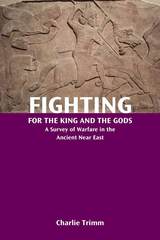
front cover of Fighting for the King and the Gods
Fighting for the King and the Gods
A Survey of Warfare in the Ancient Near East
Charlie Trimm
SBL Press, 2017

The most up-to-date sourcebook on warfare in the ancient Near East

Fighting for the King and the Gods provides an introduction to the topic of war and the variety of texts concerning many aspects of warfare in the ancient Near East. These texts illustrate various viewpoints of war and show how warfare was an integral part of life. Trimm examines not only the victors and the famous battles, but also the hardship that war brought to many. While several of these texts treated here are well known (i.e., Ramses II's battle against the Hittites at Qadesh), others are known only to specialists. This work will allow a broader audience to access and appreciate these important texts as they relate to the history and ideology of warfare.

Features

  • References to recent secondary literature for further study
  • Early Greek and Chinese illustrative texts for comparisons with other cultures
  • Indices to help guide the reader
[more]


Send via email Share on Facebook Share on Twitter