
 A SCHOLARLY BOOK REPOSITORY
The legends Swedish Americans tell about their past are both similar to and distinct from those of others who migrated westward; they participated in settler colonialism while maintaining a sense of their specific, Swedish ethnicity. Unlike racial minority groups, Swedish Americans could claim membership in a majority white community without abandoning their cultural heritage. Their legends and local histories reflect that positioning. Attebery reveals how Swedish American legends are embedded within local history writing, how ostension and rhetoric operate in historical legends, and how vernacular local history writing works in tandem with historical legends to create a common message about a communal past. This impeccably researched study points to ways in which legends about the past possess qualities unique to their subgenre yet can also operate similarly to contemporary legends in their social impact.

Employing a vast array of examples drawn from classical antiquity, Scandinavian law, Cold War scholarship, and American presidential politics, Lincoln offers a telling analysis of the performance of authority, and subversions of it, from ancient times to the present. Using a small set of case studies that highlight critical moments in the construction of authority, he goes on to offer a general examination of "corrosive" discourses such as gossip, rumor, and curses; the problematic situation of women, who often are barred from the authorizing sphere; the role of religion in the construction of authority; the question of whether authority in the modern and postmodern world differs from its premodern counterpart; and a critique of Hannah Arendt's claims that authority has disappeared from political life in the modern world. He does not find a diminution of authority or a fundamental change in the conditions that produce it. Rather, Lincoln finds modern authority splintered, expanded, and, in fact, multiplied as the mechanisms for its construction become more complex—and more expensive.
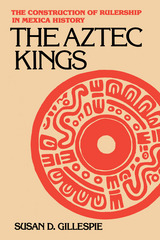
Scholars have long viewed histories of the Aztecs either as flawed chronologies plagued by internal inconsistencies and intersource discrepancies or as legends that indiscriminately mingle reality with the supernatural. But this new work draws fresh conclusions from these documents, proposing that Aztec dynastic history was recast by its sixteenth-century recorders not merely to glorify ancestors but to make sense out of the trauma of conquest and colonialism.
The Aztec Kings is the first major study to take into account the Aztec cyclical conception of time—which required that history constantly be reinterpreted to achieve continuity between past and present—and to treat indigenous historical traditions as symbolic statements in narrative form. Susan Gillespie focuses on the dynastic history of the Mexica of Tenochtitlan, whose stories reveal how the Aztecs used "history" to construct, elaborate, and reify ideas about the nature of rulership and the cyclical nature of the cosmos, and how they projected the Spanish conquest deep into the Aztec past in order to make history accommodate that event.
By demonstrating that most of Aztec history is nonliteral, she sheds new light on Aztec culture and on the function of history in society. By relating the cyclical structure of Aztec dynastic history to similar traditions of African and Polynesian peoples, she introduces a broader perspective on the function of history in society and on how and why history must change.
Drawing on the philosophy of speech acts as well as interpretive theory, Rosen shows how, for the people of this Muslim community, reality consists of the network of obligations formed by individuals out of a repertoire of relational possibilities whose defining terms are comprised by a set of essentially negotiable concepts. He thus demonstrates that the bonds of family, tribe, and political alliance take shape only as the bargains struck in and through the malleable terms that describe them take shape; that statements about relationship are no more true than a price mentioned in the marketplace until properly validated; that the relations between men and women, Arabs and Berbers, Muslims and Jews test the limits of interpersonal negotiation; and that the concepts of time, character, and narrative style are consonant with a view of reality as bargained-for network of obligations.
Bargaining for Reality makes an important contribution to our understanding of contemporary Middle Eastern society and to the development of powerful new interpretive strategies for a wide range of social theorists.
"[Rosen's] book is extremely useful for African and Middle Eastern historians, because he challenges some of our most basic ideas about the nature and force of kinship, tribe, ethnicity, and other large- and small-scale political ties."—Allan R. Meyers, International Journal of African Historical Studies
"The book conveys a compelling image of Moroccan social experience and is peppered with vivid anecdotes and case histories."—Stephen William Foster, American Anthropologist


Winner, Abbott Lowell Cummings Award, Vernacular Architecture Forum, 2020
Winner, Elisabeth Blair MacDougall Book Award, Society of Architectural Historians, 2021
From the boundary surveys of the 1850s to the ever-expanding fences and highway networks of the twenty-first century, Border Land, Border Water examines the history of the construction projects that have shaped the region where the United States and Mexico meet.
Tracing the accretion of ports of entry, boundary markers, transportation networks, fences and barriers, surveillance infrastructure, and dams and other river engineering projects, C. J. Alvarez advances a broad chronological narrative that captures the full life cycle of border building. He explains how initial groundbreaking in the nineteenth century transitioned to unbridled faith in the capacity to control the movement of people, goods, and water through the use of physical structures. By the 1960s, however, the built environment of the border began to display increasingly obvious systemic flaws. More often than not, Alvarez shows, federal agencies in both countries responded with more construction—“compensatory building” designed to mitigate unsustainable policies relating to immigration, black markets, and the natural world. Border Land, Border Water reframes our understanding of how the border has come to look and function as it does and is essential to current debates about the future of the US-Mexico divide.

“What can you spend?”
“Where will you put it?”
“Who is going to build it?”
This new updated and enlarged edition includes hundreds of photographs, drawings and house plans as well as new information about passive solar heating and cooling, and specific details on construction.
The Chickasaw Nation, an American Indian nation headquartered in southeastern Oklahoma, entered into a period of substantial growth in the late 1980s. Following its successful reorganization and expansion, which was enabled by federal policies for tribal self-determination, the Nation pursued gaming and other industries to affect economic growth. From 1987 to 2009 the Nation’s budget increased exponentially as tribal investments produced increasingly large revenues for a growing Chickasaw population. Coincident to this growth, the Chickasaw Nation began acquiring and creating museums and heritage properties to interpret their own history, heritage, and culture through diverse exhibitionary representations. By 2009, the Chickasaw Nation directed representation of itself at five museum and heritage properties throughout its historic boundaries.
Josh Gorman examines the history of these sites and argues that the Chickasaw Nation is using museums and heritage sites as places to define itself as a coherent and legitimate contemporary Indian nation. In doing so, they are necessarily engaging with the shifting historiographical paradigms as well as changing articulations of how museums function and what they represent. The roles of the Chickasaw Nation’s museums and heritage sites in defining and creating discursive representations of sovereignty are examined within their historicized local contexts. The work describes the museum exhibitions’ dialogue with the historiography of the Chickasaw Nation, the literature of new museum studies, and the indigenous exhibitionary grammars emerging from indigenous museums throughout the United States and the world.
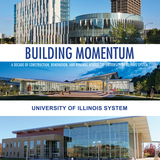
The University of Illinois System’s universities have undergone a dramatic transformation. This lavishly illustrated volume showcases the major capital projects and renovations dedicated to keeping facilities on the cutting edge while at the same time preserving history at the universities in Urbana-Champaign, Chicago, and Springfield. Fueled by an ambitious capital initiative launched in 2018, these essential and forward-looking changes include more than 500 projects valued at $4 billion over 10 years. The initiative harnesses a mix of innovative funding programs like public-private partnerships, thoughtful use of capital reserves and bonding authority, and generous state funding.
Covering completed and ongoing projects, Building Momentum offers a one- or two-page feature on each undertaking that covers its history and purpose while providing specific details about its unit, campus, architect, square footage or renovation size, budget, and LEED or other certifications. More than 100 architectural drawings and commissioned and historical photographs round out the descriptions.
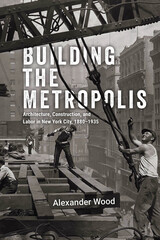
Between the 1880s and the 1930s, New York City experienced explosive growth, as nearly a million buildings, half a dozen bridges, countless tunnels and subway tracks, and miles of new streets and sidewalks were erected to meet the needs of an ever-swelling population. This landscape—jagged with skyscrapers, clamoring with transit, alive with people—made the city world-famous.
Building the Metropolis offers a revelatory look at this era of urban development by asking, “Who built this and how?” Focusing on the work of architects, builders, and construction workers, Alexander Wood chronicles the physical process of New York’s rapid expansion. The city’s towering buildings and busy thoroughfares aren’t just stylish or structural marvels, Wood shows, but the direct result of the many colorful personalities who worked in one of the city’s largest industries. New York’s development boom drew on the resources of the whole community and required money, political will, creative vision, entrepreneurial drive, skilled workmanship, and hard physical labor. Wood shows this to be a national story as well. As cities became nodes in a regional, national, and global economy, the business of construction became an important motor of economic, political, and social development. While they held drastically different views on the course of urban growth, machine politicians, reformers, and radicals alike were all committed to city-building on an epic scale.
Drawing on various sources, including city archives, the records of architecture firms, construction companies, and labor unions, Building the Metropolis tells the story of New York in a way that’s epic, lively, and utterly original.
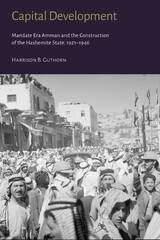
Amman, the capital of Jordan, contends with a crisis of identity rooted in how it grew to become a symbol for the Anglo-Hashemite government first, and a city second. As a representation of the new centralized authority, Amman became the seat of the Mandatory government that orchestrated the development of Transjordan, the British mandate established in 1921.
Despite its diminutive size, the city grew to house all the components necessary for a thriving and cohesive state by the end of the British mandate in 1946. However, in spite of its modernizing and regulatory ambitions, the Transjordan government did not control all facets of life in the region. Instead, the story of Transjordan is one of tensions between the state and the realities of the region, and these limitations forced the government to scale down its aspirations. This book presents the history of Amman’s development under the rule of the British mandate from 1921–46 and illustrates how the growth of the Anglo-Hashemite state imbued the city with physical, political, and symbolic significance.
Listen to a short interview with Rawi AbdelalHost: Chris Gondek | Producer: Heron & Crane
The rise of global financial markets in the last decades of the twentieth century was premised on one fundamental idea: that capital ought to flow across country borders with minimal restriction and regulation. Freedom for capital movements became the new orthodoxy.
In an intellectual, legal, and political history of financial globalization, Rawi Abdelal shows that this was not always the case. Transactions routinely executed by bankers, managers, and investors during the 1990s--trading foreign stocks and bonds, borrowing in foreign currencies--had been illegal in many countries only decades, and sometimes just a year or two, earlier.
How and why did the world shift from an orthodoxy of free capital movements in 1914 to an orthodoxy of capital controls in 1944 and then back again by 1994? How have such standards of appropriate behavior been codified and transmitted internationally? Contrary to conventional accounts, Abdelal argues that neither the U.S. Treasury nor Wall Street bankers have preferred or promoted multilateral, liberal rules for global finance. Instead, European policy makers conceived and promoted the liberal rules that compose the international financial architecture. Whereas U.S. policy makers have tended to embrace unilateral, ad hoc globalization, French and European policy makers have promoted a rule-based, "managed" globalization. This contest over the character of globalization continues today.
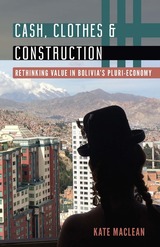
A groundbreaking feminist perspective on Movimiento al Socialismo (MAS) rule in Bolivia and the country’s radical transformation under Evo Morales
The presidency of Evo Morales in Bolivia (2006–2019) has produced considerable academic scholarship, much of it focused on indigenous social movements or extractivism, and often triumphalist about the successes of Morales’s Movimiento al Socialismo (MAS). Turning a new lens on the movement, Cash, Clothes, and Construction presents the first gender-based analysis of “pluri-economy,” a central pillar of Bolivia’s program under Morales, evaluating the potential of this vision of “an economy where all economies fit” to embrace feminist critiques of capitalism and economic diversity.
Based on more than twelve years of empirical research exploring the remarkable transformations in Bolivia since 2006, this book focuses on three sectors—finance, clothing, and construction—in which indigenous women have defied gendered expectations. Kate Maclean presents detailed case studies of women selling secondhand high street clothes from the United States in the vast, peri-urban markets of Bolivian cities; Aymaran designers of new pollera (traditional Andean dress) fashions, one of whom exhibited her collection in New York City; and the powerful and rich chola paceña, whose real estate investments have transformed the cultural maps of La Paz and El Alto.
Cash, Clothes, and Construction offers a gendered analysis of the mission of MAS to dismantle neoliberalism and decolonize politics and economy from the perspective of the Indigenous women who have radically transformed Bolivia’s economy from the ground up.
For their study, the authors analyzed coverage of 150 television and newspaper stories on five prominent issues—drugs, AIDS, South African apartheid, the Strategic Defense Initiative, and the stock market crash of October 1987. They tested audience responses of more than 1,600 people, and conducted in-depth interviews with a select sample. What emerges is a surprisingly complex picture of people actively and critically interpreting the news, making sense of even the most abstract issues in terms of their own lives, and finding political meaning in a sophisticated interplay of message, medium, and firsthand experience.
At every turn, Common Knowledge refutes conventional wisdom. It shows that television is far more effective at raising the saliency of issues and promoting learning than is generally assumed; it also undermines the assumed causal connection between newspaper reading and higher levels of political knowledge. Finally, this book gives a deeply responsible and thoroughly fascinating account of how the news is conveyed to us, and how we in turn convey it to others, making meaning of at once so much and so little. For anyone who makes the news—or tries to make anything of it—Common Knowledge promises uncommon wisdom.
These essays, illustrating cultural studies in action, are aggressively interdisciplinary and wide-ranging in topic and approach. Questions of collective and collaborative authorship in both contemporary and early modern contexts are addressed. Other topics include moral theory and authorship; copyright and the balance between competing interests of authors and the public; problems of international copyright; musical sampling and its impact on "fair use" doctrine; cinematic authorship; quotation and libel; alternative views of authorship as exemplified by nineteenth-century women's clubs and by the Renaissance commonplace book; authorship in relation to broadcast media and to the teaching of writing; and the material dimension of authorship as demonstrated by Milton's publishing contract.
Contributors. Rosemary J. Coombe, Margreta de Grazia, Marvin D'Lugo, John Feather, N. N. Feltes, Ann Ruggles Gere, Peter Jaszi, Gerhard Joseph, Peter Lindenbaum, Andrea A. Lunsford and Lisa Ede, Jeffrey A. Masten, Thomas Pfau, Monroe E. Price and Malla Pollack, Mark Rose, Marlon B. Ross, David Sanjek, Thomas Streeter, Jim Swan, Max W. Thomas, Martha Woodmansee, Alfred C. Yen

The idea that character education should be an important element in the curriculum of public schools is controversial. Critics reject the idea that schools should be involved in teaching values. Proponents often disagree among themselves—some detailing the proper values students should be taught, others arguing that character development must be part of a larger process of constructing an ethical community in the schools. The contributors to this volume bring a breadth of perspectives, experience, and approaches to the problem of assessing contemporary character education.
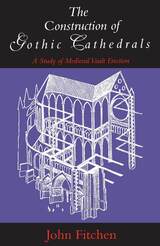
"Anyone who has caught the fascination of Gothic Churches (and once caught, has almost necessarily got it in the blood) will find this book enthralling. . . . Clearly written and beautifully illustrated." —A. D. R. Caroe, Annual Review, Central Council for the Care of Churches
"Fitchen's study is a tribute to the extraordinary creative and engineering skills of successive generations of mediaeval builders. . . . This study enables us to appreciate more fully the technical expertise and improvements which enabled the creative spirit of the day to find such splendid embodiment." —James Lingwood, Oxford Art Journal
"Fitchen, in what can only be defined as an architectural detective story, fully explores the problems confronting the medieval vault erectors and uncovers their solution. . . . This is a book that no serious student of architecture will want to miss." —Progressive Architecture
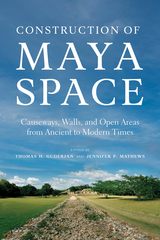
Through fifteen engaging chapters, contributors examine the construction of spatial features by ancient, historic, and contemporary Maya elite and nonelite peoples to understand how they used spaces differently. Through cutting-edge methodologies and case studies, chapters consider how and why Maya people connected and divided the spaces they used daily in their homes, in their public centers, in their sacred places such as caves, and across their regions to inform us about the mental constructs they used to create their lives and cultures of the past.
Contributors
Elias Alcocer Puerto
Alejandra Alonso Olvera
Traci Ardren
Jaime J. Awe
Alejandra Badillo Sánchez
Nicolas C. Barth
Grace Lloyd Bascopé
Adolpho Iván Batún-Alpuche
Elizabeth Beckner
M. Kathryn Brown
Bernadette Cap
Miguel Covarrubias Reyna
Juan Fernandez Diaz
Alberto G. Flores Colin
Thomas H. Guderjan
C. Colleen Hanratty
Héctor Hernández Álvarez
Scott R. Hutson
Joshua J. Kwoka
Whitney Lytle
Aline Magnoni
Jennifer P. Mathews
Stephanie J. Miller
Shawn G. Morton
Holley Moyes
Shannon Plank
Dominique Rissolo
Patrick Rohrer
Carmen Rojas Sandoval
Justine M. Shaw
J. Gregory Smith
Travis W. Stanton
Karl A. Taube
Daniel Vallejo-Cáliz
Sherman shows how a wartime visual culture saturated with images of ordinary foot soldiers, together with contemporary novels, memoirs, and tourist literature, promoted a distinctive notion of combat experience. The contrast between battlefield and home front, soldier and civilian was the basis for memory and collective gratitude. Postwar commemoration, however, also grew directly out of the long and agonized search for the remains of hundreds of thousands of missing soldiers, and the sometimes contentious debates over where to bury them. For this reason, the local monument, with its inscribed list of names and its functional resemblance to tombstones, emerged as the focal point of commemorative practice. Sherman traces every step in the process of monument building as he analyzes commemoration's competing goals—to pay tribute to the dead, to console the bereaved, and to incorporate mourners' individual memories into a larger political discourse.
Extensively illustrated, Sherman's study offers a visual record of a remarkable moment in the history of public art. It is at once a moving account of a culture haunted by war and a sophisticated analysis of the political stakes of memory in the twentieth century.
Winner of the 2000 J. Russell Major Prize of the American Historical Association
Spawned from a conference organized by the journals Annales and Comparative Studies in Society and History in concert with the Center for Historical Research at l'EHESS in Paris and the Department of History at the University of Michigan, this collection contrasts studies of Afro-Americans in the United States, French Protestants, notables in Renaissance Florence, religious minorities in the Ottoman Empire, Muslim and Chinese traders in Southeast Asia, the native peoples of Spanish America, lower-caste Indians, ethnic minorities in the Soviet Union, Australian aborigines, and American and French responses to AIDS to reveal valuable information about how minorities come to be constructed within societies. Some of the minorities considered are identified primarily in terms of their ethnicity, some by social class, and some by religion (Protestant, Jewish, and Muslim); a final essay asks whether the victims of AIDS constitute a minority at all.
With its cross-cultural emphasis, this book will be a valuable addition to courses on diversity, ethnicity, and cultural comparison. It is destined to be a useful reference for undergraduate and research libraries and a much-consulted work for specialists on each of the societies considered.
André Burguière is Research Director, l'Ecole des Hautes Etudes en Sciences Sociales (l'EHESS) in Paris. Raymond Grew is Professor of History Emeritus, University of Michigan.
Based on five years of close observation of students, writing and collaborative planning—the practice in which student writers take the roles of planner and supporter to help each other develop a more rhetorically sophisticated writing plan—foremost cognitive composition researcher Linda Flower redefines writing in terms of an interactive social and cognitive process and proposes a convincing and compelling theory of the construction of negotiated meaning.
Flower seeks to describe how writers construct meaning. Supported by the emerging body of social and cognitive research in rhetoric, education, and psychology, she portrays meaning making as a literate act and a constructive process. She challenges traditional definitions of literacy, adding to that concept the elements of social literate practices and personal literate acts. In Flower’s view, this social cognitive process is a source of tension and conflict among the multiple forces that shape meaning: the social and cultural context, the demands of discourse, and the writer’s own goals and knowledge.
Flower outlines a generative theory of conflict. With this conflict central to her theory of the construction of negotiated meaning, she examines negotiation as an alternative to the metaphors of reproduction and conversation. It is through negotiation, Flower argues, that social expectations, discourse conventions, and the writer’s personal goals and knowledge become inner voices. The tension among these forces often creates the hidden logic behind student writing. In response to these conflicting voices, writers sometimes rise to the active negotiation of meaning, creating meaning in the interplay of alternatives, opportunities, and constraints.
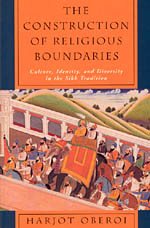
In the closing decades of the nineteenth century, however, the Singh Sabha, a powerful new Sikh movement, began to view the multiplicity in Sikh identity with suspicion and hostility. Aided by social and cultural forces unleashed by the British Raj, the Singh Sabha sought to recast Sikh tradition and purge it of diversity. The ethnocentric logic of a new elite dissolved alternative ideals under the highly codified culture of modern Sikhism.
A study of the process by which a pluralistic religious world view is replaced by a monolithic one, this important book calls into question basic assumptions about the efficacy of fundamentalist claims and the construction of all social and religious identities. An essential book for the field of South Asian religions, this work is also an important contribution to cultural anthropology, postcolonial studies, and the history of religion in general.

Beginning with a comparison of the American acoustic guitar world in the early 1960s with that of today, then describing iconic performances at storied venues such as The Ark in Ann Arbor while meticulously researching the instrument’s top makers, Smith assembles a passion-filled and eye-opening history of that “cool wooden box” from the folk era through the pandemic. The author focuses on both the playing and making of the acoustic guitar, concluding that the instrument has been transformed in both aspects during the last sixty years. On the playing side, Smith examines the influences on, and the impact of, such guitarists as David Bromberg, Elizabeth Cotten, Paul Geremia, and Norman Blake. On the making side, the author takes the reader into the tradition-minded yet dynamic world of lutherie. He traces how the oldest, most revered companies whose reputations are based on legendary breakthroughs in lutherie, Gibson and Martin, have adapted as the new lutherie movement of innovative small-scale producers, exemplified by interviewees such as Michael Gurian, Bill Collings, Richard Hoover, and Dana Bourgeois, arose. Starting small and then growing exponentially, Taylor Guitars is a wholly different “player” in acoustic guitar building, and Smith compellingly tells its story. Finally, Cool Wooden Box considers the effects of globalization on the industry.
Clocking thousands of miles and hours of interviews with guitar makers, suppliers, and sellers, W. Rand Smith has created not only a detailed history of the acoustic guitar, but also a lasting tribute to an instrument he so clearly reveres.

Between 1751 and 1784, the Qianlong emperor embarked upon six southern tours, traveling from Beijing to Jiangnan and back. These tours were exercises in political theater that took the Manchu emperor through one of the Qing empire's most prosperous regions.
This study elucidates the tensions and the constant negotiations characterizing the relationship between the imperial center and Jiangnan, which straddled the two key provinces of Jiangsu and Zhejiang. Politically, economically, and culturally, Jiangnan was the undisputed center of the Han Chinese world; it also remained a bastion of Ming loyalism and anti-Manchu sentiment. How did the Qing court constitute its authority and legitimate its domination over this pivotal region? What were the precise terms and historical dynamics of Qing rule over China proper during the long eighteenth century?
In the course of addressing such questions, this study also explores the political culture within and through which High Qing rule was constituted and contested by a range of actors, all of whom operated within socially and historically structured contexts. The author argues that the southern tours occupied a central place in the historical formation of Qing rule during a period of momentous change affecting all strata of the eighteenth-century polity.
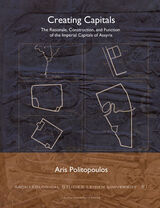
The Assyrian Empire moved and rebuilt its capital city three times—at Kar-Tukulti-Ninurta, Kalhu, Dur-Šarruken, and Nineveh. Creating Capitals explores why and how Assyria constructed these capitals as well as how they functioned within the empire. Drawing on extensive research, Aris Politopoulos offers a sweeping comparative analysis of these four ancient cities and proposes a new framework for understanding the construction of capitals in human history.
Building on Pierre Bourdieu's structural approach, the authors show how an informal, settlement-oriented system became formalized and litigious. Integral to this new legal field is the intense personal competition among arbitrators to gain a reputation for virtue, hoping to be selected for arbitration panels. Since arbitration fees have skyrocketed, this is a high-stakes game.
Using multiple examples, Dezalay and Garth explore how international developments can transform domestic methods for handling disputes and analyze the changing prospects for international business dispute resolution given the growing presence of such international market and regulatory institutions as the EEC, the WTO, and NAFTA.
"A fascinating book, which I strongly recommend to all those active in international commercial arbitration, as they will see the arbitral world from new and unthought of perspectives."—Jacques Werner, Journal of International Arbitration


In North America, immigration has never been about immigration. That was true in the early twentieth century when anti-immigrant rhetoric led to draconian crackdowns on the movement of bodies, and it is true today as new measures seek to construct migrants as dangerous and undesirable. This premise forms the crux of Jay Timothy Dolmage’s new book Disabled Upon Arrival: Eugenics, Immigration, and the Construction of Race and Disability, a compelling examination of the spaces, technologies, and discourses of immigration restriction during the peak period of North American immigration in the early twentieth century.
Through careful archival research and consideration of the larger ideologies of racialization and xenophobia, Disabled Upon Arrival links anti-immigration rhetoric to eugenics—the flawed “science” of controlling human population based on racist and ableist ideas about bodily values. Dolmage casts an enlightening perspective on immigration restriction, showing how eugenic ideas about the value of bodies have never really gone away and revealing how such ideas and attitudes continue to cast groups and individuals as disabled upon arrival.
Since the late 1970s, a new folk hero has risen to prominence in the U.S.-Mexico border region and beyond—the narcotrafficker. Celebrated in the narcocorrido, a current form of the traditional border song known as the corrido, narcotraffickers are often portrayed as larger-than-life "social bandits" who rise from poor or marginalized backgrounds to positions of power and wealth by operating outside the law and by living a life of excess, challenging authority (whether U.S. or Mexican), and flouting all risks, including death. This image, rooted in Mexican history, has been transformed and commodified by the music industry and by the drug trafficking industry itself into a potent and highly marketable product that has a broad appeal, particularly among those experiencing poverty and power disparities. At the same time, the transformation from folk hero to marketable product raises serious questions about characterizations of narcocorridos as "narratives of resistance."
This multilayered ethnography takes a wide-ranging look at the persona of the narcotrafficker and how it has been shaped by Mexican border culture, socioeconomic and power disparities, and the transnational music industry. Mark Edberg begins by analyzing how the narcocorrido emerged from and relates to the traditional corrido and its folk hero. Then, drawing upon interviews and participant-observation with corrido listening audiences in the border zone, as well as musicians and industry producers of narcocorridos, he elucidates how the persona of the narcotrafficker has been created, commodified, and enacted, and why this character resonates so strongly with people who are excluded from traditional power structures. Finally, he takes a look at the concept of the cultural persona itself and its role as both cultural representation and model for practice.

In addition to providing the full text, Uihlein and the contributors trace Ricker’s career and delve into his practice of teaching. Subject experts explore specific topics. Thomas Leslie surveys contemporary construction practices in Chicago. Tom F. Peters considers Ricker’s writings in the context of the time while Rachel Will looks at masonry know-how and testing. Donald Friedman examines the teaching of iron and steel construction.
An illuminating look at a field and a legacy, The Elements of Construction rediscovers a figure that shaped the teaching of architecture and trained a generation that forever changed Chicago.
Domingo F. Sarmiento's classic 1845 essay Facundo, Civilizacion y Barbarie opened an inquiry into the nature of Argentinian culture that continues to the present day. In this elegantly written study, Diana Sorensen Goodrich explores the varied, and often conflicting, readings that Facundo has received since its publication and shows how these readings have contributed to the making and remaking of the Argentine nation and its culture.
Goodrich's analysis sheds new light on the intersection between canon formation and nation-building. While much has been written about Facundo as a primary text in Latin American letters, this is the first study that locates it within the problematics of canon formation and the cultural, social, and political contexts in which conflicting interpretations are constructed.
This new approach to Facundo illuminates the interactions among institutions, cultural ideologies, and political life. This book will be important reading for everyone interested in questions of national identity and the institutionalization of a national tradition.

Environment, craft, and meaning in the work of Appalachian instrument makers.
How can the craft of musical instrument making help reconnect people to place and reenchant work in Appalachia? How does the sonic search for musical tone change relationships with trees and forests? Following three craftspeople in the mountain forests of Appalachia through their processes of making instruments, Finding the Singing Spruce considers the meanings of work, place, and creative expression in drawing music from wood.
Jasper Waugh-Quasebarth explores the complexities and contradictions of instrument-making labor, which is deeply rooted in mountain forests and expressive traditions but also engaged with global processes of production and consumption. Using historical narratives and sensory ethnography, among other approaches, he finds that the craft of lutherie speaks to the past, present, and future of the region’s work and nature.

Through a systematic comparison of the life circumstances, child-rearing practices, and personalities of the FulBe and their former slaves, the RiimaayBe, this book develops an alternative theory of the way personality is formed in the Fulani society of West Africa. Riesman discusses the different characters, economies, and life plans of adult men and women of both groups, focusing on their ideas about the value of relatives. He further presents detailed observations of child-rearing practices, and concludes that the FulBe and RiimaayBe do not differ in these practices. Contrasting Fulani and Western notions of parenting, he suggests that child-rearing practices are themselves irrelevant to the formation of adult personality, but that a people's ideas about the meaning of life, social relations, and the development of character are very important. Finally, Riesman outlines a sociocultural theory of personality and its formation, and uses this theory to make sense of the differences between FulBe and RiimaayBe.

Holguín brings forth an important interplay between regional nationalists and image makers actively involved in building a tourist industry. Soon they realized flamenco performances could be turned into a folkloric attraction that could stimulate the economy. Tourists and Spaniards alike began to cultivate flamenco as a representation of the country's national identity. This study reveals not only how Spain designed and promoted its own symbol but also how this cultural form took on a life of its own.
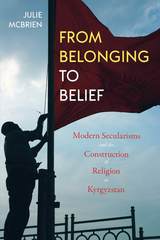
From Belonging to Belief offers an important corrective to studies that focus only on the pious turns among Muslims in Central Asia, and instead shows the complex process of evolving religion in a region that has experienced both Soviet atheism and post-Soviet secularism, each of which has profoundly formed the way Muslims interpret and live Islam.
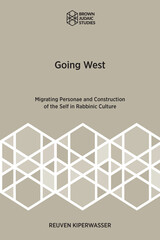

Guitars inspire cult-like devotion: an aficionado can tell you precisely when and where their favorite instrument was made, the wood it is made from, and that wood’s unique effect on the instrument’s sound. In The Guitar, Chris Gibson and Andrew Warren follow that fascination around the globe as they trace guitars all the way back to the tree. The authors take us to guitar factories, port cities, log booms, remote sawmills, Indigenous lands, and distant rainforests, on a quest for behind-the-scenes stories and insights into how guitars are made, where the much-cherished guitar timbers ultimately come from, and the people and skills that craft those timbers along the way.
Gibson and Warren interview hundreds of people to give us a first-hand account of the ins and outs of production methods, timber milling, and forest custodianship in diverse corners of the world, including the Pacific Northwest, Madagascar, Spain, Brazil, Germany, Japan, China, Hawaii, and Australia. They unlock surprising insights into longer arcs of world history: on the human exploitation of nature, colonialism, industrial capitalism, cultural tensions, and seismic upheavals. But the authors also strike a hopeful note, offering a parable of wider resonance—of the incredible but underappreciated skill and care that goes into growing forests and felling trees, milling timber, and making enchanting musical instruments, set against the human tendency to reform our use (and abuse) of natural resources only when it may be too late. The Guitar promises to resonate with anyone who has ever fallen in love with a guitar.

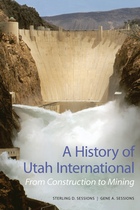
The story of how the Utah Construction Company, founded in Ogden, Utah in 1900, became Utah International, a multinational corporation, is known to historians of the American West but perhaps not by the general public. The publication of this book remedies that omission.
During its first decades, the company built railroads and dams and was one of the Six Companies Consortium that built Hoover Dam. Utah Construction was also engaged in numerous war-contract activities during World War II. In the postwar period, the company expanded its activities into mining and land development and moved its headquarters to San Francisco. Changing its name to Utah Construction and Mining, and eventually to Utah International, the corporation became one of the most successful multinational mining companies in the world. In 1976, Utah International and General Electric negotiated the largest yet corporate merger in the United States.
Based on the Utah International archives housed in the Stewart Library at Weber State University, the story of Utah International describes more than projects: it is also the story of how two remarkable entrepreneurs, Marriner Stoddard Eccles and Edmund Wattis Littlefield, transformed the company incorporated in 1900 by the Wattis brothers into the largest and most profitable mining company in the United States.
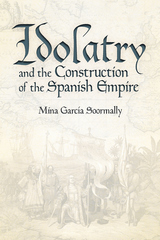
Contrasting readings of evangelization plays and chronicles from the Indies and legislation and literature produced in Spain, author Mina García Soormally places theoretical analysis of state formation in Colonial Latin America within the historical context. The conquest of America was presented, in its first instances, as a virtual extension of the Reconquista, which had taken place in Spain since 711, during which Spaniards fought to build an empire based in part on religious discrimination. The fight against the “heathens” (Moors and Jews) provided the experience and mindset to practice the repression of the other, making Spain a cultural laboratory that was transported across the Atlantic Ocean.
Idolatry and the Construction of the Spanish Empire is a wide-ranging explication of religious orthodoxy and unorthodoxy during Spain’s medieval and early modern period as they relate to idolatry, with analysis of events that occurred on both sides of the Atlantic. The book contributes to the growing field of transatlantic studies and explores the redefinition that took place in Europe and in the colonies.

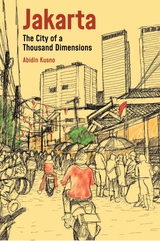
Indonesian writer Seno Gumira Ajidarma has called Jakarta a city of a thousand dimensions. A megacity of 30 million under threat from rising sea levels and temperatures, Jakarta and its resilient residents improvise and thrive. This book teases out some of the dimensions that have given shape to contemporary Jakarta, including the city’s expanded flexibility in accommodating capital and labor, and the consistent lack of planning that can be understood as a result of both politics and the poetics of governing in the region. Jakarta is essential reading for those seeking to understand one of Asia's most dynamic cities.

Drawing on extensive research and previously untapped archival materials, Lynn Edwards Butler explores Scheibe's professional relationships and the full range of his projects. These assignments included the three-manual organ for St. Paul’s Church, renovations of the organs in the important churches of St. Thomas and St. Nicholas, and the lone surviving example of Scheibe's craft, a small organ in the nearby village of Zschortau. Viewing Scheibe within the context of the era, Butler illuminates the music scene of Bach's time as she follows the life of a gifted craftsman and his essential work on an instrument that anchored religious musical practice and community.
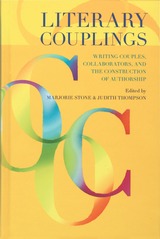
This innovative collection challenges the traditional focus on solitary genius by examining the rich diversity of literary couplings and collaborations from the early modern to the postmodern period. Literary Couplings explores some of the best-known literary partnerships—from the Sidneys to Boswell and Johnson to Sylvia Plath and Ted Hughes—and also includes lesser-known collaborators such as Daphne Marlatt and Betsy Warland. The essays place famous authors such as Samuel Coleridge, Oscar Wilde, and William Butler Yeats in new contexts; reassess overlooked members of writing partnerships; and throw new light on texts that have been marginalized due to their collaborative nature. By integrating historical studies with authorship theory, Literary Couplings goes beyond static notions of the writing "couple" to explore literary couplings created by readers, critics, historians, and publishers as well as by writers themselves, thus expanding our understanding of authorship.
Making History Matter explores the role history and historians played in imperial Japan’s nation and empire building from the 1890s to the 1930s. As ideological architects of this process, leading historians wrote and rewrote narratives that justified the expanding realm. Learning from their Prussian counterparts, they highlighted their empiricist methodology and their scholarly standpoint, to authenticate their perspective and to distinguish themselves from competing discourses. Simultaneously, historians affirmed imperial myths that helped bolster statist authoritarianism domestically and aggressive expansionism abroad. In so doing, they aligned politically with illiberal national leaders who provided funding and other support necessary to nurture the modern discipline of history. By the 1930s, the field was thriving and historians were crucial actors in nationwide commemorations and historical enterprises.
Through a close reading of vast, multilingual sources, with a focus on Kuroita Katsumi, Yoshikawa argues that scholarship and politics were inseparable as Japan’s historical profession developed. In the process of making history matter, historians constructed a national past to counter growing interwar liberalism. This outlook—which continues as the historical perspective that the Liberal Democratic Party leadership embraces—ultimately justified the Japanese aggressions during the Asia-Pacific Wars.
In The Metaphysics of Media, award-winning media critic Peter K. Fallon tackles the complicated question of how a succession of dominant forms of media have supported—and even to some extent created—different conceptions of reality. To do so, he starts with the basics: a critical discussion of the very idea of objective reality and the various postmodern responses that have tended to dominate recent philosophical approaches to the subject. From there, he embarks on a survey of the evolution of communication through four major eras: orality; literacy; print; and electricity.
Within each era, Fallon argues, the dominant form of media supported particular ways of understanding the world, from the ascendance of reason that followed the development of alphabets to the obliteration of space and time that we associate with electronic communications. Fallon concludes with a hard look at the mass ignorance that prevails today despite (or perhaps because of) the sea of information with which contemporary life is surrounded.
A stirring, philosophically rich investigation, The Metaphysics of Media offers not only a clear picture of where our society has been but also a road map to a more engaged, informed, and fully human future.

Ogden, a working-class city with a history of racial and immigrant diversity, has long held a reputation among Utahns as a “sin city” in the middle of an entrenched religious culture. Glass blends ethnographic research with historical accounts, census reports, and other secondary sources to provide insight into Ogden’s reputation, past and present. Capturing residents’ perceptions of an entire city, as opposed to only some of its neighborhoods, and exploring the regional contexts shaping these views, is rare among urban researchers. Glass’s unique approach suggests we can better confront urban problems by rethinking assumptions about place and promoting interventions that break down boundaries.
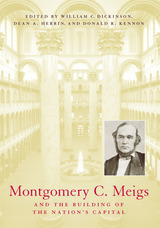
At the age of thirty-six, in 1852, Lt. Montgomery Cunningham Meigs of the Army Corps of Engineers reported to Washington, D.C., for duty as a special assistant to the chief army engineer, Gen. Joseph G. Totten. It was a fateful assignment, both for the nation’s capital and for the bright, ambitious, and politically connected West Point graduate.
Meigs's forty-year tenure in the nation's capital was by any account spectacularly successful. He surveyed, designed, and built the Washington water supply system, oversaw the extension of the U.S. Capitol and the erection of its massive iron dome, and designed and supervised construction of the Pension Building, now the home of the National Building Museum. The skills he exhibited in supervising engineering projects were carefully noted by political leaders, including president-elect Abraham Lincoln, who named Meigs quartermaster general of the Union Army, the most important position he held during his long and active military career.
Meigs believed Washington, D.C., should be the reincarnation of Rome, the ancient capital of the Roman Empire. He endeavored to memorialize the story of the American nation in all the structures he built, expressing these ideas in murals, sculpture, and monumental design.
Historians have long known Meigs for the organizational genius with which he fulfilled his duty as quartermaster general during the Civil War and for his unwavering loyalty to Lincoln and Secretary of War Edwin Stanton. This volume establishes his claim as one of the major nineteenth-century contributors to the built environment of the nation's capital.
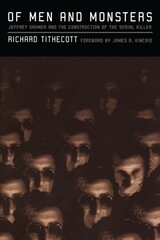
Of Men and Monsters examines the serial killer as an American cultural icon, one that both attracts and repels. Richard Tithecott suggests that the stories we tell and the images we conjure of serial killers—real and fictional—reveal as much about mainstream culture and its values, desires, and anxieties as they do about the killers themselves.
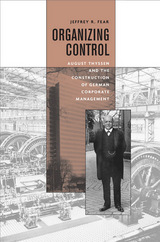
In a pioneering work, Jeffrey Fear overturns the dominant understanding of German management as “backward” relative to the U.S. and uncovers an autonomous and sophisticated German managerial tradition. Beginning with founder August Thyssen—the Andrew Carnegie of Germany—Fear traces the evolution of management inside the Thyssen-Konzern and the Vereinigte Stahlwerke (United Steel Works) between 1871 and 1934.
Fear focuses on the organization and internal dynamics of the company. He demonstrates that initiatives often flowed from middle managers, rather than from the top down. Shattering stereotypes of the overly bureaucratic and rigid German firm, Fear portrays a decentralized and flexible system that underscores the dynamic and entrepreneurial nature of German business. He fundamentally revises the scholarship on Alexander Gerschenkron and Germany’s Sonderweg, and critiques Max Weber’s concept of the corporation and capital accounting. He develops a loosely coupled relationship among enterprise strategy, organization, the structure of responsibility, and its accounting system, which links information, knowledge, and power inside the firm. This method of organizing control is central to understanding corporate governance.
Original and provocative, this work will generate much debate among historians, organizational theorists, and management and accounting scholars.
Erik J. Engstrom offers a historical perspective on the effects of gerrymandering on elections and party control of the U.S. national legislature. Aside from the requirements that districts be continuous and, after 1842, that each select only one representative, there were few restrictions on congressional districting. Unrestrained, state legislators drew and redrew districts to suit their own partisan agendas. With the rise of the “one-person, one-vote” doctrine and the implementation of the Voting Rights Act of 1965, however, redistricting became subject to court oversight.
Engstrom evaluates the abundant cross-sectional and temporal variation in redistricting plans and their electoral results from all the states, from 1789 through the 1960s, to identify the causes and consequences of partisan redistricting. His analysis reveals that districting practices across states and over time systematically affected the competitiveness of congressional elections; shaped the partisan composition of congressional delegations; and, on occasion, determined party control of the House of Representatives.
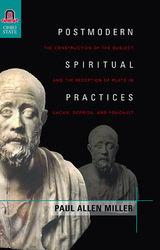
Substantial insights into various identity discourses reflected in the biblical prayers
This collection of essays from an international group of scholars focuses on how biblical prayers of the Persian and early Hellenistic periods shaped identity, evoked a sense of belonging to specific groups, and added emotional significance to this affiliation. Contributors draw examples from different biblical texts, including Genesis, Samuel, Kings, Chronicles, Ezra and Nehemiah, Psalms, Jonah, and Daniel.
Features
- Thorough study of prayers that play a key role for a biblical book’s (re)construction of the people’s history and identity
- An examination of ways biblical figures are remodeled by their prayers by introducing other, sometimes even contradictory, discourses on identity
- An exploration of different ways in which psalms from postexilic times shaped, reflected, and modified identity discourses
What has been missing, however, is detailed guidance for restoration practitioners wanting to undertake similar urban stream restoration projects that worked with, rather than against, nature. This book presents the author’s thirty years of practical experience managing long-term stream and river restoration projects in heavily degraded urban environments. Riley provides a level of detail only a hands-on design practitioner would know, including insights on project design, institutional and social context of successful projects, and how to avoid costly and time-consuming mistakes. Early chapters clarify terminology and review strategies and techniques from historical schools of restoration thinking. But the heart of the book comprises the chapters containing nine case studies of long-term stream restoration projects in northern California. Although the stories are local, the principles, methods, and tools are universal, and can be applied in almost any city in the world.
Best Books for Regional Special Interests, selected by the American Association of School Librarians, and Best Books for General Audiences, selected by the Public Library Association
“Provide[s] a useful vantage on the world bequeathed to us by the forces that set out to put America astride the globe nearly a century ago.”—Chris Rasmussen, Bookforum
Examining such relatively new or reconfigured nation-states as Iran, Iraq, Turkey, Israel, Russia, Ukraine, India, and Thailand, Selective Remembrances shows how states invoke the remote past to extol the glories of specific peoples or prove claims to ancestral homelands. Religion has long played a key role in such efforts, and the contributors take care to demonstrate the tendency of many people, including archaeologists themselves, to view the world through a religious lens—which can be exploited by new regimes to suppress objective study of the past and justify contemporary political actions.
The wide geographic and intellectual range of the essays in Selective Remembrances will make it a seminal text for archaeologists and historians.
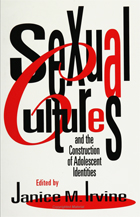
This rich collection of essays presents a new vision of adolescent sexuality shaped by a variety of social factors: race and ethnicity, gender, sexual identity, physical ability, and cultural messages propagated in films, books, and within families. The contributors consider the full range of cultural influences that form a teenager's sexual identity and argue that education must include more than its current overriding message of denial hinged on warnings of HIV and AIDS infection and teenage pregnancy. Examining the sexual experiences, feelings, and development of Asians, Latinos, African Americans, gay man and lesbians, and disabled women, this book provides a new understanding of adolescent sexuality that goes beyond the biological approach all too often simplified as "surging hormones."
In the series Health, Society, and Policy, edited by Sheryl Ruzek and Irving Kenneth Zola.

Who owns your genetic information? Might it be the doctors who, in the course of removing your spleen, decode a few cells and turn them into a patented product? In 1990 the Supreme Court of California said yes, marking another milestone on the information superhighway. This extraordinary case is one of the many that James Boyle takes up in Shamans, Software, and Spleens, a timely look at the infinitely tricky problems posed by the information society. Discussing topics ranging from blackmail and insider trading to artificial intelligence (with good-humored stops in microeconomics, intellectual property, and cultural studies along the way), Boyle has produced a work that can fairly be called the first social theory of the information age.
Now more than ever, information is power, and questions about who owns it, who controls it, and who gets to use it carry powerful implications. These are the questions Boyle explores in matters as diverse as autodialers and direct advertising, electronic bulletin boards and consumer databases, ethno-botany and indigenous pharmaceuticals, the right of publicity (why Johnny Carson owns the phrase "Here's Johnny!"), and the right to privacy (does J. D. Salinger "own" the letters he's sent?). Boyle finds that our ideas about intellectual property rights rest on the notion of the Romantic author--a notion that Boyle maintains is not only outmoded but actually counterproductive, restricting debate, slowing innovation, and widening the gap between rich and poor nations. What emerges from this lively discussion is a compelling argument for relaxing the initial protection of authors' works and expanding the concept of the fair use of information. For those with an interest in the legal, ethical, and economic ramifications of the dissemination of information--in short, for every member of the information society, willing or unwilling--this book makes a case that cannot be ignored.
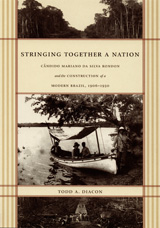
Using an impressive array of archival and documentary sources, Diacon chronicles the Rondon Commission’s arduous construction of telegraph lines across more than eight hundred miles of the Amazon Basin; its exploration, surveying, and mapping of vast areas of northwest Brazil; and its implementation of policies governing relations between the Brazilian state and indigenous groups. He considers the importance of Positivist philosophy to Rondon’s thought, and he highlights the Rondon Commission’s significant public relations work on behalf of nation-building efforts. He reflects on the discussions—both contemporaneous and historiographical—that have made Rondon such a fundamental and controversial figure in Brazilian cultural history.
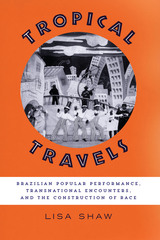
Brazilian popular culture, including music, dance, theater, and film, played a key role in transnational performance circuits—inter-American and transatlantic—from the latter nineteenth century to the middle of the twentieth century. Brazilian performers both drew inspiration from and provided models for cultural production in France, Portugal, Argentina, the United States, and elsewhere. These transnational exchanges also helped construct new ideas about, and representations of, “racial” identity in Brazil. Tropical Travels fruitfully examines how perceptions of “race” were negotiated within popular performance in Rio de Janeiro and how these issues engaged with wider transnational trends during the period.
Lisa Shaw analyzes how local cultural forms were shaped by contact with imported performance traditions and transnational vogues in Brazil, as well as by the movement of Brazilian performers overseas. She focuses specifically on samba and the maxixe in Paris between 1910 and 1922, teatro de revista (the Brazilian equivalent of vaudeville) in Rio in the long 1920s, and a popular Brazilian female archetype, the baiana, who moved to and fro across national borders and oceans. Shaw demonstrates that these transnational encounters generated redefinitions of Brazilian identity through the performance of “race” and ethnicity in popular culture. Shifting the traditional focus of Atlantic studies from the northern to the southern hemisphere, Tropical Travels also contributes to a fuller understanding of inter-hemispheric cultural influences within the Americas.

But one day Ed’s life was permanently altered. While plowing his field, he became convinced he was having a heart attack. Ed stopped his work and lay down on the ground. Staring at the sky, he saw himself as a large tortoise struggling to swim across a river. On his back were five small tortoises—his children—clinging to him for survival. And then, as he lay there in the freshly plowed dirt, Ed received a vision from God, telling him that he would be restored to health if he would agree to do one thing: make musical instruments and give them to children.
And so he did. Beginning with a few simple hand tools, Ed worked tirelessly for twenty-five years to create over two hundred instruments, each a crazy quilt of heavy, rough-sawn wood scraps joined with found objects. A rusty door hinge, a steak bone, a stack of dimes, springs, saw blades, pot lids, metal pipes, glass bottles, aerosol cans—Ed used anything he could to build a working guitar, fiddle, or dulcimer. On each instrument Ed inscribed “True Faith, True Light, Have Faith in God.”
True Faith, True Light: The Devotional Art of Ed Stilley documents Ed Stilley’s life and work, giving us a glimpse into a singular life of austere devotion.
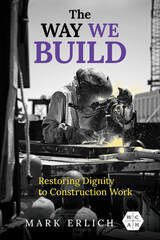
Mark Erlich blends long-view history with his personal experience inside the building trades to explain one of our economy’s least understood sectors. Erlich’s multifaceted account includes the dynamics of the industry, the backdrop of union policies, and powerful stories of everyday life inside the trades. He offers a much-needed overview of construction’s past and present while exploring roads to the future.
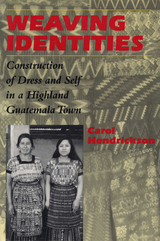
Traje, the brightly colored traditional dress of the highland Maya, is the principal visual expression of indigenous identity in Guatemala today. Whether worn in beauty pageants, made for religious celebrations, or sold in tourist markets, traje is more than "mere cloth"—it plays an active role in the construction and expression of ethnicity, gender, education, politics, wealth, and nationality for Maya and non-Maya alike.
Carol Hendrickson presents an ethnography of clothing focused on the traje—particularly women's traje—of Tecpán, Guatemala, a bi-ethnic community in the central highlands. She covers the period from 1980, when the recent round of violence began, to the early 1990s, when Maya revitalization efforts emerged.
Using a symbolic analysis informed by political concerns, Hendrickson seeks to increase the value accorded to a subject like weaving, which is sometimes disparaged as "craft" or "women's work." She examines traje in three dimensions—as part of the enduring images of the "Indian," as an indicator of change in the human life cycle and cloth production, and as a medium for innovation and creative expression.
From this study emerges a picture of highland life in which traje and the people who wear it are bound to tradition and place, yet are also actively changing and reflecting the wider world. The book will be important reading for all those interested in the contemporary Maya, the cultural analysis of material culture, and the role of women in culture preservation and change.
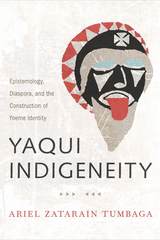
Tumbaga examines colonial documents and nineteenth-century political literature that produce a Yaqui warrior mystique and reexamines the Mexican Revolution through indigenous culture. He delves into literary depictions of Yaqui battalions by writers like Martín Luis Guzmán and Carlos Fuentes and concludes that they conceal Yaqui politics and stigmatize Yaqui warriorhood, as well as misrepresent frequently performed deer dances as isolated exotic events.
Yaqui Indigeneity draws attention to a community of Chicana/o writers of Yaqui descent: Chicano-Yaqui authors such as Luis Valdez, Alma Luz Villanueva, Miguel Méndez, Alfredo Véa Jr., and Michael Nava, who possess a diaspora-based indigenous identity. Their writings rebut prior colonial and Mexican depictions of Yaquis—in particular, Véa’s La Maravilla exemplifies the new literary tradition that looks to indigenous oral tradition, religion, and history to address questions of cultural memory and immigration.
Using indigenous forms of knowledge, Tumbaga shows the important and growing body of literary work on Yaqui culture and history that demonstrates the historical and contemporary importance of the Yaqui nation in Mexican and Chicana/o history, politics, and culture.
READERS
Browse our collection.
PUBLISHERS
See BiblioVault's publisher services.
STUDENT SERVICES
Files for college accessibility offices.
RECENTLY PUBLISHED




UChicago Accessibility Resources
home | accessibility | search | about | contact us
BiblioVault ® 2001 - 2024
The University of Chicago Press