
 A SCHOLARLY BOOK REPOSITORY
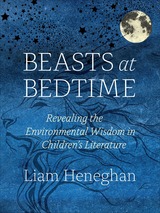
In Beasts at Bedtime, scientist (and father) Liam Heneghan examines the environmental underpinnings of children’s stories. From Beatrix Potter to Harry Potter, Heneghan unearths the universal insights into our inextricable relationship with nature that underlie so many classic children’s stories. Some of the largest environmental challenges in coming years—from climate instability, the extinction crisis, freshwater depletion, and deforestation—are likely to become even more severe as this generation of children grows up. Though today’s young readers will bear the brunt of these environmental calamities, they will also be able to contribute to environmental solutions if prepared properly. And all it takes is an attentive eye: Heneghan shows how the nature curriculum is already embedded in bedtime stories, from the earliest board books like The Rainbow Fish to contemporary young adult classics like The Hunger Games.
Beasts at Bedtime is an awakening to the vital environmental education children’s stories can provide—from the misadventures of The Runaway Bunny to more overt tales like The Lorax. Heneghan serves as our guide, drawing richly upon his own adolescent and parental experiences, as well as his travels in landscapes both experienced and imagined. Organized into thematic sections, the work winds its way through literary forests, colorful characters, and global environments.
This book enthralls as it engages. Heneghan as a guide is as charming as he is insightful, showing how kids (and adults) can start to experience the natural world in incredible ways from the comfort of their own rooms. Beasts at Bedtime will help parents, teachers, and guardians extend those cozy times curled up together with a good book into a lifetime of caring for our planet.

This guide contains 1,400 reviews of the best children's literature published between 1966 and 1972.
This volume carries on the tradition established by Zena Sutherland's two earlier collections covering the periods from 1966 to 1972 and 1973 to 1978. Her 1973 edition of The Best in Children's Books was cited by the American School Board Journal as one of the outstanding books of the year in education.
In our polarized environment, the censorship and outright banning of children’s books which some deem to be controversial or objectionable remains a major concern for libraries. Intellectual freedom champion Scales returns to the fray with a new edition of her matchless guide, updating the focus to titles published since 2015 which have been the target of challenges. School and public librarians, LIS students, and classroom educators will find the assistance and support they need to defend these challenged books with an informed response while ensuring access to young book lovers. For each of the dozens of titles covered, readers will find
- a book summary;
- a report of the specific challenges;
- quotes from reviews, plus a list of awards and accolades;
- talking points for discussing the book's issues and themes;
- links to the book's website, additional resources about the book, and suggested further reading; and
- read-alikes that have been challenged for similar reasons.
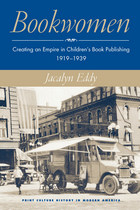
The most comprehensive account of the women who, as librarians, editors, and founders of the Horn Book, shaped the modern children's book industry between 1919 and 1939. The lives of Anne Carroll Moore, Alice Jordan, Louise Seaman Bechtel, May Massee, Bertha Mahony Miller, and Elinor Whitney Field open up for readers the world of female professionalization. What emerges is a vivid illustration of some of the cultural debates of the time, including concerns about "good reading" for children and about women's negotiations between domesticity and participation in the paid labor force and the costs and payoffs of professional life.
Published in collaboration among the University of Wisconsin Press, the Center for the History of Print Culture in Modern America (a joint program of the University of Wisconsin–Madison and the Wisconsin Historical Society), and the University of Wisconsin–Madison General Library System Office of Scholarly Communication.

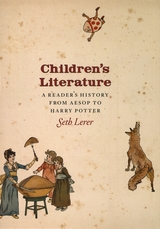
Ever since children have learned to read, there has been children’s literature. Children’s Literature charts the makings of the Western literary imagination from Aesop’s fables to Mother Goose, from Alice's Adventures in Wonderland to Peter Pan, from Where the Wild Things Are to Harry Potter.
The only single-volume work to capture the rich and diverse history of children’s literature in its full panorama, this extraordinary book reveals why J. R. R. Tolkien, Dr. Seuss, Laura Ingalls Wilder, Beatrix Potter, and many others, despite their divergent styles and subject matter, have all resonated with generations of readers. Children’s Literature is an exhilarating quest across centuries, continents, and genres to discover how, and why, we first fall in love with the written word.
“Lerer has accomplished something magical. Unlike the many handbooks to children’s literature that synopsize, evaluate, or otherwise guide adults in the selection of materials for children, this work presents a true critical history of the genre. . . . Scholarly, erudite, and all but exhaustive, it is also entertaining and accessible. Lerer takes his subject seriously without making it dull.”—Library Journal (starred review)
“Lerer’s history reminds us of the wealth of literature written during the past 2,600 years. . . . With his vast and multidimensional knowledge of literature, he underscores the vital role it plays in forming a child’s imagination. We are made, he suggests, by the books we read.”—San Francisco Chronicle
“There are dazzling chapters on John Locke and Empire, and nonsense, and Darwin, but Lerer’s most interesting chapter focuses on girls’ fiction. . . . A brilliant series of readings.”—Diane Purkiss, Times Literary Supplement
Roger Sale invites us to discover anew some of the great works of children's literature, works that have been read and loved but seldom given the benefit of serious literary assessment. It takes a critic of special gifts—receptiveness, discrimination, clarity of perception, independence of judgment—to discuss these books as illuminatingly as Sale does.
This is not a survey but a very personal book: Sale writes about stories and books with which he feels an imaginative sympathy. As it happens, they include a great many of the classic children's texts, works as disparate as “Beauty and the Beast” and Alice, The Wind in the Willows and Babar, “The Snow Queen” and Peter Rabbit, the Jungle Book and the Oz books. He conveys a fresh sense of what is special and memorable about each of them.
While avoiding conventional literary history, he sketches the circumstances of the author's life when they provide insight into the works. Unlike Bettelheim and others, Sale is not concerned with the “uses” of children's literature. He writes for adults, with the conviction that adults can find delight in these books. Many already do, and perhaps with his stimulus, many more will.
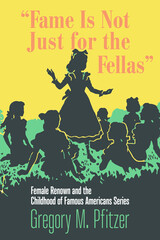
Finalist of the 2023 SHARP History of the Book Prize
Between 1932 and 1958, thousands of children read volumes in the book series Childhood of Famous Americans. With colorful cover art and compelling—and often highly fictionalized—narrative storylines, these biographies celebrated the national virtues and achievements of famous women like Betsy Ross, Louisa May Alcott, and Amelia Earhart. Employing deep archival research, Gregory M. Pfitzer examines the editorial and production choices of the publisher and considers the influence of the series on readers and American culture more broadly.
In telling the story of how female subjects were chosen and what went into writing these histories for young female readers of the time, Pfitzer illustrates how these books shaped children’s thinking and historical imaginations around girlhood using tales from the past. Utilizing documented conversations and disagreements among authors, editors, readers, reviewers, and sales agents at Bobbs-Merrill, “Fame Is Not Just for the Fellas” places the series in the context of national debates around fame, gender, historical memory, and portrayals of children and childhood for a young reading public—charged debates that continue to this day.
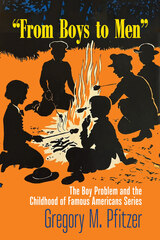
While adult concern about gender in children’s books has made recent headlines, this discussion is far from new. As Gregory M. Pfitzer reveals, the writers and editors at Bobbs-Merrill, the publisher of the Childhood of Famous Americans book series published between 1932 and 1958, thought carefully about how their books would influence the development of their male readers. These books emphasized inspiring tales over historical accuracy and were written in simple language, with characters, dialogue, and stories that were intended to teach boys how to be successful men.
But this was a specific image of American manhood. Published in an era when sociologists, psychologists, and other experts worried about male delinquency, the men envisioned in these books were steeped in Cold War racial and gender stereotypes, and questions about citizenship and responsibility. Based on deep archival research into the publication history of the series, “From Boys to Men” sheds light on current controversies on children’s books and presentations of gender diversity.
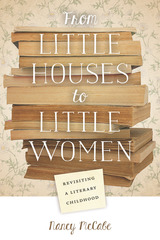
McCabe, who grew up in Kansas just a few hours from the Ingalls family’s home in Little House on the Prairie, always felt a deep connection with Laura Ingalls Wilder, author of the Little House series. McCabe read Little House on the Prairie during her childhood and visited Wilder sites around the Midwest with her aunt when she was thirteen. But then she didn’t read the series again until she decided to revisit in adulthood the books that had so influenced her childhood. It was this decision that ultimately sparked her desire to visit the places that inspired many of her childhood favorites, taking her on a journey that included stops in the Missouri of Laura Ingalls Wilder, the Minnesota of Maud Hart Lovelace, the Massachusetts of Louisa May Alcott, and even the Canada of Lucy Maud Montgomery.
From Little Houses to Little Women reveals McCabe’s powerful connection to the characters and authors who inspired many generations of readers. Traveling with McCabe as she rediscovers the books that shaped her and ultimately helped her to forge her own path, readers will enjoy revisiting their own childhood favorites as well.
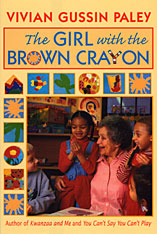
Once again Vivian Paley takes us into the inquiring minds and the dramatic worlds of young children learning in the kindergarten classroom.
As she enters her final year of teaching, Paley tells in this book a story of farewell and a story of self-discovery—through the thoughts and blossoming spirit of Reeny, a little girl with a fondness for the color brown and an astonishing sense of herself. "This brown girl dancing is me," Reeny announces, as her crayoned figures flit across the classroom walls. Soon enough we are drawn into Reeny's remarkable dance of self-revelation and celebration, and into the literary turn it takes when Reeny discovers a kindred spirit in Leo Lionni—a writer of books and a teller of tales. Led by Reeny, Paley takes us on a tour through the landscape of characters created by Lionni. These characters come to dominate a whole year of discussion and debate, as the children argue the virtues and weaknesses of Lionni's creations and his themes of self-definition and an individual's place in the community.
The Girl with the Brown Crayon tells a simple personal story of a teacher and a child, interweaving the themes of race, identity, gender, and the essential human needs to create and to belong. With characteristic charm and wonder, Paley discovers how the unexplored territory unfolding before her and Reeny comes to mark the very essence of school, a common core of reference, something to ponder deeply and expand on extravagantly.
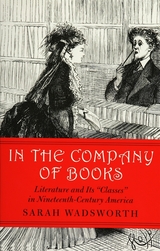
With sections focusing on segmentation by age, gender, and cultural status, In the Company of Books analyzes the ways authors and publishers carved up the field of literary production into a multitude of distinct submarkets, differentiated their products, and targeted specific groups of readers in order to guide their book-buying decisions. Combining innovative approaches to canonical authors such as Nathaniel Hawthorne, Louisa May Alcott, Mark Twain, and Henry James with engaging investigations into the careers of many lesser-known literary figures, Sarah Wadsworth reveals how American writers responded to—and contributed to—this diverse, and diversified, market.
In the Company of Books contends that specialized editorial and marketing tactics, in concert with the narrative strategies of authors and the reading practices of the book-buying public, transformed the literary landscape, leading to new roles for the book in American culture, the innovation of literary genres, and new relationships between books and readers. Both an exploration of a fragmented print culture through the lens of nineteenth-century American literature and an analysis of nineteenth-century American literature from the perspective of this subdivided marketplace, this wide-ranging study offers fresh insight into the impact of market forces on the development of American literature.
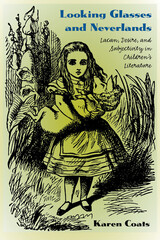
This groundbreaking study introduces and explores Lacan’s complex theories of subjectivity and desire through close readings of canonical children’s books such as Charlotte’s Web, Stellaluna, Holes, Tangerine, and The Chocolate War, providing an introduction to an increasingly influential body of difficult work while making the claim that children’s textual encounters are as significant as their existential ones in constituting their subjectivities and giving shape to their desires.
Although some later critics have argued that the books published in this era offered a vision of a safe, secure, simple world without injustice or unhappy endings, Gary D. Schmidt shows that the progressive political agenda shared by many Americans who wrote, illustrated, published, and taught children’s books had a powerful effect. Authors like James Daugherty, Laura Ingalls Wilder, Lois Lenski, Ingri and Edgar Parin D’Aulaire, Virginia Lee Burton, Robert McCloskey, and many others addressed directly and indirectly the major social issues of a turbulent time: racism, immigration and assimilation, sexism, poverty, the Great Depression, World War II, the atomic bomb, and the threat of a global cold war.
The central concern that many children’s book authors and illustrators wrestled with was the meaning of America and democracy itself, especially the tension between individual freedoms and community ties. That process produced a flood of books focused on the American experience and intent on defining it in terms of progress toward inclusivity and social justice. Again and again, children’s books addressed racial discrimination and segregation, gender roles, class differences, the fate of Native Americans, immigration and assimilation, war, and the role of the United States in the world. Fiction and nonfiction for children urged them to see these issues as theirs to understand, and in some ways, theirs to resolve. Making Americans is a study of a time when the authors and illustrators of children’s books consciously set their eyes on national and international sights, with the hope of bringing the next generation into a sense of full citizenship.
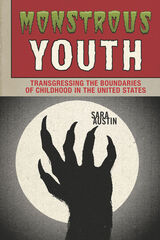
Analyzing how cultural shifts have drastically changed our perceptions of both what it means to be a monster and what it means to be a child, Austin charts how the portrayal and consumption of monsters corresponds to changes in identity categories such as race, sexuality, gender, disability, and class. In demonstrating how monstrosity is leveraged in service of political and cultural movements, such as integration, abstinence-only education, and queer rights, Austin offers insight into how monster texts continue to reflect, interpret, and shape the social discourses of identity within children’s culture.
—from the Foreword by Dr. Rudine Sims Bishop, Professor Emeritus, The Ohio State University
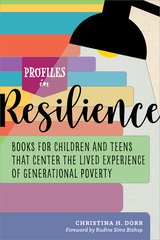
Drawing from her own lived experience, in this guide Dorr shines a light on some of the cultural values that exist across both rural and urban poverty, inviting teachers, librarians, and others who work with children from low-income families to see them in their cultural context and appreciate the values they bring to the classroom or library. She spotlights a range of books for children and teens that offer literary mirrors to low-income children, as well as windows to more economically privileged readers, enabling all young readers to celebrate our common humanity. And she also shares the work of ten authors and illustrators familiar with poverty, offering insights into the sources of their stories and the ways storytellers’ lived experience can influence their creative works and make their characters more authentic. You will discover
- an introduction which explores what it’s like to grow up in generational poverty, including its long-term effects on children, the roles played by intersectional and institutional racism, the power of family, and how reading can act as powerful catalyst;
- biographical sketches of Elizabeth Acevedo, Jason Reynolds, Cynthia Rylant, Kelly Yang, and other authors and illustrators;
- inspiring profiles and books spanning age ranges, genres, and formats that chronicle the lives of Ruth Bader Ginsberg, Kareem Abdul-Jabbar, Sonia Sotomayor, John Lewis, Wilma Mankiller, and other people who were raised in generational poverty; and
- four appendixes which spotlight even more stories of resilient individuals and fictional characters.
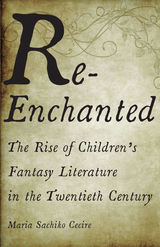
Why are so many people drawn to fantasy set in medieval, British-looking lands? This question has immediate significance for millions around the world: from fans of Lord of the Rings, Narnia, Harry Potter, and Game of Thrones to those who avoid fantasy because of the racist, sexist, and escapist tendencies they have found there. Drawing on the history and power of children’s fantasy literature, Re-Enchanted argues that magic, medievalism, and childhood hold the paradoxical ability to re-enchant modern life.
Focusing on works by authors such as J. R. R. Tolkien, C. S. Lewis, Susan Cooper, Philip Pullman, J. K. Rowling, and Nnedi Okorafor, Re-Enchanted uncovers a new genealogy for medievalist fantasy—one that reveals the genre to be as important to the history of English studies and literary modernism as it is to shaping beliefs across geographies and generations. Maria Sachiko Cecire follows children’s fantasy as it transforms over the twentieth and twenty-first centuries—including the rise of diverse counternarratives and fantasy’s move into “high-brow” literary fiction. Grounded in a combination of archival scholarship and literary and cultural analysis, Re-Enchanted argues that medievalist fantasy has become a psychologized landscape for contemporary explorations of what it means to grow up, live well, and belong. The influential “Oxford School” of children’s fantasy connects to key issues throughout this book, from the legacies of empire and racial exclusion in children’s literature to what Christmas magic tells us about the roles of childhood and enchantment in Anglo-American culture.
Re-Enchanted engages with critical debates around what constitutes high and low culture during moments of crisis in the humanities, political and affective uses of childhood and the mythological past, the anxieties of modernity, and the social impact of racially charged origin stories.
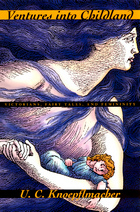
"Ventures into Childland is acute, well written and stimulating. It also has a political purpose, to insist on the importance of protecting and nurturing children, imaginatively and physically."—Jan Marsh, Times Literary Supplement
"A provocative and interesting book about Victorian culture."—Library Journal
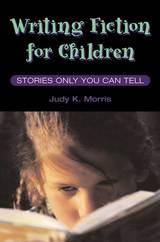
A published author of both fiction and nonfiction for children, Morris draws on extensive experience teaching children how to write and teaching adults how to write for children. Here she combines concrete methods and step-by-step techniques with succinct rules of thumb: work at making your novel whole from the start; never underestimate the power of the plain truth; personality quirks are no substitute for character; doing a good job of writing usually means doing a good job of rewriting.
Using judiciously chosen examples from successful children's literature, Writing Fiction for Children covers the building blocks of plot, characters, and setting and addresses common problems such as awkward plotting, oversimplifying, and taking a preachy or self-conscious tone. Pragmatic exercises stimulate writers to scour their experiences, sharpen their powers of observation, and capture the details, voice, and narrative energy that can bring stories vividly to life and keep readers submerged in make-believe. Loaded with practical advice and helpful exercises, Writing Fiction for Children is especially useful for anyone who aspires to write for children in the "middle ages" of eight to twelve.
Children's books should be hopeful, thrilling, funny, interesting, touching, and a pleasure to read, Morris says. Above all, they must have something at stake that matters. While conceding that only the author can provide the spark of a story to tell, Morris offers invaluable guidance on the daily work of crafting, shaping, refining, revising, and publishing a children's novel.

Moving from classic texts (The Secret Garden, Goodnight Moon) to ephemera (the Hardy Boys, Goosebumps, and Harry Potter series), from the printed page to the silver screen (Willie Wonka, Jumanji, 101 Dalmatians, Beethoven), Tim Morris employs his experience as a parent and teacher to interrogate children's culture and reveal its conflicting messages.
Books and films for children--favorites accepted as wholesome fare for impressionable young minds --do not always teach straightforward lessons. Instead, they reflect the anxieties of the times and the desires of adults. At the heart of many a children's classic lies power, often expressed through racism, sexism, or violence. Under Morris's gaze, revered animal stories like Black Beauty turn into litanies of abuse; fantasies of childhood like Big are revealed as patriarchal struggles.
You're Only Young Twice redirects the focus on children's literature, asking not "What messages should children receive?" but "What messages do adults actually send?" For example, Morris recounts his own childhood confusion upon viewing Peter Pan, with its queenish, inept pirate and a grown woman (Mary Martin) in tights who pretends to be a crowing boy.
Morris shatters our long-held assumptions and challenges our best intentions, demonstrating how children's literature and films lay bare a troubled and troubling worldview.
READERS
Browse our collection.
PUBLISHERS
See BiblioVault's publisher services.
STUDENT SERVICES
Files for college accessibility offices.
RECENTLY PUBLISHED


UChicago Accessibility Resources
home | accessibility | search | about | contact us
BiblioVault ® 2001 - 2024
The University of Chicago Press