
 A SCHOLARLY BOOK REPOSITORY
140 start with A start with A
This book offers a clear and accessible narrative of the period between the Persian Wars and the wars of the early Hellenistic period, two nominal liberations of the region. The volume complements existing histories of Classical Greece. Close inspection reveals that the Ionians were active partners in the imperial endeavor, even as imperial competition constrained local decision-making and exacerbated local and regional tensions. At the same time, the book offers interventions on critical issues related to Ionia such as the Athenian conquest of Samos, rhetoric about the freedom of the Greeks, the relationship between Ionian temple construction and economic activity, the status of the Panionion, Ionian poleis and their relationship with local communities beyond the circle of the dodecapolis, and the importance of historical memory to our understanding of ancient Greece. The result is a picture of an Aegean world that is more complex and less beholden narratives that give primacy to the imperial actors at the expense of local developments.
In the late nineteenth and early twentieth centuries, during the “protectorate” period of British occupation in Egypt—theaters and other performance sites were vital for imagining, mirroring, debating, and shaping competing conceptions of modern Egyptian identity. Central figures in this diverse spectrum were the effendis, an emerging class of urban, male, anticolonial professionals whose role would ultimately become dominant. Acting Egyptian argues that performance themes, spaces, actors, and audiences allowed pluralism to take center stage while simultaneously consolidating effendi voices.
From the world premiere of Verdi’s Aida at Cairo’s Khedivial Opera House in 1871 to the theatrical rhetoric surrounding the revolution of 1919, which gave women an opportunity to link their visibility to the well-being of the nation, Acting Egyptian examines the ways in which elites and effendis, men and women, used newly built performance spaces to debate morality, politics, and the implications of modernity. Drawing on scripts, playbills, ads, and numerous other sources, the book brings to life provocative debates that fostered a new image of national culture and performances that echoed the events of urban life in the struggle for independence.
In her discussion of theaterlike practices and experiences, Bassi proposes new conceptual categories for understanding Greek drama as a cultural institution, viewing theatrical performance as part of what Foucault has called a discursive formation. Bassi also provides an important new analysis of gender in Greek culture at large and in Athenian civic ideology in particular, where spectatorship at the civic theater was a distinguishing feature of citizenship, and where citizenship was denied women.
Acting Like Men includes detailed discussions of message-sending as a form of scripted speech in the Iliad, of disguise and the theatrical body of Odysseus in the Odyssey, of tyranny as a theaterlike phenomenon in the narratives of Herodotus, and of Dionysus as the tyrannical and effeminate god of the theater in Euripides' Bacchae and Aristophanes' Frogs. Bassi concludes that the validity of an idealized masculine identity in Greek and Athenian culture is highly contested in the theater, where--in principle--citizens become passive spectators. Thereafter the author considers Athenian theater and Athenian democracy as mutually reinforcing mimetic regimes.
Acting Like Men will interest those interested in the history of the theater, performance theory, gender and cultural studies, and feminist approaches to ancient texts.
Karen Bassi is Associate Professor of Classics, University of California, Santa Cruz.
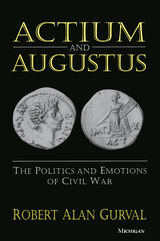
Actium and Augustus marks a turning point as well. Robert Alan Gurval's unusual approach is to examine contemporary views of the battle and its immediate political and social consequences. He starts with a consideration of the official celebration and public commemoration of the Actian victory and then moves on to other questions. What were the "Actian" monuments that Octavian erected on the battle site and later in Rome? What role did the Actian victory play in the political formation of the Principate and its public ideology? What was the response of contemporary poetry? Throughout, this volume concentrates on contemporary views of Actium and its results.
Written to include the general reader, Actium and Augustus presents a thoughtful examination of a complex period. All Greek and Latin quotations are translated, and extensive illustrations present graphic evidence about the issues Romans faced.
Robert Alan Gurval is Associate Professor of Classics, University of California, Los Angeles, and has been a recipient of the Rome Prize awarded by the American Academy in Rome.

This book presents a committed quest to unravel and document the postwar adoption networks that placed more than 3,000 Greek children in the United States, in a movement accelerated by the aftermath of the Greek Civil War and by the new conditions of the global Cold War. Greek-to-American adoptions and, regrettably, also their transactions and transgressions, provided the blueprint for the first large-scale international adoptions, well before these became a mass phenomenon typically associated with Asian children. The story of these Greek postwar and Cold War adoptions, whose procedures ranged from legal to highly irregular, has never been told or analyzed before. Adoption, Memory, and Cold War Greece answers the important questions: How did these adoptions from Greece happen? Was there any money involved? Humanitarian rescue or kid pro quo? Or both? With sympathy and perseverance, Gonda Van Steen has filled a decades-long gap in our understanding, and provided essential information to the hundreds of adoptees and their descendants whose lives are still affected today.

Three tactical treatises.
Aeneas was perhaps a general, and certainly author of several didactic military works of which the sole survivor is that on defense against siege. From it we can deduce that he was a Peloponnesian of the fourth century BC who served in the Aegean and in Asia Minor and composed the work from direct knowledge and from oral and some literary tradition, possibly in 357–6 BC. It is devoted entirely to defense of fortified places and deals specially with use of defending troops; defensive positions; morale; resistance to attacks and to actual assault; guards; obviation of treachery and revolution; and other subjects.
Asclepiodotus, philosopher and pupil of the Stoic Posidonius, wrote a rather dry but ordered work on tactics as if a subject of the lecture room, based not on personal experience but on earlier manuals. His main subjects were the branches of a military force; infantry; cavalry; chariots; elephants; arms; maneuvers; military evolutions; marching formation. The work ends with words of command.
Onasander (Onasandros), a Platonic philosopher, dedicated his work “The General” to the Roman Veranius, who was a consul in AD 49. The work deals in plain style with the sort of morals and social and military qualities and attitudes expected of a virtuous and militarily successful general. It is also concerned with such matters as his choice of staff; attitude to war; religious duties; military formations; conduct in allied and hostile lands; difficult terrains; camps; drill; spies; guards; deserters; battle formations and maneuvers; and other matters, ending with conduct after victory.

The paperback and e-book editions include a new introduction by Richard F. Thomas, along with a new glossary of names that makes the book even more accessible for students and for general readers coming to the Aeneid for the first time who may need help acclimating to Virgil’s world.
In this new translation Edward McCrorie has performed the difficult task of rendering Virgil's compact, dense Latin into fine, readable, modern English verse. The sometimes complex text is made clear and comprehensible even for first-time readers, and a glossary of names helps identify characters and place-names in the poem. The translation is well suited for students at all levels, and readers already familiar with Virgil will find many fresh images and ideas.
"A brilliant effort."--Robert Bly
"I admire the ambition of the project, and the generosity of many of the lines."--Robert Fagles
Edward McCrorie is Professor of English, Providence College. His poetry and translations of Latin verse have been widely published.
Providing unusual insights into the heart of Roman culture, these clever poems open up odd avenues of ancient lore and life as they explore social types and physical aspects of the body, regularly mocking the limitations of human nature and offering vulgar or promiscuous interpretations of the stuff of social life.
Featuring folksy proverbs and satirical anecdotes, filled with saucy naughtiness and awful puns, Aesop's Human Zoo will amuse you with its eccentricities and hit home with its shrewdly candid and red raw messages. The entertainment offered in this volume of impeccably accurate translations is truly a novelty—a good-hearted and knowing laugh courtesy of classical poetry. Beginning to advanced classicists and Latin scholars will appreciate the original Latin text provided in this bilingual edition. The splash of classic Thomas Bewick wood engravings to accompany the fables renders the collection complete.
The premier scholar-poet of the Hellenistic age.
Callimachus (ca. 303–ca. 235 BC), a proud and well-born native of Cyrene in Libya, came as a young man to the court of the Ptolemies at Alexandria, where he composed poetry for the royal family; helped establish the Library and Museum as a world center of literature, science, and scholarship; and wrote an estimated 800 volumes of poetry and prose on an astounding variety of subjects, including the Pinakes, a descriptive bibliography of the Library’s holdings in 120 volumes. Callimachus’ vast learning richly informs his poetry, which ranges broadly and reworks the language and generic properties of his predecessors in inventive, refined, and expressive ways. The “Callimachean” style, combining learning, elegance, and innovation and prizing brevity, clarity, lightness, and charm, served as an important model for later poets, not least at Rome for Catullus, Virgil, Horace, Ovid, and the elegists, among others.
This edition, which replaces the earlier Loeb editions by A. W. Mair (1921) and C. A. Trypanis (1954, 1958), presents all that currently survives of and about Callimachus and his works, including the ancient commentaries (Diegeseis) and scholia. Volume I contains Aetia, Iambi, and lyric poems; Volume II Hecale, Hymns, and Epigrams; and Volume III miscellaneous epics and elegies, other fragments, and testimonia, together with concordances and a general index. The Greek text is based mainly on Pfeiffer’s but enriched by subsequently published papyri and the judgment of later editors, and its notes and annotation are fully informed by current scholarship.
20,000 BC, the peak of the last ice age—the atmosphere is heavy with dust, deserts, and glaciers span vast regions, and people, if they survive at all, exist in small, mobile groups, facing the threat of extinction.
But these people live on the brink of seismic change—10,000 years of climate shifts culminating in abrupt global warming that will usher in a fundamentally changed human world. After the Ice is the story of this momentous period—one in which a seemingly minor alteration in temperature could presage anything from the spread of lush woodland to the coming of apocalyptic floods—and one in which we find the origins of civilization itself.
Drawing on the latest research in archaeology, human genetics, and environmental science, After the Ice takes the reader on a sweeping tour of 15,000 years of human history. Steven Mithen brings this world to life through the eyes of an imaginary modern traveler—John Lubbock, namesake of the great Victorian polymath and author of Prehistoric Times. With Lubbock, readers visit and observe communities and landscapes, experiencing prehistoric life—from aboriginal hunting parties in Tasmania, to the corralling of wild sheep in the central Sahara, to the efforts of the Guila Naquitz people in Oaxaca to combat drought with agricultural innovations.
Part history, part science, part time travel, After the Ice offers an evocative and uniquely compelling portrayal of diverse cultures, lives, and landscapes that laid the foundations of the modern world.
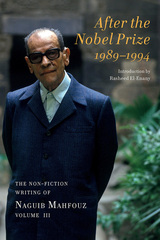
In carefully crafted short texts, his social conscience is revealed as he highlights political shortcomings, economic injustice, and corruption in Egypt and the wider Arab world. His philosophical sensitivity comes to the fore as he contemplates the meaning of a historic events, contributions of an influential people, and what is required to lead a good life. The collapse of the Soviet Union, the Oslo peace accords, the spread of terrorism, the Cairo earthquake, the passing of Louis Awad, Yusuf Idris, Yahya Hakki, the third term of Hosni Mubarak, climate change, and more come under Naguib Mahfouz’s fine scrutiny. For any fan of Mahfouz’s fiction, this collection opens a window on a different side of his intellect, and it offers insights from one of the region’s greatest modern minds.
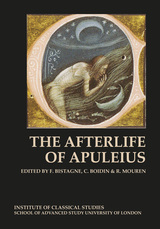
The volume gathers the proceedings of an international conference held in March 2016 at the Warburg Institute in London, in association with the Institute of Classical Studies. It includes both diachronic overviews and specific case-studies. A first series of papers focuses on The Golden Ass and its historical and geographical diffusion, from High Medieval Europe to early modern Mexico. The oriental connections of the book are also taken into account. The second part of the book examines the textual and visual destiny of Psyche’s story from the Apuleian fabula to allegorical retellings, in poetical or philosophical books and on stage. As the third series of essays indicates, the fortunes of the book led many ancient and early modern writers and translators to use it as a canonical model for reflections about the status of fiction. It also became, mostly around the beginning of the fifteenth century, a major linguistic and stylistic reference for lexicographers and neo-Latin writers. The last papers of the book deal with Renaissance polemics about "‘Apuleianism" and the role of editors and commentators.
This is the sixth and last of the volumes in the series of ‘Afterlives’ of the Classics, which is being produced jointly by the Institute of Classical Studies and the Warburg Institute.
A suspicious mind.
Sextus Empiricus (ca. AD 160–210), exponent of scepticism and critic of the Dogmatists, was a Greek physician and philosopher, pupil and successor of the medical sceptic Herodotus (not the historian) of Tarsus. He probably lived for years in Rome and possibly also in Alexandria and Athens. His three surviving works are Outlines of Pyrrhonism (three books on the practical and ethical scepticism of Pyrrho of Elis, ca. 360–275 BC, as developed later, presenting also a case against the Dogmatists); Against the Dogmatists (five books dealing with the Logicians, the Physicists, and the Ethicists); and Against the Professors (six books: Grammarians, Rhetors, Geometers, Arithmeticians, Astrologers, and Musicians). These two latter works might be called a general criticism of professors of all arts and sciences. Sextus’ work is a valuable source for the history of thought especially because of his development and formulation of former sceptic doctrines.
The Loeb Classical Library edition of Sextus Empiricus is in four volumes.
A suspicious mind.
Sextus Empiricus (ca. AD 160–210), exponent of scepticism and critic of the Dogmatists, was a Greek physician and philosopher, pupil and successor of the medical sceptic Herodotus (not the historian) of Tarsus. He probably lived for years in Rome and possibly also in Alexandria and Athens. His three surviving works are Outlines of Pyrrhonism (three books on the practical and ethical scepticism of Pyrrho of Elis, ca. 360–275 BC, as developed later, presenting also a case against the Dogmatists); Against the Dogmatists (five books dealing with the Logicians, the Physicists, and the Ethicists); and Against the Professors (six books: Grammarians, Rhetors, Geometers, Arithmeticians, Astrologers, and Musicians). These two latter works might be called a general criticism of professors of all arts and sciences. Sextus’ work is a valuable source for the history of thought especially because of his development and formulation of former sceptic doctrines.
The Loeb Classical Library edition of Sextus Empiricus is in four volumes.
A suspicious mind.
Sextus Empiricus (ca. AD 160–210), exponent of scepticism and critic of the Dogmatists, was a Greek physician and philosopher, pupil and successor of the medical sceptic Herodotus (not the historian) of Tarsus. He probably lived for years in Rome and possibly also in Alexandria and Athens. His three surviving works are Outlines of Pyrrhonism (three books on the practical and ethical scepticism of Pyrrho of Elis, ca. 360–275 BC, as developed later, presenting also a case against the Dogmatists); Against the Dogmatists (five books dealing with the Logicians, the Physicists, and the Ethicists); and Against the Professors (six books: Grammarians, Rhetors, Geometers, Arithmeticians, Astrologers, and Musicians). These two latter works might be called a general criticism of professors of all arts and sciences. Sextus’ work is a valuable source for the history of thought especially because of his development and formulation of former sceptic doctrines.
The Loeb Classical Library edition of Sextus Empiricus is in four volumes.
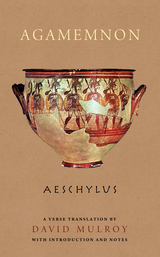
Aeschylus (525/4–456/5 B.C.E.) was the first of the three great tragic dramatists of ancient Greece, a forerunner of Sophocles and Euripides. His early tragedies were largely choral pageants with minimal plots. In Agamemnon, choral songs still predominate, but Aeschylus infuses them with such dramatic feeling that the spectator or reader is constantly spellbound.
Translator David Mulroy brings this ancient tragedy to life for modern readers and audiences. Using end rhyme and strict metrics, he combines the buoyant lyricism of the Greek text with a faithful rendering of its meaning in lucid English.
This book describes the tragic and bloody collapse of Roman civilization in the West in the fifth century and the near ruin of the Eastern Roman Empire. The hundred years from the death of Theodosius I to the conquest of Italy by Theodoric the Ostrogoth were years of chaos, havoc, and destruction. In the East we see the confusion of the imperial government, the palace intrigues, and the sinister role of the palace eunuchs—but survival. The events are dramatically described by eyewitnesses to the disasters—the Byzantine historians Priscus, Malchus, Olympiodorus, John of Antioch, and Candidus. The contemporary accounts are translated into English and provided with a running commentary by C. D. Gordon to form a continuous narrative of an age of turmoil—the Age of Attila.
David S. Potter has added translations of significant passages not in the original volume. He has also added extensive new notes to place the book in the contemporary study of the ancient world, as well as a new bibliography and a concordance with modern editions.
“David Potter’s re-edition, really updating, expanding, reshaping, and refreshing Colin Gordon's classic Age of Attila is a very welcome development. The Age of Attila, in Potter's expanded version, provides in English the most important literary sources for the immensely important period of the transition or decline, depending on one's view, of the Roman empire to the post-Roman kingdoms in the West, and for Roman history in the fifth century CE in general. This decisive century has always been hotly debated, but rising interest in economic history and a new wave of Attila books make this an especially fortuitous moment to have Gordon anew: no historian, no student of the later Roman Empire will be able to live without David Potter's edition of Gordon's Age of Attila!”
—Susanna Elm, University of California, Berkeley
“It has been half a century since C. D. Gordon published this valuable introduction to the fifth century, a narrative reconstituted from the fragmentary but tantalizing sources remaining for the period. David Potter has revitalized this classic work, updating it with reference to the latest critical editions and rewriting its notes to take account of recent scholarship. The book provides an excellent entry point into a world that saw the western Roman Empire crumble, Byzantium rise from its remains, and the barbarian peoples of central and western Eurasia reshape human history.”
—Noel Lenski, University of Colorado Boulder
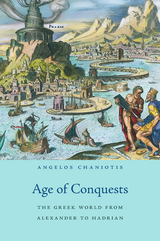
The world that Alexander remade in his lifetime was transformed once more by his death in 323 BCE. His successors reorganized Persian lands to create a new empire stretching from the eastern Mediterranean as far as present-day Afghanistan, while in Greece and Macedonia a fragile balance of power repeatedly dissolved into war. Then, from the late third century BCE to the end of the first, Rome’s military and diplomatic might successively dismantled these post-Alexandrian political structures, one by one.
During the Hellenistic period (c. 323–30 BCE), small polities struggled to retain the illusion of their identity and independence, in the face of violent antagonism among large states. With time, trade growth resumed and centers of intellectual and artistic achievement sprang up across a vast network, from Italy to Afghanistan and Russia to Ethiopia. But the death of Cleopatra in 30 BCE brought this Hellenistic moment to a close—or so the story goes.
In Angelos Chaniotis’s view, however, the Hellenistic world continued to Hadrian’s death in 138 CE. Not only did Hellenistic social structures survive the coming of Rome, Chaniotis shows, but social, economic, and cultural trends that were set in motion between the deaths of Alexander and Cleopatra intensified during this extended period. Age of Conquests provides a compelling narrative of the main events that shaped ancient civilization during five crucial centuries. Many of these developments—globalization, the rise of megacities, technological progress, religious diversity, and rational governance—have parallels in our world today.
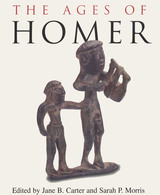
Homer’s Iliad and Odyssey have fascinated listeners and readers for over twenty-five centuries. In this volume of original essays, collected to honor the distinguished career of Emily T. Vermeule, thirty-four leading experts in Homeric studies and related fields provide up-to-date, multidisciplinary accounts of the most current issues in the study of Homer.
The book is divided into three sections. The first section treats the Bronze Age setting of the poems (around 1200 B.C.), using archaeological evidence to reveal how poetic memory preserves, distorts, and invents the past. The second section explores the early Iron Age, in which the poems were written (c. 800-500 B.C.), using the strategies of comparative philology and mythology, literary theory, historical linguistics, anthropology, and iconography to determine how the poems took shape. The final section traces the use of Homer for literary and artistic inspiration by classical Greece and Rome.
The paramount historian of the early Roman empire.
Tacitus (Cornelius), famous Roman historian, was born in AD 55, 56 or 57 and lived to about 120. He became an orator, married in 77 a daughter of Julius Agricola before Agricola went to Britain, was quaestor in 81 or 82, a senator under the Flavian emperors, and a praetor in 88. After four years’ absence he experienced the terrors of Emperor Domitian’s last years and turned to historical writing. He was a consul in 97. Close friend of the younger Pliny, with him he successfully prosecuted Marius Priscus.
Works: (i) Life and Character of Agricola, written in 97–98, specially interesting because of Agricola’s career in Britain. (ii) Germania (98–99), an equally important description of the geography, anthropology, products, institutions, and social life and the tribes of the Germans as known to the Romans. (iii) Dialogue on Oratory (Dialogus), of unknown date; a lively conversation about the decline of oratory and education. (iv) Histories (probably issued in parts from 105 onwards), a great work originally consisting of at least twelve books covering the period AD 69–96, but only Books 1–4 and part of Book 5 survive, dealing in detail with the dramatic years 69–70. (v) Annals, Tacitus’s other great work, originally covering the period AD 14–68 (Emperors Tiberius, Gaius, Claudius, Nero) and published between 115 and about 120. Of sixteen books at least, there survive Books 1–4 (covering the years 14–28); a bit of Book 5 and all Book 6 (31–37); part of Book 11 (from 47); Books 12–15 and part of Book 16 (to 66).
Tacitus is renowned for his development of a pregnant concise style, character study, and psychological analysis, and for the often terrible story which he brilliantly tells. As a historian of the early Roman empire he is paramount.
The Loeb Classical Library edition of Tacitus is in five volumes.
Despite the frequent appearances of Osama Bin Laden and Ayman al-Zawahiri on television screens worldwide, Al Qaeda remains an elusive entity. As the world has grown increasingly familiar with the spectacle of Islamist terrorism, Al Qaeda’s essential worldview has remained bewilderingly opaque. To reveal its inner workings, Gilles Kepel and his collaborators, all scholars of Arabic and Islam, have collected and brilliantly annotated key texts of the major figures from whom the movement has drawn its beliefs and direction. The resulting volume offers an unprecedented glimpse into the assumptions of the salafist jihadists who have reshaped political life at the beginning of the third millennium.
Excerpts from the work of Azzabdallah Azzam, Ayman al-Zawahiri, Osama Bin Laden, and Abu Musab al-Zarqawi—drawn from speeches, internet postings, and published writings—tell the story of Al Qaeda’s evolution, from its origins in the Afghan war through the war in Iraq. These texts reveal the rational, discursive mode used to persuade and to justify violent armed struggle in a universe defined by militant Islam. Substantial interpretive introductions to each leader’s work and extensive critical commentary provide unparalleled access to the intellectual and doctrinal context of Al Qaeda in which these radical ideas have taken shape.
By viewing Al Qaeda from within, this indispensable volume reveals the terrorist network’s insidious role in the global web culture of today and the full dimensions of its frightening threat to world stability and security.
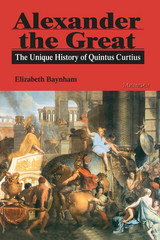
The reign and personality of Alexander the Great---one of the most romantic and powerful kings in history---have remained a source of fascination from antiquity to the present. But because the ancient information surrounding the conqueror is rich, contradictory, and complex, every historian of this near-mythical ruler-whether ancient or modern-invariably creates his or her own Alexander.
The unique work of one such ancient historian, Quintus Curtius, is the subject of Elizabeth Baynham's book. She mines Curtius' study of power for his contemporary perspective, historical methodology, and his portrait of the famous king and presents us with a brilliant, multifaceted study of this unique account regarding one of the most fascinating rulers in history.
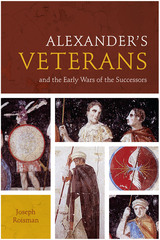
This first focused analysis of veterans’ experiences in ancient Greece offers a fresh, “bottom-up” perspective on important military and political aspects of early Hellenistic history.
Runner-up, PROSE Award, Classics and Ancient History, 2013
From antiquity until now, most writers who have chronicled the events following the death of Alexander the Great have viewed this history through the careers, ambitions, and perspectives of Alexander’s elite successors. Few historians have probed the experiences and attitudes of the ordinary soldiers who followed Alexander on his campaigns and who were divided among his successors as they fought for control of his empire after his death. Yet the veterans played an important role in helping to shape the character and contours of the Hellenistic world.
This pathfinding book offers the first in-depth investigation of the Macedonian veterans’ experience during a crucial turning point in Greek history (323–316 BCE). Joseph Roisman discusses the military, social, and political circumstances that shaped the history of Alexander’s veterans, giving special attention to issues such as the soldiers’ conduct on and off the battlefield, the army assemblies, the volatile relationship between the troops and their generals, and other related themes, all from the perspective of the rank-and-file. Roisman also reexamines the biases of the ancient sources and how they affected ancient and modern depictions of Alexander’s veterans, as well as Alexander’s conflicts with his army, the veterans’ motives and goals, and their political contributions to Hellenistic history. He pays special attention to the Silver Shields, a group of Macedonian veterans famous for their invincibility and martial prowess, and assesses whether or not they deserved their formidable reputation.
Arrivals, inspections, victories.
In this volume are three works concerning the campaigns engaged in by the great Roman statesman Julius Caesar (100–44 BC), but not written by him. The Alexandrian War, which deals with troubles elsewhere also, may have been written by Aulus Hirtius (ca. 90–43 BC, friend and military subordinate of Caesar), who is generally regarded as the author of the last book of Caesar’s Gallic War. The African War and the Spanish War are detailed accounts clearly by officers who had shared in the campaigns. All three works are important sources of our knowledge of Caesar’s career.
The Loeb Classical Library edition of Caesar is in three volumes.

The first study to focus exclusively on the use in the Hebrew Bible of soundplay to allude to and interpret earlier literary traditions
This book focuses on the way the biblical writers used allusive soundplay to construct theological discourse, that is, in service of their efforts to describe the nature of God and God's relationship to humanity. By showing that a variety of biblical books contain examples of allusive soundplay employed for this purpose, Kline demonstrates that this literary device played an important role in the growth of the biblical text as a whole and in the development of ancient Israelite and early Jewish theological traditions.
Features:- Demonstrates that allusive soundplay was a productive compositional technique in ancient Israel
- Identifies examples of innerbiblical allusion that have not been identified before
- A robust methodology for identifying soundplay in innerbiblical allusions

An award-winning novelist’s vibrant portrayal of the struggle to create a more unified society in medieval Egypt and how this has shaped Egypt today.
Brimming with intrigue, adventure, and romance, Al-Qata’i: Ibn Tulun’s City Without Walls tells the epic story of visionary Egyptian leader Ahmad Ibn Tulun who built Al-Qata’i (now Cairo) into a thriving multicultural empire.
The novel begins with the rediscovery of the Ibn Tulun Mosque in 1918 and recounts Ibn Tulun’s life and legacy in the ninth and tenth centuries. Bassiouney presents Ibn Tulun’s benevolent vision to unify all Egyptians in a new city, Al-Qata’i. He becomes so focused on his vision, however, that he cannot see the impact it has on his family or the fate of Egypt. When a betrayal leads to his demise, the rival Abbasid caliph threatens to regain control of Al-Qata’i. In the aftermath of Ibn Tulun’s death, his daughter Aisha emerges as a pivotal figure, bravely taking a stand against the Abbasids to preserve her life, the city, and the iconic mosque.
This contemporary Egyptian writer forces us to consider universal themes, such as diversity and equality, through both a historical and intercultural lens that enriches our understanding of these issues in our world today.
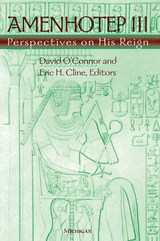
Amenhotep III: Perspectives on His Reign, edited by David O'Connor and Eric H. Cline consists of a series of essays on this complex individual and his reign. In addition to offering several provocative and ground-breaking essays, this volume serves as a compendium and sourcebook for hard-to-obtain details about the reign of Amenhotep III.
The volume begins with an overview of the pharaoh by Larry Berman: his life, his family, and the history of his reign. Betsy Bryan describes the historical antecedents of Amenhotep's reign. Ray Johnson deals first with the building activities of Amen-hotep III and then presents a study of his carved relief decoration, with particular emphasis on the tendencies towards "Atenism." Arielle Kozloff discusses a variety of small objects including cosmetic spoons, glass vessels, jewelry, and funerary equipment. David O'Connor discusses city planning, building functions, and aspects of religion in light of the contemporary Egyptian worldview. Bill Murnane's chapter on government is a fascinating glimpse of the system of government in place at the time. Extensive documentation is provided on the activities of Amenhotep in the Aegean and Anatolia, Mesopotamia, Nubia, and Syro-Palestine. The volume concludes with John Baines's chapter on the Amarna Age.
Amenhotep III: Perspectives on His Reign is a valuable contribution to pharaonic studies. It will be of interest to a wide range of scholars interested in Mediterranean literatures and cultures. It draws on literary, archaeological, and historical material to form an interdisciplinary study of a complex figure in pharaonic Egypt.
David O'Connor is Lila Acheson Wallace Professor of Ancient Egyptian Art, Institute of Fine Arts, New York University. Eric H. Cline is Assistant Professor of History, Xavier University.
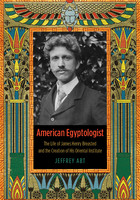
James Henry Breasted (1865–1935) had a career that epitomizes our popular image of the archaeologist. Daring, handsome, and charismatic, he traveled on expeditions to remote and politically unstable corners of the Middle East, helped identify the tomb of King Tut, and was on the cover of Time magazine. But Breasted was more than an Indiana Jones—he was an accomplished scholar, academic entrepreneur, and talented author who brought ancient history to life not just for students but for such notables as Teddy Roosevelt and Sigmund Freud.
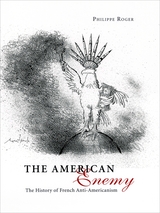
Buffon, as Philippe Roger demonstrates here, was just one of the first in a long line of Frenchmen who have built a history of anti-Americanism in that country, a progressive history that is alternately ludicrous and trenchant. The American Enemy is Roger's bestselling and widely acclaimed history of French anti-Americanism, presented here in English translation for the first time.
With elegance and good humor, Roger goes back 200 years to unearth the deep roots of this anti-Americanism and trace its changing nature, from the belittling, as Buffon did, of the "savage American" to France's resigned dependency on America for goods and commerce and finally to the fear of America's global domination in light of France's thwarted imperial ambitions. Roger sees French anti-Americanism as barely acquainted with actual fact; rather, anti-Americanism is a cultural pillar for the French, America an idea that the country and its culture have long defined themselves against.
Sharon Bowman's fine translation of this magisterial work brings French anti-Americanism into the broad light of day, offering fascinating reading for Americans who care about our image abroad and how it came about.
“A brilliant and exhaustive guide to the history of French Ameriphobia.”—Simon Schama, New Yorker
Women's and men's worlds were largely separate in ancient Mediterranean societies, and, in consequence, many women's deepest personal relationships were with other women. Yet relatively little scholarly or popular attention has focused on women's relationships in antiquity, in contrast to recent interest in the relationships between men in ancient Greece and Rome. The essays in this book seek to close this gap by exploring a wide variety of textual and archaeological evidence for women's homosocial and homoerotic relationships from prehistoric Greece to fifth-century CE Egypt.
Drawing on developments in feminist theory, gay and lesbian studies, and queer theory, as well as traditional textual and art historical methods, the contributors to this volume examine representations of women's lives with other women, their friendships, and sexual subjectivity. They present new interpretations of the evidence offered by the literary works of Sappho, Ovid, and Lucian; Bronze Age frescoes and Greek vase painting, funerary reliefs, and other artistic representations; and Egyptian legal documents.
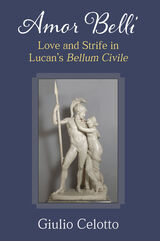
Compelled by the emperor Nero to commit suicide at age 25 after writing uncomplimentary poems, Latin poet Lucan nevertheless left behind a significant body of work, including the Bellum Civile (Civil War). Sometimes also called the Pharsalia, this epic describes the war between Julius Caesar and Pompey.Author Giulio Celotto provides an interpretation of this civil war based on the examination of an aspect completely neglected by previous scholarship: Lucan’s literary adaptation of the cosmological dialectic of Love and Strife.
According to a reading that has found favor over the last three decades, the poem is an unconventional epic that does not conform to Aristotelian norms: Lucan composes a poem characterized by fragmentation and disorder, lacking a conventional teleology, and whose narrative flow is constantly delayed. Celotto’s study challenges this interpretation by illustrating how Lucan invokes imagery of cosmic dissolution, but without altogether obliterating epic norms. The poem transforms them from within, condemning the establishment of the Principate and the Julio-Claudian dynasty.
Greek mercenaries on the march.
Xenophon (ca. 430 to ca. 354 BC) was a wealthy Athenian and friend of Socrates. He left Athens in 401 and joined an expedition including ten thousand Greeks led by the Persian governor Cyrus against the Persian king. After the defeat of Cyrus, it fell to Xenophon to lead the Greeks from the gates of Babylon back to the coast through inhospitable lands. Later he wrote the famous vivid account of this “March Up-Country” (Anabasis); but meanwhile he entered service under the Spartans against the Persian king, married happily, and joined the staff of the Spartan king, Agesilaus. But Athens was at war with Sparta in 394 and so exiled Xenophon. The Spartans gave him an estate near Elis where he lived for years writing and hunting and educating his sons. Reconciled to Sparta, Athens restored Xenophon to honor, but he preferred to retire to Corinth.
Xenophon’s Anabasis is a true story of remarkable adventures. Hellenica, a history of Greek affairs from 411 to 362, begins as a continuation of Thucydides’ account. There are four works on Socrates (collected in LCL 168). In Memorabilia Xenophon adds to Plato’s picture of Socrates from a different viewpoint. The Apology is an interesting complement to Plato’s account of Socrates’ defense at his trial. Xenophon’s Symposium portrays a dinner party at which Socrates speaks of love; and Oeconomicus has him giving advice on household management and married life. Cyropaedia, a historical romance on the education of Cyrus (the Elder), reflects Xenophon’s ideas about rulers and government; the Loeb edition is in two volumes.
We also have his Hiero, a dialogue on government; Agesilaus, in praise of that king; Constitution of Lacedaemon (on the Spartan system); Ways and Means (on the finances of Athens); Manual for a Cavalry Commander; a good manual of Horsemanship; and a lively Hunting with Hounds. The Constitution of the Athenians, though clearly not by Xenophon, is an interesting document on politics at Athens. These eight books are collected in the last of the seven volumes of the Loeb Classical Library edition of Xenophon.
On the march to greatness.
Arrian (Flavius Arrianus), of the period ca. AD 95–175, was a Greek historian and philosopher of Nicomedia in Bithynia. Both a Roman and an Athenian citizen, he was governor of the Roman province of Cappadocia 132–137, and repelled an invasion of the Alani in 134. He retired then to Athens (where he was archon in 148–149) and later to Nicomedia.
Arrian’s Anabasis of Alexander in seven books is the best account we have of Alexander’s adult life. Indica (a description of India and of Nearchus’ voyage therefrom) was to be a supplement.
A student of Epictetus, Arrian took notes at his lectures and published them (in eight books, of which we have four, The Discourses) and also the Encheiridion or Manual of Epictetus. Both works are available in the Loeb edition of Epictetus (LCL 131, 218).
The Loeb Classical Library edition of Arrian is in two volumes.
On the march to greatness.
Arrian (Flavius Arrianus), of the period ca. AD 95–175, was a Greek historian and philosopher of Nicomedia in Bithynia. Both a Roman and an Athenian citizen, he was governor of the Roman province of Cappadocia 132–137, and repelled an invasion of the Alani in 134. He retired then to Athens (where he was archon in 148–149) and later to Nicomedia.
Arrian’s Anabasis of Alexander in seven books is the best account we have of Alexander’s adult life. Indica (a description of India and of Nearchus’ voyage therefrom) was to be a supplement.
A student of Epictetus, Arrian took notes at his lectures and published them (in eight books, of which we have four, The Discourses) and also the Encheiridion or Manual of Epictetus. Both works are available in the Loeb edition of Epictetus (LCL 131, 218).
The Loeb Classical Library edition of Arrian is in two volumes.
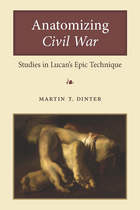
Imperial Latin epic has seen a renaissance of scholarly interest. This book illuminates the work of the poet Lucan, a contemporary of the emperor Nero who as nephew of the imperial adviser Seneca moved in the upper echelons of Neronian society. This young and maverick poet, whom Nero commanded to commit suicide at the age of 26, left an epic poem on the civil war between Caesar and Pompey that epitomizes the exuberance and stylistic experimentation of Neronian culture. This study focuses on Lucan's epic technique and traces his influence through the Middle Ages and the Renaissance.
Martin T. Dinter's newest volume engages with Lucan's use of body imagery, sententiae, Fama (rumor), and open-endedness throughout his civil war epic. Although Lucan's Bellum Civile is frequently decried as a fragmented as well as fragmentary epic, this study demonstrates how Lucan uses devices other than teleology and cohesive narrative structure to bind together the many parts of his epic body.
Anatomizing Civil War places at center stage characteristics of Lucan's work that have so far been interpreted as excessive, or as symptoms of an overly rhetorical culture indicating a lack of substance. By demonstrating that they all contribute to Lucan's poetic technique, Martin T. Dinter shows how they play a fundamental role in shaping and connecting the many episodes of the Bellum Civile that constitute Lucan's epic body. This important volume will be of interest to students of classics and comparative literature as well as literary scholars. All Greek and Latin passages have been translated.
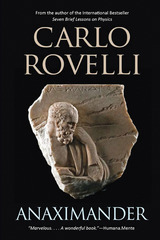
THIS BOOK IS NO LONGER AVAILABLE.
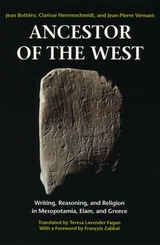
"Full of matter for anyone interested in language, religion, and politics in the ancient world."—R. T. Ridley, Journal of Religious History
"In this accessible introduction to the ancient world, three leading French scholars explore the emergence of rationality and writing in the West, tracing its development and its survival in our own traditions. . . . Jean Bottero focuses on writing and religion in ancient Mesopotamia, Clarisse Herrenschmidt considers a broader history of ancient writing, and Jean-Pierre Vernant examines classical Greek civilization in the context of Near Eastern history."—Translation Review
Ancestors, Kings, and the Dao outlines the evolution of musical performance in early China, first within and then ultimately away from the socio-religious context of ancestor worship. Examining newly discovered bamboo texts from the Warring States period, Constance A. Cook compares the rhetoric of Western Zhou (1046–771 BCE) and Spring and Autumn (770–481 BCE) bronze inscriptions with later occurrences of similar terms in which ritual music began to be used as a form of self-cultivation and education. Cook’s analysis links the creation of such classics as the Book of Odes with the ascendance of the individual practitioner, further connecting the social actors in three types of ritual: boys coming of age, heirs promoted into ancestral government positions, and the philosophical stages of transcendence experienced in self-cultivation.
The focus of this study is on excavated texts; it is the first to use both bronze and bamboo narratives to show the evolution of a single ritual practice. By viewing the ancient inscribed materials and the transmitted classics from this new perspective, Cook uncovers new linkages in terms of how the materials were shaped and reshaped over time and illuminates the development of eulogy and song in changing ritual contexts.
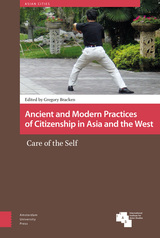

Long regarded as copies of lost Greek masterpieces, a great many Roman works are now seen as neoclassical images worthy of analysis within their own Roman contexts. This book identifies and takes account of Roman criteria in rethinking the function and aesthetic appeal of these works in the eyes of their Roman owners and audiences. Collectively, the essays argue that many traditional assumptions about the status of works of classical art as originals or copies, and much of the evidence that has been used to sustain these assumptions, must be thoroughly rethought.
Among the authors are classical archaeologists, art historians (whose areas of expertise range from antiquity to the nineteenth century), and a contemporary artist and critic.
Elaine K. Gazda is Professor in the Department of the History of Art and the Interdepartmental Program in Classical Art and Archaeology, University of Michigan.
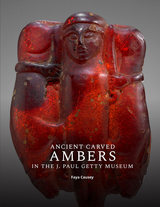
The catalogue is preceded by a general introduction to ancient amber (which was also published in 2012 as a stand-alone print volume titled Amber and the Ancient World). Through exquisite visual examples and vivid classical texts, this book examines the myths and legends woven around amber—its employment in magic and medicine, its transport and carving, and its incorporation into jewelry, amulets, and other objects of prestige. This publication highlights a group of remarkable amber carvings at the J. Paul Getty Museum.
This catalogue was first published in 2012 at museumcatalogues.getty.edu/amber/. The present online edition of this open-access publication was migrated in 2019 to www.getty.edu/publications/ambers/; it features zoomable, high-resolution photography; free PDF, EPUB, and Kindle/MOBI downloads of the book; and JPG downloads of the catalogue images.
The earliest Christian myths emerged in the melting pot of gnostic Alexandria—not in orthodox Jerusalem, classical Athens, or legalistic Rome. In this book, Tjeu van den Berk traces the sources of the Christian faith to the banks of the river Nile. Focusing on ancient archetypes, van den Berk underscores the striking similarities between the Egyptian and Christian religions. In this fascinating study, he explores the symbolism of the Trinity, the cross, and the myths of a god born of a virgin. He also traces the origins of the stories of Lazarus and Saint George, and he finds stunning parallels between Egyptian mythology and the Book of Revelation.
The first, complete English translation of the ancient Egyptian Netherworld Books
The ancient Egyptian Netherworld Books, important compositions that decorated the New Kingdom royal tombs in the Valley of the Kings, present humanity's oldest surviving attempts to provide a scientific map of the unseen realms beyond the visible cosmos and contain imagery and annotations that represent ancient Egyptian speculation (essentially philosophical and theological) about the events of the solar journey through the twelve hours of the night. The Netherworld Books describe one of the central mysteries of Egyptian religious belief—the union of the solar god Re with the underworldly god Osiris—and provide information on aspects of Egyptian theology and cosmography not present in the now more widely read Book of the Dead. Numerous illustrations provide overview images and individual scenes from each Netherworld Book, emphasizing the unity of text and image within the compositions. The major texts translated include the Book of Adoring Re in the West (the Litany of Re), the Book of the Hidden Chamber (Amduat), the Book of Gates, the Book of Caverns, the Books of the Creation of the Solar Disk, and the Books of the Solar-Osirian Unity.
Features:
- Accessible presentations of the main concepts of the Netherworld Books and the chief features of each text
- Notes and commentary address major theological themes within the texts as well as lexicographic and/or grammatical issues
- An overview of later uses of these compositions during the first millennium BCE
Completely revised and updated
James P. Allen provides a translation of the oldest corpus of ancient Egyptian religious texts from the six royal pyramids of the Fifth and Sixth Dynasties (ca. 2350–2150 BCE). Allen’s revisions take into account recent advances in the understanding of Egyptian grammar.
Features:
- Sequential translations based on all available sources, including texts newly discovered in the last decade
- Texts numbered according to the most widely used numbering system with new numbers from the latest 2013 concordance
- Translations reflect the primarily atemporal verbal system of Old Egyptian, which conveys the timeless quality that the text’s authors understood the texts to have
What does it mean to be a hero? The ancient Greeks who gave us Achilles and Odysseus had a very different understanding of the term than we do today. Based on the legendary Harvard course that Gregory Nagy has taught for well over thirty years, The Ancient Greek Hero in 24 Hours explores the roots of Western civilization and offers a masterclass in classical Greek literature. We meet the epic heroes of Homer’s Iliad and Odyssey, but Nagy also considers the tragedies of Aeschylus, Sophocles, and Euripides, the songs of Sappho and Pindar, and the dialogues of Plato. Herodotus once said that to read Homer was to be a civilized person. To discover Nagy’s Homer is to be twice civilized.
“Fascinating, often ingenious… A valuable synthesis of research finessed over thirty years.”
—Times Literary Supplement
“Nagy exuberantly reminds his readers that heroes—mortal strivers against fate, against monsters, and…against death itself—form the heart of Greek literature… [He brings] in every variation on the Greek hero, from the wily Theseus to the brawny Hercules to the ‘monolithic’ Achilles to the valiantly conflicted Oedipus.”
—Steve Donoghue, Open Letters Monthly
The ancient Greeks’ concept of “the hero” was very different from what we understand by the term today, Gregory Nagy argues—and it is only through analyzing their historical contexts that we can truly understand Achilles, Odysseus, Oedipus, and Herakles.
In Greek tradition, a hero was a human, male or female, of the remote past, who was endowed with superhuman abilities by virtue of being descended from an immortal god. Despite their mortality, heroes, like the gods, were objects of cult worship. Nagy examines this distinctively religious notion of the hero in its many dimensions, in texts spanning the eighth to fourth centuries bce: the Homeric Iliad and Odyssey; tragedies of Aeschylus, Sophocles, and Euripides; songs of Sappho and Pindar; and dialogues of Plato. All works are presented in English translation, with attention to the subtleties of the original Greek, and are often further illuminated by illustrations taken from Athenian vase paintings.
The fifth-century bce historian Herodotus said that to read Homer is to be a civilized person. In twenty-four installments, based on the Harvard University course Nagy has taught and refined since the late 1970s, The Ancient Greek Hero in 24 Hours offers an exploration of civilization’s roots in the Homeric epics and other Classical literature, a lineage that continues to challenge and inspire us today.
The ancient Greeks invented written law. Yet, in contrast to later societies in which law became a professional discipline, the Greeks treated laws as components of social and political history, reflecting the daily realities of managing society. To understand Greek law, then, requires looking into extant legal, forensic, and historical texts for evidence of the law in action. From such study has arisen the field of ancient Greek law as a scholarly discipline within classical studies, a field that has come into its own since the 1970s.
This edited volume charts new directions for the study of Greek law in the twenty-first century through contributions from eleven leading scholars. The essays in the book’s first section reassess some of the central debates in the field by looking at questions about the role of law in society, the notion of “contracts,” feuding and revenge in the court system, and legal protections for slaves engaged in commerce. The second section breaks new ground by redefining substantive areas of law such as administrative law and sacred law, as well as by examining sources such as Hellenistic inscriptions that have been comparatively neglected in recent scholarship. The third section evaluates the potential of methodological approaches to the study of Greek law, including comparative studies with other cultures and with modern legal theory. The volume ends with an essay that explores pedagogy and the relevance of teaching Greek law in the twenty-first century.
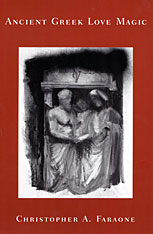
The ancient Greeks commonly resorted to magic spells to attract and keep lovers--as numerous allusions in Greek literature and recently discovered "voodoo dolls," magical papyri, gemstones, and curse tablets attest. Surveying and analyzing these various texts and artifacts, Christopher Faraone reveals that gender is the crucial factor in understanding love spells. There are, he argues, two distinct types of love magic: the curselike charms used primarily by men to torture unwilling women with fiery and maddening passion until they surrender sexually; and the binding spells and debilitating potions generally used by women to sedate angry or philandering husbands and make them more affectionate.
Faraone's lucid analysis of these spells also yields a number of insights about the construction of gender in antiquity, for example, the "femininity" of socially inferior males and the "maleness" of autonomous prostitutes. Most significantly, his findings challenge the widespread modern view that all Greek men considered women to be naturally lascivious. Faraone reveals the existence of an alternate male understanding of the female as "naturally" moderate and chaste, who uses love magic to pacify and control the "naturally" angry and passionate male. This fascinating study of magical practices and their implications for perceptions of male and female sexuality offers an unusual look at ancient Greek religion and society.
2022 PROSE Award Finalist in Classics
Although the era of the Enlightenment witnessed the rise of philosophical debates around benevolent social practice, the origins of European humane discourse date further back, to Classical Athens. The Ancient Greek Roots of Human Rights analyzes the parallel confluences of cultural factors facing ancient Greeks and eighteenth-century Europeans that facilitated the creation and transmission of humane values across history. Rachel Hall Sternberg argues that precursors to the concept of human rights exist in the ancient articulation of emotion, though the ancient Greeks, much like eighteenth-century European societies, often failed to live up to those values.
Merging the history of ideas with cultural history, Sternberg examines literary themes upholding empathy and human dignity from Thucydides’s and Xenophon’s histories to Voltaire’s Candide, and from Greek tragic drama to the eighteenth-century novel. She describes shared impacts of the trauma of war, the appeal to reason, and the public acceptance of emotion that encouraged the birth and rebirth of humane values.
An esteemed teacher offers a major reassessment of the history of Greece from prehistoric times to the rise of Alexander. This is a work of prodigious scholarship written in grand style.
John Fine surveys the archaeological work that has revealed so much about the civilization of Crete and Mycenaean Greece, and discusses the age of colonization during which Greek colonies were established from the Crimea to the Nile, from the Caucasus to Spain. Analyzing social and economic developments, as well as foreign and inter-city affairs, he assesses the history, culture, and democracy of Athens, and Sparta’s institutions and military exploits; recounts the Greeks’ relations and then war with the Persian empire; details alliances, struggles, and the varying fortunes of the Greek city-states; and relates the rise of Macedon. Fine treats the Greeks’ story in the context of events elsewhere in the eastern Mediterranean. Throughout he indicates the nature of the evidence on which our present knowledge is based, masterfully explaining the problems and pitfalls in interpreting ancient accounts. The Ancient Greeks is a splendid narrative history and a refreshing reinterpretation that will please students of ancient history, and everyone interested in early civilizations.
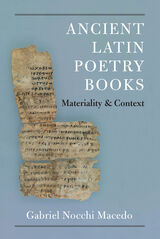
Before the invention of printing, all forms of writing were done by hand. For a literary text to circulate among readers, and to be transmitted from one period in time to another, it had to be copied by scribes. As a result, two copies of an ancient book were different from one another, and each individual book or manuscript has its own history. The oldest of these books, those that are the closest to the time in which the texts were composed, are few, usually damaged, and have been often neglected in the scholarship. Ancient Latin Poetry Books presents a detailed study of the oldest manuscripts still extant that contain texts by Latin poets, such as Virgil, Terence, and Ovid. Analyzing their physical characteristics, their script, and the historical contexts in which they were produced and used, this volume shows how manuscripts can help us gain a better understanding of the history of texts, as well as of reading habits over the centuries. Since the manuscripts originated in various places of the Latin-speaking world, Ancient Latin Poetry Books investigates the readership and reception of Latin poetry in many different contexts, such schools in the Egyptian desert, aristocratic circles in southern Italy, and the Christian élite in late antique Rome. The research also contributes to our knowledge about the use of writing and the importance of the written text in antiquity. This is an innovative approach to the study of ancient literature, one that takes the materiality of texts into consideration.
Essays cover topics such as using collective sanctions to enforce legal norms; the Greek elite’s marriage strategies for amassing financial resources essential for a public career; defenses against murder charges under Athenian criminal law, particularly in cases where the victim put his own life in peril; the interplay between Roman law and provincial institutions in regulating water rights; the Severan-age Greek author Aelian’s notions of justice and their influence on late-classical Roman jurisprudence; Roman jurists’ approach to the contract of mandate in balancing the changing needs of society against respect for upper-class concepts of duty and reciprocity; whether the Roman legal authorities developed the law exclusively to serve the Roman elite’s interests or to meet the needs of the Roman Empire’s broader population as well; and an analysis of the Senatus Consultum Claudianum in the Code of Justinian demonstrating how the late Roman government adapted classical law to address marriage between free women and men classified as coloni bound to their land.
In addition to volume editors Dennis P. Kehoe and Thomas A. J. McGinn, contributors include Adriaan Lanni, Michael Leese, David Phillips, Cynthia Bannon, Lauren Caldwell, Charles Pazdernik, and Clifford Ando.
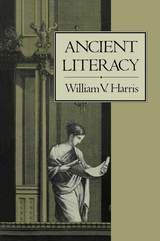
How many people could read and write in the ancient world of the Greeks and Romans?
No one has previously tried to give a systematic answer to this question. Most historians who have considered the problem at all have given optimistic assessments, since they have been impressed by large bodies of ancient written material such as the graffiti at Pompeii. They have also been influenced by a tendency to idealize the Greek and Roman world and its educational system.
In Ancient Literacy W. V. Harris provides the first thorough exploration of the levels, types, and functions of literacy in the classical world, from the invention of the Greek alphabet about 800 B.C. down to the fifth century A.D. Investigations of other societies show that literacy ceases to be the accomplishment of a small elite only in specific circumstances. Harris argues that the social and technological conditions of the ancient world were such as to make mass literacy unthinkable. Noting that a society on the verge of mass literacy always possesses an elaborate school system, Harris stresses the limitations of Greek and Roman schooling, pointing out the meagerness of funding for elementary education.
Neither the Greeks nor the Romans came anywhere near to completing the transition to a modern kind of written culture. They relied more heavily on oral communication than has generally been imagined. Harris examines the partial transition to written culture, taking into consideration the economic sphere and everyday life, as well as law, politics, administration, and religion. He has much to say also about the circulation of literary texts throughout classical antiquity.
The limited spread of literacy in the classical world had diverse effects. It gave some stimulus to critical thought and assisted the accumulation of knowledge, and the minority that did learn to read and write was to some extent able to assert itself politically. The written word was also an instrument of power, and its use was indispensable for the construction and maintenance of empires. Most intriguing is the role of writing in the new religious culture of the late Roman Empire, in which it was more and more revered but less and less practiced.
Harris explores these and related themes in this highly original work of social and cultural history. Ancient Literacy is important reading for anyone interested in the classical world, the problem of literacy, or the history of the written word.
Hippocrates, said to have been born in Cos in or before 460 BCE, learned medicine and philosophy; travelled widely as a medical doctor and teacher; was consulted by King Perdiccas of Macedon and Artaxerxes of Persia; and died perhaps at Larissa. Apparently he rejected superstition in favour of inductive reasoning and the study of real medicine as subject to natural laws, in general and in individual people as patients for treatment by medicines and surgery. Of the roughly 70 works in the “Hippocratic Collection,” many are not by Hippocrates; even the famous oath may not be his. But he was undeniably the “Father of Medicine.”
The works available in the Loeb Classical Library edition of Hippocrates are:
Volume I: Ancient Medicine. Airs, Waters, Places. Epidemics 1 and 3. The Oath. Precepts. Nutriment.
Volume II: Prognostic. Regimen in Acute Diseases. The Sacred Disease. The Art. Breaths. Law. Decorum. Physician (Ch. 1). Dentition.
Volume III: On Wounds in the Head. In the Surgery. On Fractures. On Joints. Mochlicon.
Volume IV: Nature of Man. Regimen in Health. Humours. Aphorisms. Regimen 1–3. Dreams.
Volume V: Affections. Diseases 1–2.
Volume VI: Diseases 3. Internal Affections. Regimen in Acute Diseases.
Volume VII: Epidemics 2 and 4–7.
Volume VIII: Places in Man. Glands. Fleshes. Prorrhetic 1–2. Physician. Use of Liquids. Ulcers. Haemorrhoids and Fistulas.
Volume IX: Anatomy. Nature of Bones. Heart. Eight Months’ Child. Coan Prenotions. Crises. Critical Days. Superfetation. Girls. Excision of the Fetus. Sight.
Volume X: Generation. Nature of the Child. Diseases 4. Nature of Women. Barrenness.
Volume XI: Diseases of Women 1–2.
(Volume IV also contains the fragments of Heracleitus’ On the Universe.)
In Ancient Mesopotamia at the Dawn of Civilization, Guillermo Algaze draws on the work of modern economic geographers to explore how the unique river-based ecology and geography of the Tigris-Euphrates alluvium affected the development of urban civilization in southern Mesopotamia. He argues that these natural conditions granted southern polities significant competitive advantages over their landlocked rivals elsewhere in Southwest Asia, most importantly the ability to easily transport commodities. In due course, this resulted in increased trade and economic activity and higher population densities in the south than were possible elsewhere. As southern polities grew in scale and complexity throughout the fourth millennium, revolutionary new forms of labor organization and record keeping were created, and it is these socially created innovations, Algaze argues, that ultimately account for why fully developed city-states emerged earlier in southern Mesopotamia than elsewhere in Southwest Asia or the world.
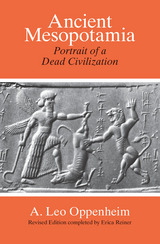
Ancient Mesopotamia—the area now called Iraq—has received less attention than ancient Egypt and other long-extinct and more spectacular civilizations. But numerous small clay tablets buried in the desert soil for thousands of years make it possible for us to know more about the people of ancient Mesopotamia than any other land in the early Near East.
Professor Oppenheim, who studied these tablets for more than thirty years, used his intimate knowledge of long-dead languages to put together a distinctively personal picture of the Mesopotamians of some three thousand years ago. Following Oppenheim's death, Erica Reiner used the author's outline to complete the revisions he had begun.
"To any serious student of Mesopotamian civilization, this is one of the most valuable books ever written."—Leonard Cottrell, Book Week
"Leo Oppenheim has made a bold, brave, pioneering attempt to present a synthesis of the vast mass of philological and archaeological data that have accumulated over the past hundred years in the field of Assyriological research."—Samuel Noah Kramer, Archaeology
A. Leo Oppenheim, one of the most distinguished Assyriologists of our time, was editor in charge of the Assyrian Dictionary of the Oriental Institute and John A. Wilson Professor of Oriental Studies at the University of Chicago.
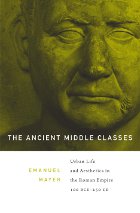
Our image of the Roman world is shaped by the writings of Roman statesmen and upper class intellectuals. Yet most of the material evidence we have from Roman times—art, architecture, and household artifacts from Pompeii and elsewhere—belonged to, and was made for, artisans, merchants, and professionals. Roman culture as we have seen it with our own eyes, Emanuel Mayer boldly argues, turns out to be distinctly middle class and requires a radically new framework of analysis.
Starting in the first century bce, ancient communities, largely shaped by farmers living within city walls, were transformed into vibrant urban centers where wealth could be quickly acquired through commercial success. From 100 bce to 250 ce, the archaeological record details the growth of a cosmopolitan empire and a prosperous new class rising along with it. Not as keen as statesmen and intellectuals to show off their status and refinement, members of this new middle class found novel ways to create pleasure and meaning. In the décor of their houses and tombs, Mayer finds evidence that middle-class Romans took pride in their work and commemorated familial love and affection in ways that departed from the tastes and practices of social elites.
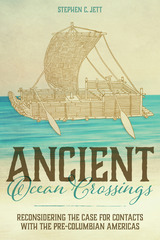
In Ancient Ocean Crossings: Reconsidering the Case for Contacts with the Pre-Columbian Americas, Stephen Jett encourages readers to reevaluate the common belief that there was no significant interchange between the chiefdoms and civilizations of Eurasia and Africa and peoples who occupied the alleged terra incognita beyond the great oceans.
More than a hundred centuries separate the time that Ice Age hunters are conventionally thought to have crossed a land bridge from Asia into North America and the arrival of Columbus in the Bahamas in 1492. Traditional belief has long held that earth’s two hemispheres were essentially cut off from one another as a result of the post-Pleistocene meltwater-fed rising oceans that covered that bridge. The oceans, along with arctic climates and daunting terrestrial distances, formed impermeable barriers to interhemispheric communication. This viewpoint implies that the cultures of the Old World and those of the Americas developed independently.
Drawing on abundant and concrete evidence to support his theory for significant pre-Columbian contacts, Jett suggests that many ancient peoples had both the seafaring capabilities and the motives to cross the oceans and, in fact, did so repeatedly and with great impact. His deep and broad work synthesizes information and ideas from archaeology, geography, linguistics, climatology, oceanography, ethnobotany, genetics, medicine, and the history of navigation and seafaring, making an innovative and persuasive multidisciplinary case for a new understanding of human societies and their diffuse but interconnected development.
The present volume includes the author's thoughts on Greek and Roman religions, early Christianity, Greek and Roman psychology and morals, and magic and the occult. Luck's main findings explore generally neglected areas of ancient civilization, locating magic and philosophy with religion as vehicles for moral and psychological guidance. Throughout this study, one finds meaning in "superstitious" and conflicting patterns of behavior and learns much about the nature of the human soul. This collection will serve as a valuable reference for those interested in the driving motivations of ancient man.
"The topics of the individual articles in this volume are very central and of great humanistic appeal, and they indeed form a thematic unity concerning man and religion in Greek and Roman society." --Ludwig Koenen, Herbert C. Youtie Distinguished University Professor of Papyrology, University of Michigan
Georg Luck is Professor of Classics, emeritus, The Johns Hopkins University.
This book is a study of the variable perceptions of Greek collective identity, discussing ancient categories such as blood- and mythically-related primordiality, language, religion, and culture. With less emphasis on dichotomies between Greeks and others, the book considers complex middle grounds of intra-Hellenic perceptions, oppositional identities, and outsiders’ views. Although the authors do not seek to provide a litmus test of Greek identity, they do pay close attention to modern theories of ethnicity, its construction, function, and representation, and assess their applicability to views of Greekness in antiquity.
From the Archaic period through the Roman Empire, archaeological, anthropological, historical, historiographical, rhetorical, artistic, and literary aspects are studied. Regardless of the invented aspects of ethnicity, the book illustrates its force and validity in history.
Ancient Perspectives encompasses a vast arc of space and time—Western Asia to North Africa and Europe from the third millennium BCE to the fifth century CE—to explore mapmaking and worldviews in the ancient civilizations of Mesopotamia, Egypt, Greece, and Rome. In each society, maps served as critical economic, political, and personal tools, but there was little consistency in how and why they were made. Much like today, maps in antiquity meant very different things to different people.

Breasted's monumental work, originally published from 1906 to 1907, encompasses twenty-six dynasties spanning more than three millennia: from ca. 3050 B.C. to 525 B.C. For each document, Breasted provides information on location, condition, historical significance, and content. Beginning with the earliest known official annals of Egypt, the Palermo Stone, Breasted catalogs the realm's official activities, including royal succession, temple construction, property distribution, and foreign conquest. He tracks the careers of scores of kings, queens, government officials, military leaders, powerful statesmen, and influential courtiers, reproducing their autobiographies, letters of favor, paeans, mortuary gifts, and tomb inscriptions. Clearly annotated for the lay reader, the documents provide copious evidence of trade relations, construction activities, diplomatic envoys, foreign expeditions, and other aspects of a vigorous, highly organized, and centrally controlled society.
Breasted's commentary is both rigorously documented and accessible, suffused with a contagious fascination for the events, the personalities, the cultural practices, and the sophistication these records indicate. A herculean assemblage of primary documents, many of which have deteriorated to illegibility in the intervening century, Ancient Records of Egypt illuminates both the incredible complexity of Egyptian society and the almost insuperable difficulties of reconstructing a lost civilization.
This first paperback edition of Ancient Records of Egypt features a new introduction and supplementary bibliographies by Peter A. Piccione. Setting Breasted's work in the context of the development of American Egyptology, Piccione discusses Breasted's establishment of the Oriental Institute of the University of Chicago, with corporate support by John D. Rockefeller and other benefactors, and surveys the ambitious body of publications with which Breasted laid the foundation for future Egyptian studies.
The Eighteenth Dynasty saw the consolidation of the cult of Amun and the expansion of the temple of Amun-Re at Karnak, as well as a religious revolution under King Akhenaten that involved abandoning Thebes as a religious capital and royal residence and founding a new city devoted to the service of the new solar god, Aten. Breasted presents records of the biography and coronation of Queen Hatshepsut, including reliefs that depict the queen's expedition to the land of Punt. Also in this volume are the annals of Thutmose III, providing the most complete account of the military achievements of any Egyptian king; scenes representing the supernatural birth and coronation by the gods of his son, Amenhotep II; and inscriptions from the tomb of Rekhmire, prime minister or vizier under Thutmose III, that include a listing of taxes paid to the temple and foreign tribute proceeding from the king's two decades of military activity in Asia.
A herculean assemblage of primary documents, many of which have deteriorated to illegibility since its original publication, Ancient Records of Egypt illuminates both the incredible complexity of Egyptian society and the almost insuperable difficulties of reconstructing a lost civilization.
In the context of a long history of mutilating and altering reliefs for political purposes, Breasted discusses the insertion into a relief of the figure of Ramesses II in order to reinforce his claim to the throne. This volume also includes the treaty of alliance that sealed peace with the Hittites under Ramesses II; a series of documents that record the invasion of Libyans and Mediterranean Sea people during the reign of Merneptah; and the Great Temple of Abu Simbel, the most remarkable of the rock-cut temples of Egypt.
This first complete paperback edition of Breasted's five-volume Ancient Records of Egypt makes available to a new audience a milestone in Egyptology and in the compilation of documentary histories. Clearly annotated for the lay reader, the documents provide copious evidence of trade relations, construction activities, diplomatic envoys, foreign expeditions, and other aspects of a vigorous, highly organized, and centrally controlled society. Breasted's commentary is both rigorously documented and accessible, suffused with a contagious fascination for the events, the personalities, the cultural practices, and the sophistication these records indicate
Volume 4 includes intriguing records of the harem conspiracy and legal documents that indicate the extent of robberies of royal tombs. Records of the Nile levels at Karnak provide important chronological landmarks, while the Stela of Piye (Piankhi), which documents the Nubian kingdom already in existence as a full-fledged power, provides information on the internal political climate of Egypt during a time when no aggressive monarch controlled the whole country. Breasted also notes where these ancient Egyptian records intersect with accounts of the same events from other sources, such as the mutiny of Psamtik I's troops as inscribed on the alabaster statue of Nesuhor and as narrated by Herodotus.
In effect, Ancient Records of Egypt offers a valuable dual record. On the one hand, Breasted presents the events and personages of ancient Egypt as recorded in the documents. On the other hand, he presents a history of the documents themselves. Fragmentary or partially destroyed, carved on temple and tomb walls or written on fragile scrolls of leather or papyrus, even inscribed on the coffins and temple linens of the royal and priestly mummy wrappings, these records offer an irreplaceable primary source on a fascinating civilization.
An indispensable companion to any of the other volumes of Ancient Records of Egypt, the Supplementary Bibliographies and Indices facilitates direct access to specific information on the people, places, and inscriptions catalogued by James Henry Breasted. Exhaustively compiled and intelligently arranged, these indices include the kings and queens, temples and geographical locations, divine names, and titles and ranks encompassed by three thousand years of Egyptian history. Also provided are indices of all Egyptian, Hebrew, and Arabic terms mentioned in the texts, as well as a complete listing of the records with their location in Lepsius's Denkmäler.
This first paperback edition of Ancient Records of Egypt features the important addition of bibliographies by Peter A. Piccione, together with an introduction that puts Breasted's historical commentaries into modern perspective. These bibliographies offer valuable guidance on new translations and modern treatments of the inscriptions included in Ancient Records of Egypt. Professor Piccione points the reader toward recent studies of Egyptian chronology and modern scholarship on Egyptian and Nubian history. He also provides information on anthologies of Egyptian texts in translation and topographical bibliographies that suggest further reading on specific ancient Egyptian monuments, texts, and reliefs.
In ancient Rome, it was believed some humans were transformed into special, empowered beings after death. These deified dead, known as the manes, watched over and protected their surviving family members, possibly even extending those relatives’ lives. But unlike the Greek hero-cult, the worship of dead emperors, or the Christian saints, the manes were incredibly inclusive—enrolling even those without social clout, such as women and the poor, among Rome's deities. The Roman afterlife promised posthumous power in the world of the living.
While the manes have often been glossed over in studies of Roman religion, this book brings their compelling story to the forefront, exploring their myriad forms and how their worship played out in the context of Roman religion’s daily practice. Exploring the place of the manes in Roman society, Charles King delves into Roman beliefs about their powers to sustain life and bring death to individuals or armies, examines the rituals the Romans performed to honor them, and reclaims the vital role the manes played in the ancient Roman afterlife.
While the term villa is generic today, its meaning extended across the entirety of ancient Roman life: villas supplied food, oil, and wine to towns and cities and produced raw materials for craft industries and building construction. Villas were also venues for pleasure, relaxation, and the cultivation of friendships and the mind. Many were known for their spectacular sites, architecture, decoration, and furnishings. They came to be ubiquitous throughout ancient Rome's European and Mediterranean rural hegemony.
This volume compiles a wealth of newly translated Latin and ancient Greek sources—treatises, letters, poems, histories, biographies, and other works of literary art—to vividly convey the architectural, economic, social, political, and cultural significance of ancient Roman villas, from their Greek antecedents through the early Christian period. Thematic chapters reveal ancient Roman attitudes on villa architecture, agricultural operations, and the practices of buying, building, and decorating villas as well as entertaining and pursuing leisure there. References to family, gender relations, and the lives of enslaved persons aim to situate, if only indirectly, a broad range of experiences within villas. Supplemented by generous commentaries, copious annotation, a comprehensive bibliography, and a glossary, this definitive sourcebook equips scholars and students alike for further research and makes for fascinating reading.
An esteemed historian explores the natural and social dynamics of the ancient coastline, demonstrating for the first time its integral place in the world of Mediterranean antiquity.
As we learn from The Odyssey and the Argonauts, Greek dramas frequently played out on a watery stage. In particular, antiquity’s key events and exchanges often occurred on coastlines. Yet the shore was not just a site of conquest and trade, ire and yearning. The seacoast was a singular kind of space and was integral to the cosmology of the Greeks and their neighbors. In The Ancient Shore, award-winning historian Paul Kosmin reveals the influence of the coast on the inner lives of the ancients: their political thought, scientific notions, artistic endeavors, and myths; their sense of wonder and of self.
The Ancient Shore transports readers to a time when the coast was an unpredictable, formidable site of infinite and humbling possibility. Shorelines served as points of connection and competition that fostered distinctive political identities. It was at the coast—ever violent, ever permeable to predation—that state power ended, and so the coast was fundamental to theories of sovereignty. Then too, the boundary of land and sea symbolized human limitation, making it the subject of elaborate and continuous philosophical, scientific, and religious attention.
Kosmin’s ancient world is expansive, connecting the Atlantic to the Straits of Malacca, the Black Sea to the Indian Ocean. And his methods are similarly far-ranging, integrating accounts of statecraft and commerce with intellectual, literary, religious, and environmental history. The Ancient Shore is a radically new encounter with people, places, objects, and ideas we thought we knew.
This collection of essays represents Vogt's personal contribution to the collective enterprise; the English edition is translated from the second German edition of 1972, which included three additional papers and a supplement bringing his earlier work up to date.
The distinctive features of Vogt's approach to ancient slavery are his social awareness and sympathetic commitment, and his refusal either to ignore or be dominated by the dogmas of the left and the structures of sociology. His systematic investigation of ancient slave wars, which is the centre of this collection, is a reasoned refutation of more extreme Marxist interpretations, and a brilliant demonstration that a pragmatic approach to the analysis of a general phenomenon can lead to conclusions as far-reaching as any a priori system. Other outstanding essays investigate with subtlety and insight the position of slaves in literature and in utopian theory, the concept of the slave of God in early Christian thought, and the extent to which rigid distinctions between slave and free were eroded by the daily contact between individuals in different social roles, and by their inability to forget that both masters and slaves were human beings, with personal loyalties and friendships. The volume ends with two essays on the interrelationship between ancient and modern attitudes to slavery since the Renaissance.
The Thracians—a collection of tribal peoples who inhabited territories north of ancient Greece, an area that comprises present-day Bulgaria, much of Romania, and parts of Greece and Turkey—were renowned for their skill as warriors and horsemen, as well as for their wealth in precious metals. Thracians left few written records, and knowledge of their history and customs has long been dependent on brief accounts from ancient Greek authors. They appeared in Greek myth as formidable adversaries in the Trojan War, cruel kings, and followers of the ecstatic god Dionysos. Spectacular archaeological discoveries made in Thracian lands during modern times, however, have provided firsthand evidence of this remarkable culture, illuminating Thrace’s interactions with Greece, Persia, and Rome.
Ancient Thrace and the Classical World reproduces more than two hundred glorious objects dating from the end of the Bronze Age, around 1200 BC, to the end of the first century AD, when Thrace became part of the Roman Empire. Experts explore topics such as Thracian royal tombs, the Greek colonization of the Black Sea coast, Thracian religion, and more, placing Thracian culture in a broader historical context that highlights its complex relationships with the surrounding region.
This volume is published to accompany an exhibition on view at the J. Paul Getty Museum at the Getty Villa from November 6, 2024, to March 3, 2025.
Animal law has become a topic of growing importance internationally, with animal welfare and animal rights often assuming center stage in contemporary debates about the legal status of animals. While nonspecialists routinely decontextualize ancient texts to support or deny rights to animals, experts in fields such as classics, biblical studies, Assyriology, Egyptology, rabbinics, and late antique Christianity have only just begun to engage the topic of animals and the law in their respective areas. This volume consists of original studies by scholars from a range of Mediterranean and West Asian fields on a variety of topics at the intersection of animals and the law in antiquity. Contributors include Rozenn Bailleul-LeSuer, Beth Berkowitz, Andrew McGowan, F. S. Naiden, Saul M. Olyan, Seth Richardson, Jordan D. Rosenblum, Andreas Schüle, Miira Tuominen, and Daniel Ullucci. The volume is essential reading for scholars and students of both the ancient world and contemporary law.
The paramount historian of the early Roman empire.
Tacitus (Cornelius), famous Roman historian, was born in AD 55, 56 or 57 and lived to about 120. He became an orator, married in 77 a daughter of Julius Agricola before Agricola went to Britain, was quaestor in 81 or 82, a senator under the Flavian emperors, and a praetor in 88. After four years’ absence he experienced the terrors of Emperor Domitian’s last years and turned to historical writing. He was a consul in 97. Close friend of the younger Pliny, with him he successfully prosecuted Marius Priscus.
Works: (i) Life and Character of Agricola, written in 97–98, specially interesting because of Agricola’s career in Britain. (ii) Germania (98–99), an equally important description of the geography, anthropology, products, institutions, and social life and the tribes of the Germans as known to the Romans. (iii) Dialogue on Oratory (Dialogus), of unknown date; a lively conversation about the decline of oratory and education. (iv) Histories (probably issued in parts from 105 onwards), a great work originally consisting of at least twelve books covering the period AD 69–96, but only Books 1–4 and part of Book 5 survive, dealing in detail with the dramatic years 69–70. (v) Annals, Tacitus’s other great work, originally covering the period AD 14–68 (Emperors Tiberius, Gaius, Claudius, Nero) and published between 115 and about 120. Of sixteen books at least, there survive Books 1–4 (covering the years 14–28); a bit of Book 5 and all Book 6 (31–37); part of Book 11 (from 47); Books 12–15 and part of Book 16 (to 66).
Tacitus is renowned for his development of a pregnant concise style, character study, and psychological analysis, and for the often terrible story which he brilliantly tells. As a historian of the early Roman empire he is paramount.
The Loeb Classical Library edition of Tacitus is in five volumes.
The paramount historian of the early Roman empire.
Tacitus (Cornelius), famous Roman historian, was born in AD 55, 56 or 57 and lived to about 120. He became an orator, married in 77 a daughter of Julius Agricola before Agricola went to Britain, was quaestor in 81 or 82, a senator under the Flavian emperors, and a praetor in 88. After four years’ absence he experienced the terrors of Emperor Domitian’s last years and turned to historical writing. He was a consul in 97. Close friend of the younger Pliny, with him he successfully prosecuted Marius Priscus.
Works: (i) Life and Character of Agricola, written in 97–98, specially interesting because of Agricola’s career in Britain. (ii) Germania (98–99), an equally important description of the geography, anthropology, products, institutions, and social life and the tribes of the Germans as known to the Romans. (iii) Dialogue on Oratory (Dialogus), of unknown date; a lively conversation about the decline of oratory and education. (iv) Histories (probably issued in parts from 105 onwards), a great work originally consisting of at least twelve books covering the period AD 69–96, but only Books 1–4 and part of Book 5 survive, dealing in detail with the dramatic years 69–70. (v) Annals, Tacitus’s other great work, originally covering the period AD 14–68 (Emperors Tiberius, Gaius, Claudius, Nero) and published between 115 and about 120. Of sixteen books at least, there survive Books 1–4 (covering the years 14–28); a bit of Book 5 and all Book 6 (31–37); part of Book 11 (from 47); Books 12–15 and part of Book 16 (to 66).
Tacitus is renowned for his development of a pregnant concise style, character study, and psychological analysis, and for the often terrible story which he brilliantly tells. As a historian of the early Roman empire he is paramount.
The Loeb Classical Library edition of Tacitus is in five volumes.
David Mulroy’s translation of Antigone faithfully reproduces the literal meaning of Sophocles’ words while also reflecting his verbal pyrotechnics. Using fluid iambic pentameters for the spoken passages and rhyming stanzas for the songs, it is true to the letter and the spirit of the great Greek original.
Winner, Friends of the Dallas Public Library Award from the Texas Institute of Letters, 2003
Antiphon was a fifth-century Athenian intellectual (ca. 480-411 BCE) who created the profession of speechwriting while serving as an influential and highly sought-out adviser to litigants in the Athenian courts. Three of his speeches are preserved, together with three sets of Tetralogies (four hypothetical paired speeches), whose authenticity is sometimes doubted. Fragments also survive of intellectual treatises on subjects including justice, law, and nature (physis), which are often attributed to a separate Antiphon the Sophist. Were these two Antiphons really one and the same individual, endowed with a wide-ranging mind ready to tackle most of the diverse intellectual interests of his day?
Through an analysis of all these writings, this book convincingly argues that they were composed by a single individual, Antiphon the Athenian. Michael Gagarin sets close readings of individual works within a wider discussion of the fifth-century Athenian intellectual climate and the philosophical ferment known as the sophistic movement. This enables him to demonstrate the overall coherence of Antiphon's interests and writings and to show how he was a pivotal figure between the sophists and the Attic orators of the fourth century. In addition, Gagarin's argument allows us to reassess the work of the sophists as a whole, so that they can now be seen as primarily interested in logos (speech, argument) and as precursors of fourth-century rhetoric, rather than in their usual role as foils for Plato.
Oratory and philosophy from a Latin novelist.
Apuleius, one of the great stylists of Latin literature, was born ca. AD 125 in Madauros to a politically prominent family and received an elite education in the provincial capital Carthage and at Athens, where he began a lifelong allegiance to Platonic philosophy. In the later 150s, he married Pudentilla of Oea, a wealthy widow, and seems to have enjoyed a distinguished public career in Africa and perhaps as an advocate in Rome.
Although Apuleius is best known for his picaresque novel Metamorphoses or The Golden Ass (LCL 44, 453), he also wrote and declaimed on a wide variety of subjects. This edition contains the other surviving works of Apuleius that are considered genuine. Apologia is a speech delivered probably in 158/59 in which Apuleius defends himself against in-laws who had accused him of having used sinister means, including magic, to induce Pudentilla to marry him. The Florida is a collection of twenty-three excerpts from speeches by Apuleius, probably all of them delivered in Africa; the title refers either to their florid style or to their resemblance to an anthology, perhaps both. De Deo Socratis (On Socrates’ God) takes the form of a speech addressed to a cultured, nonspecialist Latin-speaking audience that locates Socrates’ invisible guide and protector (daimonion) within the more general concept of daimones as forces intermediary between gods and humans.
The Loeb Classical Library edition of Apuleius is in three volumes.
Sahlins begins by confronting Thucydides' account of the Peloponnesian War with an analogous "Polynesian War," the fight for the domination of the Fiji Islands (1843-55) between a great sea power (like Athens) and a great land power (like Sparta). Sahlins draws parallels between the conflicts with an eye to their respective systems of power and sovereignty as well as to Thucydides' alternation between individual (Pericles, Themistocles) and collective (the Athenians, the Spartans) actors in the making of history. Characteristic of most histories ever written, this alternation between the agency of "Great Men" and collective entities leads Sahlins to a series of incisive analyses ranging in subject matter from Bobby Thomson's "shot heard round the world" for the 1951 Giants to the history-making of Napoleon and certain divine kings to the brouhaha over Elián Gonzalez. Finally, again departing from Thucydides, Sahlins considers the relationship between cultural order and historical contingency through the recounting of a certain royal assassination that changed the course of Fijian history, a story of fratricide and war worthy of Shakespeare.
In this most convincing presentation yet of his influential theory of culture, Sahlins experiments with techniques for mixing rich narrative with cultural explication in the hope of doing justice at once to the actions of persons and the customs of people. And he demonstrates the necessity of taking culture into account in the creation of history—with apologies to Thucydides, who too often did not.
Austere apologetics.
Q. Septimus Florens Tertullianus (ca. AD 150–222) was born a soldier’s son at Carthage, educated in Greek and Roman literature, philosophy, and medicine, and later studied law to became a pleader, remaining a clever and often tortuous arguer. At Rome he became a learned and militant Christian. After visiting churches in Greece (and Asia Minor?) he returned to Carthage and in his writings there founded a Christian Latin language and literature, toiling to fuse enthusiasm with reason; to unite the demands of the Bible with the practice of the Church; and to continue to vindicate the Church’s possession of the true doctrine in the face of unbelievers, Jews, Gnostics, and others. In some of his many works he defended Christianity, in others he attacked heretical people and beliefs; in others he dealt with morals. In this volume are his Apologeticus and De Spectaculis.
Of Minucius, an early Christian writer of unknown date, we have only Octavius, a vigorous and readable debate between an unbeliever and a Christian friend of Minucius, the lawyer Octavius Ianuarius. Minucius himself acts as presiding judge. Octavius wins the argument. The whole work presents a picture of social and religious conditions in Rome, apparently about the end of the second century.

The Roman poet Statius called the via Appia “the Queen of Roads,” and for nearly a thousand years that description held true, as countless travelers trod its path from the center of Rome to the heel of Italy. Today, the road is all but gone, destroyed by time, neglect, and the incursions of modernity; to travel the Appian Way today is to be a seeker, and to walk in the footsteps of ghosts.
Our guide to those ghosts—and the layers of history they represent—is Robert A. Kaster. In The Appian Way, he brings a lifetime of studying Roman literature and history to his adventures along the ancient highway. A footsore Roman soldier pushing the imperial power south; craftsmen and farmers bringing their goods to the towns that lined the road; pious pilgrims headed to Jerusalem, using stage-by-stage directions we can still follow—all come to life once more as Kaster walks (and drives—and suffers car trouble) on what’s left of the Appian Way. Other voices help him tell the story: Cicero, Goethe, Hawthorne, Dickens, James, and even Monty Python offer commentary, insight, and curmudgeonly grumbles, their voices blending like the ages of the road to create a telescopic, perhaps kaleidoscopic, view of present and past.
To stand on the remnants of the Via Appia today is to stand in the pathway of history. With The Appian Way, Kaster invites us to close our eyes and walk with him back in time, to the campaigns of Garibaldi, the revolt of Spartacus, and the glory days of Imperial Rome. No traveler will want to miss this fascinating journey.
Fabretti's treatise, De aquis et aquaeductibus veteris Romae dissertationes tres, is cited as a matter of course by all later scholars working in the area of Roman topography. Its findings--while updated and supplemented by more recent archaeological efforts--have never been fully superseded. Yet despite its enormous importance and impact on scholarly efforts, the De aquis has never yet been translated from the original Latin. Aqueduct Hunting in the Seventeenth Century provides a full translation of and commentary on Fabretti's writings, making them accessible to a broad audience and carefully assessing their scholarly contributions.
Harry B. Evans offers his reader an introduction to Fabretti and his scholarly world. A complete translation and a commentary that focuses primarily on the topographical problems and Fabretti's contribution to our understanding of them are also provided. Evans also assesses the contributions and corrections of later archaeologists and topographers and places the De aquis in the history of aqueduct studies.
Evans demonstrates that Fabretti's conclusions, while far from definitive, are indeed significant and merit wider attention than they have received to date. This book will appeal to classicists and classical archaeologists, ancient historians, and readers interested in the history of technology, archaeology, and Rome and Italy in the seventeenth century.
Harry B. Evans is Professor of Classics, Fordham University.
This introduction to major topics in the field of Arabic sociolinguistics examines key issues in diglossia, code-switching, gendered discourse, language variation and change, and language policies. It introduces and evaluates various theoretical approaches and models, and it illustrates the usefulness and limitations of these approaches to Arabic with empirical data. Reem Bassiouney explores how current sociolinguistic theories can be applied to Arabic and, conversely, what the study of Arabic can contribute to our understanding of the function of language in society.
Graduate students of Arabic language and linguistics as well as students of sociolinguistics with no knowledge of Arabic will find this volume to be an indispensable resource.
READERS
Browse our collection.
PUBLISHERS
See BiblioVault's publisher services.
STUDENT SERVICES
Files for college accessibility offices.
RECENTLY PUBLISHED




UChicago Accessibility Resources
home | accessibility | search | about | contact us
BiblioVault ® 2001 - 2024
The University of Chicago Press