
 A SCHOLARLY BOOK REPOSITORY
105 books about Analysis and 18
start with A
105 books about Analysis and 18
105 books about Analysis
18 start with A start with A
18 start with A start with A
The ABC of Acid-Base Chemistry
The Elements of Physiological Blood-Gas Chemistry for Medical Students and Physicians
Horace W. Davenport
University of Chicago Press, 1974
The ABC of Acid-Base Chemistry provides physiologists, medical students, and physicians with an intelligible outline of the elements of physiological acid-base chemistry.
This new edition of Horace W. Davenport's standard text takes into account different ways of looking at the problems of acid-base derived from new instrumentation. The exposition has been modified to allow the student to apply his understanding to other systems of description of the acid-base status. Although the pH system has been retained, there is increasing emphasis on the use of hydrogen ion concentration.
Topics discussed include: partial pressure of gases, composition of alveolar gas, transport of oxygen and carbon dioxide in the blood, buffer action of hemoglobin and seperated plasma, oxygenated whole blood and reduced blood, concepts of base excess and base deficit, and chemical regulation of respiration.
"Any reader who clearly understands the subject matter of this book will have a firm grounding in the principles of the subject; I find it the clearest text of this type that I have read."—British Journal of Hospital Medicine
"This little book is of great value to chemically trained physicians and medical students who want to get a clearer idea of the physiology of acid base chemistry in the blood."—The Journal of Gastroenterology
This new edition of Horace W. Davenport's standard text takes into account different ways of looking at the problems of acid-base derived from new instrumentation. The exposition has been modified to allow the student to apply his understanding to other systems of description of the acid-base status. Although the pH system has been retained, there is increasing emphasis on the use of hydrogen ion concentration.
Topics discussed include: partial pressure of gases, composition of alveolar gas, transport of oxygen and carbon dioxide in the blood, buffer action of hemoglobin and seperated plasma, oxygenated whole blood and reduced blood, concepts of base excess and base deficit, and chemical regulation of respiration.
"Any reader who clearly understands the subject matter of this book will have a firm grounding in the principles of the subject; I find it the clearest text of this type that I have read."—British Journal of Hospital Medicine
"This little book is of great value to chemically trained physicians and medical students who want to get a clearer idea of the physiology of acid base chemistry in the blood."—The Journal of Gastroenterology
[more]
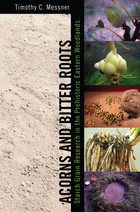
Acorns and Bitter Roots
Starch Grain Research in the Prehistoric Eastern Woodlands
Timothy C. Messner
University of Alabama Press, 2011
Starch grain analysis in the temperate climates of eastern North America using the Delaware River Watershed as a case study for furthering scholarly understanding of the relationship between native people and their biophysical environment in the Woodland Period
People regularly use plants for a wide range of utilitarian, spiritual, pharmacological, and dietary purposes throughout the world. Scholarly understanding of the nature of these uses in prehistory is particularly limited by the poor preservation of plant resources in the archaeological record. In the last two decades, researchers in the South Pacific and in Central and South America have developed microscopic starch grain analysis, a technique for overcoming the limitations of poorly preserved plant material.Messner’s analysis is based on extensive reviews of the literature on early historic, prehistoric native plant use, and the collation of all available archaeobotanical data, a review of which also guided the author in selecting contemporary botanical specimens to identify and in interpreting starch residues recovered from ancient plant-processing technologies. The evidence presented here sheds light on many local ecological and cultural developments as ancient people shifted their subsistence focus from estuarine to riverine settings. These archaeobotanical datasets, Messner argues, illuminate both the conscious and unintentional translocal movement of ideas and ecologies throughout the Eastern Woodlands.
[more]
Advances in the Analysis of Spanish Exclamatives
Ignacio Bosque
The Ohio State University Press, 2017
Advances in the Analysis of Spanish Exclamatives is the first book entirely devoted to Spanish exclamatives, a special sentence type often overlooked by contemporary linguists and neglected in standard grammatical descriptions. The seven essays in this volume, each by a leading specialist on the topic, scrutinize the syntax—as well as the semantic and pragmatic aspects—of exclamations on theoretical grounds.
The book begins by summarizing, commenting on, and evaluating previous descriptive and theoretical contributions on Spanish exclamatives. This introductory overview also contains a detailed classification of Spanish exclamative grammatical types, along with an analysis of their main properties. Special attention is devoted in the book throughoutto the syntactic structures displayed by exclamative patterns; the differences between exclamations and other speech acts (specifically questions and imperatives); the peculiar semantic denotation of exclamative words and their relationship to quantifiers denoting high degree; the semantics of adjectives and adverbs expressing extreme evaluation; the form and interpretation of negated and embedded exclamatives; the properties of optative utterances; and the different ways in which expressive contents are related to unexpected reactions of the speaker, as well as possible knowledge shared by interlocutors.
This groundbreaking volume provides a complete and accurate picture of Spanish exclamation by integrating its numerous component parts.
The book begins by summarizing, commenting on, and evaluating previous descriptive and theoretical contributions on Spanish exclamatives. This introductory overview also contains a detailed classification of Spanish exclamative grammatical types, along with an analysis of their main properties. Special attention is devoted in the book throughoutto the syntactic structures displayed by exclamative patterns; the differences between exclamations and other speech acts (specifically questions and imperatives); the peculiar semantic denotation of exclamative words and their relationship to quantifiers denoting high degree; the semantics of adjectives and adverbs expressing extreme evaluation; the form and interpretation of negated and embedded exclamatives; the properties of optative utterances; and the different ways in which expressive contents are related to unexpected reactions of the speaker, as well as possible knowledge shared by interlocutors.
This groundbreaking volume provides a complete and accurate picture of Spanish exclamation by integrating its numerous component parts.
[more]

Analysis and Argument in First-Year Writing and Beyond
A Functional Perspective
Silvia Pessoa, Thomas D. Mitchell, & Maria Pía Gómez-Laich
University of Michigan Press, 2024
In an increasingly wider range of disciplines college students are expected to write arguments throughout their undergraduate studies. While most instructors know good writing when they see it, they are not always able to articulate the finer details of how language is used to compose the strong arguments they expect from their students. Analysis and Argument in First-Year Writing and Beyond provides a common language to talk about and teach argument writing.
The authors harness over ten years of research on analyzing, scaffolding, and assessing argumentative writing in university classrooms to offer research-based tools for first-year writing and disciplinary instructors to make their expectations explicit to students. To articulate the linguistic resources of argumentation, the authors rely on genre-based pedagogy, informed by systemic functional linguistics (SFL). By leveraging their expertise , the authors offer practical tools for scaffolding writing in key genres across broader fields, such as writing studies, business administration, and information systems.
Each chapter focuses on a single tool, explaining it with mentor texts, sample texts, and visualizations, and provides guided classroom activities that teachers can adapt to fit their own contexts. With these tools, instructors and students will better understand how to:
The authors harness over ten years of research on analyzing, scaffolding, and assessing argumentative writing in university classrooms to offer research-based tools for first-year writing and disciplinary instructors to make their expectations explicit to students. To articulate the linguistic resources of argumentation, the authors rely on genre-based pedagogy, informed by systemic functional linguistics (SFL). By leveraging their expertise , the authors offer practical tools for scaffolding writing in key genres across broader fields, such as writing studies, business administration, and information systems.
Each chapter focuses on a single tool, explaining it with mentor texts, sample texts, and visualizations, and provides guided classroom activities that teachers can adapt to fit their own contexts. With these tools, instructors and students will better understand how to:
- distinguish between descriptive and argumentative writing;
- write argumentative claims;
- apply an analytical framework in a written text;
- maintain a consistent position in an argumentative text while incorporating outside sources;
- argue for one position in favor of viable alternatives.
[more]

The Analysis and Cognition of Basic Melodic Structures
Eugene Narmour
University of Chicago Press, 1990
Eugene Narmour formulates a comprehensive theory of melodic syntax to explain cognitive relations between melodic tones at their most basic level. Expanding on the theories of Leonard B. Meyer, the author develops one parsimonious, scaled set of rules modeling implication and realization in all the primary parameters of music. Through an elaborate and original analytic symbology, he shows that a kind of "genetic code" governs the perception and cognition of melody. One is an automatic, "brute" system operating on stylistic primitives from the bottom up. The other constitutes a learned system of schemata impinging on style structures from the top down.
The theoretical constants Narmour uses are context-free and, therefore, applicable to all styles of melody. He places considerable emphasis on the listener's cognitive performance (that is, fundamental melodic perception as opposed to acquired musical competence). He concentrates almost exclusively on low-level, note-to-note relations. The result is a highly generalized theory useful in researching all manner of psychological and music-theoretic problems concerned with the analysis and cognition of melody.
"In this innovative, landmark book, a distinguished music theorist draws extensively from a variety of disciplines, in particular from cognitive psychology and music theory, to develop an elegant and persuasive framework for the understanding of melody. This book should be read by all scholars with a serious interest in music."—Diana Deutsch, Editor, Music Perception
The theoretical constants Narmour uses are context-free and, therefore, applicable to all styles of melody. He places considerable emphasis on the listener's cognitive performance (that is, fundamental melodic perception as opposed to acquired musical competence). He concentrates almost exclusively on low-level, note-to-note relations. The result is a highly generalized theory useful in researching all manner of psychological and music-theoretic problems concerned with the analysis and cognition of melody.
"In this innovative, landmark book, a distinguished music theorist draws extensively from a variety of disciplines, in particular from cognitive psychology and music theory, to develop an elegant and persuasive framework for the understanding of melody. This book should be read by all scholars with a serious interest in music."—Diana Deutsch, Editor, Music Perception
[more]
The Analysis and Cognition of Melodic Complexity
The Implication-Realization Model
Eugene Narmour
University of Chicago Press, 1992
In this work, Eugene Narmour continues to develop the unique theories of musical perception and cognition first set forth in The Analysis and Cognition of Basic Melodic Structures. The two books together constitute the first comprehensive theory of melody founded on psychological research.
Narmour explains the cognitive operations by which listeners assimilate and ultimately encode complex melodic structures, and goes on to show how sixteen melodic archetypes can combine to form some 200 complex structures that, in turn, can chain together in a theoretically infinite number of ways.
Of particular importance to music theorists and music historians is Narmour's argument that melodic analysis and formal analysis, though often treated separately, are in fact indissolubly linked. Illustrated with over 250 musical examples, The Analysis and Cognition of Melodic Complexity will also appeal to ethnomusicologists, psychologists, and cognitive scientists.
Narmour explains the cognitive operations by which listeners assimilate and ultimately encode complex melodic structures, and goes on to show how sixteen melodic archetypes can combine to form some 200 complex structures that, in turn, can chain together in a theoretically infinite number of ways.
Of particular importance to music theorists and music historians is Narmour's argument that melodic analysis and formal analysis, though often treated separately, are in fact indissolubly linked. Illustrated with over 250 musical examples, The Analysis and Cognition of Melodic Complexity will also appeal to ethnomusicologists, psychologists, and cognitive scientists.
[more]
Analysis and Design of CMOS Clocking Circuits For Low Phase Noise
Woorham Bae
The Institution of Engineering and Technology, 2020
As electronics continue to become faster, smaller and more efficient, development and research around clocking signals and circuits has accelerated to keep pace. This book bridges the gap between the classical theory of clocking circuits and recent technological advances, making it a useful guide for newcomers to the field, and offering an opportunity for established researchers to broaden and update their knowledge of current trends.
[more]

Analysis and Design of Reset Control Systems
Yuqian Guo
The Institution of Engineering and Technology, 2016
Reset control is concerned with how to reset a system when it is disturbed to overcome the inherent limitations of linear feedback control and to improve robustness. It has found applications in many practical systems including flexible mechanical systems, tapespeed control systems and high precision positioning systems.
[more]
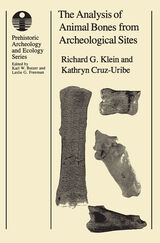
The Analysis of Animal Bones from Archeological Sites
Richard G. Klein and Kathryn Cruz-Uribe
University of Chicago Press, 1984
In growing numbers, archeologists are specializing in the analysis of excavated animal bones as clues to the environment and behavior of ancient peoples. This pathbreaking work provides a detailed discussion of the outstanding issues and methods of bone studies that will interest zooarcheologists as well as paleontologists who focus on reconstructing ecologies from bones. Because large samples of bones from archeological sites require tedious and time-consuming analysis, the authors also offer a set of computer programs that will greatly simplify the bone specialist's job.
After setting forth the interpretive framework that governs their use of numbers in faunal analysis, Richard G. Klein and Kathryn Cruz-Uribe survey various measures of taxonomic abundance, review methods for estimating the sex and age composition of a fossil species sample, and then give examples to show how these measures and sex/age profiles can provide useful information about the past. In the second part of their book, the authors present the computer programs used to calculate and analyze each numerical measure or count discussed in the earlier chapters. These elegant and original programs, written in BASIC, can easily be used by anyone with a microcomputer or with access to large mainframe computers.
After setting forth the interpretive framework that governs their use of numbers in faunal analysis, Richard G. Klein and Kathryn Cruz-Uribe survey various measures of taxonomic abundance, review methods for estimating the sex and age composition of a fossil species sample, and then give examples to show how these measures and sex/age profiles can provide useful information about the past. In the second part of their book, the authors present the computer programs used to calculate and analyze each numerical measure or count discussed in the earlier chapters. These elegant and original programs, written in BASIC, can easily be used by anyone with a microcomputer or with access to large mainframe computers.
[more]

The Analysis of Cross-Classified Data Having Ordered Categories
Leo A. Goodman
Harvard University Press, 1984
An Analysis of Effigy Mound Complexes in Wisconsin
William M. Hurley
University of Michigan Press, 1975
The Effigy Mound tradition of Wisconsin dates to between roughly AD 100 and AD 1400. Its center is in central and southern Wisconsin, with a handful of sites also found in Illinois, Iowa, Minnesota, and Michigan. During excavation at two major Effigy Mound sites—the Bigelow site and the Sanders site—William M. Hurley and his crew recorded 56 mounds, 91 features, 3 houses, and 10 prehistoric burials, and uncovered more than 55,000 artifacts.
[more]
The Analysis of Firms and Employees
Quantitative and Qualitative Approaches
Edited by Stefan Bender, Julia Lane, Kathryn L. Shaw, Fredrik Andersson, and Till von Wachter
University of Chicago Press, 2008
The long-term impact of globalization, outsourcing, and technological change on workers is increasingly being studied by economists. At the nexus of labor economics, industry studies, and industrial organization, The Analysis of Firms and Employees presents new findings about these impacts by examining the interaction between the internal workings of businesses and outside influences from the market using data from countries around the globe. The result is enhanced insight into the dynamic interrelationship between firms and workers.
A distinguished team of researchers here examines the relationships between human resource practices and productivity, changing ownership and production methods, and expanding trade patterns and firm competitiveness. With analyses of large-scale, nationwide datasets as well as focused, intensive observation of a few firms, The Analysis of Firms and Employees will challenge economists, policymakers, and scholars alike to rethink their assumptions about the workplace.
[more]
The Analysis of Ideology
Raymond Boudon
University of Chicago Press, 1989
Distinguished French sociologist Raymond Boudon presents here a critical theory history of the concept of ideology. His highly original and lucidly argued study addresses the core question of any account of ideology. How do individuals come to adhere to false or apparently irrational beliefs, and how do such beliefs become collectively accepted as true?
Boudon begins by providing an exhaustive and subtle critique of sociological explanations of ideology from early conceptions to its current usage in the works of Barthes, Foucault, Habermas, Sartre, and others. He then offers his own interpretation of the origins and emergence of ideological beliefs. In opposition to those views which associate ideology with irrationalism, Boudon shows that ideologies are a natural ingredient of social life; he develops a rationalist theory that helps to explain why certain ideas are believed by individuals and thereby effective in the social world. Finally, he examines case studies of two modern-day ideologies—developmentalism and Third Worldism.
Moving easily across disciplinary boundaries, Boudon's provocative contribution to a subject of growing significance will be of great interest to scholars in sociology and social theory, as well as philosophy, political science, and development studies.
Boudon begins by providing an exhaustive and subtle critique of sociological explanations of ideology from early conceptions to its current usage in the works of Barthes, Foucault, Habermas, Sartre, and others. He then offers his own interpretation of the origins and emergence of ideological beliefs. In opposition to those views which associate ideology with irrationalism, Boudon shows that ideologies are a natural ingredient of social life; he develops a rationalist theory that helps to explain why certain ideas are believed by individuals and thereby effective in the social world. Finally, he examines case studies of two modern-day ideologies—developmentalism and Third Worldism.
Moving easily across disciplinary boundaries, Boudon's provocative contribution to a subject of growing significance will be of great interest to scholars in sociology and social theory, as well as philosophy, political science, and development studies.
[more]

Analysis of Metallic Antennas and Scatterers
B.D. Popović
The Institution of Engineering and Technology, 1994
Most antennas are assembled from conducting surfaces and wires. The usual approach to numerical analysis of such structures is to approximate them by small surface or wire elements, with simple current approximation over the elements (the so-called subdomain approach), which requires a large amount of computer storage. This book describes a novel general entire-domain method for the analysis of metallic antennas and scatterers which enables the solution of a very wide class of problems to be obtained using computers of relatively modest capability.
[more]

The Analysis of the Self
A Systematic Approach to the Psychoanalytic Treatment of Narcissistic Personality Disorders
Heinz Kohut
University of Chicago Press, 2009
Psychoanalyst, teacher, and scholar, Heinz Kohut was one of the twentieth century's most important intellectuals. A rebel according to many mainstream psychoanalysts, Kohut challenged Freudian orthodoxy and the medical control of psychoanalysis in America. In his highly influential book The Analysis of the Self, Kohut established the industry standard of the treatment of personality disorders for a generation of analysts. This volume, best known for its groundbreaking analysis of narcissism, is essential reading for scholars and practitioners seeking to understand human personality in its many incarnations.
“Kohut has done for narcissism what the novelist Charles Dickens did for poverty in the nineteenth century. Everyone always knew that both existed and were a problem. . . . The undoubted originality is to have put it together in a form which carries appeal to action.”—International Journal of Psychoanalysis
[more]
An Analysis of the Wood-Cutting Process
Norman C. Franz
University of Michigan Press, 1958
In this technical age, wood-machining has largely remained an art for a lack of scientific investigation in this field. An Analysis of the Wood-Cutting Process was prepared to provide a basic understanding of wood-cutting and in particular of parallel-grain wood-cutting. Norman C. Franz is an Associate Professor of Wood Technology in the School of Natural Resources at the University of Michigan. The wood-cutting process is defined in terms of the interactions between wood properties, cutting geometry, and the friction between the chip and the tool. In continuous observations, three basic types of chip were identified—each having generated a related quality of surface. In the analysis of the mechanics of chip formation, the book describes the determination of machining efficiency and surface quality; by demonstrated calculations of optimum cutting angles for given wood properties, an equation is derived for the control of surface quality in wood-cutting.
[more]
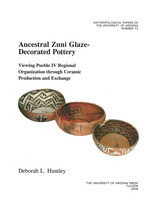
Ancestral Zuni Glaze-Decorated Pottery
Viewing Pueblo IV Regional Organization through Ceramic Production and Exchange
Deborah L. Huntley
University of Arizona Press, 2008
The Pueblo IV period (AD 1275–1600) witnessed dramatic changes in regional settlement patterns and social configurations across the ancestral Pueblo Southwest. Early in this interval, Pueblo potters began making distinctive polychrome vessels, often decorated with technologically innovative glaze paints. Archaeologists have linked these ceramic innovations with the introduction of new ideologies and religious practices to the area. This research explores interaction networks among residents of settlement clusters in the Zuni region of westcentral New Mexico during the thirteenth and fourteenth centuries AD. Using multiple analytical techniques, this research provides a case study for documenting multiple scales of interaction in prehistory. Ceramicists will find a wealth of technological and contextual data on glaze-decorated pottery, and archaeologists interested in power and leadership in ancestral Pueblo societies will be intrigued by the implication that strategies like the manipulation of interpueblo alliances or control over long-distance resources may have been used to concentrate social power.
[more]
An Archaeologist's Guide to Organic Residues in Pottery
Eleanora A. Reber
University of Alabama Press, 2022
A guide for mastering the technical specialty of organic residue analysis of pottery
Pottery analysis is a crucial component of excavating an archaeological site. Organic residues in pottery are made up of chemicals that absorb into pots over their lifetime. These residues can reveal what people ate, whether different types of vessels were used for different cooking or foodstuffs preparation, and whether “elite” vessels were in use.
Organic residue analysis is a technical specialty that blends an unusual type of instrumental organic chemistry and archaeology. Because it is considered an obscure technique, archaeologists of all degrees of experience tend to struggle with how to apply the technology to archaeological questions and how to sample effectively in the field to answer these questions.
Eleanora A. Reber’s An Archaeologist’s Guide to Organic Residues in Pottery is a user-friendly resource for all archaeologists. Composed of case studies gleaned from Reber’s more than twenty years of archaeological research, this guide covers the range of residues encountered in the field and explains the methods and application of organic residue analysis.
Reber illustrates the useful aspects of residue analysis, such as compound-specific isotope analysis for the identification of traces of maize and marine resources, conifer resins, and the psychoactive alkaloid biomarkers caffeine and nicotine. Special attention is paid to sampling and construction of meaning as well as research questions to help field archaeologists integrate residue analysis seamlessly into their projects
Pottery analysis is a crucial component of excavating an archaeological site. Organic residues in pottery are made up of chemicals that absorb into pots over their lifetime. These residues can reveal what people ate, whether different types of vessels were used for different cooking or foodstuffs preparation, and whether “elite” vessels were in use.
Organic residue analysis is a technical specialty that blends an unusual type of instrumental organic chemistry and archaeology. Because it is considered an obscure technique, archaeologists of all degrees of experience tend to struggle with how to apply the technology to archaeological questions and how to sample effectively in the field to answer these questions.
Eleanora A. Reber’s An Archaeologist’s Guide to Organic Residues in Pottery is a user-friendly resource for all archaeologists. Composed of case studies gleaned from Reber’s more than twenty years of archaeological research, this guide covers the range of residues encountered in the field and explains the methods and application of organic residue analysis.
Reber illustrates the useful aspects of residue analysis, such as compound-specific isotope analysis for the identification of traces of maize and marine resources, conifer resins, and the psychoactive alkaloid biomarkers caffeine and nicotine. Special attention is paid to sampling and construction of meaning as well as research questions to help field archaeologists integrate residue analysis seamlessly into their projects
[more]
READERS
Browse our collection.
PUBLISHERS
See BiblioVault's publisher services.
STUDENT SERVICES
Files for college accessibility offices.
RECENTLY PUBLISHED







UChicago Accessibility Resources
home | accessibility | search | about | contact us
BiblioVault ® 2001 - 2024
The University of Chicago Press