
 A SCHOLARLY BOOK REPOSITORY
9 start with T start with T
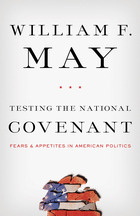
Since the end of World War II, runaway fears of Soviet imperialism, global terrorism, and anarchy have tended to drive American foreign policy toward an imperial agenda. At the same time, uncurbed appetites have wasted the environment and driven the country’s market economy into the ditch. How can we best sustain our identity as a people and resist the distortions of our current anxieties and appetites?
Ethicist William F. May draws on America’s religious and political history and examines two concepts at play in the founding of the country—contractual and covenantal. He contends that the biblical idea of a covenant offers a more promising way than the language of contract, grounded in self-interest alone, to contain our runaway anxieties and appetites. A covenantal sensibility affirms, “We the people (not simply, We the individuals, or We the interest groups) of the United States.” It presupposes a history of mutual giving and receiving and of bearing with one another that undergirds all the traffic in buying and selling, arguing and negotiating, that obtain in the rough terrain of politics. May closes with an account of the covenantal agenda ahead, and concludes with the vexing issue of immigrants and undocumented workers that has singularly tested the covenant of this immigrant nation.

The field of bioethics was deeply influenced by religious thinkers as it emerged in the 1960s and early 1970s. Since that time, however, a seemingly neutral political liberalism has pervaded the public sphere, resulting in a deep suspicion of those bringing religious values to bear on questions of bioethics and public policy.
As a theological ethicist and progressive Catholic, Lisa Sowle Cahill does not want to cede the "religious perspective" to fundamentalists and the pro-life movement, nor does she want to submit to the gospel of a political liberalism that champions individual autonomy as holy writ. In Theological Bioethics, Cahill calls for progressive religious thinkers and believers to join in the effort to reclaim the best of their traditions through jointly engaging political forces at both community and national levels.
In Cahill's eyes, just access to health care must be the number one priority for this type of "participatory bioethics." She describes a new understanding of theological bioethics that must go beyond decrying injustice, beyond opposing social practices that commercialize human beings, beyond painting a vision of a more egalitarian future. Such a participatory bioethics, she argues, must also take account of and take part in a global social network of mobilization for change; it must seek out those in solidarity, those involved in a common calling to create a more just social, political, and economic system.
During the past two decades Cahill has made profound contributions to theological ethics and bioethics. This is a magisterial and programmatic statement that will alter how the religiously inclined understand their role in the great bioethics debates of today and tomorrow that yearn for clear thinking and prophetic wisdom.
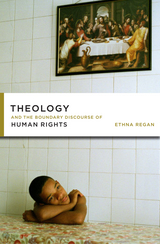
What are human rights? Can theology acknowledge human rights discourse? Is theological engagement with human rights justified? What place should this discourse occupy within ethics?
Ethna Regan seeks to answer these questions about human rights, Christian theology, and philosophical ethics. The main purpose of this book is to justify and explore theological engagement with human rights. Regan illustrates how that engagement is both ecumenical and diverse, citing the emerging engagement with human rights discourse by evangelical theologians in response to the War on Terror. The book examines where the themes and concerns of key modern theologians—Karl Rahner, J. B. Metz, Jon Sobrino, and Ignacio Ellacuría—converge with the themes and concerns of those committed to the advancement of human rights. Regan also critically engages with the “disdain” for rights discourse that is found in the postliberal critiques of John Milbank and Stanley Hauerwas.
This interdisciplinary volume will be of interest to students and scholars in the fields of systematic theology, theological ethics, human rights, religion and politics, and political theory.
Freedom is a fundamental Christian theological category, as much a challenge to construct a new way of seeing oneself and others as it is an announcement of what Christ has already done for us in his death and resurrection. Liberation theology is, most simply, the effort to spell out what such freedom means for Christians in the twentieth and twenty-first centuries.
This book has as its principle premise the conviction that if we are to construct a North American liberation theology we must begin listening to and understanding Latin American theology not so much as a model to be slavishly followed but as a challenge to our own cultural, political, and even religious assumptions. The focus thus is not so much on the theoretical meaning of Christian freedom but on its practice, and more exactly its praxis, that is to say the dialectic between theory and practice.
After focusing on the creation and development of liberating theological methods and sources and, above all, the revitalization and renewal of structures that will contribute to the development of a liberated and liberating church, Fr. Hennelly ends with an analysis of the most recent and the most important vatican document on liberation theology, The Instruction of Christian Freedom and Liberation, which he sees as an acknowledgement by the universal church that the theme of liberation is central to the meaning of Christian theology.
The first examination of predictive technology from the perspective of Catholic theology
Probabilistic predictions of future risk govern much of society. In business and politics alike, institutional structures manage risk by controlling the behavior of consumers and citizens. New technologies comb through past data to predict and shape future action. Choosing between possible future paths can cause anxiety as every decision becomes a calculation to achieve the most optimal outcome.
Tomorrow’s Troubles is the first book to use virtue ethics to analyze these pressing issues. Paul Scherz uses a theological analysis of risk and practical reason to show how risk-based decision theory reorients our relationships to the future through knowledge of possible dangers and foregone opportunities—and fosters a deceptive hope for total security. Scherz presents this view of temporality as problematic because it encourages a desire for stability through one’s own efforts instead of reliance on God. He also argues that the largest problem with predictive models is that they do not address individual reason and free will. Instead of dwelling on a future, we cannot control, we can use our past experiences and the Christian tradition to focus on discerning God’s will in the present.
Tomorrow’s Troubles offers a thoughtful new framework that will help Christians benefit from the positive aspects of predictive technologies while recognizing God’s role in our lives and our futures.
The first book to argue for the concept of tragic dilemmas in Christian ethics
Moral dilemmas arise when individuals are unable to fulfill all of their ethical obligations. Tragic dilemmas are moral dilemmas that involve great tragedy. The existence of moral and tragic dilemmas is debated in philosophy and often dismissed in theology based on the notion that there are effective strategies that completely solve hard ethical situations. Yet cases from real-life events in war and bioethics offer compelling evidence for the existence of tragic dilemmas.
In Tragic Dilemmas in Christian Ethics, Jackson-Meyer expertly explores the thought of Augustine and Aquinas to show the limits of their treatment of hard cases, as well as where their thought can be built on and expanded in relation to tragic dilemmas. She recognizes and develops a new theological understanding of tragic dilemmas rooted in moral philosophy, contemporary case studies, and psychological literature on moral injury. Jackson-Meyer argues that in tragic dilemmas moral agents choose between conflicting nonnegotiable moral obligations rooted in Christian commitments to protect human life and the vulnerable. Personal culpability is mitigated due to constrained situations and society is also culpable when tragic dilemmas are a result of structural sin. In response, Jackson-Meyer implores Christian communities to offer individual and communal healing after tragic dilemmas and to acknowledge their own participation in injustice.
Tragic Dilemmas in Christian Ethics offers practical strategies that Christian communities can use to provide healing to those who have acted in tragic dilemmas and to transform the unjust structures that often cause these tragedies.
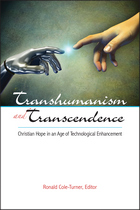
The timeless human desire to be more beautiful, intelligent, healthy, athletic, or young has given rise in our time to technologies of human enhancement. Athletes use drugs to increase their strength or stamina; cosmetic surgery is widely used to improve physical appearance; millions of men take drugs like Viagra to enhance sexual performance. And today researchers are exploring technologies such as cell regeneration and implantable devices that interact directly with the brain. Some condemn these developments as a new kind of cheating—not just in sports but in life itself—promising rewards without effort and depriving us most of all of what it means to be authentic human beings. “Transhumanists,” on the other hand, reject what they see as a rationalizing of human limits, as if being human means being content forever with underachieving bodies and brains. To be human, they insist, is to be restless with possibilities, always eager to transcend biological limits.
As the debate grows in urgency, how should theology respond? Christian theologians recognize truth on both sides of the argument, pointing out how the yearnings of the transhumanists—if not their technological methods—find deep affinities in Christian belief. In this volume, Ronald Cole-Turner has joined seasoned scholars and younger, emerging voices together to bring fresh insight into the technologies that are already reshaping the future of Christian life and hope.
READERS
Browse our collection.
PUBLISHERS
See BiblioVault's publisher services.
STUDENT SERVICES
Files for college accessibility offices.
RECENTLY PUBLISHED



UChicago Accessibility Resources
home | accessibility | search | about | contact us
BiblioVault ® 2001 - 2025
The University of Chicago Press