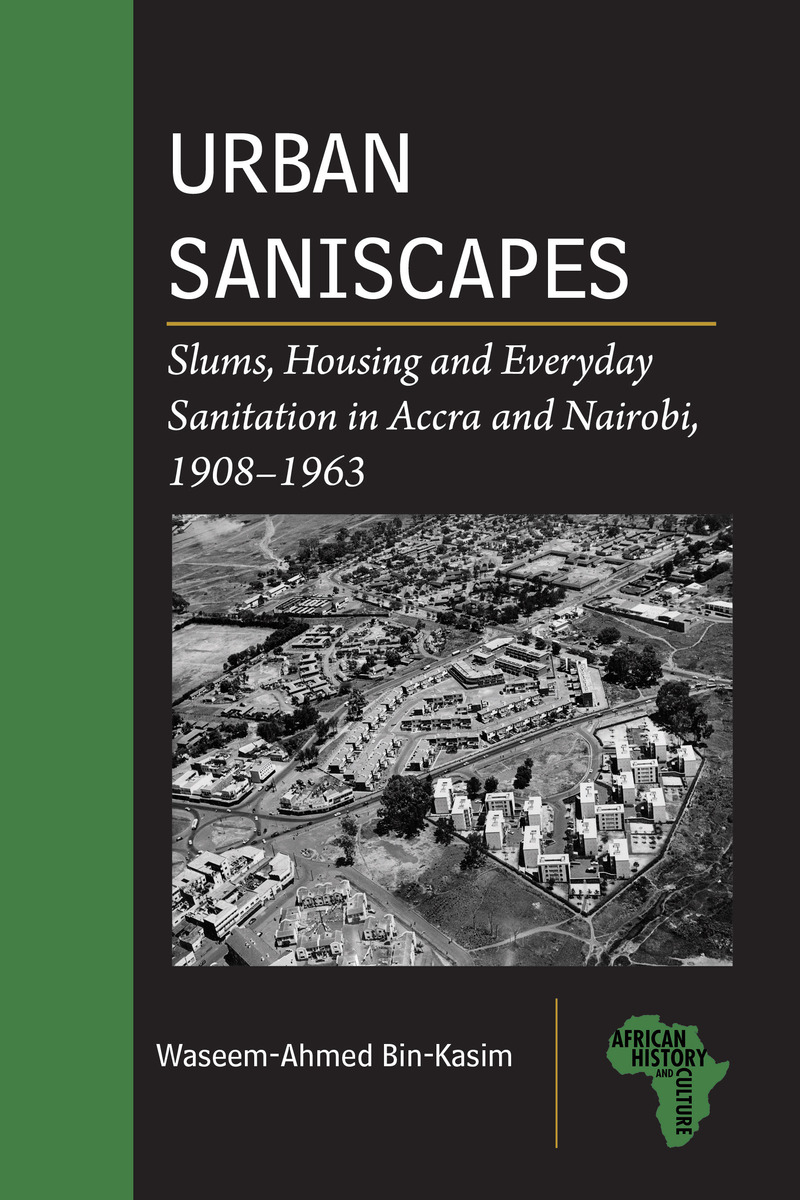
Urban Saniscapes: Slums, Housing and Everyday Sanitation in Accra and Nairobi, 1908–1963
Michigan State University Press, 2025
Paper: 978-1-61186-549-3 | eISBN: 978-1-62895-557-6 (ePub) | eISBN: 978-1-60917-794-2 (PDF)
Library of Congress Classification RA545.B556 2025
See other books on: Ghana | Housing | Kenya | Slums | Urbanization
See other titles from Michigan State University Press
Paper: 978-1-61186-549-3 | eISBN: 978-1-62895-557-6 (ePub) | eISBN: 978-1-60917-794-2 (PDF)
Library of Congress Classification RA545.B556 2025
ABOUT THIS BOOK | AUTHOR BIOGRAPHY | REVIEWS | TOC | REQUEST ACCESSIBLE FILE
ABOUT THIS BOOK
In this comparative study, Bin-Kasim examines environmental sanitation in the historical development of Accra and Nairobi, the capitals of the Gold Coast (Ghana) and Kenya. This book traces the approaches to sanitation during colonial rule and urban growth throughout the first half of the twentieth century and beyond. From the consolidation of the colonial regimes to the Great Depression, urbanization waves, and postwar development, sanitation was both a cause and a consequence of the built environment. Bin-Kasim characterizes this complex relationship between sanitation and urban growth over time as the 'saniscape.' The saniscape is the confluence of public health, planning interventions, and various urban constituencies, and includes an array of influences like colonial expertise and African industry, which shaped the two cities regardless of their power dynamics and land tenure. Attention to the saniscape validates how Africans called out colonial discrimination and inefficiencies to intervene and shape cities. This volume highlights the shared histories of Accra and Nairobi and upends conventional narratives that attach too much difference to non-settler and settler colonialism.
See other books on: Ghana | Housing | Kenya | Slums | Urbanization
See other titles from Michigan State University Press