
 A SCHOLARLY BOOK REPOSITORY
13 start with R start with R
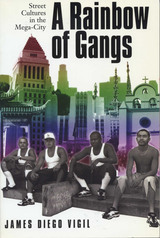
Winner, Best Book on Ethnic and Racial Politics in a Local or Urban Setting , Organized Section on Race, Ethnicity, and Politics of the American Political Science Association, 2002
This cross-cultural study of Los Angeles gangs identifies the social and economic factors that lead to gang membership and underscores their commonality across four ethnic groups--Chicano, African American, Vietnamese, and Salvadorian.
With nearly 1,000 gangs and 200,000 gang members, Los Angeles holds the dubious distinction of being the youth gang capital of the United States. The process of street socialization that leads to gang membership now cuts across all ethnic groups, as evidenced by the growing numbers of gangs among recent immigrants from Asia and Latin America.
This cross-cultural study of Los Angeles gangs identifies the social and economic factors that lead to gang membership and underscores their commonality across four ethnic groups—Chicano, African American, Vietnamese, and Salvadorian. James Diego Vigil begins at the community level, examining how destabilizing forces and marginalizing changes have disrupted the normal structures of parenting, schooling, and policing, thereby compelling many youths to grow up on the streets. He then turns to gang members' life stories to show how societal forces play out in individual lives. His findings provide a wealth of comparative data for scholars, policymakers, and law enforcement personnel seeking to respond to the complex problems associated with gangs.
Winner, Best Book on Ethnic and Racial Politics in a Local or Urban Setting , Organized Section on Race, Ethnicity, and Politics of the American Political Science Association, 2002
This cross-cultural study of Los Angeles gangs identifies the social and economic factors that lead to gang membership and underscores their commonality across four ethnic groups--Chicano, African American, Vietnamese, and Salvadorian.
With nearly 1,000 gangs and 200,000 gang members, Los Angeles holds the dubious distinction of being the youth gang capital of the United States. The process of street socialization that leads to gang membership now cuts across all ethnic groups, as evidenced by the growing numbers of gangs among recent immigrants from Asia and Latin America.
This cross-cultural study of Los Angeles gangs identifies the social and economic factors that lead to gang membership and underscores their commonality across four ethnic groups—Chicano, African American, Vietnamese, and Salvadorian. James Diego Vigil begins at the community level, examining how destabilizing forces and marginalizing changes have disrupted the normal structures of parenting, schooling, and policing, thereby compelling many youths to grow up on the streets. He then turns to gang members' life stories to show how societal forces play out in individual lives. His findings provide a wealth of comparative data for scholars, policymakers, and law enforcement personnel seeking to respond to the complex problems associated with gangs.
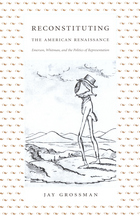
Reconstituting the American Renaissance describes how Emerson and Whitman came into the period of their greatest productivity with different conceptions of the functions and political efficacy of the word in the world. It challenges Emerson’s position as Whitman’s necessary precursor and offers a cultural history that emphasizes the two writers’ differences in social class, cultural experience, and political perspective. In their writings between 1830 and 1855, the book finds contrasting conceptions of the relations between the “representative man” and the constituencies to whom, and for whom, he speaks. Reconstituting the American Renaissance opens up the canonical relationship between Emerson and Whitman and multiplies the historical and discursive contexts for understanding their published and unpublished works.

In this updated edition of Reel Inequality, author Nancy Wang Yuen reflects on Hollywood's wins and failures in addressing racism across the past decade. Drawing on newly released industry data and recently published interviews with actors of color, she traces how racism continues to shape who gets cast, who gets hired, and who gets to tell their own story. Yuen looks closely at the pressures actors of color face, including typecasting, financial precarity, and racial burdens, even as many push back and forge their own paths. She also traces Hollywood’s recurring cycle of promise and retreat, showing how diversity efforts often surge in response to public pressure but are scaled back during economic downturns, corporate mergers, and political pressures. Reel Inequality, the reboot, will always honor the resilience of actors of color working within and against a racist Hollywood system, as true inclusion remains a cliffhanger.
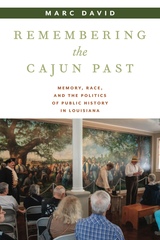
Exploring how public history creates collective memory of this white ethnic group through memorials
Cajuns arrived in southern Louisiana in the 18th century after the British exiled them from eastern Canada. Also known as Acadians, they retain a unique dialect of French, and their distinctive music, food, and other cultural traits characterized them as an ethnic group. Until the 1960s, authorities viewed them as a serious problem, allegedly blocking the state’s progress as they clung to their antiquated ways. Few Cajun residents in the region remembered the remote past of their ancestors, but by the 1970s, organizations ranging from local non-profits to the National Park Service created sites that commemorated their history, such as the Acadian Memorial in St. Martinville, allowing Cajuns to connect their lives to their past and claim it as their own.
In Remembering the Cajun Past, anthropologist Marc David studies the cultural and political dynamics that reconfigured Cajun memory and identity. Focusing on St. Martinville and the Acadian Memorial, he explores how authorities changed their minds about Cajuns and demonstrates how Cajuns’ historical memories took shape. Part ethnography and part history, David examines the racial aspects of the Memorial’s creation in the wake of the Civil Rights movement and the growth of a new Cajun history, one through which individual Cajuns rejected the label’s connotation of “white trash” and embraced belonging within a storied white ethnic group. Based on decades of fieldwork and deep engagement with public history practices, David explores how historical memory and the historic sites that foster it are intertwined with the politics of civic life.
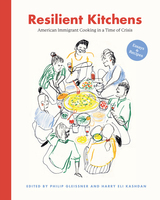
Winner of the James Beard Award for Best Book in Food Issues and Advocacy
Immigrants have left their mark on the great melting pot of American cuisine, and they have continued working hard to keep America’s kitchens running, even during times of crisis like the COVID-19 pandemic. For some immigrant cooks, the pandemic brought home the lack of protection for essential workers in the American food system. For others, cooking was a way of reconnecting with homelands they could not visit during periods of lockdown.
Resilient Kitchens: American Immigrant Cooking in a Time of Crisis is a stimulating collection of essays about the lives of immigrants in the United States before and during the COVID-19 pandemic, told through the lens of food. It includes a vibrant mix of perspectives from professional food writers, restaurateurs, scholars, and activists, whose stories range from emotional reflections on hardship, loss, and resilience to journalistic investigations of racism in the American food system. Each contribution is accompanied by a recipe of special importance to the author, giving readers a taste of cuisines from around the world. Every essay is accompanied by gorgeous food photography, the authors’ snapshots of pandemic life, and hand-drawn illustrations by Filipino American artist Angelo Dolojan.
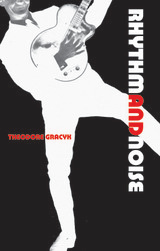
What’s in a name? “Rock” or “Rock ’n’ Roll?” Grayck argues that rock and roll is actually a performance style, one in a number of musical styles comprising rock. What distinguishes rock, Gracyk tells us, is how it is mediated by technology: The art is in the recording. The lesson is a heady one, entailing a tour through the history of rock music from Elvis Presley’s first recordings in 1954 to Kurt Cobain’s suicide in 1994. Gracyk takes us through key recordings, lets us hear what rock musicians and their critics have to say, shows us how other kinds of music compare, and gives us the philosophical background to make more than passing sense of the medium. His work takes up the common myths and stereotypes about rock, popular and academic, and focuses on the features of the music that electrify fans and consistently generate controversy. When Elvis came to town, did southern sheriffs say that rock was barbaric and addictive? Well so did Theodor Adorno, in his way, and Allan Bloom, in his, and Gracyk takes aim at this charge as it echoes through the era of recorded music. He looks at what rock has to do with romanticism and, even more, with commercialism. And he questions the orthodoxy of making grand distinctions between “serious” and “popular” art.
Keenly attuned to the nuances of music and of all the ways that we can think about it, this exhilarating book tunes us in, as no other has, to the complex role of rock in American culture.
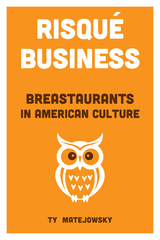
Risqué Business serves up the breastaurant industry, where food service, sex appeal, identity, and gender politics mix.
Risqué Business explores the rise and ongoing cultural reckoning of “breastaurants”: sports bar–style restaurants like Hooters and Twin Peaks, which have long relied on the sexualized presentation of female servers to attract a mostly straight, male clientele. Ty Matejowsky, professor of anthropology at the University of Central Florida, is uniquely positioned in America’s foundational, breastaurant-saturated landscape. From this vantage, he offers a well-balanced account that draws on pop culture, media analysis, and contemporary gender politics. He delivers a smart, layered analysis of how breastaurants commodify youth and femininity, uphold retrograde masculinity, and serve as symbolic battlegrounds in today's highly charged political environments including America's deeply polarized Red State/Blue State divide.
With case studies, cultural critique, and a critical lens on labor and sexuality, Matejowsky reveals how these restaurants are more than just risqué marketing gimmicks. They reflect deeper anxieties about gender, identity, and the uneasy fusion of sex and service in American consumer culture. Risqué Business is a high-spirited study of an industry that thrives at the intersection of appetite and identity.

In a unique and groundbreaking 2015 presentation of important contemporary art rarely seen in the traditional environs of the Hudson River Valley, the Thomas Cole National Historic Site and Olana, Frederic Edwin Church's Persian-inspired mansion, showcased the work of contemporary American artists such as Chuck Close, Cindy Sherman, Maya Lin, Martin Puryear, and Gregory Crewdson, some of the 30 artists featured in the exhibition. Stephen Hannock, celebrated Luminist painter and one of the exhibition's co-curators, stated that "this is a terrific opportunity to open up contemporary art, as well as these historic properties, to audiences who will see firsthand these shared artistic concerns."
The works of art selected for the exhibition were shown at the two venues to encourage visitors to experience both of the distinguished properties and the grandeur of their surroundings, and to present a complete overview and understanding of these contemporary works in a location where many art historians believe American art was born. The accompanying publication, River Crossings: Contemporary Art Comes Home, provides readers with a lavish record of this extraordinary and innovative exhibition, and offers unique and highly informative perspectives on the continuity of the American artistic tradition in two of the nation's most historic sites.
In addition to an impressive plate section of more than 60 works with brief artist biographies and descriptive narratives for the individual works, this comprehensive presentation features noteworthy, exceptional contributions. Stephen Hannock's preface details the development of this remarkable exhibition, while co-curator Jason Rosenfeld reveals in his essay the exhibition's importance relative to historical perception as he considers Cole's and Church's support of conemporary art in their time. Cultural historian Maurice Berger considers the realities of race and gender from the nineteenth-century Hudson River Valley to the present, and Marvin Heiferman, curator and writer, examines photography in the exhibition and its connections to Church's work and his use of the medium. Award-winning architectural and landscape photographer Peter Aaron generously provided the stunning installation, exterior, and landscape photographs, a gorgeous complement to this outstanding catalogue.

In recent decades, the social sciences have struggled to predict, monitor, and understand ongoing social crises. This is due in part to a lack of infrastructure to adequately do so. The American Voices Project (AVP), an experimental public-use platform for collecting qualitative data, was designed to expand the capacity of social science research by complementing existing research methods examining the everyday lives of Americans. The AVP was fielded in 2019-2022 as the country’s first nationally-representative, large-scale, multiple-domain qualitative data collection effort. In this double issue of RSF, sociologists Kathryn J. Edin, Corey D. Fields, David B. Grusky, Marybeth J. Mattingly, Kristen Olson, and Charles Varner, computer scientist Jure Leskovec, and an interdisciplinary group of contributors utilize data from the AVP to determine whether the platform can provide insight into the lives of Americans and address social science’s current shortcomings.
Issue 1 examines Americans’ experiences during the COVID-19 pandemic, identifies and explores emerging crises in the U.S., and includes the first set of classical interpretive studies based on a public-use dataset. Kyle Fee and colleagues find that job loss during the pandemic was associated with declines in financial and mental wellbeing, that expanded safety net programs did not disincentivize work, and that existing survey-based monitoring is missing important pockets of deprivation. Katherine Cramer and colleagues discover a more thoroughgoing “disaffection crisis” than has been appreciated to date, a crisis in which low- and middle-income earners often feel profoundly disconnected from politics and have little confidence in their ability to meaningfully effect change. Josephina Flores Morales shows that healthcare costs – even after recent and ongoing reforms in healthcare – remain insurmountable for many Latinx Americans, who must then rely on family for unexpected medical costs. Brandon A. Jackson finds that higher income gig workers hold surprisingly positive views of platform work as a way to explore their community, while lower income gig workers are less keen and focus on the financial benefits of gig work.
Issue 2 illustrates how the AVP can be used to uncover hidden populations and to explore how some types of crises, mindsets, or sensibilities can have cascading effects that impact multiple areas of people’s lives. Corey M. Abramson and colleagues use the AVP to uncover the population of Americans experiencing physical pain, showing that while pain is very prevalent, it has larger negative effects on the life trajectories of women and those without a college degree than on other groups. James Hiebert and colleagues uncover the large population of individuals who left the labor market due to a health condition and describe their strategies for reducing stigma when explaining why they are no longer working. Shira Zilberstein and colleagues discover that when individuals discuss their lives they feature “agentic moments” in which they can claim agency despite facing constraints that could be seen as limiting choice and agency.
This volume of RSF provides compelling insights into the lives of Americans and convincingly makes the case for building a permanent public-use platform for qualitative research.
In recent decades, the social sciences have struggled to predict, monitor, and understand ongoing social crises. This is due in part to a lack of infrastructure to adequately do so. The American Voices Project (AVP), an experimental public-use platform for collecting qualitative data, was designed to expand the capacity of social science research by complementing existing research methods examining the everyday lives of Americans. The AVP was fielded in 2019-2022 as the country’s first nationally-representative, large-scale, multiple-domain qualitative data collection effort. In this double issue of RSF, sociologists Kathryn J. Edin, Corey D. Fields, David B. Grusky, Marybeth J. Mattingly, Kristen Olson, and Charles Varner, computer scientist Jure Leskovec, and an interdisciplinary group of contributors utilize data from the AVP to determine whether the platform can provide insight into the lives of Americans and address social science’s current shortcomings.
Issue 1 examines Americans’ experiences during the COVID-19 pandemic, identifies and explores emerging crises in the U.S., and includes the first set of classical interpretive studies based on a public-use dataset. Kyle Fee and colleagues find that job loss during the pandemic was associated with declines in financial and mental wellbeing, that expanded safety net programs did not disincentivize work, and that existing survey-based monitoring is missing important pockets of deprivation. Katherine Cramer and colleagues discover a more thoroughgoing “disaffection crisis” than has been appreciated to date, a crisis in which low- and middle-income earners often feel profoundly disconnected from politics and have little confidence in their ability to meaningfully effect change. Josephina Flores Morales shows that healthcare costs – even after recent and ongoing reforms in healthcare – remain insurmountable for many Latinx Americans, who must then rely on family for unexpected medical costs. Brandon A. Jackson finds that higher income gig workers hold surprisingly positive views of platform work as a way to explore their community, while lower income gig workers are less keen and focus on the financial benefits of gig work.
Issue 2 illustrates how the AVP can be used to uncover hidden populations and to explore how some types of crises, mindsets, or sensibilities can have cascading effects that impact multiple areas of people’s lives. Corey M. Abramson and colleagues use the AVP to uncover the population of Americans experiencing physical pain, showing that while pain is very prevalent, it has larger negative effects on the life trajectories of women and those without a college degree than on other groups. James Hiebert and colleagues uncover the large population of individuals who left the labor market due to a health condition and describe their strategies for reducing stigma when explaining why they are no longer working. Shira Zilberstein and colleagues discover that when individuals discuss their lives they feature “agentic moments” in which they can claim agency despite facing constraints that could be seen as limiting choice and agency.
This volume of RSF provides compelling insights into the lives of Americans and convincingly makes the case for building a permanent public-use platform for qualitative research.
READERS
Browse our collection.
PUBLISHERS
See BiblioVault's publisher services.
STUDENT SERVICES
Files for college accessibility offices.
RECENTLY PUBLISHED






UChicago Accessibility Resources
home | accessibility | search | about | contact us
BiblioVault ® 2001 - 2026
The University of Chicago Press