
 A SCHOLARLY BOOK REPOSITORY
2 start with J start with J
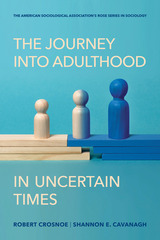
Drawing on both quantitative and qualitative survey data over five decades, Crosnoe and Cavanagh find that young adults are, in fact, waiting longer to take on “real” adult roles, such as worker or parent. However, this is not out of a reluctance to grow up. Instead, increased inequality and changes in the economy have forced young people to adapt their lives in new ways. Young adults are now spending more time in school, have more trouble finding their footing in the labor force, and consequently postpone getting married and having children. They also mix and match roles in more complicated ways now than in the past—going back and forth between school and work over longer periods of time or disconnecting parenthood from their romantic relationships. While the period from late teens to mid-twenties does look different now than in the past, the change has been slow and steady rather than a dramatic shift due to social crises. The Great Recession, for example, had a more muted effect on young people’s social and economic attainment and family formation than fears of a lost generation would suggest.
Crosnoe and Cavanagh find that while the panic over young adults today may be somewhat overblown, this conclusion should not obscure some clear concerns. Young adults do struggle with their social and emotional wellbeing. They are more depressed than their counterparts in previous generations, drink less alcohol in ways that suggest less engagement with social life, and express deep distrust of social institutions and the idea of the American Dream. The authors argue that worries about the state of young adulthood today should trigger more reflection about how to support young people rather than how to fix them.
The Journey into Adulthood in Uncertain Times is a comprehensive and illuminating examination of the challenges faced by contemporary young adults.
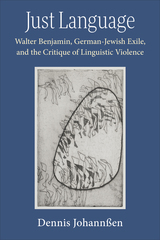
Just Language revisits the Weimar period and its representation in the postwar years to explore narratives of linguistic resistance in the works of Walter Benjamin, Theodor W. Adorno, Hannah Arendt, and Paul Celan. How did this generation of exile writers grapple with their experiences of oppression and persecution? How did they create a language of resistance during the decades that prepared the Third Reich and the Shoah?
Facing the devastations of World War I, the book explores how Walter Benjamin analyzed language’s ability to radically break the cyclical violence of war and examines his opposition to expansionism and imperialism in Weimar education and culture. Based on Benjamin’s analysis, Johannßen traces the postwar responses of Hannah Arendt and Paul Celan. While Arendt proposed strategies of metaphorical thinking to counteract the formation of totalitarianism, Celan mobilized silence as a poetic counterforce against oppression and erasure. Just Language argues that every linguistic act and practice, no matter how small or marginalized, entails the ethical task of opposing the normalization and institutionalization of political violence. By tracing how Benjamin and his interlocutors struggled against German fascism, Johannßen presents a memory-based critique of linguistic violence, opening a dialogue between German-Jewish writers and today’s debates on nondiscrimination, propaganda, and social justice.
READERS
Browse our collection.
PUBLISHERS
See BiblioVault's publisher services.
STUDENT SERVICES
Files for college accessibility offices.
RECENTLY PUBLISHED



UChicago Accessibility Resources
home | accessibility | search | about | contact us
BiblioVault ® 2001 - 2026
The University of Chicago Press