
 A SCHOLARLY BOOK REPOSITORY
This new edition of Horace W. Davenport's standard text takes into account different ways of looking at the problems of acid-base derived from new instrumentation. The exposition has been modified to allow the student to apply his understanding to other systems of description of the acid-base status. Although the pH system has been retained, there is increasing emphasis on the use of hydrogen ion concentration.
Topics discussed include: partial pressure of gases, composition of alveolar gas, transport of oxygen and carbon dioxide in the blood, buffer action of hemoglobin and seperated plasma, oxygenated whole blood and reduced blood, concepts of base excess and base deficit, and chemical regulation of respiration.
"Any reader who clearly understands the subject matter of this book will have a firm grounding in the principles of the subject; I find it the clearest text of this type that I have read."—British Journal of Hospital Medicine
"This little book is of great value to chemically trained physicians and medical students who want to get a clearer idea of the physiology of acid base chemistry in the blood."—The Journal of Gastroenterology
The Wounded Knee Massacre of December 29, 1890, known to U.S. military historians as the last battle in "the Indian Wars," was in reality another tragic event in a larger pattern of conquest, destruction, killing, and broken promises that continue to this day.
On a cold winter's morning more than a century ago, the U.S. Seventh Cavalry attacked and killed more than 260 Lakota men, women, and children at Wounded Knee Creek in South Dakota. In the aftermath, the broken, twisted bodies of the Lakota people were soon covered by a blanket of snow, as a blizzard swept through the countryside. A few days later, veteran army surgeon John Vance Lauderdale arrived for duty at the nearby Pine Ridge Indian Reservation. Shocked by what he encountered, he wrote numerous letters to his closest family members detailing the events, aftermath, and daily life on the Reservation under military occupation. He also treated the wounded, both Cavalry soldiers and Lakota civilians. What distinguishes After Wounded Knee from the large body of literature already available on the massacre is Lauderdale's frank appraisals of military life and a personal observation of the tragedy, untainted by self-serving reminiscence or embellished newspaper and political reports. His sense of frustration and outrage toward the military command, especially concerning the tactics used against the Lakota, is vividly apparent in this intimate view of Lauderdale's life. His correspondence provides new insight into a familiar subject and was written at the height of the cultural struggle between the U.S. and Lakota people. Jerry Green's careful editing of this substantial collection, part of the John Vance Lauderdale Papers in the Western Americana Collection in Yale University's Beinecke Library, clarifies Lauderdale's experiences at the Pine Ridge Indian Reservation.

This legendary figure now comes to life in an integrated work of biography and letters that reveals the personal as well as the professional woman. In documenting Hamilton's evolution from a childhood of privilege to a life of social advocacy, the volume opens a window on women reformers and their role in Progressive Era politics and reform. Because Hamilton was a keen observer and vivid writer, her letters--more than 100 are included here--bring an unmatched freshness and immediacy to a range of subjects, such as medical education; personal relationships and daily life at Hull House; the women's peace movement; struggles for the protection of workers' health; academic life at Harvard; politics and civil liberties during the cold war; and the process of growing old. Her story takes the reader from the Gilded Age to the Vietnam War.

She was first considered "subversive" during World War I, yet she lived to protest our involvement in Vietnam. She was America's foremost industrial toxicologist, a pioneer in medicine and in social reform, long-time resident of Hull House, pacifist and civil libertarian. She was Edith Hamilton's sister, and the first woman on the faculty of Harvard, though she retired--an assistant professor in the school of public health--ten years before women medical students were admitted.
This legendary figure now comes to life in an integrated work of biography and letters. A keen observer and an extraordinarily complex woman, Alice Hamilton left a rich correspondence, spanning the period from 1888 to 1965, that forms a journal of her times as well as of her life. The letters document the range of her involvement, from the battle against lead poisoning to debates with Felix Frankfurter over civil liberties. But as Alice Hamilton describes a woman's medical education in the late nineteenth century, her unlikely adventures in city slums, mine shafts, and factories, her work with Jane Addams and the women's peace movement, we also witness the stages of one woman's evolution from self-deprecating girl to leading social advocate. The charming details of her girlhood help us to understand her conflicted need to escape Victorian constraints without violating her own notion of femininity, a dilemma resolved only by a career combining science with service.
Beautifully realized works themselves, these letters have been woven by Barbara Sicherman into an exemplary biography that opens a window on the Progressive era.

“This is a splendid diary of a man and physician during the late antebellum years, sure to interest not only historians of medicine but also historians of gender, the South, and antebellum politics. . . . An exceptionally useful historical document as well as a good read.” —Steven M. Stowe, Indiana University
Elijah Millington Walker began to keep a diary midway through his medical apprenticeship in Oxford, Mississippi. He composed a lengthy preface to the diary, in which he remembered his life from the time of his family’s arrival in north Mississippi in 1834, when he was ten years old, until late 1848, when the University of Mississippi opened and Walker’s diary begins.
On one level, the diary records the life of a bachelor, chronicling the difficulties of an ambitious young physician who would like to marry but is hampered by poverty and his professional aspirations. Walker details the qualities he desires in a wife and criticizes women who do not measure up; a loyal wife, in Walker’s highly romanticized image, remains a true helpmeet even to the most debased drunkard. On another level, Walker describes various medical cases, giving readers an idea of the kinds of diseases prevalent in the lower South at mid-century, as well as their treatment by orthodox physicians. In this vivid chronicle of everyday life in antebellum Mississippi, Walker also finds space to comment on a wide range of topics that affected the state and the region, including pioneer life in north Mississippi, evangelical Protestantism, the new state university at Oxford, the threat of secession in 1849–50, Henry Clay’s Compromise of 1850, foreign affairs, and local railroad development. A strong defender of the Union at mid-century, Walker nonetheless defended slavery and distinctively Southern institutions.
A Bachelor’s Life in Antebellum Mississippi brings to the public one of the few diaries of a very intelligent yet “ordinary” man, a non-elite member of a society dominated by a planter aristocracy. The author’s frankness and flair for writing reflect a way of life not often seen; this volume will thus prove a valuable addition to the body of primary documents from the early republic.
Lynette Boney Wrenn has taught history at Memphis State University and Southwestern College. She is the author of Crisis and Commission Government in Memphis: Elite Rule in a Gilded Age City and Cinderella of the New South: A History of the Cottonseed Industry, 1855–1955. Wrenn lives in Greensboro, North Carolina.
"Le Roy Ladurie paints a remarkably contemporary picture of life in the sixteenth century. . . . It's a good story, told with a deft narrative touch."—Michael S. Kimmel, The Nation
"Le Roy Ladurie is a master of the representative detail and uses the Platters' lives as a means to see a whole century 'through a glass, darkly'."—The Independent
"Le Roy Ladurie has not only thoroughly sketched out the Platters' particular brand of gusto, he has also made it seem a defining characteristic of the sixteenth century."—The New Republic
"All [of] the drama and pathos of a Disney film."—Emily Eakin, Lingua Franca
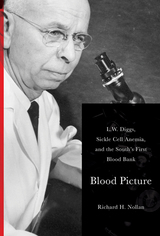
In 1929, Lemuel Whitley Diggs arrived in Memphis as a newly minted physician from the Johns Hopkins University School of Medicine. Rather than establish a private practice, which would have been a lucrative endeavor in a modern city such as Memphis, Diggs took a position as one of the first full-time faculty members with the University of Tennessee Medical Units, a position that afforded Diggs access to both patient care and clinical research, and a decision that would later define his career. As part of his position, Diggs saw patients at the Memphis City Hospital, a poor, inner-city facility constrained by Jim Crow laws and racial bias. He immediately recognized a high rate of sickle cell disease among his patients, a disease Diggs had been taught was rare and one laden with negative racial attributes. Diggs’s study of sickle cell disease would lead him to confront medical racism, establish the South’s first blood blank and the nation’s first sickle cell center, and help define the mission of St. Jude Children’s Research Hospital.
Essentially a biography of Diggs, Blood Picture relates the life of a physician and intellectual with strong convictions and medically forward thinking. Diggs’s career spanned the Great Depression, World War II, and the civil rights movement, and he pushed the limits of medicine and sicklecell research in times of turbulent social change. His life reveals the consciousness of the South as seen through the profession he admired and loved.
Of his friend of many years, Dr. John Fothergill, Benjamin Franklin wrote: "I can hardly conceive that a better man has ever existed." Fothergill's letters provide a fascinating perspective of his time--a totally different view from that given by his contemporaries Horace Walpole and Dr. Johnson.
The "Quaker internationalist" (as his editors aptly call him) was during the middle decades of the eighteenth century one of the half dozen leading physicians of London, a horticulturist of great distinction, an educational reformer, a patron of many philanthropic causes, and a tireless friend of Americans and the cause of American rights. He was exceedingly generous as a patron of scientific undertakings and of young Americans abroad. He founded a famous Quaker school for boys and girls which is still flourishing; he helped found various benevolent and educational institutions in America and he continually subsidized worthy books and gave them to worthy recipients.
All these activities and others are recorded in the some two hundred letters here selected for publication. They throw light on Quaker history on both sides of the Atlantic, on advances in medical science and institutional care of the sick, on discoveries in natural history, and on political developments from the Jacobite Rebellion through the American Revolution. From the beginnings of the rift between colonies and mother country, Fothergill served as a vigorous advocate of conciliatory measures and commonwealth status for America, speaking with equal frankness and impartiality to leaders on both sides until well after hostilities began.
A few weeks before he died (at the end of 1780), he wrote Franklin in France to say that with all Europe leagued against England nothing could be hoped for her from this war, but that the world might hope for the establishment of a tribunal to settle disputes among nations and preclude war as an instrument of policy.
This edition includes a substantial introduction, and the letters have been annotated with great skill and authority. Lyman Butterfield, well known editor of the Adams Papers, says, "I have never encountered annotation on bibliographical, biographical, medical, botanical, and topographical matters that is more unfailingly readable per se. The transatlantic combination of editors was obviously just right. Toward understanding one prominent strand in the cultural history of the 18th century, this book is a uniquely valuable contribution."
In Charles Bell and the Anatomy of Reform, Carin Berkowitz takes readers into Bell’s world, helping us understand the life of medicine before the modern separation of classroom, laboratory, and clinic. Through Bell’s story, we witness the age when modern medical science, with its practical universities, set curricula, and medical professionals, was born.
![front cover of The City of Refuge [New and Expanded Edition]](https://www.bibliovault.org/thumbs/978-0-8262-1812-4-thumb.jpg)
A definitive collection of Fisher’s short stories, The City of Refuge offers vibrant tales that deal with the problems faced by newcomers to the city, ancestor figures who struggle to instill a sense of integrity in the young, problems of violence and vengeance, and tensions of caste and class. This anthology has now been expanded to include seven previously unpublished stories that take up such themes as marital infidelity and passing for black and also relate the further adventures of Jinx and Bubber, the comic duo who appeared in Fisher’s two novels.
This new edition also includes two unpublished speeches and the popular article “The Caucasian Storms Harlem,” describing the craze for black music and dance. John McCluskey’s introduction has been updated to place the additional works within the context of Fisher’s career while situating his oeuvre within the broader context of American writing during the twenties.
Fisher recognized the dramatic and comic power in African American folklore and music and frequented Harlem’s many cabarets, speakeasies, and nightclubs, and at the core of his work is a strong regard for music as context and counterpoint. The City of Refuge now better captures the sounds of the city experience by presenting all of Fisher’s known stories. It offers a portrait of Harlem unmatched in depth and range by Fisher’s contemporaries or successors, celebrating, as Booklist noted, “the complexity of black urban life in its encounter with the dangers and delights of the city.” This expanded edition adds new perspectives to that experience and will enhance Fisher’s status for a new generation of readers.
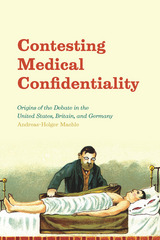
In Contesting Medical Confidentiality, Andreas-Holger Maehle travels back to the origins of this increasingly relevant issue. He offers the first comparative analysis of professional and public debates on medical confidentiality in the United States, Britain, and Germany during the late nineteenth and early twentieth centuries, when traditional medical secrecy first came under pressure from demands of disclosure in the name of public health. Maehle structures his study around three representative questions of the time that remain salient today: Do physicians have a privilege to refuse court orders to reveal confidential patient details? Is there a medical duty to report illegal procedures to the authorities? Should doctors breach confidentiality in order to prevent the spread of disease? Considering these debates through a unique historical perspective, Contesting Medical Confidentiality illuminates the ethical issues and potentially grave consequences that continue to stir up public debate.

"Highly recommended for everyone from patients wrestling with their personal prognosis to any medical practitioner touched by this bioethical dilemma."—Library Journal, starred review
"[T]he first full general discussion of prognosis ever written. . . . [A] manifesto for a form of prognosis that's equal parts prediction-an assessment of likely outcomes based on statistical averages-and prophecy, an intuition of what lies ahead."—Jeff Sharlet, Chicago Reader
"[S]ophisticated, extraordinarily well supported, and compelling. . . . [Christakis] argues forcefully that the profession must take responsibility for the current widespread avoidance of prognosis and change the present culture. This prophet is one whose advice we would do well to heed."—James Tulsky, M.D., New England Journal of Medicine

This early feminist novel is a wickedly funny slice of mid-nineteenth-century Americana peppered with details of the era’s freakish medical tactics and leavened with a smart and sassy commentary about the societal restraints on women’s physical and intellectual abilities.
First published in 1852, Delia’s Doctors is one of four known novels by Hannah Gardner Creamer, an American writer whose life and career have been all but absent from the annals of American history. In the book, eighteen-year-old Delia Thornton is ill. Her condition, more psychological than physical, worsens during the bitter winter, even as doctor after doctor attempts to cure her.
As Delia typifies the female heroine whose sickness is aggravated by listlessness and inactivity, her brother’s fiancée, Adelaide Wilmot, is Delia’s more robust counterpart. Adelaide thinks she could do anything, if only she were a man, and she dreams of being a physician. Quick to point out the shortcomings of male doctors in treating female illnesses, Adelaide saves Delia and delivers a series of arguments against New England patriarchy.
"If you read only one book this year, read Demanding Medical Excellence. It's that good, and the revolution it describes is that important."—Health Affairs
"Millenson has done yeoman's work in amassing and understanding that avalanche of data that lies beneath most of the managed-care headlines. . . . What he finds is both important and well-explained: inconsistency, overlap, and inattention to quality measures in medical treatment cost more and are more dangerous than most cost-cutting measures. . . . [This book] elevates the healthcare debate to a new level and deserves a wide readership."—Library Journal
"An involving, human narrative explaining how we got to where we are today and what lies ahead."—Mark Taylor, Philadelphia Inquirer
"Read this book. It will entertain you, challenge, and strengthen you in your quest for better accountability in health care."—Alex R. Rodriguez, M.D., American Journal of Medical Quality
"Finally, a health-care book that doesn't wring its hands over the decline of medicine at the hands of money-grubbing corporations. . . . This is a readable account of what Millenson calls a 'quiet revolution' in health care, and his optimism makes for a refreshing change."—Publishers Weekly
"With meticulous detail, historical accuracy, and an uncommon understanding of the clinical field, Millenson documents our struggle to reach accountability."—Saty Satya-Murti, M.D., Journal of the American Medical Association

Hatim Kanaaneh is a Palestinian doctor who has struggled for over 35 years to bring medical care to Palestinians in Galilee, against a culture of anti-Arab discrimination. This is the story of how he fought for the human rights of his patients and overcame the Israeli authorities' cruel indifference to their suffering.
Kanaaneh is a native of Galilee, born before the creation of Israel. He left to study medicine at Harvard, before returning to work as a public health physician with the intention of helping his own people. He discovered a shocking level of disease and malnutrition in his community and a shameful lack of support from the Israeli authorities. After doing all he could for his patients by working from inside the system, Kanaaneh set up The Galilee Society, an NGO working for equitable health, environmental and socio-economic conditions for Palestinian Arabs in Israel.
This is a brilliant memoir that shows how grass roots organisations can loosen the Zionist grip upon Palestinian lives.


Doctors are obviously influential in determining the costs of their services. But even more important, many believe, is the influence physicians have over the use and cost of nonphysician health-care resources and services. Doctors and Their Workshops is the first comprehensive attempt to use economic analysis to understand some of the physician effects on nonphysician aspects of health care.
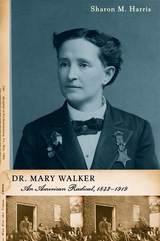
Perhaps more telling about her life are the words of an 1866 London Anglo-American Times reporter, "Her strange adventures, thrilling experiences, important services and marvelous achievements exceed anything that modern romance or fiction has produced. . . . She has been one of the greatest benefactors of her sex and of the human race."
In this biography Sharon M. Harris steers away from a simplistic view and showcases Walker as a Medal of Honor recipient, examining her work as an activist, author, and Civil War surgeon, along with the many nineteenth-century issues she championed:political, social, medical, and legal reforms, abolition, temperance, gender equality, U.S. imperialism, and the New Woman.
Rich in research and keyed to a new generation, Dr. Mary Walker captures its subject's articulate political voice, public self, and the realities of an individual whose ardent beliefs in justice helped shape the radical politics of her time.
The thirteen essays in Educating for Professionalism examine the often conflicting ethical, social, emotional, and intellectual messages that medical institutions send to students about what it means to be a doctor. Because this disconnection between what medical educators profess and what students experience is partly to blame for the current crisis in medical professionalism, the authors offer timely, reflective analyses of the work and opportunities facing medical education if doctors are to win public trust.
In their drive to improve medical professionalism within the world of academic medicine, editors Delese Wear and Janet Bickel have assembled thought-provoking essays that elucidate the many facets of teaching, valuing, and maintaining medical professionalism in the middle of the myriad challenges facing medicine at the dawn of the twenty-first century.
The collection traces how the values of altruism and service can influence not only mission statements and admission policies but also the content of medical school ethics courses, student-led task forces, and mentoring programs, along with larger environmental issues in medical schools and the communities they serve.
Stanley Joel Reiser
Jack Coulehan
Peter C. Williams
Frederic W. Hafferty
Richard Martinez
Judith Andre
Jake Foglio
Howard Brody
Sheila Woods
Sue Fosson
Lois Margaret Nora
Mary Anne C. Johnston
Tana A. Grady-Weliky
Cynthia N. Kettyle
Edward M. Hundert
Norma E. Wagoner
Frederick A. Miller
William D. Mellon
Howard Waitzkin
Donald Wasylenki
Niall Byrne
Barbara McRobb
Edward J. Eckenfels
Lucy Wolf Tuton
Claudia H. Siegel
Timothy B. Campbell

At the heart of this profoundly interdisciplinary study lies the Royal Society of London for the Improvement of Natural Knowledge, which from its founding in 1660 served as the major professional organization for London’s leading physicians, many of them prominent virtuosi. Craig Ashley Hanson reveals that a vital art audience emerged from the Royal Society—whose members assembled many of the period’s most important nonaristocratic collections—a century before most accounts date the establishment of an institutional base for the arts in England. Unearthing the fascinating stories of an impressive cast of characters, Hanson establishes a new foundation for understanding both the relationship between British art and science and the artistic accomplishments of the late eighteenth and nineteenth centuries.
The world of wealth and patronage that we associate with sixteenth- and early seventeenth-century Italy can make the Renaissance seem the exclusive domain of artists and aristocrats. Revealing a Renaissance beyond Michelangelo and the Medici, Sarah Gwyneth Ross recovers the experiences of everyday men and women who were inspired to pursue literature and learning.
Ross draws on a trove of original unpublished sources—wills, diaries, household inventories, account books, and other miscellany—to reconstruct the lives of over one hundred artisans, merchants, and others on the middle rung of Venetian society who embraced the ennobling virtues of a humanistic education. These men and women sought out the latest knowledge, amassed personal libraries, and passed both their books and their hard-earned wisdom on to their families and heirs.
Physicians were often the most avid—and the most anxious—of professionals seeking cultural legitimacy. Ross examines the lives of three doctors: Nicolò Massa (1485–1569), Francesco Longo (1506–1576), and Alberto Rini (d. 1599). Though they had received university training, these self-made men of letters were not patricians but members of a social group that still yearned for credibility. Unlike priests or lawyers, physicians had not yet rid themselves of the taint of artisanal labor, and they were thus indicative of a middle class that sought to earn the respect of their peers and betters, protect and advance their families, and secure honorable remembrance after death.
The authors take a wide-ranging look at the meaning of intergenerational vocations and the role of family, the economy, and social issues on the evolution of medical education and practice in the United States.

Steven Palmer breaks with the view of popular and professional medicine as polar opposites—where popular medicine is seen as representative of the authentic local community and as synonymous with oral tradition and religious and magical beliefs and professional medicine as advancing neocolonial interests through the work of secular, trained academicians. Arguing that there was significant and formative overlap between these two forms of medicine, Palmer shows that the relationship between practitioners of each was marked by coexistence, complementarity, and dialogue as often as it was by rivalry. Palmer explains that while the professionalization of medical practice was intricately connected to the nation-building process, the Costa Rican state never consistently displayed an interest in suppressing the practice of popular medicine. In fact, it persistently found both tacit and explicit ways to allow untitled healers to practice. Using empirical and archival research to bring people (such as the famous healer or curandero Professor Carlos Carbell), events, and institutions (including the Rockefeller Foundation) to life, From Popular Medicine to Medical Populism demonstrates that it was through everyday acts of negotiation among agents of the state, medical professionals, and popular practitioners that the contours of Costa Rica’s modern, heterogeneous health care system were established.
Mizrahi observed and interviewed these physicians in six timeframes ending in 2016. Beginning with medical school in the mid-1970s, these physicians reveal the myriad fluctuations and uncertainties in their professional practice, working conditions, collegial relationships, and patient interactions. In their own words, they provide a “view from the front lines” both in academic and community settings. They disclose the satisfactions and strains in coping with macro policies enacted by government and insurance companies over their career trajectory.
They describe their residency in internal medicine in a large southern urban medical center as a “siege mentality” which lessened as they began their careers, in Getting Rid of Patients, the title of Mizrahi’s first book (1986). As these doctors moved on in their professional lives more of their experiences were discussed in terms of dissatisfaction with financial remuneration, emotional gratification, and intellectual fulfillment. Such moments of career frustration, however, were also interspersed with moments of satisfaction at different stages of their medical careers. Particularly revealing was whether they were optimistic about the future at each stage of their career and whether they would recommend a medical career to their children. Mizrahi's subjects also divulge their private feelings of disillusionment and fear of failure given the malpractice epidemic and lawsuits threatened or actually brought against so many doctors. Mizrahi’s work, covering almost fifty years, provides rarely viewed insights into the lives of physicians over a professional life span.

When Barney Clark received the Jarvik-7 artificial heart in 1983 and Cold Fusion came under fire in 1989, Chase Peterson, as the University of Utah president, was inevitably pulled into these campus events. While these episodes may be the best known in Peterson’s professional history, they are certainly not the only stories that make his autobiography worth reading.
The Guardian Poplar tells of a man who grew up in small-town Utah and carried his pioneer and Mormon heritage to a New England prep school and later to Harvard. He then returned to Utah as a doctor, but unexpectedly found himself back at Harvard as its dean of admissions, handling issues such as the Vietnam War and racial and gender reform. The book explains how Peterson’s home state recruited him back to become an administrator at the University of Utah and how he would eventually become the university president, taking on new issues and challenges. Peterson recounts these years by drawing on anecdotes that recall the people he served and the moments that brought his life meaning.
This autobiography is a compelling account of how Peterson has managed to balance family and career, handle the tensions that have arisen between his faith and his scientific training, and remain solid in the face of his newest challenge—cancer. The book’s engaging prose and honest reflections are sure to intrigue and inspire readers who know the man well, as well as those readers who simply want to know a man who can be described as dedicated, faithful, hardworking, and hopeful about the future.
“When I first met Chase Peterson as a Harvard freshman—along with our joint friend and brother David Evans—something deeply touched me. It was not only his sincere smile and open embrace but also a sense that here was a kind and courageous man comfortable in his own skin, secure in who he was yet eager to encounter new persons, new experiences, and new challenges. . . . He was from Utah but in New England, a Mormon in old Harvard, and a medical doctor in the deanship of admissions. Little did I know that his journey would enhance and enrich my own—owing to his critical allegiance to his family, his faith, his friends, and to his citizenship of country and world. His prophetic witness at Harvard in the turbulent ‘60s and ‘70s, his promotion of black priesthood in the Mormon church, his support of antiapartheid protests in the ‘80s, and his steadfast defense of academic freedom in the Cold Fusion controversy in the early ‘90s all express his quiet and humble effort to be true to himself—a self grounded in, but
not limited by, a rich Mormon tradition.”—from the foreword by Cornel West

This book illuminates issues in medical ethics revolving around the complex bond between healer and patient, focusing on friendship and other important values in the healing relationship. Embracing medicine, philosophy, theology, and bioethics, it considers whether bioethical issues in medicine, nursing, and dentistry can be examined from the perspective of the healing relationship rather than external moral principles.
Distinguished contributors explore the role of the health professional, the moral basis of health care, greater emphasis on the humanities in medical education, and some of the current challenges facing healers today.

Winner of the American Sociological Association Sociology of Law Section 2013 Outstanding Book Award
How do we know when physicians practice medicine safely? Can we trust doctors to discipline their own? What is a proper role of experts in a democracy? In the Public Interest raises these provocative questions, using medical licensing and discipline to advocate for a needed overhaul of how we decide public good in a society dominated by private interest groups. Throughout the twentieth century, American physicians built a powerful profession, but their drive toward professional autonomy has made outside observers increasingly concerned about physicians’ ability to separate their own interests from those of the general public.
Ruth Horowitz traces the history of medical licensure and the mechanisms that democratic societies have developed to certify doctors to deliver critical services. Combining her skills as a public member of medical licensing boards and as an ethnographer, Horowitz illuminates the workings of the crucial public institutions charged with maintaining public safety. She demonstrates the complex agendas different actors bring to board deliberations, the variations in the board authority across the country, the unevenly distributed institutional resources available to board members, and the difficulties non-physician members face as they struggle to balance interests of the parties involved.
In the Public Interest suggests new procedures, resource allocation, and educational initiatives to increase physician oversight. Horowitz makes the case for regulations modeled after deliberative democracy that promise to open debates to the general public and allow public members to take a more active part in the decision-making process that affects vital community interests.
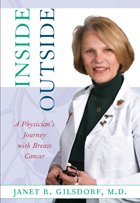
The medical system delivers cures, answers, and relief from pain to those who seek its help, but it can also offer misinformation, shattered expectations, horrible options, and inhumane consideration of the people it is supposed to serve. As Gilsdorf takes us on a journey across the terrifying landscape of cancer, she discovers that there are oases of unfathomable beauty to be found.
Inside/Outside is compelling, sometimes scary, reading as it puts us inside Gilsdorf’s skin. It ponders a vast array of profound choices most of us will be confronted with in our lives: thinking versus feeling, knowing versus not knowing, hanging on versus letting go, loving versus hating, and the immeasurable territories of life between the poles. Even as it touches on these universal human themes, ultimately Inside/Outside is a story of one person’s courage, hope, and survival in the face of terrifying odds.


Jelliffe's colorful and versatile career led him from botany and neurology (he was coauthor of a neurology text that remained standard for some forty years) to psychiatry, psychoanalysis (of which he was a founding father in the United States), and psychosomatic medicine (in which he also pioneered). Jelliffe also made outstanding contributions to medical journalism. With William Alanson White he founded the Psychoanalytic Review, and his work as editor of the Journal of Nervous and Mental Disease from 1902 to 1944 may have set a record for editorial longevity. Jelliffe was a charismatic speaker and teacher who in all his roles induced physicians and other thinkers to explore new ideas and ways of thinking.
Jelliffe's correspondence with Jung and Freud illuminates the personal and professional lives of the three men. The letters help to clarify concepts in both the Jungian and Freudian schools. The shifting emphasis of Jelliffe's relationships with the two masters of psychoanalysis—first when the two were colleagues, then for the greater span of time when they were rivals and adversaries—is revealing of Jenlliffe's own flexible views.
Jelliffe, furthermore, provides insights into the history of medicine and medical institutions and customs through Jelliffe's frank accounts of the developing medical profession in America. Jelliffe describes, for example, what it was like for a young M.D. to set up an economically viable practice in the 1890s. In addition, Burnham explores the problem of measuring the influence of a man like Jelliffe upon the history of ideas and institutions.
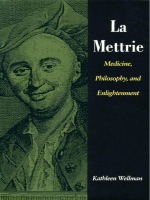
Wellman’s study presents La Mettrie as an advocate of progressive medical theory and practice who consistently applied his medical concerns to the reform of philosophy, morals, and society. By examining his training with the Dutch physician Hermann Boerhaave, his satires lampooning the ignorance and venality of the medical profession, and his medical treatises on subjects ranging from vertigo to veneral disease, Wellman illuminates the medical roots of La Mettrie’s philosophy. She shows how medicine encouraged La Mettrie to undertake an impiricist critique of the philosophical tradition and provided the foundation for a medical materialism that both shaped his understanding of the possibilities of moral and social reform and led him to espouse the cause of the philosophers.
Elucidating the medical view of nature, human beings, and society that the Enlightenment and La Mettrie in particular bequethed to the modern world, La Mettrie makes an important contribution to our understanding of both that period and our own.
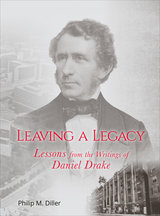
Leaving a Legacy: Lessons from the Writings of Daniel Drake is a selective collection of excerpts from the vast writings from the nineteenth-century doctor and medical pioneer Daniel Drake. From Drake’s life, documented here in his own words from excerpts of lectures, personal journal entries, presentations, speeches, books, and letters to his children, readers learn about the scope of his accomplishments in medicine, contributions to his community, and dedication to his family. Diller goes beyond biography to contextualize Drake’s life choices and what made him a role model for today’s physicians. Diller selected one hundred and eighty thematically arranged excerpts, which he paired with original reflection questions to guide the reader through thought-provoking prompts. In doing so, Diller presents the lessons from Drake’s remarkable life and work as a guide for others who wish to build an enduring legacy.

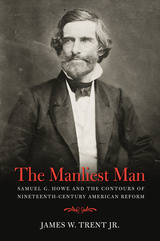
Always quick to refer to himself as a liberal, Howe embodied the American Renaissance's faith in the perfectibility of human beings, and he spoke out in favor of progressive services for disabled Americans. A Romantic figure even in his own day, he embraced a notion of manliness that included heroism under fire but also compassion for the underdog and the oppressed. Though hardly a man without flaws and failures, he nevertheless represented the optimism that characterized much of antebellum American reform.
The first full-length biography of Samuel G. Howe in more than fifty years, The Manliest Man explores his life through private letters and personal and public documents. It offers an original view of the reformer's personal life, his association with social causes of his time, and his efforts to shape those causes in ways that allowed for the greater inclusion of devalued people in the mainstream of American life.
A Measure of Malpractice tells the story and presents the results of the Harvard Medical Practice Study, the largest and most comprehensive investigation ever undertaken of the performance of the medical malpractice system. The Harvard study was commissioned by the government of New York in 1986, in the midst of a malpractice crisis that had driven insurance premiums for surgeons and obstetricians in New York City to nearly $200,000 a year.
The Harvard-based team of doctors, lawyers, economists, and statisticians set out to investigate what was actually happening to patients in hospitals and to doctors in courtrooms, launching a far more informed debate about the future of medical liability in the 1990s. Careful analysis of the medical records of 30,000 patients hospitalized in 1984 showed that approximately one in twenty-five patients suffered a disabling medical injury, one quarter of these as a result of the negligence of a doctor or other provider. After assembling all the malpractice claims filed in New York State since 1975, the authors found that just one in eight patients who had been victims of negligence actually filed a malpractice claim, and more than two-thirds of these claims were filed by the wrong patients.
The study team then interviewed injured patients in the sample to discover the actual financial loss they had experienced: the key finding was that for roughly the same dollar amount now being spent on a tort system that compensates only a handful of victims, it would be possible to fund comprehensive disability insurance for all patients significantly disabled by a medical accident. The authors, who came to the project from very different perspectives about the present malpractice system, are now in agreement about the value of a new model of medical liability. Rather than merely tinker with the current system which fixes primary legal responsibility on individual doctors who can be proved medically negligent, legislatures should encourage health care organizations to take responsibility for the financial losses of all patients injured in their care.
As the ground war in Vietnam escalated in the late 1960s, the US government leveraged the so-called doctor draft to secure adequate numbers of medical personnel in the armed forces. Among newly minted physicians’ few alternatives to military service was the Clinical Associate Training Program at the National Institutes of Health. Though only a small percentage of applicants were accepted, the elite program launched an unprecedented number of remarkable scientific careers that would revolutionize medicine at the end of the twentieth century.
Medal Winners recounts this overlooked chapter and unforeseen byproduct of the Vietnam War through the lives of four former NIH clinical associates who would go on to become Nobel laureates. Raymond S. Greenberg traces their stories from their pre-NIH years and apprenticeships through their subsequent Nobel Prize–winning work, which transformed treatment of heart disease, cancer, and other diseases. Greenberg shows how the Vietnam draft unintentionally ushered in a golden era of research by bringing talented young physicians under the tutelage of leading scientists and offers a lesson in what it may take to replicate such a towering center of scientific innovation as the NIH in the 1960s and 1970s.
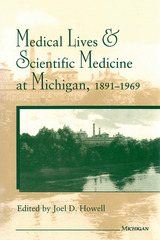
U.S. health care has changed dramatically during the past century. A new breed of physicians use new machines, vaccines, and ideas in ways that have touched the lives of virtually everyone. How and why did these changes occur?
The biographical essays comprising this volume address this question through the stories of six scientific innovators at the University of Michigan Medical School. Michigan was the first major U.S. medical school to admit women, to run its own university hospital, and, by the turn of the century, was recognized as one of the finest medical schools in the country. The people whose stories unfold here played a central part in defining the place of medical science at the University of Michigan and in the larger world of U.S. health care.
Introductory sections are followed by biographical profiles of George Dock, Thomas Francis, Albion Hewlett, Louise Newburgh, Cyrus Strurgis, and Frank Wilson. Drawing on extensive archival research, the authors provide a richly textured portrait of academic medical life and reveal how the internal content of science and medicine interacted with the social context of each subject's life. Also explored is the relationship between the environment (the hospital, the university, and the city) and the search for knowledge.
These narratives expand our perspective on twentieth-century medical history by presenting these individuals' experiences as extended biopsies of the period and place, focal points illuminating the personal nature of medicine and locating the discipline within a social and institutional setting.
Joel D. Howell is Associate Professor, Department of Internal Medicine, Department of History, and Department of Health Services Management and Policy, University of Michigan.
From practical to philosophical considerations, this succinct, clear presentation of medical malpractice issues is a valuable resource for the classroom and the reference shelf. Frank M. McClellan illustrates the multitude of considerations that impact the merit of each case, never losing sight of the importance of preserving human dignity in malpractice lawsuits.
Early chapters urge the evaluation of legal, medical, and ethical standards, especially the Standard of Care. Part II focuses on assessing and proving compensatory and punitive damages, Part III sets out guidelines for intelligence gathering, medical research, choosing expert witnesses, and preparing for trial.
Students of law, medicine, and public health, as well as lawyers and health care professionals, will find in Medical Malpractice a valuable text or reference book. "Problems" in twelve of the thirteen chapters illustrate the range of issues that can arise in malpractice suits. An appendix lists leading cases that have shaped medical malpractice law.
This, according to Tom Baker, is the myth of medical malpractice, and as a reality check he offers The Medical Malpractice Myth, a stunning dismantling of this familiar, but inaccurate, picture of the health care industry. Are there too many medical malpractice suits? No, according to Baker; there is actually a great deal more medical malpractice, with only a fraction of the cases ever seeing the inside of a courtroom. Is too much litigation to blame for the malpractice insurance crisis? No, for that we can look to financial trends and competitive behavior in the insurance industry. Are these lawsuits frivolous? Very rarely. Point by point, Baker—a leading authority on insurance and law—pulls together the research that demolishes the myths that have taken hold about medical malpractice and suggests a series of legal reforms that would help doctors manage malpractice insurance while also improving patient safety and medical accountability.
President Bush has made medical malpractice reform a priority in his last term in office, but if history is any indication, legislative reform would only worsen the situation and perpetuate the gross misunderstanding of it. The debate surely will be transformed by The Medical Malpractice Myth, a book aimed squarely at general readers but with radical conclusions that speak to the highest level of domestic policymaking.
Medical malpractice has been at the center of recurring tort crises for the last quarter-century. In 1960, expenditures on medical liability insurance in the United States amounted to about $60 million. In 1988, the figure topped $7 billion. Physicians have responded not simply with expensive methods of "defensive medicine" but also with successful pressure upon state legislatures to cut back on the tort rights of seriously injured patients. Various reforms have been proposed to deal with the successive crises, but so far none have proved to be effective and fair.
In this landmark book, Paul Weiler argues for a two-part approach to the medical malpractice crisis. First, he proposes a thorough revision of the current tort liability regime, which would concentrate available resources on meeting actual financial losses of seriously injured victims. It would also shift the focus of tort liability from the individual doctor to the hospital or other health care organization. This would elicit more effective quality assurance programs from the institutions that are in the best position to reduce our current unacceptable rate of physician-induced injuries.
But in states such as New York, Florida, and Illinois, where the current situation seems to have gone beyond the help of even drastic tort reform, the preferred solution is a no-fault system. Weiler shows how such a system would provide more equitable compensation, more effective prevention, and more economical administration than any practical alternative.
How often are patients seriously injured through faulty medical care? And what proportion of these people receive compensation for their injuries and suffering? This is the first book that tries to answer these questions in a careful, scholarly way. Among its important findings is that at most one in ten patients injured through medical negligence receives compensation through the malpractice system.
The focus of public attention has been on the rising cost to physicians of malpractice insurance. Although Patricia Danzon analyzes this question thoroughly, her view is much broader, encompassing the malpractice system itself--the legal process, the liability insurance markets, and the feedback to health care. As an economist, she is concerned with the efficiency or cost-effectiveness of the system from the point of view of its three social purposes: deterrence of medical negligence, compensation of injured patients, and the spreading of risk. To provide evidence of the operation of the system in practice, to distinguish fact from allegation, and to evaluate proposals for reform, she has undertaken a detailed empirical analysis of malpractice claims and insurance markets. It is a major contribution to our understanding of how the system works in practice and how it might be improved.
Runaway medical costs, long-term care, market competition, for-profit medicine, nursing shortages—these are but a few of the issues that swirl around in the late twentieth century’s volatile health care scene. How much of the system do we want to change, and how much do we want to keep? Health policy expert Eli Ginzberg examines such crucial questions in his characteristically broad-gauged perspective. Framing the issues in their historical, political, and professional contexts, the author analyzes how we have arrived at the current crisis.
The book focuses on the three sides of the medical triangle that have separate and sometimes conflicting goals: the physicians want to provide the most health care for the most money; the government, which furnishes 40 percent of the system's funding, wants to limit the money it pays out for health care; and the public, with over a billion annual visits to doctors, wants the most health care for the least money.
Ginzberg explains how the core components of our health care system—the community hospital and physicians who have long practiced in a fee-for-service mode—are under attack, and he indicates the factors that make it uncertain whether the destabilization will slow down or accelerate. Moreover, can key health care centers maintain their leadership in a time when new dollars for health are scarce? How will the floundering state of foundations affect medical care in local communities?
In his final chapters the author zeroes in on the special concerns of the public: high-need patients (including those suffering from cancer, catastrophic illness, and the infirmities of old age, or those who are mentally ill or chronically poor), nursing shortages, unsuccessful cost containment, and lack of consensus within the medical triangle about the major issues on our nation's health agenda.
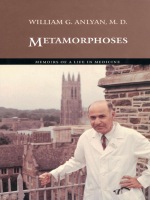
Born in Alexandria, Egypt, in 1925, and schooled in the British tradition, Anlyan attended Yale University as an undergraduate and medical student before coming to the relatively unknown medical school at Duke University in 1949 for an internship in general and thoracic surgery. He stayed on, first as a resident, then as a staff surgeon. By 1961, he was a full professor of surgery. In 1964, Anlyan was named dean of the medical school, the first in a series of administrative posts at the medical school and hospital. Anlyan’s role in the transformation of the Duke University Medical Center into an internationally renowned health system is manifest: he restructured the medical school and hospital and supervised the addition of almost four million square feet of new or renovated space. He hired outstanding administrators and directed a staff that instituted innovative programs and groundbreaking research centers, such as the Cancer Center and the Physician’s Assistant Program.
Anlyan describes a series of metamorphoses in his own life, in the world of medicine, in Durham, and at Duke. At the time of his prep school upbringing in Egypt, medicine was a matter of controlling infectious diseases like tuberculosis and polio. As he became an immigrant medical student and then a young surgeon, he observed vast advances in medical practice and changes in the financing of medical care. During his tenure at Duke, Durham was transformed from a sleepy mill and tobacco town into the “City of Medicine,” a place where patients routinely travel for open-heart surgery and cutting-edge treatments for cancer and other diseases.
Anyone interested in health care, medical education, and the history of Duke University will find Anlyan’s memoir of interest.
In this expanded edition, an accomplished physician and teacher of medicine discusses the importance of being a caring doctor, especially now that the focus of medicine is increasingly on technological innovation and health care costs.
With wisdom and compassion, Dr. Jerome Lowenstein tells stories about relationships between medical students and their teachers, physicians and their patients. He reflects on what doctors learn from treating chronic illness; how they respond to patients' needs for reassurance; how they bear the burden of treating patients with life-threatening or degenerative disease; whether the distinction between traditional and "alternative" medical treatment is ultimately beneficial or destructive; and many other issues. Dr. Lowenstein's ruminations on humanistic approaches to learning and practicing medicine will be treasured by physicians, medical students, and patients alike.

This is the story of a Chinese doctor, his book, and the creatures that danced within its pages. The Monkey and the Inkpot introduces natural history in sixteenth-century China through the iconic Bencao gangmu (Systematic materia medica) of Li Shizhen (1518–1593).
The encyclopedic Bencao gangmu is widely lauded as a classic embodiment of pre-modern Chinese medical thought. In the first book-length study in English of Li’s text, Carla Nappi reveals a “cabinet of curiosities” of gems, beasts, and oddities whose author was devoted to using natural history to guide the application of natural and artificial objects as medical drugs. Nappi examines the making of facts and weighing of evidence in a massive collection where tales of wildmen and dragons were recorded alongside recipes for ginseng and peonies.
Nappi challenges the idea of a monolithic tradition of Chinese herbal medicine by showing the importance of debate and disagreement in early modern scholarly and medical culture. The Monkey and the Inkpot also illuminates the modern fate of a book that continues to shape alternative healing practices, global pharmaceutical markets, and Chinese culture.
In the nineteenth century, infants were commonly breast-fed; by the middle of the twentieth century, women typically bottle-fed their babies on the advice of their doctors. In this book, Rima D. Apple discloses and analyzes the complex interactions of science, medicine, economics, and culture that underlie this dramatic shift in infant-care practices and women’s lives.
As infant feeding became the keystone of the emerging specialty of pediatrics in the twentieth century, the manufacture of infant food became a lucrative industry. More and more mothers reported difficulty in nursing their babies. While physicians were establishing themselves and the scientific experts and the infant-food industry was hawking the scientific bases of their products, women embraced “scientific motherhood,” believing that science could shape child care practices. The commercialization and medicalization of infant care established an environment that made bottle feeding not only less feared by many mothers, but indeed “natural” and “necessary.” Focusing on the history of infant feeding, this book clarifies the major elements involved in the complex and sometimes contradictory interaction between women and the medical profession, revealing much about the changing roles of mothers and physicians in American society.
“The strength of Apple’s book is her ability to indicate how the mutual interests of mothers, doctors, and manufacturers led to the transformation of infant feeding. . . . Historians of science will be impressed with the way she probes the connections between the medical profession and the manufacturers and with her ability to demonstrate how medical theories were translated into medical practice.”—Janet Golden, Isis
The sixteenth century saw an unprecedented growth in the number of educated physicians practicing in German cities. Concentrating on Nuremberg, A New Order of Medicine follows the intertwined careers of municipal physicians as they encountered the challenges of the Reformation city for the first time. Although conservative in their professed Galenism, these men were eclectic in their practices, which ranged from book collecting to botany to subversive anatomical experimentations. Their interests and ambitions lead to local controversy. Over a twenty-year campaign, apothecaries were wrested from their place at the forefront of medical practice, no longer able to innovate remedies, while physicians, recent arrivals in the city, established themselves as the leading authorities. Examining archives, manuscript records, printed texts, and material and visual sources, and considering a wide range of diseases, Hannah Murphy offers the first systematic interpretation of the growth of elite medical “practice,” its relationship to Galenic theory, and the emergence of medical order in the contested world of the German city.
Although he received no formal medical education, Forman built a thriving practice. His success rankled the College of Physicians of London, who hounded Forman with fines and jail terms for nearly two decades. In addition to detailing case histories of his medical practice—the first such records known from London—as well as his run-ins with the College, Forman's manuscripts cover a wide variety of other matters, from astrology and alchemy to gardening and the theater. His autobiographical writings are among the earliest English examples of their genre and display an abiding passion for reworking his personal history in the best possible light, even though they show little evidence that Forman ever intended to publish them.
Fantastic as many of Forman's manuscripts are, it is their more mundane aspects that make them such a priceless record of what daily life was like for ordinary inhabitants of Shakespeare's London. Forman's descriptions of the stench of a privy, the paralyzed limbs of a child, a lost bitch dog with a velvet collar all offer tantalizing glimpses of a world that seems at once very far away and intimately familiar. Anyone who wants to reclaim that world will enjoy this book.

Traveling by foot, horse, stage, canal boat, and steamer, Nathaniel and Nicodemus explore the backcountry and forge a deep friendship as they encounter a host of memorable characters who reveal the nature of the American experiment, one still in its early stages but already under the stress of social injustices and economic inequities.

With disarming candor and the audacity to admit that practicing medicine can be a crazy thing, Watts fills each page with riveting details, moving accounts, or belly-laughs. As the stories in this work unfold, we are witness to the moral dilemmas and personal rewards of ministering to the sick. Whether the subject is the potential benefits of therapeutic deception or telling a child about death, Watts’s ear for the right word, the right tone, and the right detail never fails him.
From The Orange Wire Problem and Other Tales from the Doctor’s Office:
We were lingering in the outer office. He mentioned again, no biopsy. I knew that. And I knew there would be no chemotherapy.
Maybe it's like that Orange Wire Problem, I said.
Yes exactly, he said, and four years from now when we're all sitting around the campfire we'll remember the Orange Wire Problem. . .
And I thought to myself, my brother did that. Spoke of the time ahead as he was dying of lung cancer. Six months from now he had said, we'll be glad we did all those drug therapies—as if to speak of the future laid claim to the future.
Over the past decade, there have been substantial and rapidly changing developments in the treatment of eating disorders. Grounded in the most recent literature, The Outpatient Treatment of Eating Disorders balances general and pathology-specific research to emphasize outpatient treatment. The contributors provide an overview of the full range of eating disorders and offer clinical recommendations for a comprehensive treatment plan for patients with these disorders.
These distinguished contributors present case studies and hands-on treatment models based on cognitive behavioral techniques. Using three vignettes-a woman with anorexia nervosa, a woman with bulimia nervosa, and a man with binge eating disorder-the authors offer practical approaches, including extensive nutritional information for dietitians, for treating these three major forms of eating disorders. Designed for all health care workers who deal with eating disorder patients, this indispensable guide will be useful for psychiatrists, other physicians, psychologists, social workers, exercise physiologists, and dietitians as well as those who suffer from eating disorders.
Contributors: David W. Abbott, U of North Dakota; Roslyn Binford, U of Minnesota; Carol Brunzell, Fairview-University Medical Center; Scott Crow, U of Minnesota; Mary Hendrickson-Nelson, HealthPartners of Minnesota; Susan Jack, Fairview-University Medical Center; Pamela K. Keel, Harvard U; Melissa Pederson Mussell, U of St. Thomas; Carol Peterson, U of Minnesota; Claire Pomeroy, U of Kentucky; LeAnn Snow, U of Minnesota; Stephen A. Wonderlich, U of North Dakota; and Martina de Zwaan, University Hospital, Vienna.
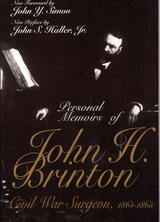
John Hill Brinton (1832–1907) met, observed, and commented on practically the entire hierarchy of the Union army; serving as medical director for Ulysses S. Grant, he came into contact with Philip H. Sheridan, John C. Frémont, Henry W. Halleck, William A. Hammond, D. C. Buell, John A. Rawlins, James Birdseye McPherson, C. F. Smith, John A. McClernand, William S. Rosecrans, and his first cousin George Brinton McClellan. John Y. Simon points out in his foreword that Brinton was one of the first to write about a relatively obscure Grant early in the war:
"Brinton found a quiet and unassuming man smoking a pipe—he could not yet afford cigars— and soon recognized a commander with mysterious strength of intellect and character."
Positioned perfectly to observe the luminaries of the military, Brinton also occupied a unique perspective from which to comment on the wretched state of health and medicine in the Union army and on the questionable quality of medical training he found among surgeons. With both A.B. and A.M. degrees from the University of Pennsylvania and postgraduate training in Paris and Vienna at a time when most medical schools required only a grammar school education, Brinton was exceptional among Civil War doctors. He found, as John S. Haller, Jr., notes in his preface, "the quality of candidates for surgeon’s appointments was meager at best." As president of the Medical Examining Board, Brinton had to lower his standards at the insistence of Secretary of War Edwin Stanton. Haller points out that one "self-educated candidate for an appointment as brigade surgeon explained to the board that he could do ‘almost anything, from scalping an Indian, up and down.’" Brinton assigned this singular candidate to duty in Kansas "where Brinton hoped he would do the least amount of damage." Throughout the war, the dearth of qualified surgeons created problems.
Brinton’s memoirs reveal a remarkable Civil War surgeon, a witness to conditions in Cairo, the Battle of Belmont, and the Siege of Fort Donelson who encountered almost every Union military leader of note.
Brinton wrote his memoirs for the edification of his family, not for public consumption. Yet he was, as Haller notes, a "keen observer of character." And with the exception of Brinton’s acceptance of late nineteenth-century gossip favorable to his cousin General McClellan, Simon finds the memoirs "remarkable for accuracy and frankness." His portrait of Grant is vivid, and his comments on the state of medicine during the war help explain, in Haller’s terms, why the "Civil War was such a medical and human tragedy."
We all have a good idea of how we want things to go when we visit a physician. We expect to be able to explain why we are there, and we hope the physician will listen and possibly ask questions that help us clarify our thoughts. Most of us hope that the physician will provide some expression of empathy, offer a clear, nontechnical assessment of our problem, and describe "next steps" in a way that is easy to understand. Ideally, we would like to be asked about our ability to follow treatment recommendations. Some experts say that these expectations are not only reasonable but even necessary if patients are to get the care they need. Yet there is a growing body of research that suggests the reality of physician communication with patients often falls short of this ideal in many respects.
A careful analysis of the findings of this research can provide guidance to physician educators, health care administrators, and health policy makers interested in understanding the role that improved physician communication can play in improving quality of care and patient outcomes. Physician Communication with Patients summarizes findings from the academic literature pertaining to various aspects of this question, discussing those findings in the context of current pressures for change in the organization and delivery of medical services.
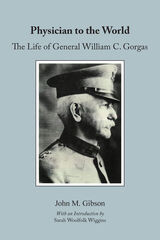
Physician to the World by John M. Gibson is a study of the career of William Crawford Gorgas, focusing primarily on the 22 years from the Spanish-American War until his death at the age of 65. The book details the medical community’s gradual acceptance of the mosquito theory as the cause for yellow fever epidemics and follows Gorgas as his initial skepticism gave way to belief while he participated in Walter Reed’s massive cleanup of Havana. From this success Gorgas moved to the Panama Canal Zone and a bureaucratic quagmire as he attempted to apply sanitary principles there to control yellow fever and malaria. As canal construction proceeded, assorted red-tape and critics repeatedly thwarted Gorgas’s efforts. His particular nemesis was the imperious engineer George Goethals, who ruled the construction project with an iron hand. Gorgas’s dogged persistence to make Panama healthy for both Americans and natives eventually succeeded, enabling the project to be completed with minimum loss of life. During World War I Gorgas became U.S. Surgeon General, and finally his reputation equaled his accomplishments. He traveled widely in Europe, South Africa, and South America on behalf of public health improvements and was about to begin another such journey when he died of complications from a stroke in London in 1920.

The first scholarly exploration of the forums, practice, and economics of functional medicine.
Physicians of the Future interrogates the hidden logics of inclusion and exclusion in functional medicine (FM), a holistic form of personalized medicine that targets chronic disease. Rosalynn Vega uncovers how, as “wounded healers,” some FM practitioners who are former chronic disease sufferers turn their illness narratives into a form of social capital, leveraging social media to relate to patients and build practices as “doctor-influencers.” Arguing that power and authority operate distinctly in FM when compared to conventional medicine, largely because FM services are paid for out of pocket by socioeconomically privileged “clients,” Vega studies how FM practitioners engage in entrepreneurship of their own while critiquing the profit motives of the existing healthcare system, pharmaceutical industry, and insurance industry. Using data culled from online support groups, conferences, docuseries, blogs, podcasts, YouTube, and TED Talks, as well as her own battles with chronic illness, Vega argues that FM practices prioritize the individual while inadvertently reinscribing inequities based on race and class. Ultimately, she opens avenues of possibility for FM interlocutors wrestling with their responsibility for making functional medicine accessible to all.

—Gianna Pomata
Professor of the History of Medicine, Johns Hopkins University
Scholars exploring the history of science under the Nazis have generally concentrated on the Nazi destruction of science or the corruption of intellectual and liberal values. Racial Hygiene focuses on how scientists themselves participated in the construction of Nazi racial policy. Robert Proctor demonstrates that the common picture of a passive scientific community coerced into cooperation with the Nazis fails to grasp the reality of what actually happened—namely, that many of the political initiatives of the Nazis arose from within the scientific community, and that medical scientists actively designed and administered key elements of National Socialist policy.
The book presents the most comprehensive account to date of German medical involvement in the sterilization and castration laws, the laws banning marriage between Jews and non-Jews, and the massive program to destroy “lives not worth living.” The study traces attempts on the part of doctors to conceive of the “Jewish problem” as a “medical problem,” and how medical journals openly discussed the need to find a “final solution” to Germany’s Jewish and gypsy “problems.”
Proctor makes us aware that such thinking was not unique to Germany. The social Darwinism of the late nineteenth century in America and Europe gave rise to theories of racial hygiene that were embraced by enthusiasts of various nationalities in the hope of breeding a better, healthier, stronger race of people. Proctor also presents an account of the “organic” health movement that flourished under the Nazis, including campaigns to reduce smoking and drinking, and efforts to require bakeries to produce whole-grain bread. A separate chapter is devoted to the emergence of a resistance movement among doctors in the Association of Socialist Physicians. The book is based on a close analysis of contemporary documents, including German state archives and more than two hundred medical journals published during the period.
Proctor has set out not merely to tell a story but also to urge reflection on what might be called the “political philosophy of science”—how movements that shape the policies of nations can also shape the structure and priorities of science. The broad implications of this book make it of consequence not only to historians, physicians, and people concerned with the history and philosophy of science, but also to those interested in science policy and medical ethics.
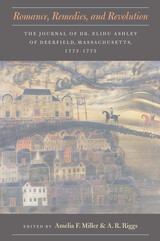
With flashes of humor and close attention to detail, Ashley describes a broad range of activities and experiences in the small village of Deerfield and the surrounding towns of the Connecticut River valley. Articulate as well as observant, this former schoolteacher conveys a sense of immediacy that brings even the most mundane daily events to life. He discusses medical theory and practice, revolutionary politics, farming, his family, his circle of friends, and amusements ranging from singing and dancing to sleigh riding and bouts of drunkenness. He also writes about his love life, including a dalliance with the older sister of his fiancee, Polly Williams, while the latter is away visiting relatives in the Berkshires.
For Ashley, personal relationships and politics were the prominent issues of 1773 and 1774, as events in Massachusetts drew the province toward rebellion. He discusses the gathering of angry mobs in response to the so-called Intolerable Acts, the stoppage of the courts in Hampshire County, the anarchy that ensued, and the persecution of loyalists, with or without the sanction of law. When the revolution breaks out in April 1775, he describes the departure of companies of minutemen as they set out for Boston to challenge the British Army.
Six months later, in November 1775, the journal abruptly ends. By then, however, Elihu Ashley had already bequeathed to posterity an extraordinary firsthand account of life in rural New England in the years immediately preceding the War of Independence.
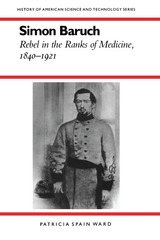
Recounts the remarkable life of a Prussian/Polish Jew who immigrated to the United States as a teenager in the 1850s and became one of the nation’s best-known physicians by the turn of the century
After medical study in South Carolina and Virginia on the eve of the Civil War, Simon Baruch served the Confederacy as a surgeon for three years, twice undergoing capture and internment. Despite economic hardships while practicing in South Carolina during Reconstruction, he helped to reactivate the State Medical Association and served as president of the State Board of Health.
In 1881 he joined the exodus of southern physicians and scientists of that period, taking up residence in New York City, where he rose to prominence through his advocacy of surgery in one of the early operations for appendicitis and through is role as the protective physician in a widely publicized “child cruelty” case involving the musical prodigy, Josef Hofmann. Baruch became a leader in the nationwide movement to establish free public baths for tenement dwellers and in the development of expert medical journalism. Although his advocacy of such natural remedies as water, fresh air, and diet often made him appear unaccountably iconoclastic to his contemporaries, he has gained posthumous recognition as a pioneer in physical medicine.
Bernard N. Baruch, one of his four sons, has memorialized this work through endowments for research and instruction in physical medicine and rehabilitation. Ward reconstructs the life of a medical student in the South at the opening of the Civil War, the adventures of a Confederate surgeon, and the difficulties of a practitioner in Reconstruction South Carolina. Simon Baruch’s physician’s registers and his correspondence with colleagues afford the reader an immediate sense of the therapeutic dilemmas facing physicians and patients of his era. Baruch’s experiences while establishing himself in New York City after 1881 reflect the challenges facing those trying to break into what was then the nation’s medical capital—as well as that city’s rich opportunities and heady intellectual atmosphere. His energetic campaign for free public baths illustrates one of the most colorful chapters of American social history, as immigrants flooded the cities at the turn of the century. As medical editor of the New York Sun from 1912 to 1918, Baruch touched on most of the health concerns of that period and a few—such as handgun control—that persist to this day.

Torture doctors invent and oversee techniques to inflict pain and suffering without leaving scars. Their knowledge of the body and its breaking points and their credible authority over death certificates and medical records make them powerful and elusive perpetrators of the crime of torture. In The Torture Doctors, Steven H. Miles fearlessly explores who these physicians are, what they do, how they escape justice, and what can be done to hold them accountable.
At least one hundred countries employ torture doctors, including both dictatorships and democracies. While torture doctors mostly act with impunity—protected by governments, medical associations, and licensing boards—Miles shows that a movement has begun to hold these doctors accountable and to return them to their proper role as promoters of health and human rights. Miles’s groundbreaking portrayal exposes the thinking and psychology of these doctors, and his investigation points to how the international human rights community and the medical community can come together to end these atrocities.

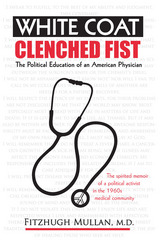
In the sixties, Fitzhugh Mullan was an activist in the civil rights struggle. While in medical school, Mullan was shocked by gaps in what the students learned, and the lack of humanity in the classroom. Later, Dr. Mullan was outraged at the conditions he discovered when he began to practice. He helped found the Student Health Organization, organized the Controversial Medical Collective at Lincoln Hospital in the Bronx, and struggled to offer improved medical care to those who needed it most and could afford it least.
This landmark book charts the state of medical school and practices in the 1960s and 70s. This new edition is updated with a preface in which Dr. Mullan reflects on the changes in the medical field over the last thirty-plus years.
Fitzhugh Mullan is Murdock Head Professor of Medicine and Health Policy at George Washington University. He worked at the U.S. Public Health Service where he attained the rank of Assistant Surgeon General (1991-1996). Dr. Mullan is the co-founder of the National Coalition for Cancer Survivorship and the author of numerous books, including Plagues and Politics: The Story of the United States Public Health Service, and his most recent book, Narrative Matters: The Power of the Personal Essay in Health Policy.
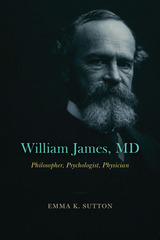
William James is known as a nineteenth-century philosopher, psychologist, and psychical researcher. Less well-known is how his interest in medicine influenced his life and work, driving his ambition to change the way American society conceived of itself in body, mind, and soul. William James, MD offers an account of the development and cultural significance of James’s ideas and works, and establishes, for the first time, the relevance of medical themes to his major lines of thought.
James lived at a time when old assumptions about faith and the moral and religious possibilities for human worth and redemption were increasingly displaced by a concern with the medically “normal” and the perfectibility of the body. Woven into treatises that warned against humanity’s decline, these ideas were part of the eugenics movement and reflected a growing social stigma attached to illness and invalidism, a disturbing intellectual current in which James felt personally implicated. Most chronicles of James’s life have portrayed a distressed young man, who then endured a psychological or spiritual crisis to emerge as a mature thinker who threw off his pallor of mental sickness for good. In contrast, Emma K. Sutton draws on his personal correspondence, unpublished notebooks, and diaries to show that James considered himself a genuine invalid to the end of his days. Sutton makes the compelling case that his philosophizing was not an abstract occupation but an impassioned response to his own life experiences and challenges. To ignore the medical James is to misread James altogether.
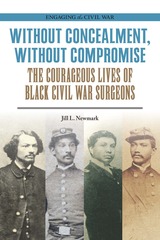
Of some twelve thousand Union Civil War surgeons, only fourteen were Black men. This book is the first-ever comprehensive exploration of their lives and service. Jill L. Newmark’s outstanding research uncovers stories hidden for more than 150 years, illuminating the unique experiences of proud, patriotic men who fought racism and discrimination to attend medical school and serve with the U.S. military. Their efforts and actions influenced societal change and forged new pathways for African Americans.
Individual biographies bring to light Alexander T. Augusta, who challenged discriminatory laws; William P. Powell Jr., who pursued a military pension for twenty-five years; Anderson R. Abbott, a friend of Elizabeth Keckley’s; John van Surly DeGrasse, the only Black surgeon to serve on the battlefield; John H. Rapier Jr., an international traveler; Richard H. Greene, the only Black surgeon known to have served in the Navy; Willis R. Revels, a preacher; Benjamin A. Boseman, a politician and postmaster; and Charles B. Purvis, who taught at Howard University. Information was limited for five other men, all of whom broke educational barriers by attending medical schools in the United States: Cortlandt Van Rensselaer Creed, William B. Ellis, Alpheus W. Tucker, Joseph Dennis Harris, and Charles H. Taylor.
Newmark presents all available information about the surgeons’ early lives, influences, education, Civil War service, and post-war experiences. Many of the stories overlap, as did the lives of the men. Each man, through his service as a surgeon during the war and his lifelong activism for freedom, justice, and equality, became a catalyst of change and a symbol of an emancipated future.

The Wounded River takes the reader back more than 130 years to reveal a marvelous, first-hand account of nineteenth-century warfare. In the process, the work cuts the legends and mythology that have come to frame and define accounts of America's bloodiest war. Of equal significance, Peter Josyph's editorial work on this superb collection of letters from the Western Americana Division of Yale University's Beinecke Rare Book and Manuscripts Library enhances and clarifies Lauderdale's experinces as a surgeon aboard the U.S. Army hospital ship D. A. January.
The reader looks on while Lauderdale, a New York civilian contract surgeon, operates on hundreds of Confederate and Union wounded. The young doctor's clear writing style and his great compassion for these unfortunate men whose bodies were ripped apart by bullets, shell fragments, and bayonets permits us to catch a disturbiing glimpse of what modern warfare does to humanity. Finally, we learn of Lauderdale's motives for volunteering, his impressions of the "hospital ship" D. A. January, Confederate morale, the Abolitionist cause, and black slavery. The Wounded River is a must read for anyone interested in the real American Civil War.
READERS
Browse our collection.
PUBLISHERS
See BiblioVault's publisher services.
STUDENT SERVICES
Files for college accessibility offices.
RECENTLY PUBLISHED





UChicago Accessibility Resources
home | accessibility | search | about | contact us
BiblioVault ® 2001 - 2024
The University of Chicago Press