Cloth: 979-8-89948-010-2 | Paper: 979-8-89948-009-6 | eISBN: 979-8-89948-011-9
Library of Congress Classification F3126
Dewey Decimal Classification 305.89872
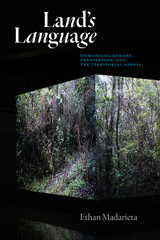
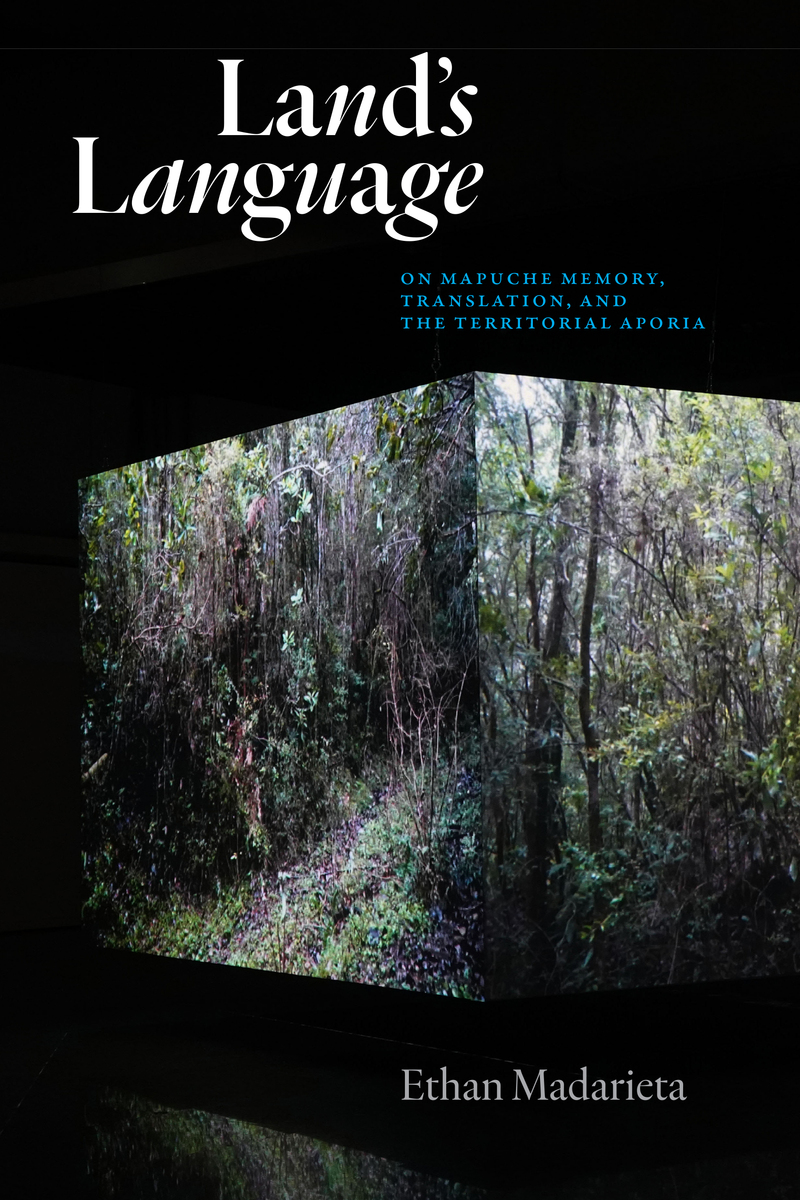
Presenting a new framework for understanding indigeneity and Indigenous peoples’ demands for territorial restitution
Asserting that the work of critical theory today must attend to an epistemic locality rather than the universalizing impulse of its European intellectual genealogy, Ethan Madarieta makes central to his study the literatures and philosophy of the Mapuche peoples of Wallmapu (comprising south-central regions of what are currently known as Chile and Argentina). In doing so, he argues that the primary site of settler and Indigenous antagonisms is not “land,” as is ubiquitously asserted, but the overlapping and incommensurate conceptual orders within which land and body are constituted and accrue meaning.
Land’s Language works to unsettle the stability and universality of how land and body are understood by calling into question what can or will be restored or returned and to whom. Drawing on Latin American and Mapuche historical, philosophical, and literary studies in dialogue with global critical theory and Anglophone critical Indigenous studies, this book demonstrates how Mapuche knowledge and thought, and that of each Indigenous nation across the planet, offer ways to live in ethical relation beyond that of the state and under the wider systemic hegemony of colonial racial capitalism.
See other books on: Argentina | Chile | Land tenure | Mapuche Indians | Translation
See other titles from Northwestern University Press