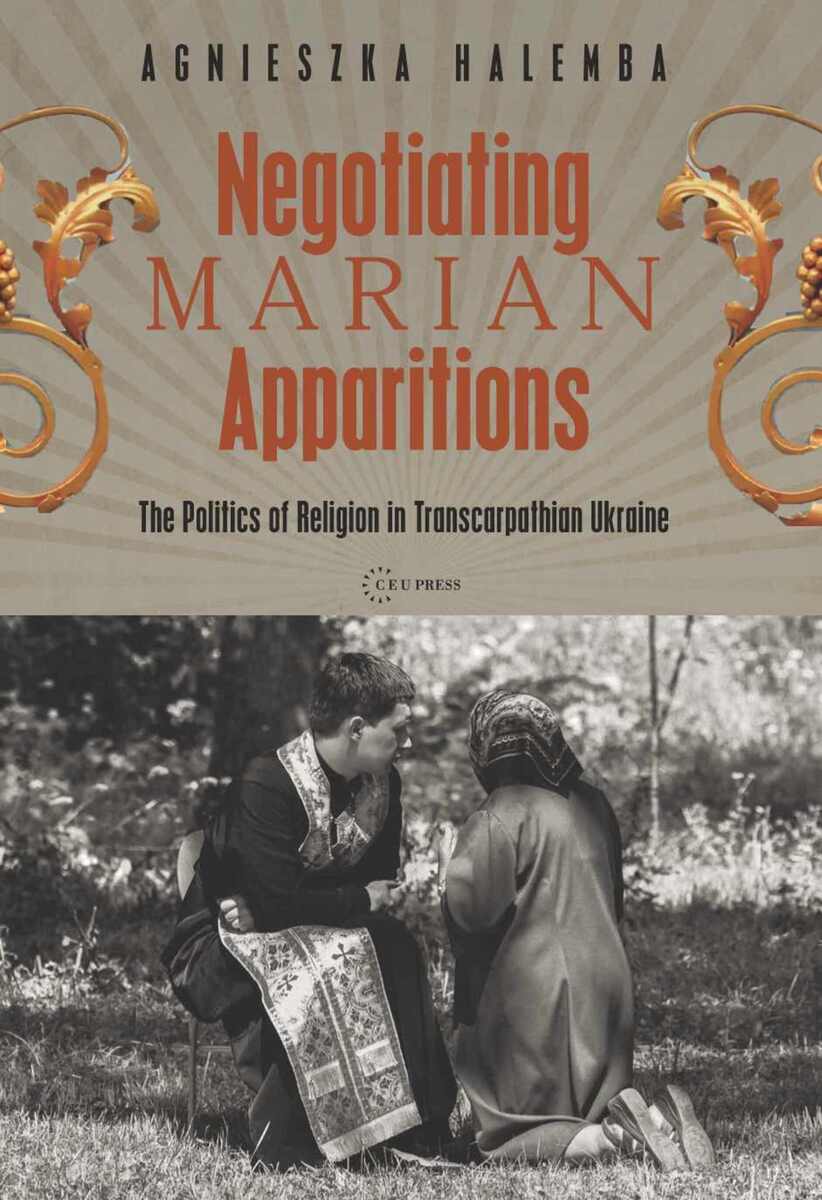
Negotiating Marian Apparitions: The Politics of Religion in Transcarpathian Ukraine
Central European University Press, 2015
Cloth: 978-615-5053-36-8 | eISBN: 978-963-386-253-7 (ePub) | eISBN: 978-963-386-145-5 (PDF)
Library of Congress Classification BT652.Z35H35 2015
Dewey Decimal Classification 232.917094779
Cloth: 978-615-5053-36-8 | eISBN: 978-963-386-253-7 (ePub) | eISBN: 978-963-386-145-5 (PDF)
Library of Congress Classification BT652.Z35H35 2015
Dewey Decimal Classification 232.917094779
ABOUT THIS BOOK | AUTHOR BIOGRAPHY | REVIEWS | TOC
ABOUT THIS BOOK
This book concerns the politics of religion as expressed through apparitions of the Virgin Mary in Dzhublyk in Transcarpathian Ukraine. On the one hand, the analysis provides insights into the present position of Transcarpathia in regional, Ukraine-wide, and European struggles for identity and political belonging. The way in which the apparitions site has been conceived and managed raises questions concerning the fate of religious communities during and after socialism, the significance of national projects for religious organizations, and the politics of religious management in a situation in which local religious commitments are relatively strong and religious organizations are relatively weak. The analysis contributes to the ethnography and history of this particular region and of the post-socialist world in general. On the other hand, the changing status of the apparition site over the years allows investigation of the questions concerning authority, legitimacy, and power in religious organizations, especially in relation to management of religious experiences. The analysis aims at clarification of such concepts as religious institutions, organizations but also religious experiences and is relevant to anthropology, sociology and religious studies. It is argued that the important question in analyses of religious apparitions should not be how an individual experience becomes institutionalized and instrumentalized, but how experience becomes a tool for negotiation and transformation in the religious field. Key word: 1. Mary, Blessed Virgin, Saint-–Apparitions and miracles–Ukraine–Zakarpats'kaoblast'. 2. Zakarpats'ka oblast' (Ukraine)–Church history.
See other books on: Apparitions and miracles | Mary, Blessed Virgin, Saint | Sociology of Religion | Ukraine | Zakarpatsʹka oblastʹ
See other titles from Central European University Press