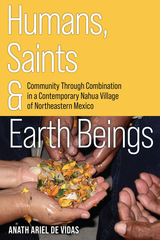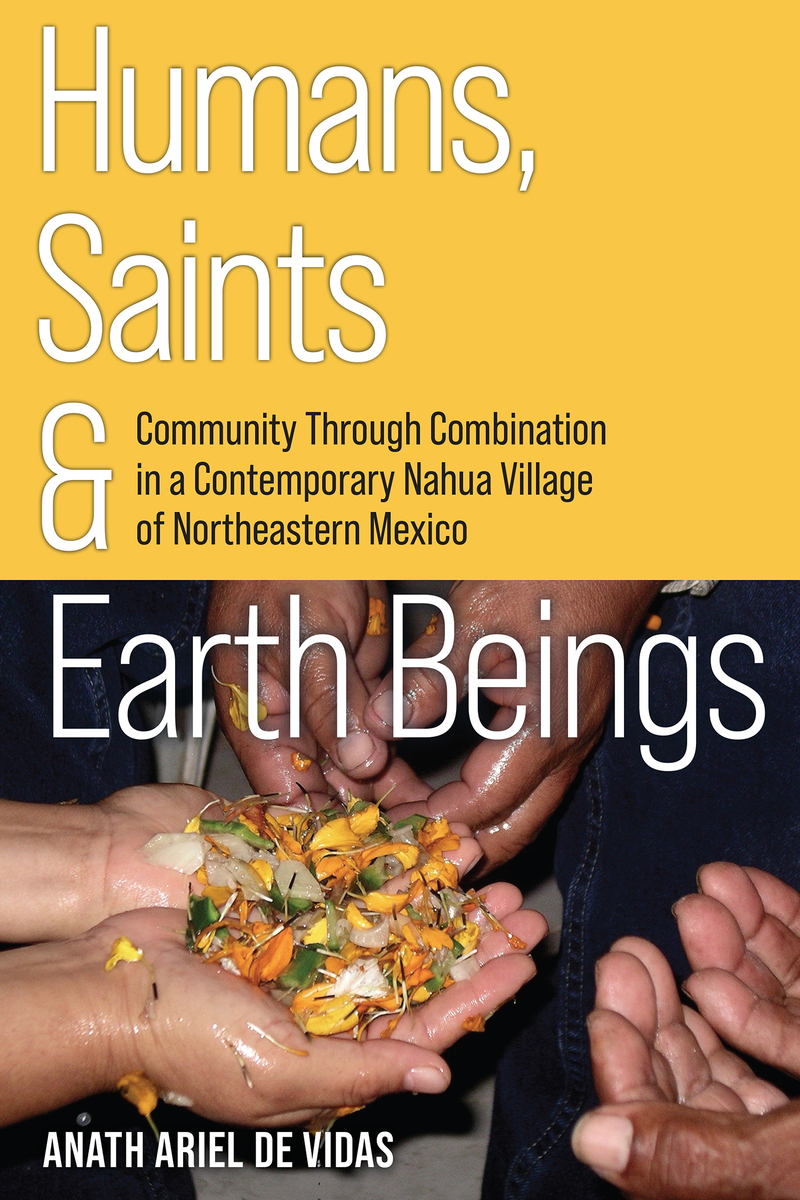
Humans, Saints, and Earth Beings: Community Through Combination in a Contemporary Nahua Village of Northeastern Mexico
University Press of Colorado, 2025
Cloth: 978-1-64642-746-8 | Paper: 978-1-64642-747-5 | eISBN: 978-1-64642-748-2 (all)
Library of Congress Classification F1221.N3A736 2026
See other books on: Humans | Nahuas | Northeastern Mexico | Rites and ceremonies | Saints
See other titles from University Press of Colorado
Cloth: 978-1-64642-746-8 | Paper: 978-1-64642-747-5 | eISBN: 978-1-64642-748-2 (all)
Library of Congress Classification F1221.N3A736 2026
ABOUT THIS BOOK | AUTHOR BIOGRAPHY | TOC | REQUEST ACCESSIBLE FILE
ABOUT THIS BOOK
In the Nahua village of La Esperanza, nestled in Mexico’s Huasteca region of Veracruz, fewer than 200 residents navigate a compelling paradox: how to maintain deep cultural roots while embracing modernity. Humans, Saints, and Earth Beings is a rich and lively ethnography that reveals how this rural community achieves remarkable social cohesion through what Anath Ariel de Vidas terms “combinationism”—the deliberate integration of seemingly disparate ontological universes within a single cultural framework.
In her work, Ariel de Vidas demonstrates how villagers blend traditional earth-based rituals with Catholic practices, creating a sophisticated system of coexistence between humans and nonhuman entities. These ritual combinations serve as the primary mechanism for social production, cultural continuity, and political authority. The book challenges conventional anthropological binaries of tradition versus modernity and continuity versus acculturation through “thick” ethnographic descriptions that focus on the ethics of coexistence among humans themselves as well as between humans and the peculiar nonhuman inhabitants of their environment.
Originally published in Spanish as Combinar para convivir (2021), Humans, Saints, and Earth Beings contributes to contemporary theoretical discussions about Indigenous ontologies, ritual practice, and social cohesion. It offers crucial insights into how rural communities worldwide might navigate the tensions between maintaining cultural particularities and participating in broader social transformations, making it essential reading for anthropologists, Latin American studies scholars, and anyone interested in Indigenous resilience and adaptation.
In her work, Ariel de Vidas demonstrates how villagers blend traditional earth-based rituals with Catholic practices, creating a sophisticated system of coexistence between humans and nonhuman entities. These ritual combinations serve as the primary mechanism for social production, cultural continuity, and political authority. The book challenges conventional anthropological binaries of tradition versus modernity and continuity versus acculturation through “thick” ethnographic descriptions that focus on the ethics of coexistence among humans themselves as well as between humans and the peculiar nonhuman inhabitants of their environment.
Originally published in Spanish as Combinar para convivir (2021), Humans, Saints, and Earth Beings contributes to contemporary theoretical discussions about Indigenous ontologies, ritual practice, and social cohesion. It offers crucial insights into how rural communities worldwide might navigate the tensions between maintaining cultural particularities and participating in broader social transformations, making it essential reading for anthropologists, Latin American studies scholars, and anyone interested in Indigenous resilience and adaptation.
See other books on: Humans | Nahuas | Northeastern Mexico | Rites and ceremonies | Saints
See other titles from University Press of Colorado