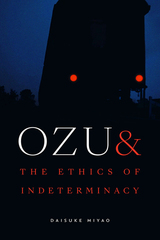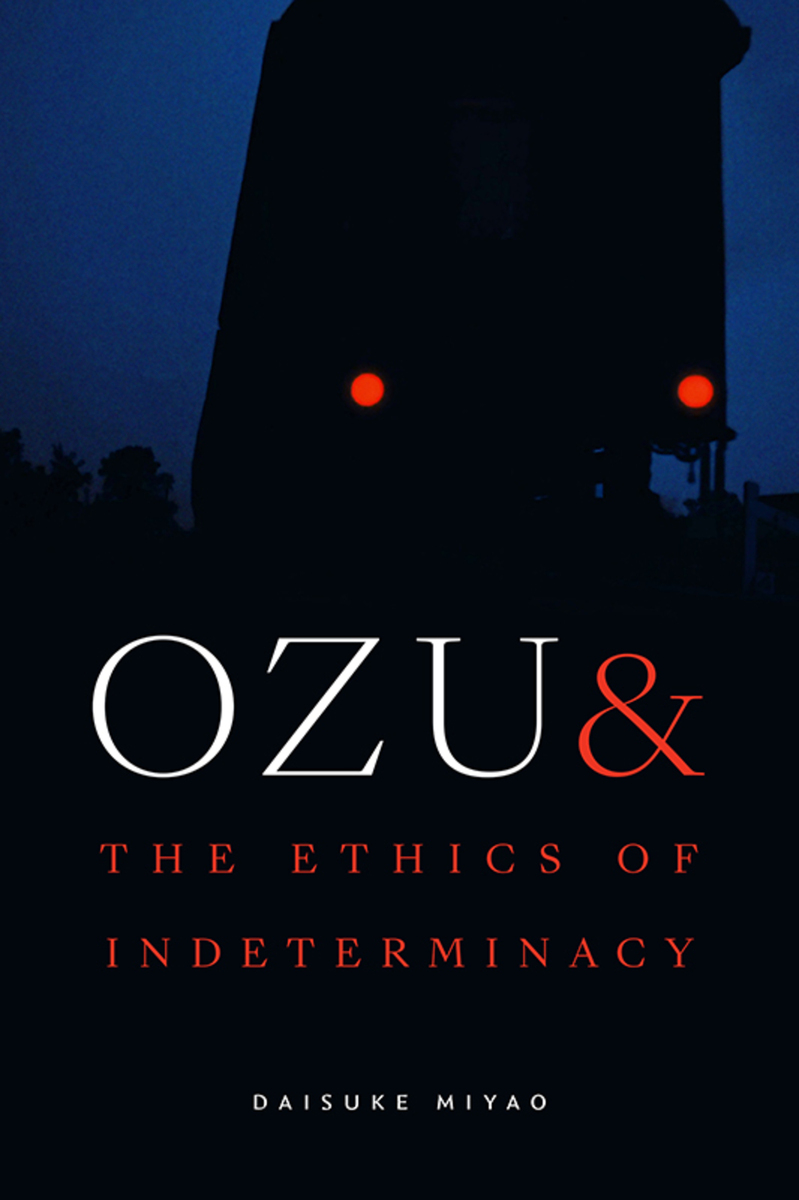
Ozu and the Ethics of Indeterminacy
Duke University Press, 2026
Cloth: 978-1-4780-2987-8 | Paper: 978-1-4780-3332-5 | eISBN: 978-1-4780-9458-6 (OA) | eISBN: 978-1-4780-6207-3 (standard)
Library of Congress Classification PN1993.5.J3M56 2026
See other books on: Asian Studies | Genres | In motion pictures | Miyao, Daisuke | Motion picture producers and directors
See other titles from Duke University Press
Cloth: 978-1-4780-2987-8 | Paper: 978-1-4780-3332-5 | eISBN: 978-1-4780-9458-6 (OA) | eISBN: 978-1-4780-6207-3 (standard)
Library of Congress Classification PN1993.5.J3M56 2026
ABOUT THIS BOOK | AUTHOR BIOGRAPHY | REVIEWS | TOC | REQUEST ACCESSIBLE FILE
ABOUT THIS BOOK
Ozu and the Ethics of Indeterminacy re-examines cinema studies through the work of Japanese filmmaker Yasujirō Ozu, employing the multiple methodologies and indeterminacy of Ozu’s films as a model for discussions of cinema’s relationship to the world and the formation of film studies as a discipline. Centering a selection of Ozu films in each chapter, Daisuke Miyao builds a method based on the way films directed by Ozu avoid unitary perspective and allow multiple possibilities of standpoint and spectatorial position, which Miyao calls the ethics of indeterminacy. Analyzing Ozu’s use of cinematography, narrative, and color, Miyao theorizes the indeterminate in film—the seen and unseen, human and nonhuman, domestic and international—to initiate a multi-directional dialogue on the study of cinema that reaches beyond auteurism and culturalism to establish a new basis for disciplinary conversations.
See other books on: Asian Studies | Genres | In motion pictures | Miyao, Daisuke | Motion picture producers and directors
See other titles from Duke University Press