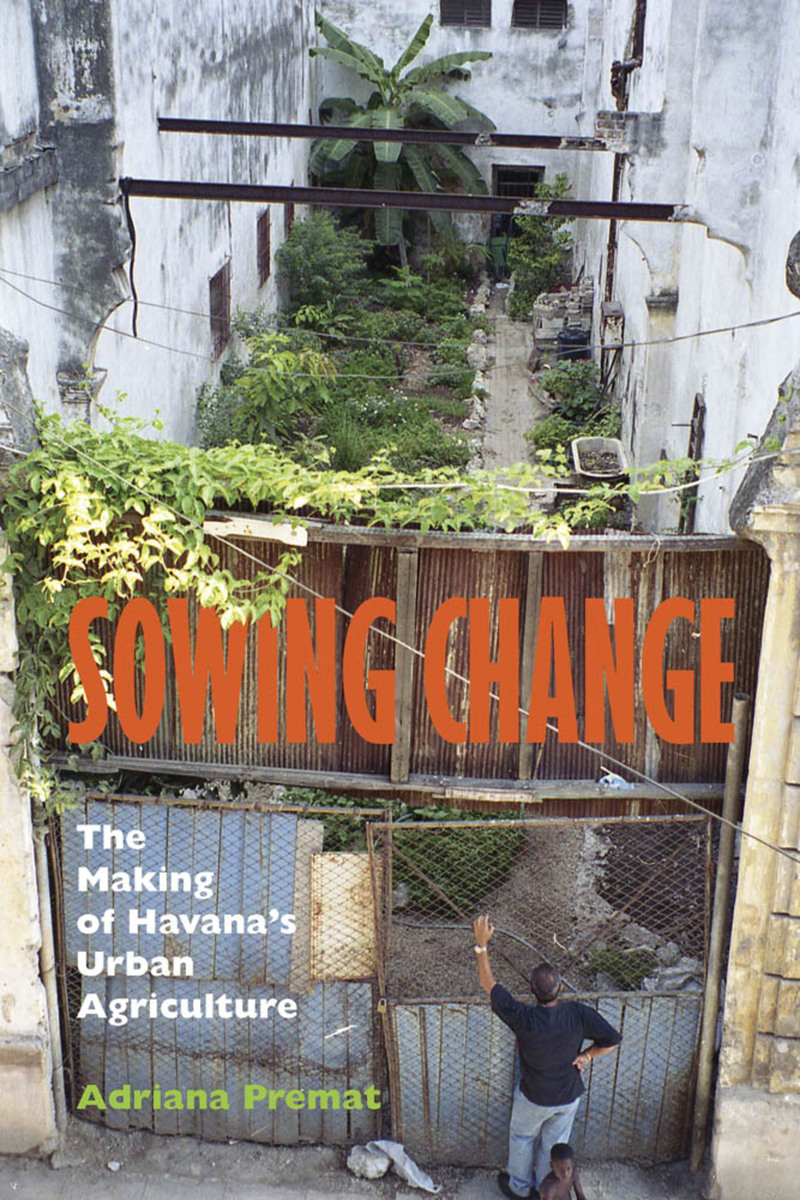
Sowing Change: The Making of Havana's Urban Agriculture
Vanderbilt University Press, 2012
Cloth: 978-0-8265-1858-3 | Paper: 978-0-8265-1859-0 | eISBN: 978-0-8265-1860-6 (PDF)
Library of Congress Classification S477.C82H38 2012
Dewey Decimal Classification 635.977
Cloth: 978-0-8265-1858-3 | Paper: 978-0-8265-1859-0 | eISBN: 978-0-8265-1860-6 (PDF)
Library of Congress Classification S477.C82H38 2012
Dewey Decimal Classification 635.977
ABOUT THIS BOOK | AUTHOR BIOGRAPHY | REVIEWS | TOC
ABOUT THIS BOOK
Following the dissolution of the Soviet bloc, Cuba found itself struggling to find its place in a new geopolitical context, while dealing with an unprecedented agricultural and food crisis that experts feel foreshadows the future of many countries across the globe. Sowing Change traces the evolution of the officially endorsed urban agriculture movement in the capital city of Havana, considering its political significance for the Cuban government and its import for transnational actors in the field of sustainable development. But the analysis does not stop at official understandings and representations of this movement. Rather, it brings into focus the perspectives of small-scale urban farmers--real men and women who live at the conceptual margins of the Cuban economy and struggle to balance personal needs and dreams with political ideals and government expectations, in a context where those very ideals and expectations continually shift. Sowing Change is a timely reflection on the changing agricultural, urban, and power landscapes of post-Soviet Cuba that, finally, queries common presumptions about this socialist nation and its now famous urban agriculture experience.
See other books on: Caribbean & West Indies | City Planning & Urban Development | Cuba | Havana | Urban agriculture
See other titles from Vanderbilt University Press