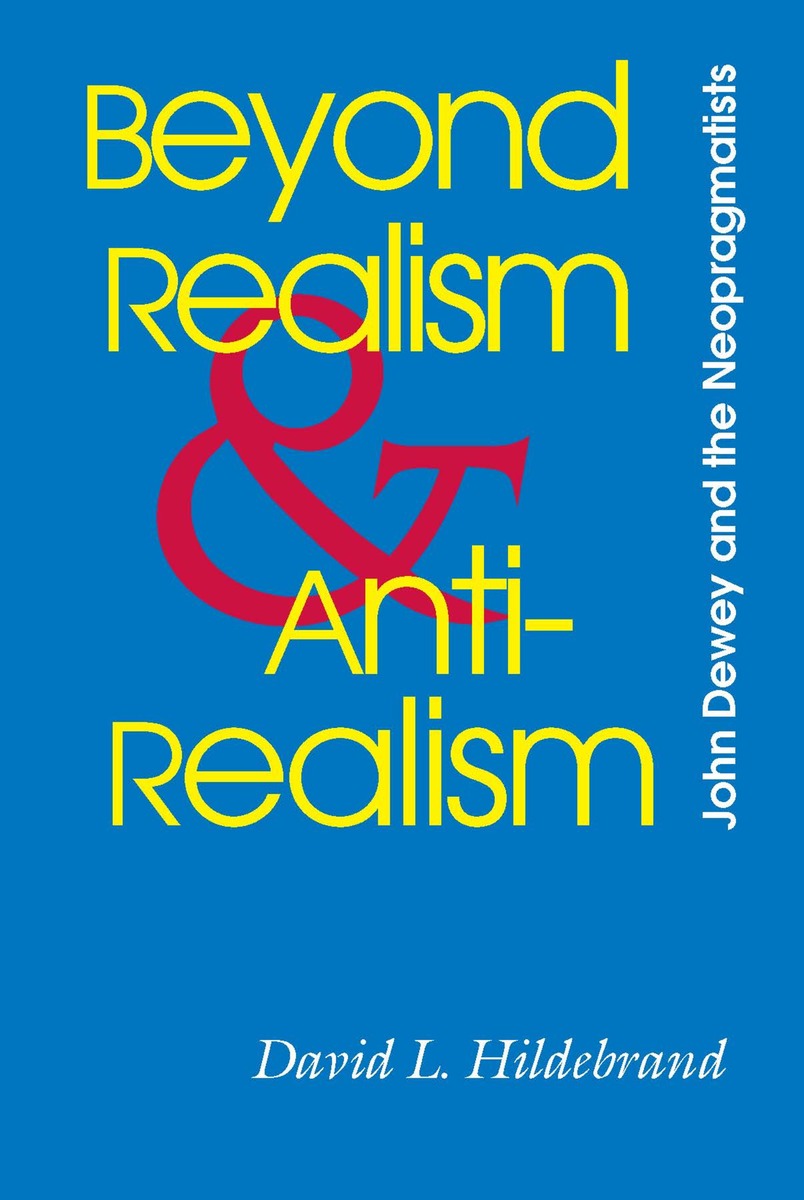
Beyond Realism and Antirealism: John Dewey and the Neopragmatists
Vanderbilt University Press, 2003
Cloth: 978-0-8265-1426-4 | Paper: 978-0-8265-1427-1 | eISBN: 978-0-8265-0257-5 (ePub) | eISBN: 978-0-8265-9169-2 (PDF)
Library of Congress Classification B944.P72H55 2003
Dewey Decimal Classification 144.3
Cloth: 978-0-8265-1426-4 | Paper: 978-0-8265-1427-1 | eISBN: 978-0-8265-0257-5 (ePub) | eISBN: 978-0-8265-9169-2 (PDF)
Library of Congress Classification B944.P72H55 2003
Dewey Decimal Classification 144.3
ABOUT THIS BOOK | AUTHOR BIOGRAPHY | REVIEWS | TOC
ABOUT THIS BOOK
Perhaps the most significant development in American philosophy in recent times has been the extraordinary renaissance of Pragmatism, marked most notably by the reformulations of the so-called "Neopragmatists" Richard Rorty and Hilary Putnam. With Pragmatism offering the allure of potentially resolving the impasse between epistemological realists and antirealists, analytic and continental philosophers, as well as thinkers across the disciplines, have been energized and engaged by this movement.
In Beyond Realism and Antirealism: John Dewey and the Neopragmatists, David L. Hildebrand asks two important questions: first, how faithful are the Neopragmatists' reformulations of Classical Pragmatism (particularly Deweyan Pragmatism)? Second, and more significantly, can their Neopragmatisms work?
In assessing Neopragmatism, Hildebrand advances a number of historical and critical points:
• Current debates between realists and antirealists (as well as objectivists and relativists) are similar to early twentieth-century debates between realists and idealists that Pragmatism addressed extensively.
• Despite their debts to Dewey, the Neopragmatists are reenacting realist and idealist stands in their debate over realism, thus giving life to something shown fruitless by earlier Pragmatists.
• What is absent from the Neopragmatist's position is precisely what makes Pragmatism enduring: namely, its metaphysical conception of experience and a practical starting point for philosophical inquiry that such experience dictates.
• Pragmatism cannot take the "linguistic turn" insofar as that turn mandates a theoretical starting point.
• While Pragmatism's view of truth is perspectival, it is nevertheless not a relativism.
• Pace Rorty, Pragmatism need not be hostile to metaphysics; indeed, it demonstrates how pragmatic instrumentalism and metaphysics are complementary.
In examining these and other difficulties in Neopragmatism, Hildebrand is able to propose some distinct directions for Pragmatism. Beyond Realism and Antirealism will provoke specialists and non-specialists alike to rethink not only the definition of Pragmatism, but its very purpose.
In Beyond Realism and Antirealism: John Dewey and the Neopragmatists, David L. Hildebrand asks two important questions: first, how faithful are the Neopragmatists' reformulations of Classical Pragmatism (particularly Deweyan Pragmatism)? Second, and more significantly, can their Neopragmatisms work?
In assessing Neopragmatism, Hildebrand advances a number of historical and critical points:
• Current debates between realists and antirealists (as well as objectivists and relativists) are similar to early twentieth-century debates between realists and idealists that Pragmatism addressed extensively.
• Despite their debts to Dewey, the Neopragmatists are reenacting realist and idealist stands in their debate over realism, thus giving life to something shown fruitless by earlier Pragmatists.
• What is absent from the Neopragmatist's position is precisely what makes Pragmatism enduring: namely, its metaphysical conception of experience and a practical starting point for philosophical inquiry that such experience dictates.
• Pragmatism cannot take the "linguistic turn" insofar as that turn mandates a theoretical starting point.
• While Pragmatism's view of truth is perspectival, it is nevertheless not a relativism.
• Pace Rorty, Pragmatism need not be hostile to metaphysics; indeed, it demonstrates how pragmatic instrumentalism and metaphysics are complementary.
In examining these and other difficulties in Neopragmatism, Hildebrand is able to propose some distinct directions for Pragmatism. Beyond Realism and Antirealism will provoke specialists and non-specialists alike to rethink not only the definition of Pragmatism, but its very purpose.
See other books on: 1859-1952 | Dewey, John | John Dewey | Pragmatism | Realism
See other titles from Vanderbilt University Press