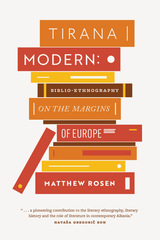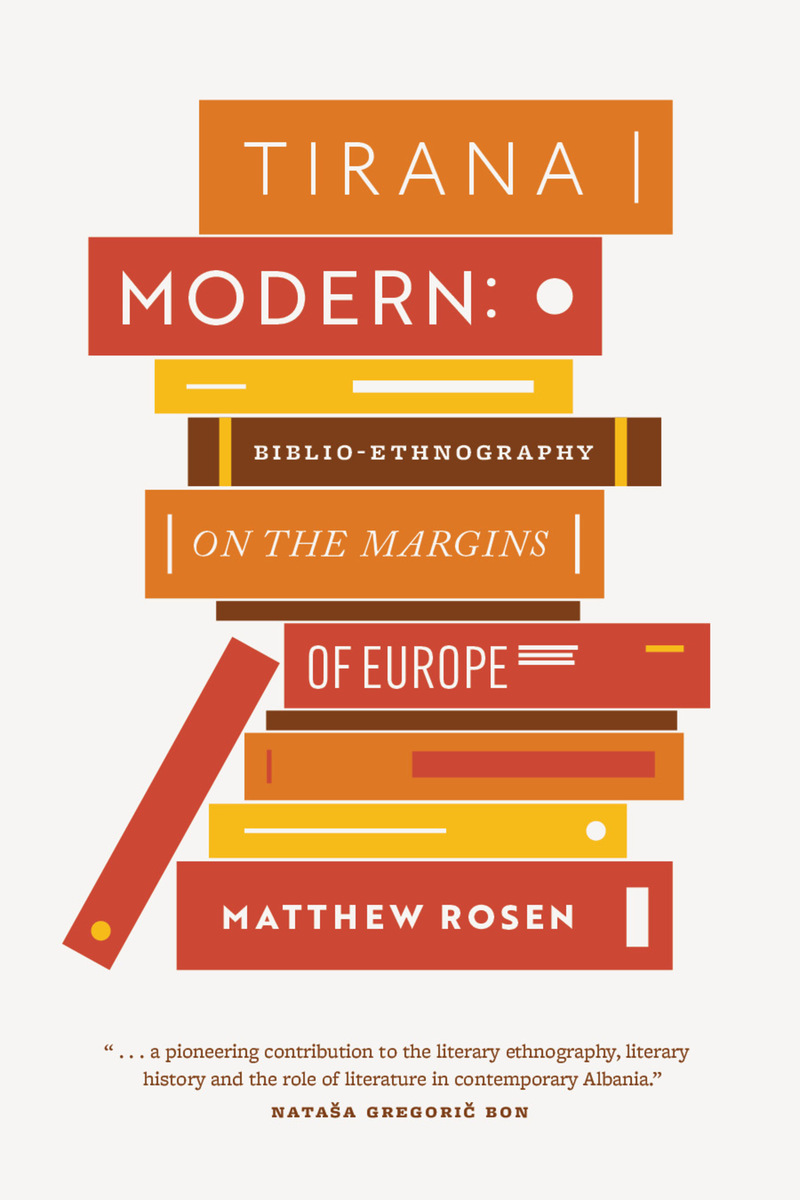
Tirana Modern: Biblio-Ethnography on the Margins of Europe
Vanderbilt University Press, 2022
Cloth: 978-0-8265-0482-1 | Paper: 978-0-8265-0481-4 | eISBN: 978-0-8265-0483-8 (ePub) | eISBN: 978-0-8265-0484-5 (PDF)
Library of Congress Classification DR997.3.R67 2022
Dewey Decimal Classification 028.9094965
Cloth: 978-0-8265-0482-1 | Paper: 978-0-8265-0481-4 | eISBN: 978-0-8265-0483-8 (ePub) | eISBN: 978-0-8265-0484-5 (PDF)
Library of Congress Classification DR997.3.R67 2022
Dewey Decimal Classification 028.9094965
ABOUT THIS BOOK | AUTHOR BIOGRAPHY | REVIEWS | TOC
ABOUT THIS BOOK
Guided by the thesis that literature can transform social reality, Tirana Modern draws on ethnographic and historical material to examine the public culture of reading in modern Albania. As its starting point, this book asks: How has Albanian literature and literary translation shaped social action during the longue durée of Albanian modernity?
Drawing on material collected through fieldwork with a community of readers, writers, and translators attached to the independent Albanian publisher Pika pa sipërfaqe (Point without Surface), Tirana Modern provides a tightly focused ethnography of literary culture in Albania that brings into relief the more general dialectic between social imagination and social reality as mediated by reading and literature.
Drawing on material collected through fieldwork with a community of readers, writers, and translators attached to the independent Albanian publisher Pika pa sipërfaqe (Point without Surface), Tirana Modern provides a tightly focused ethnography of literary culture in Albania that brings into relief the more general dialectic between social imagination and social reality as mediated by reading and literature.
See other books on: Albania | Books | Developing & Emerging Countries | Literature and anthropology | Margins
See other titles from Vanderbilt University Press