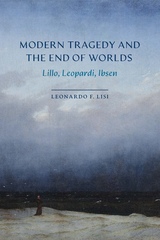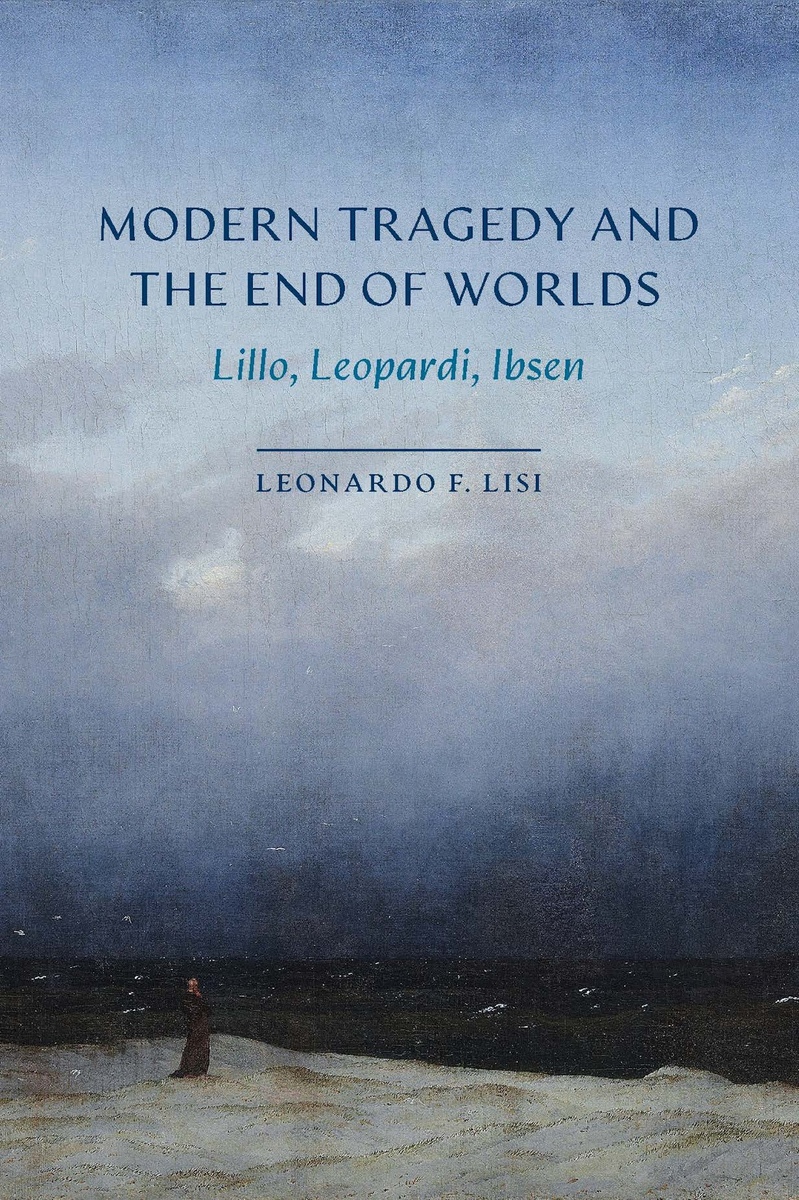
Modern Tragedy and the End of Worlds: Lillo, Leopardi, Ibsen
Northwestern University Press, 2026
Cloth: 978-0-8101-4912-0 | eISBN: 978-0-8101-4913-7
Library of Congress Classification PN56.T68L57 2026
Dewey Decimal Classification 809.9162
Cloth: 978-0-8101-4912-0 | eISBN: 978-0-8101-4913-7
Library of Congress Classification PN56.T68L57 2026
Dewey Decimal Classification 809.9162
ABOUT THIS BOOK | AUTHOR BIOGRAPHY | REVIEWS | TOC | REQUEST ACCESSIBLE FILE
ABOUT THIS BOOK
Studying three tragic authors to explore the meanings—and consequences—of modernity
The emergence of a distinctly modern form of tragedy is often associated with the introduction of middle-class characters and settings to high drama during the early eighteenth century. What has not been explored previously, however, is how such tragedy uses modernity’s social circumstances to stage metaphysical conditions that are destructive to human worlds. Leonardo F. Lisi pursues this argument by focusing on three central yet distinct figures in the history of modern thought and theater: eighteenth-century English dramatist George Lillo, early nineteenth-century Italian poet Giacomo Leopardi, and late nineteenth-century Norwegian iconoclast Henrik Ibsen. Modern Tragedy and the End of Worlds: Lillo, Leopardi, Ibsen shows that their works share a critical theme: the impossibility of sustaining human forms of meaning in the face of modern materialism, finance, and reason. Viewed in this light, Lisi argues that modern tragedy requires thinking together the incommensurable scales of human existence and the inhuman processes on which it rests—a task that continues to have profound relevance for imagining the end of worlds in the Anthropocene.
The emergence of a distinctly modern form of tragedy is often associated with the introduction of middle-class characters and settings to high drama during the early eighteenth century. What has not been explored previously, however, is how such tragedy uses modernity’s social circumstances to stage metaphysical conditions that are destructive to human worlds. Leonardo F. Lisi pursues this argument by focusing on three central yet distinct figures in the history of modern thought and theater: eighteenth-century English dramatist George Lillo, early nineteenth-century Italian poet Giacomo Leopardi, and late nineteenth-century Norwegian iconoclast Henrik Ibsen. Modern Tragedy and the End of Worlds: Lillo, Leopardi, Ibsen shows that their works share a critical theme: the impossibility of sustaining human forms of meaning in the face of modern materialism, finance, and reason. Viewed in this light, Lisi argues that modern tragedy requires thinking together the incommensurable scales of human existence and the inhuman processes on which it rests—a task that continues to have profound relevance for imagining the end of worlds in the Anthropocene.
See other books on: 18th Century | Civilization, Modern | End | Tragic, The, in literature | Worlds
See other titles from Northwestern University Press