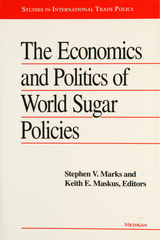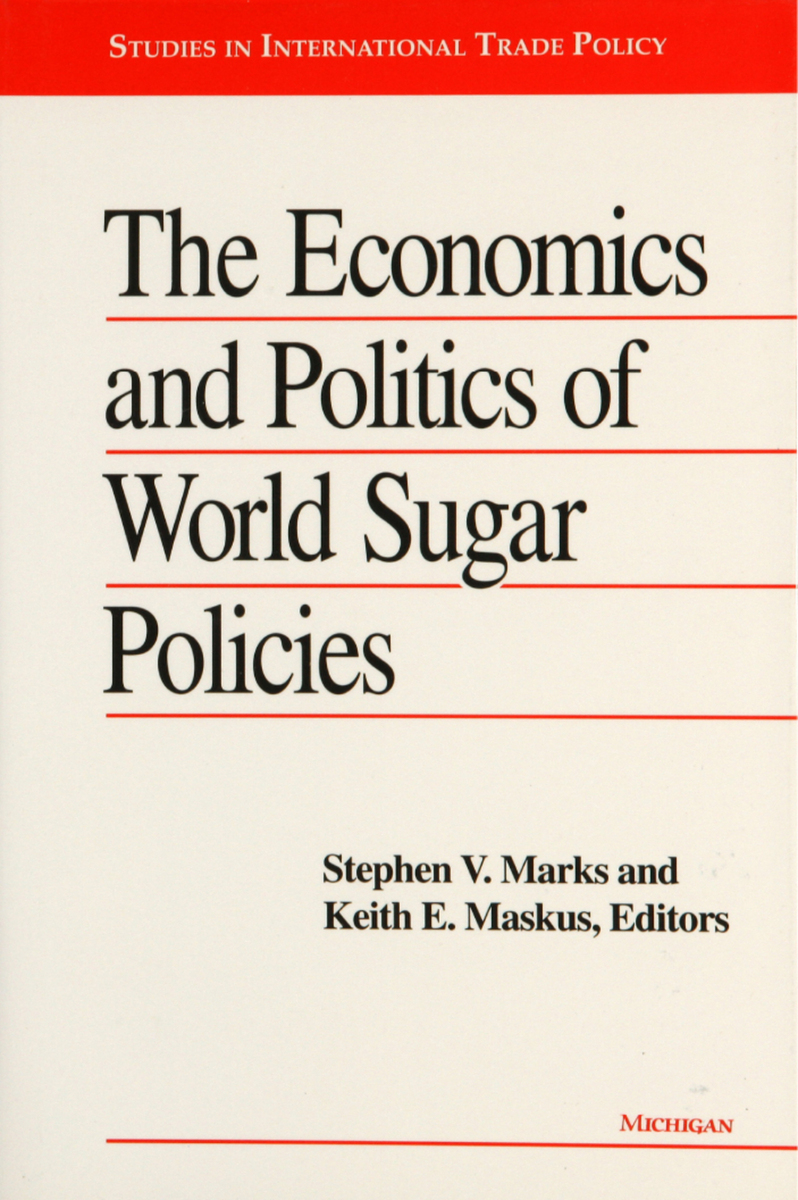
Economics and Politics of World Sugar Policies
University of Michigan Press, 1993
Cloth: 978-0-472-10428-4 | eISBN: 978-0-472-22350-3 (standard)
Library of Congress Classification HD9100.6.E27 1993
Dewey Decimal Classification 382.4136
Cloth: 978-0-472-10428-4 | eISBN: 978-0-472-22350-3 (standard)
Library of Congress Classification HD9100.6.E27 1993
Dewey Decimal Classification 382.4136
ABOUT THIS BOOK | AUTHOR BIOGRAPHY | REQUEST ACCESSIBLE FILE
ABOUT THIS BOOK
Around the world, markets for producing and consuming sugar and related sweeteners are heavily distorted by trade barriers, output controls, price supports, and government subsidies. These policies have significant and identifiable impacts on the economic well-being of different groups in various countries. The net effect of these global distortions is to damage world welfare at the same time that the various national policies reduce economic well-being in the countries that impose them. Sugar policy is the perfect example of how the political imperatives of support for agricultural interests dominate considerations of national welfare or international relations. The contributors provide rigorous analyses of world sugar markets and the distortions caused by policies tn the major countries. They employ several numerical modeling techniques to describe and assess the impacts of world sugar programs. These calculations are buttressed by complementary discussions of the political and economic rationales underlying sugar protection and support. The contributions to The Economics and Politics of World Sugar Policies combine survey evidence with new modeling results from econometric approaches and applied equilibrium simulations to provide new assessments of the current state of world sugar markets. Several original results are presented that shed new light on the impacts of sugar protection. This book should be of considerable interest to agricultural economists, trade-policy analysts, and specialists in international relations and development economics. It is highly relevant for understanding both the economics of agricultural protection and the politics of farm support.
See other books on: Business Development | Economics & Trade | International | Maskus, Keith E. | Sugar trade
See other titles from University of Michigan Press