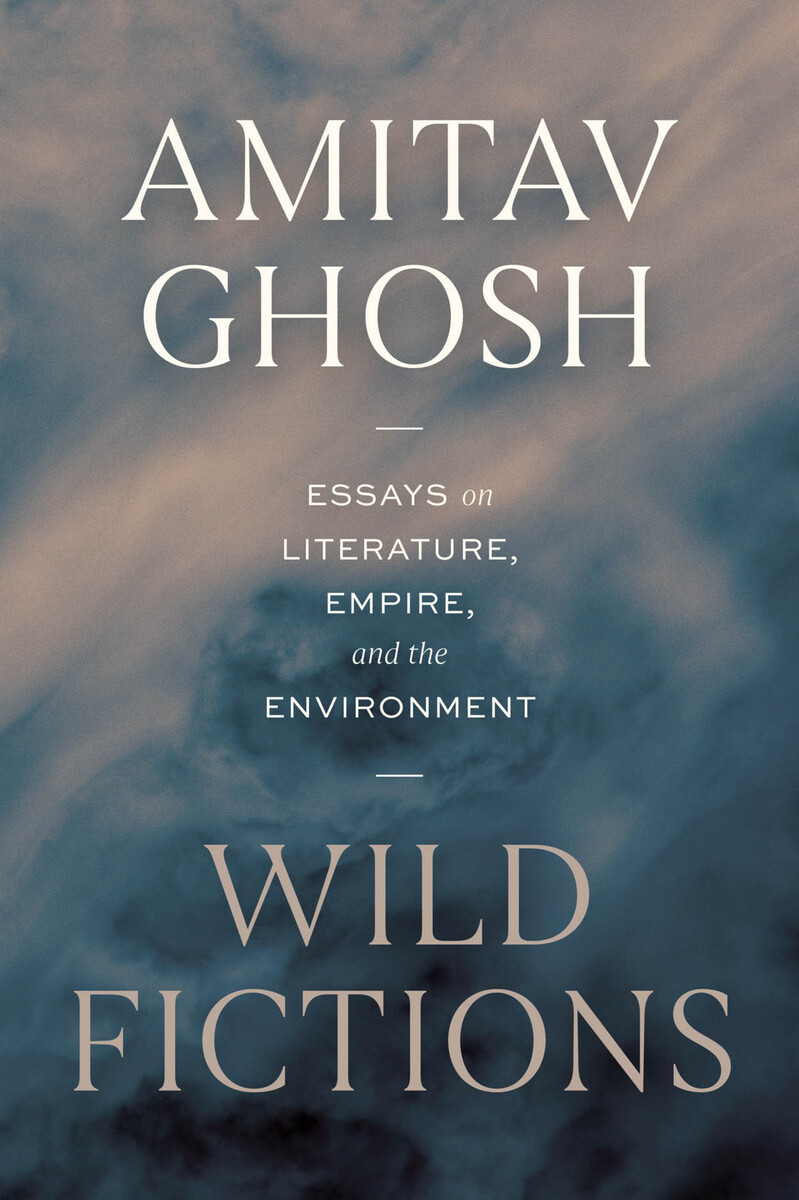
Wild Fictions: Essays on Literature, Empire, and the Environment
University of Chicago Press, 2025
Cloth: 978-0-226-84532-6 | eISBN: 978-0-226-84533-3
Library of Congress Classification PR9499.3.G536W45 2025
Dewey Decimal Classification 824.914
Cloth: 978-0-226-84532-6 | eISBN: 978-0-226-84533-3
Library of Congress Classification PR9499.3.G536W45 2025
Dewey Decimal Classification 824.914
ABOUT THIS BOOK | AUTHOR BIOGRAPHY | REVIEWS | TOC | REQUEST ACCESSIBLE FILE
ABOUT THIS BOOK
From the 2025 recipient of the Pak Kyongni Prize, often referred to as Korea’s Nobel Prize in Literature.
A collection of essays on themes central to Ghosh’s work: imperialism and decolonization, climate change, and the stories of ordinary people making lives amid these historical forces.
Wild Fictions brings together Amitav Ghosh’s extraordinary writings on subjects that have obsessed him over the last twenty-five years: literature and language; climate change and the environment; and human lives, travel, and discoveries. Threaded throughout the collection are his reflections on the spaces that we inhabit and how we occupy them. From the significance of the commodification of the clove to the diversity of the mangrove forests in Bengal and the radical fluidity of multilingualism, Wild Fictions is a powerful refutation of imperial violence, a fascinating exploration of the fictions we weave to absorb history, and a reminder of the importance of sensitivity and empathy.
With the combination of moral passion, intellectual curiosity, and literary elegance that defines his writing, Ghosh makes readers understand the world in new and urgent ways. Together, the pieces in Wild Fictions chart a course that allows us to heal our relationships and restore the delicate balance with the volatile landscapes to which we all belong.
A collection of essays on themes central to Ghosh’s work: imperialism and decolonization, climate change, and the stories of ordinary people making lives amid these historical forces.
Wild Fictions brings together Amitav Ghosh’s extraordinary writings on subjects that have obsessed him over the last twenty-five years: literature and language; climate change and the environment; and human lives, travel, and discoveries. Threaded throughout the collection are his reflections on the spaces that we inhabit and how we occupy them. From the significance of the commodification of the clove to the diversity of the mangrove forests in Bengal and the radical fluidity of multilingualism, Wild Fictions is a powerful refutation of imperial violence, a fascinating exploration of the fictions we weave to absorb history, and a reminder of the importance of sensitivity and empathy.
With the combination of moral passion, intellectual curiosity, and literary elegance that defines his writing, Ghosh makes readers understand the world in new and urgent ways. Together, the pieces in Wild Fictions chart a course that allows us to heal our relationships and restore the delicate balance with the volatile landscapes to which we all belong.
See other books on: Empire | Environment | Ghosh, Amitav | Literature | Subjects & Themes
See other titles from University of Chicago Press