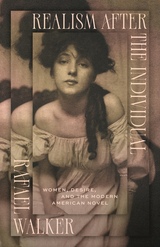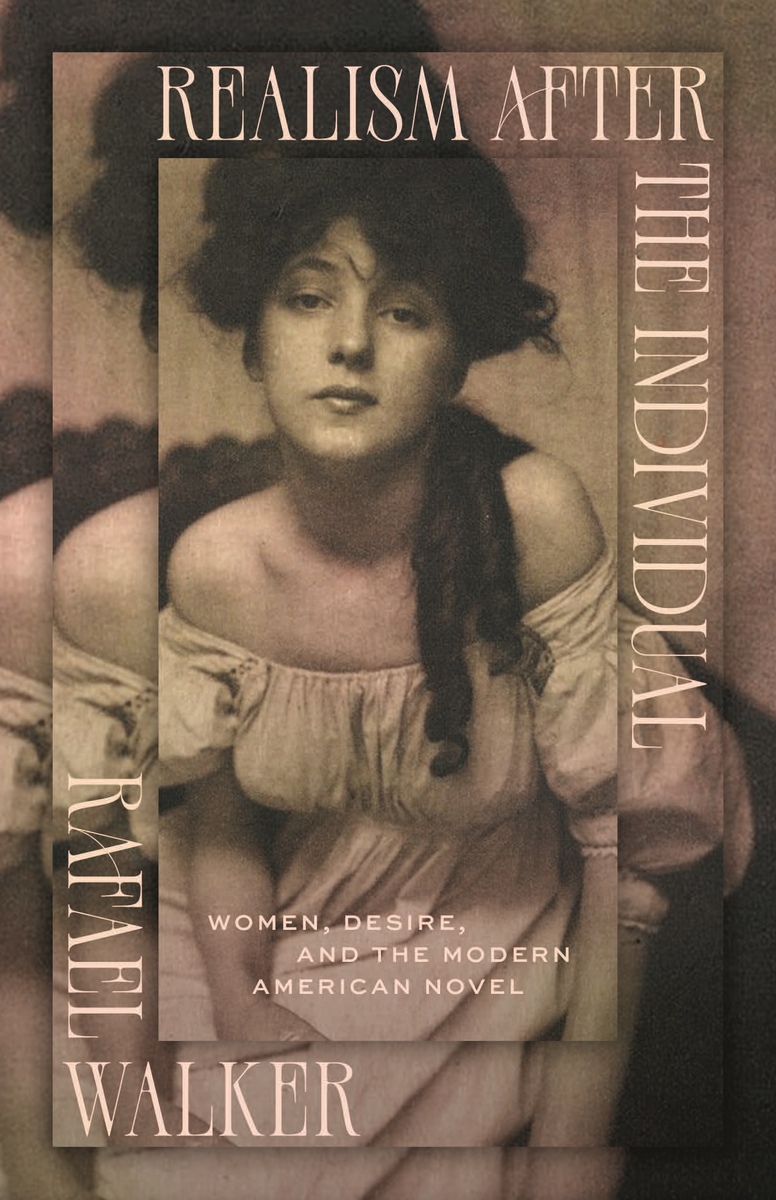
Realism after the Individual: Women, Desire, and the Modern American Novel
University of Chicago Press, 2026
Cloth: 978-0-226-84505-0 | Paper: 978-0-226-84506-7 | eISBN: 978-0-226-84507-4
Library of Congress Classification PS151.W34 2026
See other books on: American fiction | Desire | Individual | Semiotics & Theory | Women authors
See other titles from University of Chicago Press
Cloth: 978-0-226-84505-0 | Paper: 978-0-226-84506-7 | eISBN: 978-0-226-84507-4
Library of Congress Classification PS151.W34 2026
ABOUT THIS BOOK | AUTHOR BIOGRAPHY | REVIEWS | TOC | REQUEST ACCESSIBLE FILE
ABOUT THIS BOOK
A study of the transformation of the realist novel in the hands of early-twentieth-century American writers, who adapted this quintessentially nineteenth-century genre to the conditions of their age.
Realism after the Individual offers a new theoretical paradigm for understanding realist novels published in the United States between 1900 and 1920, a period that has been described wrongheadedly as a “gulf” or a “valley” in American literary history. In this generation of writers, only three have remained in favor among critics: Kate Chopin, Edith Wharton, and Theodore Dreiser. Others have disappeared from view altogether—writers such as Robert Grant, Robert Herrick, and Booth Tarkington, all of whom were critically acclaimed bestsellers in their day.
As Rafael Walker shows, this generation of writers deserves new attention for the way they revised many core facets of the nineteenth-century novel in response to the historical shifts around it. This generation of novelists not only rejected liberal individualism but also formulated alternative paradigms for conceptualizing selfhood. The result was a slew of woman-centered realist novels that broke with literary precedent: The novels punish characters not for desiring too much but for failing to desire enough, they depict subjectivity not as private and interior but as outward-facing, and they view closure not as the novel’s aim but as a convention to flout. Realism after the Individual both revises prevailing views of American realism and lays the foundation for an alternative account of the development of literary modernism, one that illuminates the continuity between realism and the modernism that followed it.
Realism after the Individual offers a new theoretical paradigm for understanding realist novels published in the United States between 1900 and 1920, a period that has been described wrongheadedly as a “gulf” or a “valley” in American literary history. In this generation of writers, only three have remained in favor among critics: Kate Chopin, Edith Wharton, and Theodore Dreiser. Others have disappeared from view altogether—writers such as Robert Grant, Robert Herrick, and Booth Tarkington, all of whom were critically acclaimed bestsellers in their day.
As Rafael Walker shows, this generation of writers deserves new attention for the way they revised many core facets of the nineteenth-century novel in response to the historical shifts around it. This generation of novelists not only rejected liberal individualism but also formulated alternative paradigms for conceptualizing selfhood. The result was a slew of woman-centered realist novels that broke with literary precedent: The novels punish characters not for desiring too much but for failing to desire enough, they depict subjectivity not as private and interior but as outward-facing, and they view closure not as the novel’s aim but as a convention to flout. Realism after the Individual both revises prevailing views of American realism and lays the foundation for an alternative account of the development of literary modernism, one that illuminates the continuity between realism and the modernism that followed it.
See other books on: American fiction | Desire | Individual | Semiotics & Theory | Women authors
See other titles from University of Chicago Press