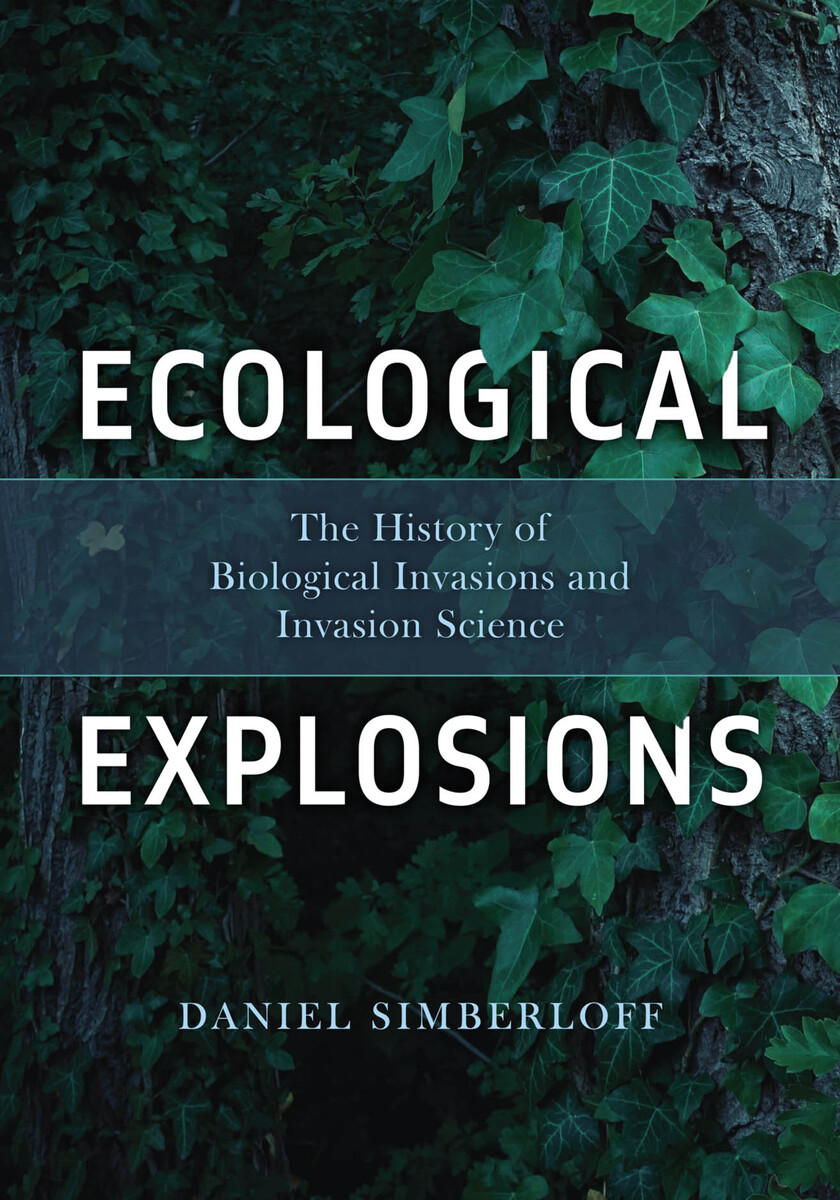
Ecological Explosions: The History of Biological Invasions and Invasion Science
University of Chicago Press, 2025
Cloth: 978-0-226-84256-1 | Paper: 978-0-226-84257-8 | eISBN: 978-0-226-84258-5
Library of Congress Classification QH353.S275 2026
See other books on: Biological invasions | Biology | Evolution (Biology) | Population biology | Simberloff, Daniel
See other titles from University of Chicago Press
Cloth: 978-0-226-84256-1 | Paper: 978-0-226-84257-8 | eISBN: 978-0-226-84258-5
Library of Congress Classification QH353.S275 2026
ABOUT THIS BOOK | AUTHOR BIOGRAPHY | REVIEWS | TOC | REQUEST ACCESSIBLE FILE
ABOUT THIS BOOK
A leading biologist offers a comprehensive and accessible history of invasive species science, from its earliest antecedents through its current research foci and controversies.
From the arrival of the naval shipworm in the Black Sea in the first millennium BC to the escape of the Burmese python in Florida in 1992, humans have moved species to new locations, deliberately or inadvertently, for thousands of years. Agricultural and environmental impacts of some invasions were evident early, although whether observers recognized that the cause was an introduced species is uncertain. The history of invasion biology truly begins in the sixteenth through eighteenth centuries, when explorers noticed European species on various distant islands and in North America. In the nineteenth century, biogeographers, studying species distributions across the globe, introduced the first native and non-native species categorizations, and prominent researchers like Charles Darwin began to describe the impacts of introduced species. In the nineteenth and twentieth centuries, as humans moved increasing numbers of species across the globe, the advent of modern ecology deepened our understanding of the scope of the problem.
In Ecological Explosions, invasive species expert Daniel Simberloff provides a thorough overview of the development of invasion science, from early research—including from the perspectives of leading scientists like Aldo Leopold—to the field’s future. Simberloff explores the work of pioneering ecologists like Charles Elton, antecedents of what became today’s invasion biology, before discussing the field’s true emergence in the 1980s, its explosive methodological and theoretical expansion, its integration with other disciplines, and its increasing visibility, not only within the biological literature but also in government policies across the world in the 1990s. Finally, he investigates current controversies, such as the debate over whether the entire science is xenophobic, and asks how ecosystems might adapt to a rapidly globalizing world and ever-increasing numbers of introduced species—including the joro spider, lionfish, spotted lanternfly, common reed, and Asian carp.
From the arrival of the naval shipworm in the Black Sea in the first millennium BC to the escape of the Burmese python in Florida in 1992, humans have moved species to new locations, deliberately or inadvertently, for thousands of years. Agricultural and environmental impacts of some invasions were evident early, although whether observers recognized that the cause was an introduced species is uncertain. The history of invasion biology truly begins in the sixteenth through eighteenth centuries, when explorers noticed European species on various distant islands and in North America. In the nineteenth century, biogeographers, studying species distributions across the globe, introduced the first native and non-native species categorizations, and prominent researchers like Charles Darwin began to describe the impacts of introduced species. In the nineteenth and twentieth centuries, as humans moved increasing numbers of species across the globe, the advent of modern ecology deepened our understanding of the scope of the problem.
In Ecological Explosions, invasive species expert Daniel Simberloff provides a thorough overview of the development of invasion science, from early research—including from the perspectives of leading scientists like Aldo Leopold—to the field’s future. Simberloff explores the work of pioneering ecologists like Charles Elton, antecedents of what became today’s invasion biology, before discussing the field’s true emergence in the 1980s, its explosive methodological and theoretical expansion, its integration with other disciplines, and its increasing visibility, not only within the biological literature but also in government policies across the world in the 1990s. Finally, he investigates current controversies, such as the debate over whether the entire science is xenophobic, and asks how ecosystems might adapt to a rapidly globalizing world and ever-increasing numbers of introduced species—including the joro spider, lionfish, spotted lanternfly, common reed, and Asian carp.
See other books on: Biological invasions | Biology | Evolution (Biology) | Population biology | Simberloff, Daniel
See other titles from University of Chicago Press