
 A SCHOLARLY BOOK REPOSITORY
Musicologist Georgia J. Cowart explores how Antoine Watteau’s late paintings reimagine the symbolic order of absolutism in the wake of Louis XIV’s death.
Antoine Watteau has long been known for the theatricality of his paintings, but what that theatricality signifies has remained elusive. In After the King, Georgia Cowart contends that this mode of painting takes shape in response to the spectacle of Louis XIV’s absolutism, which the painter’s late works transform into a new aesthetic language.
The king’s death marked a turning point in Watteau’s art. In the six years that followed, his paintings turned more decisively toward the musical stage. Evoking theatrical plots, frontispieces, and costume types, they conjured a world in which the legacy of absolutist culture lingered as stylized memory—its rituals, emblems, and pleasures recast through theatrical illusion and ironic distance.
Rather than treating Watteau as a painter of nostalgic reverie or Rococo charm, Cowart situates his art within the immersive performance culture of Versailles and the vibrant Parisian stage, at a time when the opéra-ballet, popular opera, and the commedia dell’arte were charting new theatrical landscapes. Drawing on art history, musicology, theater studies, and Pierre Nora’s theory of lieux de mémoire, she proposes a new framework that understands Watteau’s paintings as acts of theatrical memory and cultural recomposition.
Elegantly written and conceptually ambitious, After the King reveals how Watteau recoded the symbols of monarchy to stage a post-absolutist cultural imagination shaped by irony, sensuality, and poetic transformation.
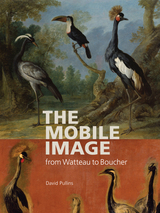
This book provides a new way of thinking about eighteenth-century French art and visual culture by prioritizing production over reception. Abandoning the ideologically driven discourse that distinguished fine from decorative art between the 1690s and 1770s, The Mobile Image reveals how the two have been inextricably bound from the earliest stages of artistic instruction through the daily life of painters’ workshops. In this study, author David Pullins defines artisanal and artistic means of learning, seeing, and making through a system of “mobile images”: motifs that were effectively engineered for mobility and designed never to be definitive, always awaiting replication and circulation. He examines the careers of Antoine Watteau, Jean-Baptiste Oudry, and François Boucher, situating them against a much broader cast of actors—such as printmakers, publishers, anonymous studio assistants, and architects, among others—to place eighteenth-century painting within a wider context of media and making.
READERS
Browse our collection.
PUBLISHERS
See BiblioVault's publisher services.
STUDENT SERVICES
Files for college accessibility offices.
RECENTLY PUBLISHED



UChicago Accessibility Resources
home | accessibility | search | about | contact us
BiblioVault ® 2001 - 2026
The University of Chicago Press