
 A SCHOLARLY BOOK REPOSITORY
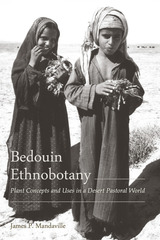
Bedouin Ethnobotany offers the first detailed study of plant uses among the Najdi Arabic–speaking tribal peoples of eastern Saudi Arabia. It also makes a major contribution to the larger project of ethnobotany by describing aspects of a nomadic peoples’ conceptual relationships with the plants of their homeland.
The modern theoretical basis for studies of the folk classification and nomenclature of plants was developed from accounts of peoples who were small-scale agriculturists and, to a lesser extent, hunter-gatherers. This book fills a major gap by extending such study into the world of the nomadic pastoralist and exploring the extent to which these patterns are valid for another major subsistence type. James P. Mandaville, an Arabic speaker who lived in Saudi Arabia for many years, focuses first on the role of plants in Bedouin life, explaining their uses for livestock forage, firewood, medicinals, food, and dyestuffs, and examining other practical purposes. He then explicates the conceptual and linguistic aspects of his subject, applying the theory developed by Brent Berlin and others to a previously unstudied population. Mandaville also looks at the long history of Bedouin plant nomenclature, finding that very little has changed among the names and classifications in nearly eleven centuries.
An essential volume for anyone interested in the interaction between human culture and plant life, Bedouin Ethnobotany will stand as a definitive source for years to come.
Fineman focuses on blame’s roots and enduring manifestations, from the witch hunts of the past to today’s more buttoned-up scapegoating and stigmatization; from an individual’s righteous anger to entire cultures shaped by its power. Addressing our era of increasing unease about governance in public and private enterprises, he delves behind the scenes of organizations infected with blame, profiling the people who keep its plates spinning. With a critical eye, he examines the vexing issue of public accountability and the political circus that so often characterizes our politicians and corporations lost in their “blame games.”
Ultimately, Fineman raises the challenging question of how we might mitigate blame’s corrosive effects, asking crucial and timely questions about the limits of remorse and forgiveness, the role of state apologies for historical wrongdoings, whether restorative justice can work, and many other topics. An absorbing look at something we all know intimately, this book deepens our understanding of blame and how it shapes our lives.

Each essay in Engaging the Past pays close attention to the unique problems and methods associated with its particular social scientific discipline. By exploring questions raised by both contemporary and more established works within each field, the authors show that some of the best and most innovative research in each of the social sciences includes a strong historical component. Thus, as Eric H. Monkkonen’s introduction shows, these essays taken together make it clear that historical research provides a significant key to many of the major issues in the social sciences.
Intended for the growing community of both social scientists and historians interested in reading or researching historically informed social science, Engaging the Past suggests future directions that might be taken by this work. Above all, by providing a set of user’s guides written by respected social scientists, it encourages future boundary crossings between history and each of the social sciences.
Contributors. Andrew Abbott, Richard Dennis, Susan Kellog, Eric H. Monkkonen, David Brian Robertson, Hugh Rockoff
Yúdice contends that a new international division of cultural labor has emerged, combining local difference with transnational administration and investment. This does not mean that today’s increasingly transnational culture—exemplified by the entertainment industries and the so-called global civil society of nongovernmental organizations—is necessarily homogenized. He demonstrates that national and regional differences are still functional, shaping the meaning of phenomena from pop songs to antiracist activism. Yúdice considers a range of sites where identity politics and cultural agency are negotiated in the face of powerful transnational forces. He analyzes appropriations of American funk music as well as a citizen action initiative in Rio de Janeiro to show how global notions such as cultural difference are deployed within specific social fields. He provides a political and cultural economy of a vast and increasingly influential art event— insite a triennial festival extending from San Diego to Tijuana. He also reflects on the city of Miami as one of a number of transnational “cultural corridors” and on the uses of culture in an unstable world where censorship and terrorist acts interrupt the usual channels of capitalist and artistic flows.
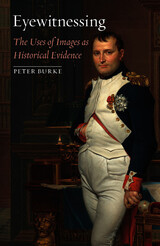
Traditional art historians have depended on two types of analysis when dealing with visual imagery: iconography and iconology. Burke describes and evaluates these approaches, concluding that they are insufficient. Focusing instead on the medium as message and on the social contexts and uses of images, he discusses both religious images and political ones, also looking at images in advertising and as commodities.
Ultimately, Burke's purpose is to show how iconographic and post-iconographic methods – psychoanalysis, semiotics, viewer response, deconstruction – are both useful and problematic to contemporary historians.
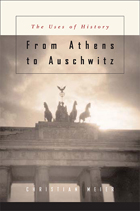
What does history mean today? What is its relevance to the modern world? In contemplating fundamental questions about history and the Western legacy, the noted classical historian Christian Meier offers a new interpretation on how we view the world.
Meier sees an “absence” of history in contemporary Europe and throughout the West—an absence he attributes to the way modern historians have written about history and, more important, to the dramatic transformations of the twentieth century. He argues for the central legacy of Western civilization. He tackles the difficulty of reconciling a historical perspective with our era of extreme acceleration, when experience is shaped less by inheritance and legacy than by the novelty of changes wrought by science and globalization. Finally, Meier contemplates the enormity of the Holocaust, which he sees as a test of “understanding” history. If it is part of the whole arc of the Western legacy, how do we fit it with the rest?
This engaging and thought-provoking meditation challenges us to rethink the role of history in Western culture and a changing world.
For centuries, the writ of habeas corpus has served as an important safeguard against miscarriages of justice, and today it remains at the center of some of the most contentious issues of our time—among them terrorism, immigration, crime, and the death penalty. Yet, in recent decades, habeas has been seriously abused. In this book, Nancy J. King and Joseph L. Hoffmann argue that habeas should be exercised with greater prudence.
Through historical, empirical, and legal analysis, as well as illustrative case studies, the authors examine the current use of the writ in the United States and offer sound reform proposals to help ensure its ongoing vitality in today’s justice system. Comprehensive and thoroughly grounded in a modern understanding of habeas corpus, this informative book will be an insightful read for legal scholars and anyone interested in the importance of habeas corpus for American government.
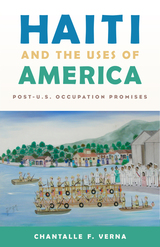
In the years following the U.S. occupation of Haiti (1915-1934), Haitian politicians and professionals with a cosmopolitan outlook shaped a new era in Haiti-U.S. diplomacy. Their efforts, Verna shows, helped favorable ideas about the United States, once held by a small segment of Haitian society, circulate more widely. In this way, Haitians contributed to and capitalized upon the spread of internationalism in the Americas and the larger world.
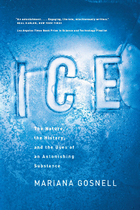
Mariana Gosnell here explores the history and uses of ice in all its complexity, grandeur, and significance. From the freezing of Pleasant Lake in New Hampshire to the breakup of a Vermont river at the onset of spring, from the frozen Antarctic landscape that emperor penguins inhabit to the cold, watery route bowhead whales take between Arctic ice floes, Gosnell examines icebergs, icicles, and frostbite; sea ice and permafrost; ice on Mars and in the rings of Saturn; and several new forms of ice developed in labs. Arecord of the scientific surprises, cultural magnitude, and everyday uses of frozen water, Ice is a sparkling illumination of a substance whose ebbs and flows over time have helped form the world we live in.
“Gosnell travels to the ends of the earth, into the clouds and under the frozen sea to conduct her investigations . . . By the time you finish this remarkable book, you’ll never think about freezing and melting in quite the same way.”—New York Times Book Review
“To read Ice is to discover just how astonishing it is and how necessary.”—San Francisco Chronicle
“A bright, curious, omnidirectional tour that will entrance nature readers.”—Booklist
“An encyclopedic work with surprises on every page . . . . Illustrated with images of ice castles, skaters, and bubble-filled frozen sculpture, Gosnell’s book breathes life into the crystals dubbed ‘glorious spangles’ by Henry David Thoreau.”—Discover
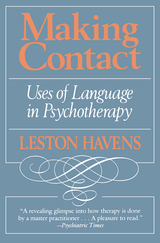
Since 1955, moving from early work in psychopharmacology to studies of clinical method and the psychiatric schools, Leston Havens has been working toward a general theory of therapy. It often seems that twentieth-century psychiatry, sect-ridden, is a Tower of Babel, as Havens once characterized it. This book is the distillation of long years of thought and practice, a bold yet modest attempt to delineate an “integrated psychotherapy.”
The boldness of this effort lies in its author’s willingness to recognize the best that each school has to offer, to describe it cogently, and to integrate it into a full response to today’s new kind of patient. Descriptive or medical psychiatry, psychoanalysis, interpersonal or behavioristic psychiatry, empathic or existential therapy-viewed in metaphors, respectively, of perceiving, thinking, managing, feeling-all have useful contributions to make to contemporary methods of treatment. But how? Havens’s modest answer is through appropriate language, and he demonstrates exactly what he means: when to ask questions, when to direct or draw back, when to sympathize.
Practitioners now must deal with less dramatic, but more stubborn, problems of character and situation; lack of purpose, isolation, submissiveness, invasiveness, deep yet vague dissatisfaction. Some kind of human presence must be discovered in the patient, and Havens gives concrete, absorbing examples of ways of “speaking to absence,” of making contact. The emphasis is on verbal technique, but the underlying broad, humane intent is everywhere evident. It is no less than to transform passivity, by means of disciplined therapeutic concern, into a state of being Human.
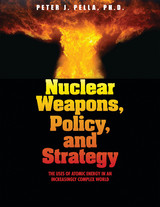
In this comprehensive introduction to nuclear physics, related national and international policy issues from Dr. Pete Pella, Gettysburg College nuclear physicist, educators will find a definitive textbook on the peaceful and military uses of nuclear energy. Pella traces both the scientific evolution and political history of nuclear power and arms, bringing us to current events including nuclear plant development, status of treaties, U.S.-Russia disarmament efforts, and policing of rogue nations. Must reading for the world’s citizens concerned about these vital issues.
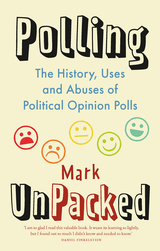
Opinion polls dominate media coverage of politics, especially elections. But how do the polls work? How do we tell the good from the bad? And in light of recent polling disasters, can we trust them at all?
Polling UnPacked gives us the full story, from the first rudimentary polls in the nineteenth century, through attempts by politicians to ban polling in the twentieth century, to the very latest techniques and controversies from the last few years. Equal parts enlightening and hilarious, the book requires no prior knowledge of polling or statistics to understand. But even hardened pollsters will find much to enjoy, from how polling has been used to help plan military invasions to why an exhausted interviewer was accidentally instrumental in inventing exit polls.
Written by a former political pollster and the creator of Britain’s foremost polling-intention database, Polling UnPacked reveals which opinion polls to trust, which to ignore, and which, frankly, to laugh at. It will change the way we see political coverage forever.

Winner of the Scribes Book Award
“Displays a level of intellectual honesty one rarely encounters these days…This is delightful stuff.”
—Barton Swaim, Wall Street Journal
“At a time when the concept of truth itself is in trouble, this lively and accessible account provides vivid and deep analysis of the practices addressing what is reliably true in law, science, history, and ordinary life. The Proof offers both timely and enduring insights.”
—Martha Minow, former Dean of Harvard Law School
“His essential argument is that in assessing evidence, we need, first of all, to recognize that evidence comes in degrees…and that probability, the likelihood that the evidence or testimony is accurate, matters.”
—Steven Mintz, Inside Higher Education
“I would make Proof one of a handful of books that all incoming law students should read…Essential and timely.”
—Emily R. D. Murphy, Law and Society Review
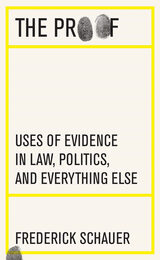
In the age of fake news, trust and truth are hard to come by. Blatantly and shamelessly, public figures deceive us by abusing what sounds like evidence. To help us navigate this polarized world awash in misinformation, preeminent legal theorist Frederick Schauer proposes a much-needed corrective.
How we know what we think we know is largely a matter of how we weigh the evidence. But evidence is no simple thing. Law, science, public and private decision making—all rely on different standards of evidence. From vaccine and food safety to claims of election fraud, the reliability of experts and eyewitnesses to climate science, The Proof develops fresh insights into the challenge of reaching the truth. Schauer reveals how to reason more effectively in everyday life, shows why people often reason poorly, and makes the case that evidence is not just a matter of legal rules, it is the cornerstone of judgment.
Integrating literary, epigraphic, and archaeological evidence with recent scholarship on memory, identity, rhetoric, and international relations, Social Memory in Athenian Public Discourse: Uses and Meanings of the Past enhances our understanding of both the function of memory in Athenian public discourse and the history of Athenian-Theban relations. It should be of interest not only to students of Greek history and oratory but to everybody interested in memory studies, Athenian democracy, and political decision making.

The title sequence, which explores a father’s illness and death, is both elegiac and celebratory, evoking the conflictual bonds in any father-son relationship. In these sonnets, by turns hilarious and heartbreaking, Wallace once again proves himself to be one of our most versatile and affirmative poets.
“The history of interpretation, the skills by which we keep alive in our minds the light and dark of past literature and past humanity, is to an incalculable extent a history of error.” So writes Frank Kermode of a history to which he has contributed many luminous pages. This book is a record of Kermode’s “error,” his wandering through literature past and present. He notes that “in thirty-odd years I have written several hundred reviews, an example I would strongly urge the young not to follow.” From these hundreds Kermode has selected the pieces he treasures most, and they provide an example that indeed will be difficult to follow.
The Uses of Error contains some of Kermode’s very best writing. Again and again he proves himself to be more than a commentator or chronicler; he is rather a creator of cultural value in his interaction with the texts at hand. The appeal of this book is broad. Everything is here from Augustine to Ariès on death and dying, from Wilde to Woolf and writer’s block, from Joachim of Fiore to Flaubert’s Parrot. In a phrase or an aside on any of these subjects Kermode can open a vista, wither a reputation, or spotlight an intellectual mantrap.
The core of the volume is a group of essays on the central figures of modern English literature. Kermode tells more here—about Tennyson, Shaw, Forster, and Eliot—than most people could in twice the space. His brief, vivid, and sympathetic writings extol the range of British writing and mark out the difference between an interest that is solely academic and the richer view of one who writes from inside the culture and shares a common experience with its interpreters.
There is also Kermode the man. He saves a set of autobiographical essays until the end, and they are a veritable dessert for those who read the volume straight through. But they will stand first in the reader’s memory afterward, because they give body to the mind so clearly in evidence throughout the book. Kermode shows us the means by which he gained the perspective to become a transnational critic—not a critic on the margin, but one who shows us where the margins are. For anyone who is not yet familiar with Frank Kermode’s work, this is the place to begin. For those who are already acquainted with it, here is the chance to see the pattern of the whole.
While the concept of defeat in the Mexican literary canon is frequently acknowledged, it has rarely been explored in the fullness of the psychological and religious contexts that define this aspect of "mexicanidad." Going beyond the simple narrative of self-defeat, The Uses of Failure in Mexican Literature and Identity presents a model of failure as a source of knowledge and renewed self-awareness.
Studying the relationship between national identity and failure, John Ochoa revisits the foundational texts of Mexican intellectual and literary history, the "national monuments," and offers a new vision of the pivotal events that echo throughout Mexican aesthetics and politics. The Uses of Failure in Mexican Literature and Identity encompasses five centuries of thought, including the works of the Conquistador Bernal Díaz del Castillo, whose sixteenth-century True History of the Conquest of New Spain formed Spanish-speaking Mexico's early self-perceptions; José Vasconcelos, the essayist and politician who helped rebuild the nation after the Revolution of 1910; and the contemporary novelist Carlos Fuentes.
A fascinating study of a nation's volatile journey towards a sense of self, The Uses of Failure elegantly weaves ethical issues, the philosophical implications of language, and a sociocritical examination of Latin American writing for a sparkling addition to the dialogue on global literature.
Concerned with both the theory and practice of literary history, these provocative and sometimes combative pieces examine the writing of literary history, the nature of our interest in tradition, and the ways that literary works act in history. Among the numerous issues discussed are the uses of evidence, anachronism, the dialectic of texts and contexts, particularism and the resistance to reductive understanding, the construction of identities, memory, and the endurance of the past. New historicism, nationalism, and gender studies appear in relation to more traditional issues such as textual editing, taste, and literary pedagogy. Combining new and old perspectives, The Uses of Literary History provides a broad view of the field.
Contributors. Charles Altieri, Jonathan Arac, R. Howard Bloch, Richard Dellamora, Paul H. Fry, Geoffrey Hartman, Denis Hollier, Donna Landry, Lawrence Lipking, Jerome J. McGann, Walter Benn Michaels, Rukmini Bhaya Nair, Virgil Nemoianu, Annabel Patterson, David Perkins, Marjorie Perloff, Meredith Anne Skura, Doris Sommer, Peter Stallybrass, Susan Stewart
The pioneering writer Higuchi Ichiyō (1872–1896) has been described as “the last woman of old Japan,” a consummate stylist of classical prose, whose command of the linguistic and rhetorical riches of the premodern tradition might suggest that her writings are relics of the past with no concern for the problems of modern life.
Timothy Van Compernolle investigates the social dimensions of Ichiyō’s artistic imagination and argues that she creatively reworked the Japanese literary tradition in order to understand, confront, and critique the emerging modernity of the Meiji period. For Ichiyō, the classical canon was a reservoir of tropes and paradigms that could be reshaped and renewed as a way to explore the sociopolitical transformations of the 1890s and cast light upon the human costs of modernization.
Drawing critical momentum from the dialogical theory of Mikhail Bakhtin, the author explores in five of Ichiyō’s best known stories how traditional rhetoric and literary devices are dialogically engaged with discourses associated with modernity within the pages of Ichiyō’s narratives. In its close, sensitive readings of Ichiyō’s oeuvre, The Uses of Memory not only complicates the scholarly discussion of her position in the Japanese literary canon, but also broaches larger theoretical issues.
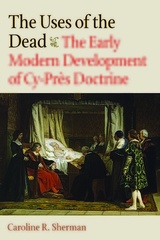
Posthumous gifts, which required no sacrifice during life, were in fact broadly understood by canon lawyers and medieval donors themselves to have at best a very limited relationship to salvation. As a consequence, for much of the Middle Ages the preferred method for resolving impossible or impractical gifts was to try to reach a consensus among all of the interested parties to the gift, including the donor's heirs and the recipients, with the mediation of the local bishop.
When cy-près emerged in the seventeenth century, it cut a charitable gift o from return to the donor's estate in the event of failure. It also gave the interested parties to the gift (heirs, beneficiaries, or trustees) little authority over resolutions to problematic gifts, which were now considered primarily in relationship to the donor's intent—even as the intent was ultimately honored only in its breach. The Uses of the Dead shows how cy-près developed out of controversies over church property, particularly monastic property, and whether it might be legally turned over to fund education, poor relief, or national defense.
Renaissance humanists hoped to make better, more prudent uses of property; the Reformation sought to correct superstitious abuses of property and ultimately tended to prevent donors' heirs from recovering secularized ecclesiastical gifts; and the early modern state attempted to centralize poor relief and charitable efforts under a more rational, centralized supervision. These three factors combined to replace an older equitable ideal with a new equitable rule—one whose use has rapidly expanded in the modern era to allow assorted approximations and judicial redistributions of property.
The essays explore a variety of incarnations of "the folk," from the contested meanings of folk dance in creating a national culture in twentieth-century Haiti and Nicaragua, to the ways that the London Museum’s collection of artifacts challenged early-twentieth-century British notions of gender, labor, and citizenship, to the production of urban folklore in New York City. The Uses of the Folk identifies folk culture of the past and present as an important site of ongoing struggle—one affecting all scholars who draw on folk or vernacular culture in their work.
Contributors. Adina Back, Jordanna Bailkin, Regina Bendix, Katherine Borland, Sally Charnow, Peggy P. Hargis, Georgina Hickey, John Howard, Shafali Lal, R. J. Lambrose, Ronald Radano, Kate Ramsey, Gerald Shenk, David Takacs, David Waldstreicher, Daniel Walkowitz, Steve Zeitlin
America's university president extraordinaire adds a new chapter and preface to The Uses of the University, probably the most important book on the modern university ever written. This summa on higher education brings the research university into the new century.
The multiversity that Clark Kerr so presciently discovered now finds itself in an age of apprehension with few certainties. Leaders of institutions of higher learning can be either hedgehogs or foxes in the new age. Kerr gives five general points of advice on what kinds of attitudes universities should adopt. He then gives a blueprint for action for foxes, suggesting that a few hedgehogs need to be around to protect university autonomy and the public weal.
How have modern Jews appropriated traditional aspects of their culture and religion to sustain them in the modern world? Twenty-one distinguished scholars address this question by drawing on a range of disciplines: social and cultural history, ethnography, folklore, sociology, educational theory, and rabbinics. They examine Jewish communities from Russia to North Africa, from Israel to the United States. Among the subjects they explore are Jewish art, holiday practices, feminist ceremonies, adult education, and religious movements in Israel.
The Uses of Tradition demonstrates the persistence of tradition and the limits to continuity. It asks: How extensively can tradition be reinterpreted before it is subverted? At what point is creative reinvention an act of betrayal? How effectively can selective borrowing from tradition sustain a religious community?
The turn of the last century, amid the excesses of the Gilded Age, variety became a key notion for Americans—a sign of national progress and development, reassurance that the modern nation would not fall into monotonous dullness or disorderly chaos. Carrie Tirado Bramen pursues this idea through the works of a wide range of regional and cosmopolitan writers, journalists, theologians, and politicians who rewrote the narrative of American exceptionalism through a celebration of variety. Exploring cultural and institutional spheres ranging from intra-urban walking tours in popular magazines to the 1893 World's Parliament of Religions in Chicago, she shows how the rhetoric of variety became naturalized and nationalized as quintessentially American and inherently democratic. By focusing on the uses of the term in the work of William James, Anna Julia Cooper, W. E. B. Du Bois, Hamlin Garland, and Wong Chin Foo, among many others, Bramen reveals how the perceived innocence and goodness of variety were used to construct contradictory and mutually exclusive visions of modern Americanism.
Bramen's innovation is to look at the debates of a century ago that established diversity as the distinctive feature of U.S. culture. In the late-nineteenth-century conception, which emphasized the openness of variety while at the same time acknowledging its limits, she finds a useful corrective to the contemporary tendency to celebrate the United States as a postmodern melange or a carnivalesque utopia of hybridity and difference.
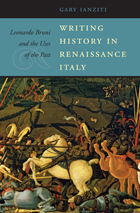
Leonardo Bruni (1370–1444) is widely recognized as the most important humanist historian of the early Renaissance. But why this recognition came about—and what it has meant for the field of historiography—has long been a matter of confusion and controversy. Writing History in Renaissance Italy offers a fresh approach to the subject by undertaking a systematic, work-by-work investigation that encompasses for the first time the full range of Bruni’s output in history and biography.
The study is the first to assess in detail the impact of the classical Greek historians on the development of humanist methods of historical writing. It highlights in particular the importance of Thucydides and Polybius—authors Bruni was among the first in the West to read, and whose analytical approach to politics led him in new directions. Yet the revolution in history that unfolds across the four decades covered in this study is no mere revival of classical models: Ianziti constantly monitors Bruni’s position within the shifting hierarchies of power in Florence, drawing connections between his various historical works and the political uses they were meant to serve.
The result is a clearer picture of what Bruni hoped to achieve, and a more precise analysis of the dynamics driving his new approach to the past. Bruni himself emerges as a protagonist of the first order, a figure whose location at the center of power was a decisive factor shaping his innovations in historical writing.

READERS
Browse our collection.
PUBLISHERS
See BiblioVault's publisher services.
STUDENT SERVICES
Files for college accessibility offices.
RECENTLY PUBLISHED



UChicago Accessibility Resources
home | accessibility | search | about | contact us
BiblioVault ® 2001 - 2024
The University of Chicago Press