
 A SCHOLARLY BOOK REPOSITORY
12 start with A start with A

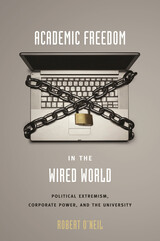
In this passionately argued overview, a longtime activist-scholar takes readers through the changing landscape of academic freedom. From the aftermath of September 11th to the new frontier of blogging, Robert O'Neil examines the tension between institutional and individual interests. Many cases boil down to a hotly contested question: who has the right to decide what is taught in the classroom?
O'Neil shows how courts increasingly restrict professorial judgment, and how the feeble protection of what is posted on the Internet and written in email makes academics more vulnerable than ever. Even more provocatively, O'Neil argues, the newest threats to academic freedom come not from government, but from the private sector. Corporations increasingly sponsor and control university-based research, while self-appointed watchdogs systematically harass individual teachers on websites and blogs. Most troubling, these threats to academic freedom are nearly immune from legal recourse.
Insisting that new concepts of academic freedom, and new strategies for maintaining it are needed, O'Neil urges academics to work together--and across rigid and simplistic divisions between "left" and "right."
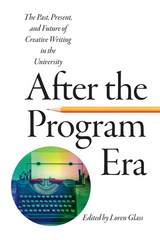
After the Program Era explores the consequences and implications, as well as the lacunae and liabilities, of McGurl’s foundational intervention. Glass focuses only on American fiction and the traditional MFA program, and this collection aims to expand and examine its insights in terms of other genres and sites. Postwar poetry, in particular, has until now been neglected as a product of the Program Era, even though it is, arguably, a “purer” example, since poets now depend almost entirely on the patronage of the university. Similarly, this collection looks beyond the traditional MFA writing program to explore the pre-history of writing programs in American universities, as well as alternatives to the traditionally structured program that have emerged along the way.
Taken together, the essays in After the Program Era seek to answer and explore many of these questions and continue the conversations McGurl only began.
CONTRIBUTORS
Seth Abramson, Greg Barnhisel, Eric Bennett, Matthew Blackwell, Kelly Budruweit, Mike Chasar, Simon During, Donal Harris, Michael Hill, Benjamin Kirbach, Sean McCann, Mark McGurl, Marija Rieff, Juliana Spahr, Stephen Voyce, Stephanie Young

Allen Tate - American Writers 39 was first published in 1964. Minnesota Archive Editions uses digital technology to make long-unavailable books once again accessible, and are published unaltered from the original University of Minnesota Press editions.
Ambrose Bierce - American Writers 37 was first published in 1964. Minnesota Archive Editions uses digital technology to make long-unavailable books once again accessible, and are published unaltered from the original University of Minnesota Press editions.
Amelia Gayle Gorgas (June 1, 1826–January 3, 1913) was the head librarian and postmaster of the University of Alabama for 25 years in the late nineteenth and early twentieth centuries. After the University's original library was burned by Union troops just days before Lee's surrender at Appomattox, Gorgas played a central role in the creation of a new library, expanding the collection from 6,000 to 20,000 volumes. She worked till the age of 80 in 1907, and, in gratitude for her years of service, the University's main library is named in her honor. This book tells her story.
Amelia was the daughter of John Gayle, governor of Alabama from 1831 to 1835, and the wife of Josiah Gorgas, chief of ordnance for the Confederate armies. Their six children included William Crawford Gorgas, surgeon-general of the United States Army. Brought up in the antebellum South, Gorgas nevertheless was a leader in the physical and intellectual reconstruction of the University after the Civil War, both providing some stablizing continuity but also embracing change.
The life of Amelia Gayle Gorgas disproves stereotypes of fragile Southern women. Readers of her story can see in episode after episode the strength, resiliency, and perseverance that the times called for. The extensive and penetrating scholarship of Mary Tabb Johnston and Elizabeth Johnston Lipscomb present Gorgas's story in brisk and enticing detail that will delight readers interesting in the University of Alabama and Southern history.
American Humorists - American Writers 42 was first published in 1964. Minnesota Archive Editions uses digital technology to make long-unavailable books once again accessible, and are published unaltered from the original University of Minnesota Press editions.
The American Short Story - American Writers 14 was first published in 1961. Minnesota Archive Editions uses digital technology to make long-unavailable books once again accessible, and are published unaltered from the original University of Minnesota Press editions.
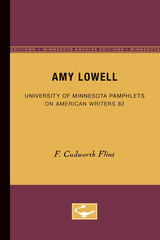
Archibald MacLeish - American Writers 99 was first published in 1971. Minnesota Archive Editions uses digital technology to make long-unavailable books once again accessible, and are published unaltered from the original University of Minnesota Press editions.
Arthur Miller - American Writers 40 was first published in 1964. Minnesota Archive Editions uses digital technology to make long-unavailable books once again accessible, and are published unaltered from the original University of Minnesota Press editions.
READERS
Browse our collection.
PUBLISHERS
See BiblioVault's publisher services.
STUDENT SERVICES
Files for college accessibility offices.
RECENTLY PUBLISHED



UChicago Accessibility Resources
home | accessibility | search | about | contact us
BiblioVault ® 2001 - 2024
The University of Chicago Press