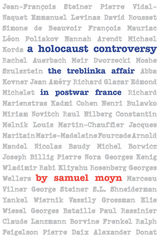

front cover of A Holocaust Controversy
A Holocaust Controversy
The Treblinka Affair in Postwar France
Samuel Moyn
Brandeis University Press, 2005
How has the world come to focus on the Holocaust and why has it invariably done so in the heat of controversy, scandal, and polemics about the past? These questions are at the heart of this unique investigation of the Treblinka affair that occurred in France in 1966 when Jean-Francois Steiner, a young Jewish journalist, published Treblinka: The Revolt of an Extermination Camp. A cross between a history and a novel, Steiner’s book narrated the 1943 revolt at one of the major Nazi death camps. Abetted by a scandalous interview he gave, as well as Simone de Beauvoir’s glowing preface, the book shot to the top of the Parisian bestseller list and prompted a wide-ranging controversy in which both the well-known and the obscure were embroiled. Few had heard of Treblinka, or other death camps, before the affair. The validity of the difference between those killing centers and the larger network of concentration camps making up the universe of Nazi crime had to be fought out in public. The affair also bore on the frequently raised question of the Jews’ response to their dire straits. Moyn delves into events surrounding the publication of Steiner’s book and the subsequent furor. In the process, he sheds light on a few forgotten but thought-provoking months in French cultural history. Reconstructing the affair in detail, Moyn studies it as a paradigm-shifting controversy that helped change perceptions of the Holocaust in the French public and among French Jews in particular. Then Moyn follows the controversy beyond French borders to the other countries—especially Israel and the United States—where it resonated powerfully. Based on a complete reconstruction of the debate in the press (including Yiddish dailies) and on archives on three continents, Moyn’s study concludes with the response of the survivors of Treblinka to the controversy and reflects on its place in the longer history of Holocaust memory. Finally, Moyn revisits, in the context of a detailed case study, some of the theoretical controversies the genocide has provoked, including whether it is appropriate to draw universalistic lessons from the victimhood of particular groups.
[more]

logo for University of Illinois Press
Shadows of Treblinka
Miriam Kuperhand and Saul Kuperhand
University of Illinois Press, 1998
      Unique and compelling, this husband-and-wife memoir of the Holocaust
        will move and inform generations. As we lose eyewitnesses to this ultimate
        horror, the Kuperhands present us with an elegantly restrained, yet hard-hitting,
        Kaddish to Polish Jewry.
      Miriam was the daughter of a prosperous furrier; Saul was the son of
        a poor shoemaker. Miriam was sixteen when she and her brother roamed the
        wild countryside of Poland, searching for food and shelter--and for their
        parents. Saul was only a few years older when he watched the smoke rising
        from the crematoria and knew that his parents, sister, and eight brothers
        were gone forever. Miriam lived by hiding; Saul lived by escaping from
        the camp.
      The authors emphasize the essential role that Polish Christians played
        in their survival and stress that wit, courage, faith, luck, and even
        a strong will to live were worthless without their help.
      The travail of their survival is wrenching yet comforting, tragic yet
        upbeat, cinematic yet intimate. Shadows of Treblinka will haunt
        and inspire its readers.
 
[more]

front cover of Survival at Treblinka
Survival at Treblinka
Geography, Gender, and Social Networks in Jewish Resistance
Chad S.A. Gibbs
University of Wisconsin Press, 2026

On August 2, 1943, prisoners at the Nazi extermination camp Treblinka, located in occupied Poland, launched an uprising against their captors, during which hundreds successfully escaped while guards killed as many in the process. In this groundbreaking work, Chad S.A. Gibbs draws upon recently discovered sources and novel research methods to fundamentally reassess Jewish resistance at Treblinka—both before and during the revolt.

Using the testimonies of revolt survivors, prior escapees, those who passed through the camp, and a handful of bystander witnesses and former SS guards, Gibbs sheds new light on the events of August 2 as well as many prior acts of resistance. Critical to these new interpretations of the revolt are the actions of women prisoners, who here assume a central place in this story for the first time.
[more]

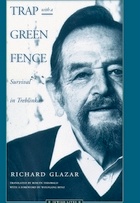
front cover of Trap with a Green Fence
Trap with a Green Fence
Survival in Treblinka
Richard Glazar
Northwestern University Press, 1995
Trap with a Green Fence is Richard Glazar's memoir of deportation, escape, and survival. In economical prose, Glazar weaves a description of Treblinka and its operations into his evocation of himself and his fellow prisoners as denizens of an underworld. Glazar gives us compelling images of these horrors in a tone that remains thoughtful but sober, affecting but simple.
[more]


Send via email Share on Facebook Share on Twitter