
front cover of Beyond the Boycott
Beyond the Boycott
Labor Rights, Human Rights, and Transnational Activism
Gay W. Seidman
Russell Sage Foundation, 2007
As the world economy becomes increasingly integrated, companies can shift production to wherever wages are lowest and unions weakest. How can workers defend their rights in an era of mobile capital? With national governments forced to compete for foreign investment by rolling back legal protections for workers, fair trade advocates are enlisting consumers to put market pressure on companies to treat their workers fairly. In Beyond the Boycott, sociologist Gay Seidman asks whether this non-governmental approach can reverse the "race to the bottom" in global labor standards. Beyond the Boycott examines three campaigns in which activists successfully used the threat of a consumer boycott to pressure companies to accept voluntary codes of conduct and independent monitoring of  work sites. The voluntary Sullivan Code required American corporations operating in apartheid-era South Africa to improve treatment of their workers;  in India, the Rugmark inspection team provides 'social labels' for  handknotted carpets made without child labor; and in Guatemala,  COVERCO monitors conditions in factories producing clothing under contract for major American brands. Seidman compares these cases to explore the ingredients of successful campaigns, as well as the inherent limitations facing voluntary monitoring schemes. Despite activists' emphasis on educating individual consumers to support ethical companies, Seidman finds that, in practice, they have been most successful when they mobilized institutions—such as universities, churches, and shareholder organizations. Moreover, although activists tend to dismiss states' capabilities, all three cases involved governmental threats of trade sanctions against companies and countries with poor labor records. Finally, Seidman  points to an intractable difficulty of independent workplace monitoring: since consumers rarely distinguish between monitoring schemes and labels, companies can hand pick monitoring organizations, selecting those with the lowest standards for working conditions and the least aggressive inspections. Transnational consumer movements can increase the bargaining power of the global workforce, Seidman argues, but they cannot replace national governments or local campaigns to expand the meaning of citizenship. As trade and capital move across borders in growing volume and with greater speed, civil society and human rights movements are also becoming more global. Highly original and thought-provoking, Beyond the Boycott vividly depicts the contemporary movement to humanize globalization—its present and its possible future. A Volume in the American Sociological Association's Rose Series in Sociology
[more]

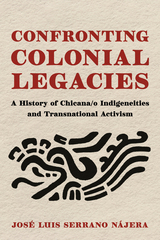
front cover of Confronting Colonial Legacies
Confronting Colonial Legacies
A History of Chicana/o Indigeneities and Transnational Activism
José Luis Serrano Nájera
University of Arizona Press, 2026

This work offers a groundbreaking account of how Chicana/o activists have engaged in sustained efforts to reclaim Indigenous identity through political struggle, cultural expression, and transnational solidarity.

Author José Luis Serrano Nájera takes an in-depth look at the history of Chicana/o indigeneity, starting with the Chicana/o Movement of the 1960s and 1970s and through twenty-first century transnational activism and solidarity movements. Serrano Nájera reveals how claims to indigeneity were rooted in reciprocal relationships with Indigenous communities and driven by a shared commitment to decolonization. Through chapters on visual and performing arts, ceremony, education, and grassroots organizing, this book challenges reductive narratives of cultural appropriation and instead foregrounds the complex and historically grounded nature of Chicana/o indigeneity.

Drawing on extensive archival research, Serrano Nájera demonstrates how Chicana/o indigeneity has contributed to broader Indigenous rights movements, including efforts that culminated in the 2007 United Nations Declaration on the Rights of Indigenous Peoples. This work highlights the intercontinental dimensions of Chicana/o activism and offers a vital source for scholars and students in Chicana/o studies, Indigenous studies, ethnic studies, history, and political science. Confronting Colonial Legacies is a compelling call to rethink the politics of identity, sovereignty, and solidarity across the Americas.
[more]

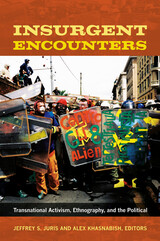
front cover of Insurgent Encounters
Insurgent Encounters
Transnational Activism, Ethnography, and the Political
Jeffrey S. Juris and Alex Khasnabish, eds.
Duke University Press, 2013
Insurgent Encounters illuminates the dynamics of contemporary transnational social movements, including those advocating for women and indigenous groups, environmental justice, and alternative—cooperative rather than exploitative—forms of globalization. The contributors are politically engaged scholars working within the social movements they analyze. Their essays are both models of and arguments for activist ethnography. They demonstrate that such a methodology has the potential to reveal empirical issues and generate theoretical insights beyond the reach of traditional social-movement research methods. Activist ethnographers not only produce new understandings of contemporary forms of collective action, but also seek to contribute to struggles for social change. The editors suggest networks and spaces of encounter as the most useful conceptual rubrics for understanding shape-shifting social movements using digital and online technologies to produce innovative forms of political organization across local, regional, national, and transnational scales. A major rethinking of the practice and purpose of ethnography, Insurgent Encounters challenges dominant understandings of social transformation, political possibility, knowledge production, and the relation between intellectual labor and sociopolitical activism.

Contributors
. Giuseppe Caruso, Maribel Casas-Cortés, Janet Conway, Stéphane Couture, Vinci Daro, Manisha Desai, Sylvia Escárcega, David Hess, Jeffrey S. Juris, Alex Khasnabish, Lorenzo Mosca, Michal Osterweil, Geoffrey Pleyers, Dana E. Powell, Paul Routledge, M. K. Sterpka, Tish Stringer
[more]


Send via email Share on Facebook Share on Twitter