
 A SCHOLARLY BOOK REPOSITORY
Results by Title
3 books about Thrace, Western
3 books about Thrace, Western
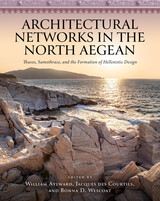
Architectural Networks in the North Aegean
Thasos, Samothrace, and the Formation of Hellenistic Design
Edited by William Aylward, Jacques des Courtils, and Bonna D. Wescoat
University of Wisconsin Press, 2025
During the Hellenistic period, the North Aegean Sea was a dynamic and diverse area, linked by robust trading networks and sometimes precarious political allegiances. The islands of Thasos, Samothrace, and Lesbos in particular played crucial roles in their position between Anatolia, Macedonia, Thrace, and Greece. Migration, trade, and politics—not to mention the specifics of sites and climate—shaped the development of architecture. The region pioneered many innovations that subsequently spread across the Mediterranean.
Employing the idea of networks to effectively describe the interconnectedness of design, materials, technology, religion, and politics, the contributors to this volume establish the need to understand this important region holistically and on its own terms. Taking a close look at major buildings and monuments—while considering technique, design, and decoration as elements of a vigorous web—this volume offers important insights about the area’s significance in the history of Hellenistic architecture, including lasting innovations in architectural illusion, Ionic entablature, and groundbreaking uses of marble and plaster. From the North Aegean, such principles and tactics were transmitted to the rest of the Hellenistic world, influencing Roman architecture and, from there, Western architectural history.
Employing the idea of networks to effectively describe the interconnectedness of design, materials, technology, religion, and politics, the contributors to this volume establish the need to understand this important region holistically and on its own terms. Taking a close look at major buildings and monuments—while considering technique, design, and decoration as elements of a vigorous web—this volume offers important insights about the area’s significance in the history of Hellenistic architecture, including lasting innovations in architectural illusion, Ionic entablature, and groundbreaking uses of marble and plaster. From the North Aegean, such principles and tactics were transmitted to the rest of the Hellenistic world, influencing Roman architecture and, from there, Western architectural history.
[more]

Bad Souls
Madness and Responsibility in Modern Greece
Elizabeth Anne Davis
Duke University Press, 2012
Bad Souls is an ethnographic study of responsibility among psychiatric patients and their caregivers in Thrace, the northeastern borderland of Greece. Elizabeth Anne Davis examines responsibility in this rural region through the lens of national psychiatric reform, a process designed to shift treatment from custodial hospitals to outpatient settings. Challenged to help care for themselves, patients struggled to function in communities that often seemed as much sources of mental pathology as sites of refuge. Davis documents these patients' singular experience of community, and their ambivalent aspirations to health, as they grappled with new forms of autonomy and dependency introduced by psychiatric reform. Planned, funded, and overseen largely by the European Union, this "democratic experiment," one of many reforms adopted by Greece since its accession to the EU in the early 1980s, has led Greek citizens to question the state and its administration of human rights, social welfare, and education. Exploring the therapeutic dynamics of diagnosis, persuasion, healing, and failure in Greek psychiatry, Davis traces the terrains of truth, culture, and freedom that emerge from this questioning of the state at the borders of Europe.
[more]

Minority Memory, Identity, and Reconciliation
The Turkish Muslim Minority of Greece and the Greek Orthodox Minority of Türkiye
Gül M. Gür
University of Michigan Press, 2025
Migration and minority rights are increasingly at the forefront of global discourse. Minority Memory, Identity, and Reconciliation explores the lives of two often overlooked minority communities: the Greek Orthodox minority in Istanbul, Türkiye, and the Turkish Muslim minority in Western Thrace, Greece. As empires dissolved, the leaders and political elites of new, smaller nations that emerged embarked on population exchanges to increase the ethnic and religious homogeneity of their nation-states. Although these two minority communities differ in religious, ethnic, and socioeconomic terms, they both offer unique perspectives on what happens to people who live on what is perceived as the wrong side of an arbitrarily drawn border.
Drawing from the personal stories of members of these two minority communities regarding their struggle with displacement, discrimination, and cultural assimilation, as well as comprehensive historical analysis, this book examines how historical traumas, national policies, and sociopolitical dynamics have influenced contemporary minority memory and identity formation. By incorporating interviews with community leaders, civil society representatives, and state officials, this book offers a rich, multifaceted perspective on the processes of memory and identity formation that underscores the broader implications of these processes for international relations in the region and minority rights. Gül M. Gür pulls together theories of nationalism, collective memory, and narrative practice to highlight the unique process of minority memory work and its role in sustaining minority identity and their advocacy efforts.
Drawing from the personal stories of members of these two minority communities regarding their struggle with displacement, discrimination, and cultural assimilation, as well as comprehensive historical analysis, this book examines how historical traumas, national policies, and sociopolitical dynamics have influenced contemporary minority memory and identity formation. By incorporating interviews with community leaders, civil society representatives, and state officials, this book offers a rich, multifaceted perspective on the processes of memory and identity formation that underscores the broader implications of these processes for international relations in the region and minority rights. Gül M. Gür pulls together theories of nationalism, collective memory, and narrative practice to highlight the unique process of minority memory work and its role in sustaining minority identity and their advocacy efforts.
[more]
READERS
Browse our collection.
PUBLISHERS
See BiblioVault's publisher services.
STUDENT SERVICES
Files for college accessibility offices.
RECENTLY PUBLISHED







UChicago Accessibility Resources
home | accessibility | search | about | contact us
BiblioVault ® 2001 - 2025
The University of Chicago Press