
 A SCHOLARLY BOOK REPOSITORY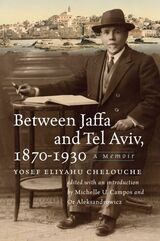
Born in Jaffa in 1870, Yosef Eliyahu Chelouche grew up within a notable Sephardi family in the local Jewish community. He went on to become a prominent entrepreneur; a founder of Tel Aviv; and a fierce critic of the Ashkenazi Zionist leadership, Arab nationalism, and British colonial sectarianism; before emerging, in the last decade of his life, as an anguished public figure struggling to repair Arab-Jewish relations.
His memoir paints an intimate portrait of life in Palestine at the turn of the twentieth century, told from the perspective of a Middle Eastern Jew deeply embedded in local society. By centering on the world and experiences of a native Jew who was an eyewitness to and participant in the unfolding conflict in Palestine, this book shows how the course of Zionist politics and Jewish-Arab relations in pre-state Palestine might have taken alternative pathways. A comprehensive introduction sets the scene in late nineteenth- and early twentieth-century Jaffa and thoughtful annotations contextualize Chelouche’s story within the modern history of Palestine and Israel. Between Jaffa and Tel Aviv, 1870–1930 tells the fascinating story of a civic leader—and offers a complex view of the various cultural, social, and political forces that forged multilayered Jewish identities in the Middle East. The book includes a family tree and is illustrated with photographs of the family and scenes of Jaffa and early Tel Aviv.
In the fall of 2001 Charles Salmon had a Fulbright fellowship in Israel. He was due to depart on September 12. Arriving in Israel a few weeks later, speaking no Hebrew and largely unfamiliar with Judaism and Israeli customs, he immersed himself in Israeli culture.
This collection of correspondence began as a weekly report to friends and was designed to offer an alternative to mainstream media. With the excitement of a tourist and the eagerness of an anthropologist, Salmon emerges as a modern Candide. He describes historical sites and a supermarket in Tel Aviv, discusses the differences between university students in Israel and America, and negotiates the purchase of food and the vagaries of the weather with humor and passion. The letters also discuss Israeli–Palestinian relations, and details terrorist events and responses to them.
This unique book focuses on how everyday hopes and fears transcend geopolitical boundaries and provides valuable lessons on how to thrive in these new and uncertain times.
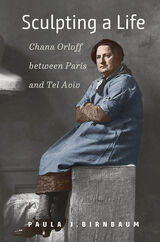
In Sculpting a Life, the first book-length biography of sculptor Chana Orloff (1888-1968), author Paula Birnbaum tells the story of a fiercely determined and ambitious woman who fled antisemitism in Ukraine, emigrated to Palestine with her family, then travelled to Paris to work in haute couture before becoming an internationally recognized artist. Against the backdrop of revolution, world wars, a global pandemic and forced migrations, her sculptures embody themes of gender, displacement, exile, and belonging. A major figure in the School of Paris, Orloff contributed to the canon of modern art alongside Picasso, Modigliani and Chagall.
Stories from her unpublished memoir enrich this life story of courage, perseverance, and extraordinary artistic accomplishments that take us through the aftermath of the Holocaust when Orloff lived between Paris and Tel Aviv. This biography brings new perspectives and understandings to Orloff’s multiple identities as a cosmopolitan émigré, woman, and Jew, and is a much-needed intervention into the narrative of modern art.
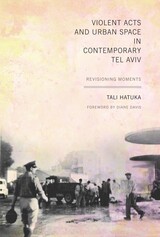
Violent acts over the past fifteen years have profoundly altered civil rituals, cultural identity, and the meaning of place in Tel Aviv. Three events in particular have shed light on the global rule of urban space in the struggle for territory, resources, and power: the assassination of Prime Minister Rabin in 1995 in the city council square; the suicidal bombing at the Dolphinarium Discothèque along the shoreline in 2001; and bombings in the Neve Shaanan neighborhood in 2003.
Tali Hatuka uses an interdisciplinary framework of urban theory and sociopolitical theory to shed light on the discourse regarding violent events to include an analysis of the physical space where these events take place. She exposes the complex relationships among local groups, the state, and the city, challenging the national discourse by offering a fresh interpretation of contesting forces and their effect on the urban environment.
Perhaps the most valuable contribution of this book is its critical assessment of the current Israeli reality, which is affected by violent events that continually alter the everyday life of its citizens. Although these events have been widely publicized by the media, there is scant literature focusing on their impact on the urban spaces where people live and meet. In addition, Hatuka shows how sociopolitical events become crucial defining moments in contemporary lived experience, allowing us to examine universal questions about the way democracy, ideology, and memory are manifested in the city.
READERS
Browse our collection.
PUBLISHERS
See BiblioVault's publisher services.
STUDENT SERVICES
Files for college accessibility offices.
RECENTLY PUBLISHED



UChicago Accessibility Resources
home | accessibility | search | about | contact us
BiblioVault ® 2001 - 2026
The University of Chicago Press