
 A SCHOLARLY BOOK REPOSITORY
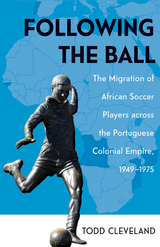
With Following the Ball, Todd Cleveland incorporates labor, sport, diasporic, and imperial history to examine the extraordinary experiences of African football players from Portugal’s African colonies as they relocated to the metropole from 1949 until the conclusion of the colonial era in 1975. The backdrop was Portugal’s increasingly embattled Estado Novo regime, and its attendant use of the players as propaganda to communicate the supposed unity of the metropole and the colonies.
Cleveland zeroes in on the ways that players, such as the great Eusébio, creatively exploited opportunities generated by shifts in the political and occupational landscapes in the waning decades of Portugal’s empire. Drawing on interviews with the players themselves, he shows how they often assumed roles as social and cultural intermediaries and counters reductive histories that have depicted footballers as mere colonial pawns.
To reconstruct these players’ transnational histories, the narrative traces their lives from the informal soccer spaces in colonial Africa to the manicured pitches of Europe, while simultaneously focusing on their off-the-field challenges and successes. By examining this multi-continental space in a single analytical field, the book unearths structural and experiential consistencies and contrasts, and illuminates the components and processes of empire.
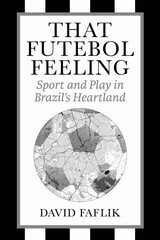
That Futebol Feeling captures the region’s enthrallment with “the beautiful game,” and shows us how and why play is central to the human condition. David Faflik profiles members of the most celebrated local team, Clube Atlético Mineiro (CAM), as well as its passionate, never-say-die fans, to show how futebol and fandom shape their everyday lives and perspectives. He discovers bonds of work and play, as well as pride, identity, and community. Additionally, Faflik’s analysis of Brazil’s futebol culture reflects sports fandom worldwide.
CAM stands as a symbol for a way of life in Minas Gerais, the birthplace of Pelé. Faflik interrogates what playing the game means to those who dedicate their lives to the sport. He writes, “The feelings that football inspires are the best of me.” That Futebol Feeling shares that special feeling with the rest of us.
READERS
Browse our collection.
PUBLISHERS
See BiblioVault's publisher services.
STUDENT SERVICES
Files for college accessibility offices.
RECENTLY PUBLISHED


UChicago Accessibility Resources
home | accessibility | search | about | contact us
BiblioVault ® 2001 - 2026
The University of Chicago Press