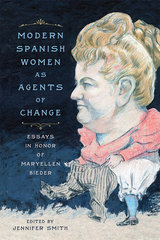
front cover of Modern Spanish Women as Agents of Change
Modern Spanish Women as Agents of Change
Essays in Honor of Maryellen Bieder
Smith, Jennifer
Bucknell University Press, 2019
This volume brings together cutting-edge research on modern Spanish women as writers, activists, and embodiments of cultural change, and simultaneously honors Maryellen Bieder’s invaluable scholarly contribution to the field. The essays are innovative in their consideration of lesser-known women writers, focus on women as political activists, and use of post-colonialism, queer theory, and spatial theory to examine the period from the Enlightenment until World War II. The contributors study women as agents and representations of social change in a variety of genres, including short stories, novels, plays, personal letters, and journalistic pieces. Canonical authors such as Emilia Pardo Bazán, Leopoldo Alas “Clarín,” and Carmen de Burgos are considered alongside lesser known writers and activists such as María Rosa Gálvez, Sofía Tartilán, and Caterina Albert i Paradís. The critical analyses are situated within their specific socio-historical context, and shed new light on nineteenth- and early twentieth-century Spanish literature, history, and culture.

Published by Bucknell University Press. Distributed worldwide by Rutgers University Press. 

[more]

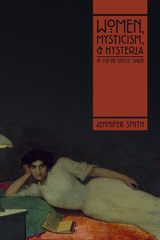
front cover of Women, Mysticism, and Hysteria in Fin-de-Siècle Spain
Women, Mysticism, and Hysteria in Fin-de-Siècle Spain
Jennifer Smith
Vanderbilt University Press, 2021
Women, Mysticism, and Hysteria in Fin-de-Siècle Spain argues that the reinterpretation of female mysticism as hysteria and nymphomania in late nineteenth- and early twentieth-century Spain was part of a larger project to suppress the growing female emancipation movement by sexualizing the female subject. This archival-historical work highlights the phenomenon in medical, social, and literary texts of the time, illustrating that despite many liberals' hostility toward the Church, secular doctors and intellectuals employed strikingly similar paradigms to those through which the early modern Spanish Church castigated female mysticism as demonic possession.

Author Jennifer Smith also directs modern historians to the writings of Emilia Pardo Bazán (1851-1921) as a thinker whose work points out mysticism's subversive potential in terms of the patriarchal order. Pardo Bazán, unlike her male counterparts, rejected the hysteria diagnosis and promoted mysticism as a path for women's personal development and self-realization.
[more]


Send via email Share on Facebook Share on Twitter