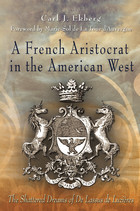

front cover of A French Aristocrat in the American West
A French Aristocrat in the American West
The Shattered Dreams of De Lassus De Luzières
Carl J. Ekberg & Foreword by Marie-Sol de La Tour d'Auvergne
University of Missouri Press, 2010
In 1790, Pierre-Charles de Lassus de Luzières gathered his wife and children and fled Revolutionary France. His trek to America was prompted by his “purchase” of two thousand acres situated on the bank of the Ohio River from the Scioto Land Company—the institution that infamously swindled French buyers and sold them worthless titles to property. When de Luzières arrived and realized he had been defrauded, he chose, in a momentous decision, not to return home to France. Instead, he committed to a life in North America and began planning a move to the Mississippi River valley.
De Luzières dreamed of creating a vast commercial empire that would stretch across the frontier, extending the entire length of the Ohio River and also down the Mississippi from Ste. Genevieve to New Orleans. Though his grandiose goal was never realized, de Luzières energetically pursued other important initiatives. He founded the city of New Bourbon in what is now Missouri and recruited American settlers to move westward across the Mississippi River. The highlight of his career was being appointed Spanish commandant of the New Bourbon District, and his 1797 census of that community is an invaluable historical document. De Luzières was a significant political player during the final years of the Spanish regime in Louisiana, but likely his greatest contributions to American history are his extensive commentaries on the Mississippi frontier at the close of the colonial era.
A French Aristocrat in the American West: The Shattered Dreams of De Lassus de Luzières is both a narrative of this remarkable man’s life and a compilation of his extensive writings. In Part I of the book, author Carl Ekberg offers a thorough account of de Luzières, from his life in Pre-Revolutionary France to his death in 1806 in his house in New Bourbon. Part II is a compilation, in translation, of de Luzières’s most compelling correspondence. Until now very little of his writing has been published, despite the fact that his letters constitute one of the largest bodies of writing ever produced by a French émigré in North America.
Though de Luzières’s presence in early American history has been largely overlooked by scholars, the work left behind by this unlikely frontiersman merits closer inspection. A French Aristocrat in the American West brings the words and deeds of this fascinating man to the public for the first time.
[more]

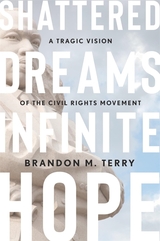
front cover of Shattered Dreams, Infinite Hope
Shattered Dreams, Infinite Hope
A Tragic Vision of the Civil Rights Movement
Brandon M. Terry
Harvard University Press, 2025

A New York Times Notable Book

A landmark reinterpretation of the civil rights movement that challenges reductive heroic narratives of the 1950s and 1960s and invigorates new debates and possibilities for the future of the struggle for liberation.


We are all familiar with the romantic vision of the civil rights movement: a moment when heroic African Americans and their allies triumphed over racial oppression through courageous protest, forging a new consensus in American life and law. But what are the effects of this celebratory storytelling? What happens when a living revolt against injustice becomes an embalmed museum piece?

In this innovative work, Brandon Terry develops a novel theory of interpretation to show how competing accounts of the civil rights movement circulate through politics and political philosophy. The dominant narrative is romantic. This “arc of justice” narrative is found in popular histories, the speeches of Barack Obama, and even the writings of the liberal philosopher John Rawls. Despite being public orthodoxy, these romantic visions are exhausted and unpersuasive on their own terms. The breakdown of the authority of this history of justice has created space for a rival ironic mode, embodied in the political ideas of Afropessimism. While offering a sympathetic critique, Terry ultimately finds Afropessimist thought self-undermining and unworkable.

Instead, he argues, the civil rights movement is best understood in tragic terms. By challenging the attachment to triumphant pasts, Terry demonstrates that tragedy exemplifies what the civil rights movement has been and can still be. Provocative and original, Shattered Dreams, Infinite Hope offers an optimistic political vision without naïveté, to train our judgment and resilience in the face of reasonable despair.

[more]


Send via email Share on Facebook Share on Twitter