
 A SCHOLARLY BOOK REPOSITORY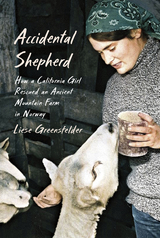
A summer job turns serious when a young woman takes the reins on a remote farm—and learns far more than how to herd sheep
In May 1972, Liese Greensfelder arrived in the small Norwegian town of Øystese to startling news: Johannes, the farmer who hired her for the summer, had just been hospitalized after a stroke. Could she please watch over his place for a month or so, until he got back on his feet? Twenty years old and with no farming experience, Liese was dropped off the next day at a centuries-old mountain farm at the end of a dirt road high above the magnificent Hardanger Fjord—with 115 sheep, two cows, one calf, a draft horse, and a Norwegian herding dog to care for.
Armed with a command of Danish that enabled rudimentary communication, Liese began learning from neighbors who spoke an ancient Norwegian dialect—how to feed the animals, milk by hand, and supervise her first lambing. The farm was run in the old way: horses and wagons instead of tractors, haymaking in the rain, and hikes into the mountains to check on the sheep that ranged free over those wild peaks all summer. And, she was quick to discover, the farm was on the brink of ruin, for Johannes was a heartless man who had abused his animals and neglected his buildings and equipment for decades.
Although her employer had alienated his neighbors, they immediately welcomed the American newcomer and offered her help. As “a month or so” stretched to a year and Liese struggled for the survival of the farm, she joined this tight-knit enclave of farmers, learning their stories and history, adopting their dialect, and growing intimately familiar with the grass-based farming practices that had sustained them for generations.
From moments of levity, such as sampling a neighbor’s fruit wines, Christmas parties, and skiing; to soul-battering challenges, including the directive to kill a fox, sending sheep to slaughter, rotten silage, and vicious weather; to the yearnings of a young woman awash in a sea of masculinity, Accidental Shepherd is a candid account of Liese’s year in a remote farmhouse. Confronted with dangers and obstacles for which she was utterly unprepared, she tells a story of remarkable resilience and records the fascinating but rapidly vanishing traditions of the community that took her in.
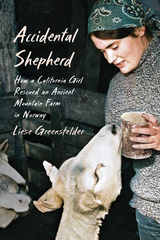
A summer job turns serious when a young woman takes the reins on a remote farm—and learns far more than how to herd sheep
In May 1972, Liese Greensfelder arrived in the small Norwegian town of Øystese to startling news: Johannes, the farmer who hired her for the summer, had just been hospitalized after a stroke. Could she please watch over his place for a month or so, until he got back on his feet? Twenty years old and with no farming experience, Liese was dropped off the next day at a centuries-old mountain farm at the end of a dirt road high above the magnificent Hardanger Fjord—with 115 sheep, two cows, one calf, a draft horse, and a Norwegian herding dog to care for.
Armed with a command of Danish that enabled rudimentary communication, Liese began learning from neighbors who spoke an ancient Norwegian dialect—how to feed the animals, milk by hand, and supervise her first lambing. The farm was run in the old way: horses and wagons instead of tractors, haymaking in the rain, and hikes into the mountains to check on the sheep that ranged free over those wild peaks all summer. And, she was quick to discover, the farm was on the brink of ruin, for Johannes was a heartless man who had abused his animals and neglected his buildings and equipment for decades.
Although her employer had alienated his neighbors, they immediately welcomed the American newcomer and offered her help. As “a month or so” stretched to a year and Liese struggled for the survival of the farm, she joined this tight-knit enclave of farmers, learning their stories and history, adopting their dialect, and growing intimately familiar with the grass-based farming practices that had sustained them for generations.
From moments of levity, such as sampling a neighbor’s fruit wines, Christmas parties, and skiing; to soul-battering challenges, including the directive to kill a fox, sending sheep to slaughter, rotten silage, and vicious weather; to the yearnings of a young woman awash in a sea of masculinity, Accidental Shepherd is a candid account of Liese’s year in a remote farmhouse. Confronted with dangers and obstacles for which she was utterly unprepared, she tells a story of remarkable resilience and records the fascinating but rapidly vanishing traditions of the community that took her in.
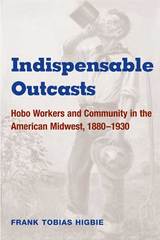
Often overlooked in labor history, the hoboes who rode the rails in search of seasonal work nevertheless secured a place in the American imagination. Frank Tobias Higbie weaves together history, anthropology, gender studies, and literary analysis to reposition these workers at the center of Progressive Era debates over class, race, manly responsibility, community, and citizenship. Combining incisive cultural criticism with labor history, Higbie illustrates how these so-called marginal figures were in fact integral to communities and to cultural conflicts over class, masculinity, and sexuality. He draws from life histories, the investigations of social reformers, and the organizing materials of the Industrial Workers of the World to present a complex portrait of hobo life, from its often violent and dangerous working conditions to its ethic of “transient mutuality” that enabled survival and resistance on the road.
Frank and compelling,Indispensable Outcasts examines hoboes within the sprawling story of American labor while meditating on writing history from the bottom up and the ways a fascination with personal narrative can color a historian's work.
READERS
Browse our collection.
PUBLISHERS
See BiblioVault's publisher services.
STUDENT SERVICES
Files for college accessibility offices.
RECENTLY PUBLISHED






UChicago Accessibility Resources
home | accessibility | search | about | contact us
BiblioVault ® 2001 - 2026
The University of Chicago Press