
 A SCHOLARLY BOOK REPOSITORY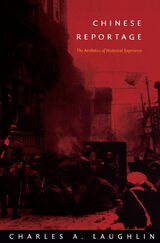
Laughlin traces the roots of reportage (or baogao wenxue) to the travel literature of the Qing Dynasty but shows that its flourishing was part of the growth of Chinese communism in the twentieth century. In a modern Asian context critical of capitalism and imperialism, reportage offered the promise of radicalizing writers through a new method of literary practice and the hope that this kind of writing could in turn contribute to social revolution and China’s national self-realization. Chinese Reportage explores the wide range of social engagement depicted in this literature: witnessing historic events unfolding on city streets; experiencing brutal working conditions in 1930s Shanghai factories; struggling in the battlefields and trenches of the war of resistance against Japan, the civil war, and the Korean war; and participating in revolutionary rural, social, and economic transformation. Laughlin’s close readings emphasize the literary construction of social space over that of character and narrative structure, a method that brings out the critique of individualism and humanism underlying the genre’s aesthetics.
Chinese Reportage recaptures a critical aspect of leftist culture in China with far-reaching implications for historians and sociologists as well as literary scholars.
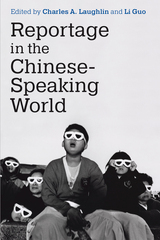
Reportage in the Chinese-Speaking World examines reportage as an important aesthetic form of cultural production in the Sinophone world. Originating as a proletarian nonfiction form in interwar Europe, reportage spread around the world, coming into its own in the Sinophone world from the 1930s to today. Going beyond fact-based journalism, reportage is pursued through a variety of artistic forms and media, from nonfiction writing to photography to documentary film. Reportage’s plurimedial representations facilitate and amplify intersectional struggles against multiple forms of social and political oppression. Engaging its audiences in affective ethico-political exchanges with (human or nonhuman) subjects, reportage promotes audiences’ empathetic responses to the democratic appeals of marginalized groups whose status, identity, or situation manifest emergent ethical challenges in the society of their time.
This work offers new understandings of reportage’s dialectical relationship with its readership by evoking sympathetic identifications with personal contemplations of place, hearth, and senses of belonging. Covering a breadth of media across mainland China, Taiwan, and the Sinophone diaspora in the United States and Japan, this book examines how intermediality cultivates distinctive expressions in reportage, cross-cultural empathy, and ethico-political relationships between the reporter, photographer, filmmaker, and their surroundings.
READERS
Browse our collection.
PUBLISHERS
See BiblioVault's publisher services.
STUDENT SERVICES
Files for college accessibility offices.
RECENTLY PUBLISHED



UChicago Accessibility Resources
home | accessibility | search | about | contact us
BiblioVault ® 2001 - 2026
The University of Chicago Press