
 A SCHOLARLY BOOK REPOSITORY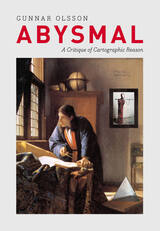
People rely on reason to think about and navigate the abstract world of human relations in much the same way they rely on maps to study and traverse the physical world. Starting from that simple observation, renowned geographer Gunnar Olsson offers in Abysmal an astonishingly erudite critique of the way human thought and action have become deeply immersed in the rhetoric of cartography and how this cartographic reasoning allows the powerful to map out other people’s lives.
A spectacular reading of Western philosophy, religion, and mythology that draws on early maps and atlases, Plato, Kant, and Wittgenstein, Thomas Pynchon, Gilgamesh, and Marcel Duchamp, Abysmal is itself a minimalist guide to the terrain of Western culture. Olsson roams widely but always returns to the problems inherent in reason, to question the outdated assumptions and fixed ideas that thinking cartographically entails. A work of ambition, scope, and sharp wit, Abysmal will appeal to an eclectic audience—to geographers and cartographers, but also to anyone interested in the history of ideas, culture, and art.

Against the common view, which restricts the range of reason to logic and truth-theory alone, Romano advocates "big-hearted rationality," including in it what is only ostensibly its opposite, that is, sensibility, and locating in sensibility itself the roots of the categorical forms of thought. Contrary to what was claimed by the "linguistic turn," language is not a self-enclosed domain; it cannot be conceived in its specificity unless it is led back to its origin in the pre-predicative or pre-linguistic structure of experience itself.
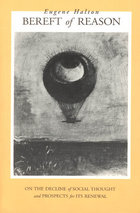
Claiming that human beings should be understood as far more than simply a form of knowledge, social construction, or contingent difference, Halton argues that contemporary thought has lost touch with the spontaneous passions—or enchantment—of life. Exploring neglected works in twentieth century social thought and philosophy—particularly the writings of Lewis Mumford and Charles Peirce—as well as the work of contemporary writers such as Vaclav Havel, Maya Angelou, Milan Kundera, Doris Lessing, and Victor Turner, Halton argues that reason is dependent upon nonrational forces—including sentiment, instinct, conjecture, imagination, and experience. We must, he argues, frame our questions in a way which encompasses both enchantment and critical reason, and he offers an outline here for doing so.
A passionate plea for a fundamental reexamination of the entrenched assumptions of the modern era, this book deals with issues of vital concern to modern societies and should be read by scholars across disciplines.
"Bereft of Reason is a thoughtful critique informed by a passionate commitment to the renewal of critical concerns. For this reason alone it should be widely read and inform current debates."—Lauren Langman, Sociological Inquiry
"Halton takes the 'ghost in the machine' as a dominant defining metaphor for modern thought and life, and criticizes it with gusto, wit, wide reading, and philosophical acumen."—Robert J. Mulvaney, Review of Metaphysics
Despite widespread public support for environmental protection, a backlash against environmental policies is developing. Fueled by outright distortions of fact and disregard for the methodology of science, this backlash appears as an outpouring of seemingly authoritative opinions by so-called experts in books, articles, and appearances on television and radio that greatly distort what is or is not known by environmental scientists. Through relentless repetition, the flood of anti-environmental sentiment has acquired an unfortunate aura of credibility, and is now threatening to undermine thirty years of progress in defining, understanding, and seeking solutions to global environmental problems.
In this hard-hitting and timely book, world-renowned scientists and writers Paul R. Ehrlich and Anne H. Ehrlich speak out against what they call the "brownlash." Brownlash rhetoric, created by public relations spokespersons and a few dissident scientists, is a deliberate misstatement of scientific findings designed to support an anti-environmental world view and political agenda. As such, it is deeply disturbing to environmental scientists across the country. The agenda of brownlash proponents is rarely revealed, and the confusion and distraction its rhetoric creates among policymakers and the public prolong an already difficult search for realistic and equitable solutions to global environmental problems.
In Betrayal of Science and Reason, the Ehrlichs explain clearly and with scientific objectivity the empirical findings behind environmental issues including population growth, desertification, food production, global warming, ozone depletion, acid rain, and biodiversity loss. They systematically debunk revisionist "truths" such as:
- population growth does not cause environmental damage, and may even be beneficial
- humanity is on the verge of abolishing hunger; food scarcity is a local or regional problem and is not indicative of overpopulation
- there is no extinction crisis
- natural resources are superabundant, if not infinite
- global warming and acid rain are not serious threats to humanity
- stratospheric ozone depletion is a hoax
- risks posed by toxic substances are vastly exaggerated
Betrayal of Science and Reason is an eye-opening look at current environmental problems and the fundamental importance of the scientific process in solving them. It presents unique insight into the sources and implications of anti-environmental rhetoric, and provides readers with a valuable means of understanding and refuting the feel-good fables that constitute the brownlash.
Caws takes us back to Pascal’s youth, when he was a child prodigy first engaging mathematics through the works of mathematicians such as Father Mersenne. She describes his early scientific experiments and his construction of mechanical calculating machines; she looks at his correspondence with important thinkers such as René Descartes and Pierre de Fermat; she surveys his many inventions, such as the first means of public transportation in Paris; and she considers his later religious exaltations in works such as the “Memorial.” Along the way, Caws examines Pascal’s various modes of writing—whether he is arguing with the strict puritanical modes of church politics, assuming the personality of a naïve provincial trying to understand the Jesuitical approach, offering pithy aphorisms in the Pensées, or meditating on thinking about thinking itself.
Altogether, this book lays side by side many aspects of Pascal’s life and work that are seldom found in a single volume: his religious motivations and faith, his scientific passions, and his practical savvy. The result is a comprehensive but easily approachable account of a fascinating and influential figure.
Whereas Weber contends that the administration of all modern nation-states would eventually converge in one form characterized by rationality and legal authority, Silberman argues that the process of bureaucratic rationalization took, in fact, two courses. One path is characterized by permeable organizational boundaries and the allocation of information by "professionals." The other features well-defined boundaries and the allocation of information by organizational rules. Through case studies of France, Japan, the United States, and Great Britain, Silberman demonstrates that this divergence stems from differences in leadership structure and in levels of uncertainty about leadership succession in the nineteenth century.
Silberman concludes that the rise of bureacratic rationality was primarily a response to political problems rather than social and economic concerns. Cages of Reason demonstrates how rationalization can have occurred over a wide range of cultures at various levels of economic development. It will be of considerable interest to readers in a number of disciplines: political science, sociology, history, and public administration.
"Silberman has produced an invaluable, densely packed work that those with deep knowledge of public administrative development will find extremely rewarding." —David H. Rosenbloom, American Political Science Review
"An erudite, incisive, and vibrant book, the product of intensive study and careful reflection. Given its innovative theoretical framework and the wealth of historical materials contained in it, this study will generate debate and stimulate research in sociology, political science, and organizational theory. It is undoubtedly the best book on the comparative evolution of the modern state published in the last decade."—Mauro F. Guillen, Contemporary Sociology

Control of the Imaginary was first published in 1989. Minnesota Archive Editions uses digital technology to make long-unavailable books once again accessible, and are published unaltered from the original University of Minnesota Press editions.
In Control of the Imaginary Luiz Costa Lima explains how the distinction between truth and fiction emerged at the beginning of modern times and why, upon its emergence, fiction fell under suspicion. Costa Lima not only describes the continuous relationship between Western notions of reason and subjectivity over a broad time-frame—the Renaissance to the first decade of the twentieth century—but he uses this occasion to reexamine the literary traditions of France, Italy, Spain, Portugal, England, and Germany. The book reconstructs the dominant frames in the European tradition between the Middle Ages and the nineteenth century from the perspective of a Latin American who sees the culture of his native Brazil haunted by unresolved questions from the Northern Hemisphere. Costa Lima manages to synthesize positions from philosophy, anthropology, sociology, psychology, linguistics, and history without separating the theoretical discussion from his historical reconstructions.
The first chapter situates the problem and grounds the emergent distinction between truth and fiction in a very close analysis of one of the first European historians, Fernao Lopes, who sets the tone for the condemnation of fiction in the name of the truth of history and the potential for individual interpretation. Costa Lima pursues these notions through the aesthetic debates of the seventeenth and eighteenth centuries to the writings of the French historian Michelet. He also devotes an illuminating chapter to the invention of the strictures imposed on fiction.

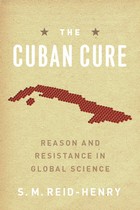
After Fidel Castro came to power in 1959, his second declaration, after socialism, was that Cuba would become a leader in international science. In biotechnology he would be proven right and, today, Cuba counts a meningitis B vaccine and cutting-edge cancer therapies to its name. But how did this politically and geographically isolated country make such impressive advances? Drawing on a unique ethnography, and blending the insights of anthropology, sociology, and geography, The Cuban Cure shows how Cuba came to compete with U. S. pharmaceutical giants—despite a trade embargo and crippling national debt.
In uncovering what is distinct about Cuban biomedical science, S. M. Reid-Henry examines the forms of resistance that biotechnology research in Cuba presents to the globalization of western models of scientific culture and practice. He illustrates the epistemic, social, and ideological clashes that take place when two cultures of research meet, and how such interactions develop as political and economic circumstances change. Through a novel argument about the intersection of socioeconomic systems and the nature of innovation, The Cuban Cure presents an illuminating study of politics and science in the context of globalization.
Deconstructive Variations was first published in 1995. Minnesota Archive Editions uses digital technology to make long-unavailable books once again accessible, and are published unaltered from the original University of Minnesota Press editions.
Unique in its focus and its interdisciplinary reach, Rose Rosengard Subotnik's work is among the most original and challenging being done in American musicology. Her concerns are both formal and sociological, firmly linking music to social and cultural context and breaking down the barriers between music and life.
Deconstructive Variations is a sequel to Subotnik's previous collection, Developing Variations. It expands and continues her achievement-the promotion of humanistic criticism as a significant activity in music scholarship and the portrayal of Western art music in relation to the social structures and cultural values of the society that created it.
Bringing to her subject a vast range of philosophical, artistic, and historical knowledge, Subotnik applies the insights of Kant, Adorno, Bakhtin, and Derrida to major works of Mozart and Chopin. Each of these essays functions as an argument between two views: for and against the ideal of structural listening; Enlightenment and Romantic readings of The Magic Flute; high-modernist and postmodernist readings of Chopin's A-Major Prelude; and conceptions of reason put forward by Allan Bloom and Spike Lee.
Rose Rosengard Subotnik is professor emerita in the department of music at Brown University, and is the author of Developing Variations: Style and Ideology in Western Music (Minnesota, 1991).
Through a modified Kantian approach to epistemology and philosophy of science, this book opposes both Quinean naturalistic holism and the post-Kuhnian conceptual relativism that has dominated recent literature in science studies. Focussing on the development of "scientific philosophy" from Kant to Rudolf Carnap, along with the parallel developments taking place in the sciences during the same period, the author articulates a new dynamical conception of relativized a priori principles. This idea applied within the physical sciences aims to show that rational intersubjective consensus is intricately preserved across radical scientific revolutions or "paradigm-shifts and how this is achieved.
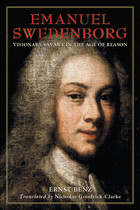
Originally written more than fifty years ago by eminent scholar Ernst Benz, this volume stands as one of the most comprehensive biographies of Emanuel Swedenborg (1688–1772) ever published.
Benz examines Swedenborg’s life through the lens of the intellectual atmosphere of the eighteenth century. Growing up at a time when the classical view of the world was being challenged by the new philosophers and scientists of the Enlightenment, Swedenborg was deeply immersed both in the religious teachings of the Lutheran church and the explorations of rational science. His quest for understanding eventually led to his spiritual awakening and the unique insights that continue to inspire seekers and thinkers today.
Now available for the first time in paperback, Nicholas Goodrick-Clarke’s eminently readable translation shines a new light on the Swedish seer.
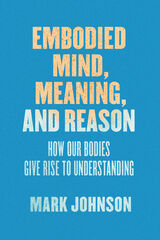
A brief account of Johnson’s own intellectual journey, through which we track some of the most important discoveries in the field over the past forty years, sets the stage. Subsequent chapters set out Johnson’s important role in embodied cognition theory, including his cofounding (with George Lakoff) of conceptual metaphor theory and, later, their theory of bodily structures and processes that underlie all meaning, conceptualization, and reasoning. A detailed account of how meaning arises from our physical engagement with our environments provides the basis for a nondualistic, nonreductive view of mind that he sees as most congruous with the latest cognitive science. A concluding section explores the implications of our embodiment for our understanding of knowledge, reason, and truth. The resulting book will be essential for all philosophers dealing with mind, thought, and language.
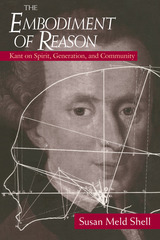
Shell argues that the central animating issues of Kant's lifework concerned the perplexing relation of spirit to body. Through an exacting analysis of individual writings, Shell maps the philosophical contours of Kant's early intellectual struggles and their relation to his more mature thought. The paradox of mind in matter and the tensions it generates—between freedom and determinacy, independence and community, ideal and real—are shown to inform the whole of his work. Shell's fresh, penetrating analysis of the precritical works will surely catapult them to new prominence in Kant studies.
Shell's critique goes further to consider the context of contemporary intellectual life. She explores the fascinating realm of Kant's sexual and medical idiosyncracies, linking them to the primary concerns of his critical philosophy. She develops a sure-to-be controversial treatment of the connection between Kant's philosophy and his chronic hypochondria, and illuminates previously unforeseen connections in a remarkable convergence of life and thought, with important theoretical and practical implications for modern times.
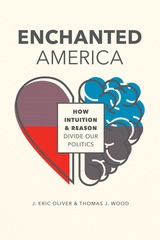
The answer, according to J. Eric Oliver and Thomas J. Wood, can be found in the most important force shaping American politics today: human intuition. Much of what seems to be irrational in American politics arises from the growing divide in how its citizens make sense of the world. On one side are rationalists. They use science and reason to understand reality. On the other side are intuitionists. They rely on gut feelings and instincts as their guide to the world. Intuitionists believe in ghosts and End Times prophecies. They embrace conspiracy theories, disbelieve experts, and distrust the media. They are stridently nationalistic and deeply authoritarian in their outlook. And they are the most enthusiastic supporters of Donald Trump. The primary reason why Trump captured the presidency was that he spoke about politics in a way that resonated with how Intuitionists perceive the world. The Intuitionist divide has also become a threat to the American way of life. A generation ago, intuitionists were dispersed across the political spectrum, when most Americans believed in both God and science. Today, intuitionism is ideologically tilted toward the political right. Modern conservatism has become an Intuitionist movement, defined by conspiracy theories, strident nationalism, and hostility to basic civic norms.
Enchanted America is a clarion call to rationalists of all political persuasions to reach beyond the minority and speak to intuitionists in a way they understand. The values and principles that define American democracy are at stake.
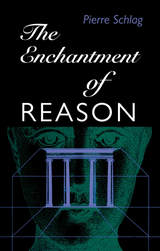
In examining the fierce resistance to questioning reason’s primacy, this renowned critic and professor of American law demonstrates how those who use and study the law perpetuate their own methodological blind spots. Claiming that reason has been endowed with a virtually mystical power to organize social life, Schlag unravels the seemingly rational world of judicial opinions, statutes, doctrines, and legal principles. In the process, he paints a shocking—and sure to be controversial—picture of the chaos and, indeed, violence of the American legal tradition.
This bold commentary on the irrationality of reason in American law and legal studies will interest not only legal scholars and philosophers but also serious thinkers across a broad disciplinary spectrum.
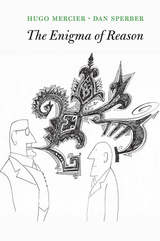
“Brilliant…Timely and necessary.” —Financial Times
“Especially timely as we struggle to make sense of how it is that individuals and communities persist in holding beliefs that have been thoroughly discredited.”
—Darren Frey, Science
If reason is what makes us human, why do we behave so irrationally? And if it is so useful, why didn’t it evolve in other animals? This groundbreaking account of the evolution of reason by two renowned cognitive scientists seeks to solve this double enigma. Reason, they argue, helps us justify our beliefs, convince others, and evaluate arguments. It makes it easier to cooperate and communicate and to live together in groups. Provocative, entertaining, and undeniably relevant, The Enigma of Reason will make many reasonable people rethink their beliefs.
“Reasonable-seeming people are often totally irrational. Rarely has this insight seemed more relevant…Still, an essential puzzle remains: How did we come to be this way?…Cognitive scientists Hugo Mercier and Dan Sperber [argue that] reason developed not to enable us to solve abstract, logical problems…[but] to resolve the problems posed by living in collaborative groups.”
—Elizabeth Kolbert, New Yorker
“Turns reason’s weaknesses into strengths, arguing that its supposed flaws are actually design features that work remarkably well.”
—Financial Times
“The best thing I have read about human reasoning. It is extremely well written, interesting, and very enjoyable to read.”
—Gilbert Harman, Princeton University
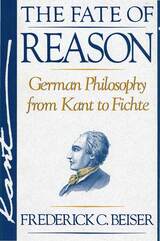
The Fate of Reason is the first general history devoted to the period between Kant and Fichte, one of the most revolutionary and fertile in modern philosophy. The philosophers of this time broke with the two central tenets of the modern Cartesian tradition: the authority of reason and the primacy of epistemology. They also witnessed the decline of the Aufklärung, the completion of Kant’s philosophy, and the beginnings of post-Kantian idealism.
Thanks to Frederick C. Beiser we can newly appreciate the influence of Kant’s critics on the development of his philosophy. Beiser brings the controversies, and the personalities who engaged in them, to life and tells a story that has uncanny parallels with the debates of the present.
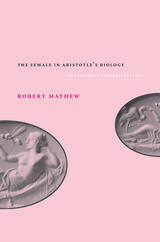
Mayhew points out that the tools of modern science and scientific experimentation were not available to the Greeks during Aristotle's time and that, consequently, Aristotle had relied not only on empirical observations when writing about living organisms but also on a fair amount of speculation. Further, he argues that Aristotle's remarks about females in his biological writings did not tend to promote the inferior status of ancient Greek women.
Written with passion and precision, The Female in Aristotle's Biology will be of enormous value to students of philosophy, the history of science, and classical literature.
Leading researchers in neurology, sociology, anthropology, education, and psychology assess what is now commonly known as the five to seven year shift. They consider how development is influenced by changes in neurobiological subsystems; cognition, emotion, and self-concept; concerns with peers and families; and school and cultural practices. They find that important transitions in behavior and environment do take place in this period, and are best described in terms of the qualitative increase in complexity due to interactions among ecological systems.
This volume increases our understanding of both child development and the study and treatment of children at home and at school. It will interest researchers, clinicians, and students of psychology and education.

In The Good Project, Monika Krause dives into the intricacies of the decision-making process at NGOs and uncovers a basic truth: It may be the case that relief agencies try to help people but, in practical terms, the main focus of their work is to produce projects. Agencies sell projects to key institutional donors, and in the process the project and its beneficiaries become commodities. In an effort to guarantee a successful project, organizations are incentivized to help those who are easy to help, while those who are hardest to help often receive no assistance at all. The poorest of the world are made to compete against each other to become projects—and in exchange they offer legitimacy to aid agencies and donor governments. Sure to be controversial, The Good Project offers a provocative new perspective on how NGOs succeed and fail on a local and global level.
By now, it should be clear: in the face of disinformation and disaster, we cannot hot take, life hack, or meme our way to a better future. But how should we respond instead? In How to Think like a Philosopher, Julian Baggini turns to the study of reason itself for practical solutions to this question, inspired by our most eminent philosophers, past and present.
Baggini offers twelve key principles for a more humane, balanced, and rational approach to thinking: pay attention; question everything (including your questions); watch your steps; follow the facts; watch your language; be eclectic; be a psychologist; know what matters; lose your ego; think for yourself, not by yourself; only connect; and don’t give up. Each chapter is chockful of real-world examples showing these principles at work—from the discovery of penicillin to the fight for trans rights—and how they lead to more thoughtful conclusions. More than a book of tips and tricks (or ways to be insufferably clever at parties), How to Think like a Philosopher is an invitation to develop the habits of good reasoning that our world desperately needs.
Lakatos escaped Hungary following the failed 1956 Revolution. Before then, he had been an influential Communist intellectual and was imprisoned for years by the Stalinist regime. He also wrote a lost doctoral thesis in the philosophy of science and participated in what was criminal behavior in all but a legal sense. Kadvany argues that this intellectual and political past animates Lakatos’s English-language philosophy, and that, whether intended or not, Lakatos integrated a penetrating vision of Hegelian ideas with rigorous analysis of mathematical proofs and controversial histories of science.
Including new applications of Lakatos’s ideas to the histories of mathematical logic and economics and providing lucid exegesis of many of Hegel’s basic ideas, Imre Lakatos and the Guises of Reason is an exciting reconstruction of ideas and episodes from the history of philosophy, science, mathematics, and modern political history.

Yvor Winters has here collected, with an introduction, the major critical works—Primitivism and Decadence, Maule’s Curse, and The Anatomy of Nonsense—of the period in which he worked out his famous and influential critical position. The works together show an integrated position which illuminates the force and importance of the individual essays. With The Function of Criticism, a subsequent collection, In Defense of Reason provides an incomparable body of critical writing.
The noted critic bases his analysis upon a belief in the existence of absolute truths and values, in the ethical judgment of literature, and in an insistence that it is the duty of the writer—as it is of very man—to approximate these truths insofar as human fallibility permits. His argument is by theory, but also by definite example—the technique of the “whole critic” who effectively combines close study of specific literary works and a penetrating investigation of aesthetic philosophies.
This is the first detailed study, following the recent collapse of political Marxism in Eastern Europe, of twentieth-century Hungarian philosopher Georg Lukács and his position as the leading proponent of the Marxist theory of reason. Lukács's History and Class Consciousness has been called one of the three most influential philosophical works of this century, and he, the outstanding Marxist philosopher. Marxism has long suffered relative neglect in philosophical discussion as a result of its own invidious distinction between itself and the supposed irrationality of what it regards as bourgeois philosophy.
Tom Rockmore offers a uniquely detailed philosophical analysis of Lukács's entire position as a theory of reason, based on the distinction between reason and unreason, or irrationalism. The author gives special emphasis to Lukács's connection to German neo-Kantianism, particularly Lask, and on his last, unfinished work.
Rockmore begins with an account of the roots of Lukács's Marxism, followed by an in-depth analysis of his often mentioned, but still incompletely understood, seminal essay "Reification and the Class Consciousness of the Proletariat." He then traces the evolution and later demise of the distinction between reason and irrationalism in Lukács's final thought. The author thus makes available for the first time in English a strictly philosophical discussion of Georg Lukács's Marxist phase and brings consideration of his thought into the wider philosophical discussion.
Ratzinger’s extraordinary and sympathetic understanding of the sources of contemporary secularism equipped him to appreciate the gains of the Enlightenment, while still being a fierce critic of the losses humanity has suffered when reason falsely excludes faith. Fr. Agbaw-Ebai’s account reveals Ratzinger, in relation to his various interlocutors, to be the truly “enlightened” one because he demonstrates a truly balanced understanding of the human mind. To be truly rational one must be able to hold to faith and reason both, reason informed by faith in Jesus Christ.
A particular merit of this book is Agbaw-Ebai’s presentation of Ratzinger’s treatment of the German Enlightenment’s greatest contributors: Kant, Nietzche, Hegel and Habermas, among others. In the postscript George Weigel characterizes what this study accomplishes in the larger framework of scholarship. “[Ratzinger’s] position remains too often misunderstood, and sometimes deliberately misinterpreted, throughout the whole Church. And to misunderstand, or misinterpret, Ratzinger is to misunderstand or misinterpret both the modern history of theology and the Second Vatican Council.” Agbaw-Ebai masterfully positions Ratzinger correctly in the history of ideas, and exhibits why Ratzinger will be remembered as one of its main players. Pure rationalists and true believers are equally indebted to him.
Drawing on original research, case studies of policymaking in Congress, and portraits of American lawmakers, Bessette demonstrates not only the limitations of nondeliberative explanations for how laws are made but also the continued vitality of genuine reasoning on the merits of public policy. Bessette discusses the contributions of the executive branch to policy deliberation, and looks at the controversial issue of the proper relationship of public opinion to policymaking.
Informed by Bessette's nine years of public service in city and federal government, The Mild Voice of Reason offers important insights into the real workings of American democracy, articulates a set of standards by which to assess the workings of our governing institutions, and clarifies the forces that promote or inhibit the collective reasoning about common goals so necessary to the success of American democracy.
"No doubt the best-publicized recent book-length work on Congress is columnist George Will's diatribe in praise of term limits in which the core of his complaint is that Congress does not deliberate in its decision-making. Readers who are inclined to share that fantasy would do well to consult the work of Joseph M. Bessette. He turns up massive amounts of material attesting to the centrality of deliberation in congressional life."—Nelson W. Polsby, Presidential Studies Quarterly
In Modern Chinese Counter-Enlightenment, Peng Hsiao-yen argues that a trend of Counter-Enlightenment had grown from the late Qing to the May Fourth era in the 1910s to the 1920s and continued to the 1940s. She demonstrates how Counter-Enlightenment was manifested with case studies such as Lu Xun’s writings in the late 1900s, the Aesthetic Education movement from the 1910s to 1920s, and the Science and Lifeview debate in the 1920s. During the period, the life philosophy movement, highlighting the epistemic debate on affect and reason, is connected with its counterparts in Germany, France, and Japan. The movement had a widespread and long-term impact on Chinese philosophy and literature. Using the transcultural lexicon as methodology, this book traces how the German term Lebensanschauung (life view), a key concept in Rudolf Eucken’s life philosophy, constituted a global tide of Counter-Enlightenment that influenced the thought of leading Chinese intellectuals in the Republican era. Peng contends that Chinese intellectuals’ transcultural connections with others in the philosophical pursuit of knowledge triggered China’s self-transformation. She successfully reconstructs the missing link in the Chinese theater of the worldwide dialectic of Enlightenment and Counter-Enlightenment.

"Public reason" is one of the central concepts in modern liberal political theory. As articulated by John Rawls, it presents a way to overcome the difficulties created by intractable differences among citizens' religious and moral beliefs by strictly confining the place of such convictions in the public sphere.
Identifying this conception as a key point of conflict, this book presents a debate among contemporary natural law and liberal political theorists on the definition and validity of the idea of public reason. Its distinguished contributors examine the consequences of interpreting public reason more broadly as "right reason," according to natural law theory, versus understanding it in the narrower sense in which Rawls intended. They test public reason by examining its implications for current issues, confronting the questions of abortion and slavery and matters relating to citizenship.
This energetic exchange advances our understanding of both Rawls's contribution to political philosophy and the lasting relevance of natural law. It provides new insights into crucial issues facing society today as it points to new ways of thinking about political theory and practice.
“Professor Booth’s earnestness is graced by wit, irony, and generous humor.”—Louis Coxe, New Republic
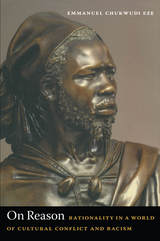
Eze draws on an extraordinary command of Western philosophical thought and a deep knowledge of African philosophy and cultural traditions. He explores models of rationality in the thought of philosophers from Aristotle, René Descartes, Francis Bacon, and Thomas Hobbes to Noam Chomsky, Richard Rorty, Hilary Putnam, and Jacques Derrida, and he considers portrayals of reason in the work of the African thinkers and novelists Chinua Achebe, Ngugi wa Thiong’o, and Wole Soyinka. Eze reflects on contemporary thought about genetics, race, and postcolonial historiography as well as on the interplay between reason and unreason in the hearings of South Africa’s Truth and Reconciliation Commission. He contends that while rationality may have a foundational formality, any understanding of its foundation and form is dynamic, always based in historical and cultural circumstances.

Modern theories of meaning usually culminate in a critique of science. This book presents a study of human intelligence beginning with a semantic theory and leading into a critique of music.
By implication it sets up a theory of all the arts; the transference of its basic concepts to other arts than music is not developed, but it is sketched, mainly in the chapter on artistic import. Thoughtful readers of the original edition discovered these far-reaching ideas quickly enough as the career of the book shows: it is as applicable to literature, art and music as to the field of philosophy itself.
The topics it deals with are many: language, sacrament, myth, music, abstraction, fact, knowledge--to name only the main ones. But through them all goes the principal theme, symbolic transformation as the essential activity of human minds. This central idea, emphasizing as it does the notion of symbolism, brings Mrs. Langer's book into line with the prevailing interest in semantics. All profound issues of our age seem to center around the basic concepts of symbolism and meaning. The formative, creative, articulating power of symbols is the tonic chord which thinkers of all schools and many diverse fields are unmistakably striking; the surprising, far-reaching implications of this new fundamental conception constitute what Mrs. Langer has called "philosophy in a new key."
Mrs. Langer's book brings the discussion of symbolism into a wider general use than criticism of word meaning. Her volume is vigorous, effective, and well written and will appeal to everyone interested in the contemporary problems of philosophy.
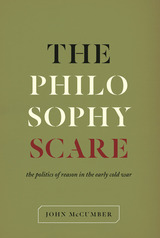
McCumber begins with the story of Max Otto, whose appointment to the UCLA Philosophy Department in 1947 was met with widespread protest charging him as an atheist. Drawing on Otto’s case, McCumber details the hugely successful conservative efforts that, by 1960, had all but banished the existentialist and pragmatist paradigms—not to mention Marxism—from philosophy departments all across the country, replacing them with an approach that valorized scientific objectivity and free markets and which downplayed the anti-theistic implications of modern thought. As he shows, while there have since been many instances of definitive and even explosive rejection of this conservative trend, its effects can still be seen at American universities today.
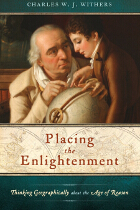
The Enlightenment was the age in which the world became modern, challenging tradition in favor of reason, freedom, and critical inquiry. While many aspects of the Enlightenment have been rigorously scrutinized—its origins and motivations, its principal characters and defining features, its legacy and modern relevance—the geographical dimensions of the era have until now largely been ignored. Placing the Enlightenment contends that the Age of Reason was not only a period of pioneering geographical investigation but also an age with spatial dimensions to its content and concerns.
Investigating the role space and location played in the creation and reception of Enlightenment ideas, Charles W. J. Withers draws from the fields of art, science, history, geography, politics, and religion to explore the legacies of Enlightenment national identity, navigation, discovery, and knowledge. Ultimately, geography is revealed to be the source of much of the raw material from which philosophers fashioned theories of the human condition.
Lavishly illustrated and engagingly written, Placing the Enlightenment will interest Enlightenment specialists from across the disciplines as well as any scholar curious about the role geography has played in the making of the modern world.
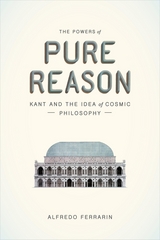
Ferrarin blows the dust off of two egregiously overlooked sections of the First Critique—the Transcendental Dialectic and the Doctrine of Method. There he discovers what he argues is the Critique’s greatest achievement: a conception of the unity of reason and an exploration of the powers it has to reach beyond itself and legislate over the world. With this in mind, Ferrarin dismantles the common vision of Kant as a philosopher writing separately on epistemology, ethics, and aesthetics and natural teleology, showing that the three Critiques are united by this underlying theme: the autonomy and teleology of reason, its power and ends. The result is a refreshing new view of Kant, and of reason itself.
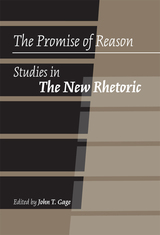
Divided into four sections—Conceptual Understandings of The New Rhetoric, Extensions of The New Rhetoric, The Ethical Turn in Perelman and The New Rhetoric, and Uses of The New Rhetoric—this insightful volume covers a wide variety of topics. It includes general assessments of The New Rhetoric and its central concepts, as well as applications of those concepts to innovative areas in which argumentation is being studied, such as scientific reasoning, visual media, and literary texts. Additional essays compare Perelman’s ideas with those of other significant thinkers like Kenneth Burke and Richard McKeon, explore his career as a philosopher and activist, and shed new light on Perelman and Olbrechts- Tyteca’s collaboration. Two contributions present new scholarship based on recent access to letters, interviews, and archival materials housed in the Université Libre de Bruxelles. Among the volume’s unique gifts is a personal memoir from Perelman’s daughter, Noémi Perelman Mattis, published here for the first time.
The Promise of Reason, expertly compiled and edited by John T. Gage, is the first to investigate the pedagogical implications of Perelman and Olbrechts- Tyteca’s groundbreaking work and will lead the way to the next generation of argumentation studies.

This book is about some of the largest events of the twentieth century, about international war, economic collapse, new science and technologies, and about the transformation of an old mill town region into a modern American metropolis. But it sees those sweeping changes through the eyes of fourteen particular Bostonians, in an ambitious attempt to understand the disorienting experiences of recent history. These lives span the years from 1850 to 1980, a time when Boston, like all American cities, was being rebuilt according to the continually changing specifications of science, engineering, mass wealth, and big corporations.
From Boston Brahmins to self-made millionaires, Sam Warner, Jr., brings us into the diverse worlds of Robert Grant, judge and popular novelist; Mary Antin, mystic and advocate for immigrants; Fred Allen, radio comedian; Charles A. Stone and Edwin S. Webster, electrical engineers; Laura Elizabeth Richards, reformist clubwoman; Emily Greene Balch, economist and winner of the Nobel Peace Prize; William Madison Wood, textile magnate; Fred Erwin Beal, socialist labor organizer; Louise Andrews Kent, suburban housewife and writer; Vannevar Bush, science administrator; Laurence K. Marshall, electronics entrepreneur; James Bryant Conant, university president and educational reformer; and Rachel Carson, renowned science writer.
These varied lives have been deftly brought together to illuminate the many contradictory qualifies of today’s metropolitan life: ambitions for education and pervasive social neglect; conspicuous luxuries and endemic poverty; elaborate science and a poisoned environment; far-reaching cooperative networks of strangers and narrow, segregated neighborhoods; the multiplication of women’s roles and the entrapment of women in the home.
Individual experience—how one person lived as a child in a family and in a particular place, how people did their work—can bring renewed insight to the conflicts of modern life. This engrossing story speaks from an urge to recapture history through human lives and to examine its meaning as authentic experience. As Alfred Kazin expresses it, we are a nation of men and women who have endeavored to escape traditions, and therefore self-discovery is our preoccupation and delight.
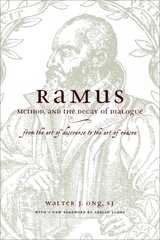
Considered the most important work of Walter Ong's career, Ramus, Method, and the Decay of Dialogue is an elegant review of the history of Ramist scholarship and Ramus's quarrels with Aristotle. A key influence on Marshall McLuhan, with whom Ong enjoys the status of honorary guru among technophiles, this challenging study remains the most detailed account of Ramus's method ever published. Out of print for more than a decade, this book—with a new foreword by Adrian Johns—is a canonical text for enthusiasts of media, Renaissance literature, and intellectual history.
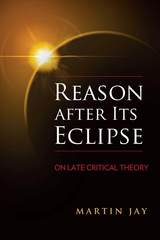
After surveying Western ideas of reason from the ancient Greeks through Kant, Hegel, and Marx, Jay engages at length with the ways leading theorists of the Frankfurt School—Horkheimer, Marcuse, Adorno, and most extensively Habermas—sought to salvage a viable concept of reason after its apparent eclipse. They despaired, in particular, over the decay in the modern world of reason into mere instrumental rationality. When reason becomes a technical tool of calculation separated from the values and norms central to daily life, then choices become grounded not in careful thought but in emotion and will—a mode of thinking embraced by fascist movements in the twentieth century.
Is there a more robust idea of reason that can be defended as at once a philosophical concept, a ground of critique, and a norm for human emancipation? Jay explores at length the ommunicative rationality advocated by Habermas and considers the range of arguments, both pro and con, that have greeted his work.
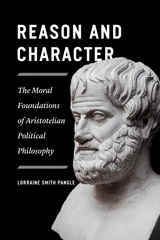
A close and selective commentary on Aristotle’s Nicomachean Ethics, offering a novel interpretation of Aristotle’s teachings on the relation between reason and moral virtue.
What does it mean to live a good life or a happy life, and what part does reason play in the quest for fulfillment? Lorraine Smith Pangle shows how Aristotle’s arguments for virtue as the core of happiness and for reason as the guide to virtue emerge in response to Socrates’s paradoxical claim that virtue is knowledge and vice is ignorance.
Against Socrates, Aristotle does justice to the effectual truth of moral responsibility—that our characters do indeed depend on our own voluntary actions. But he also incorporates Socratic insights into the close interconnection of passion and judgment and the way passions and bad habits work not to overcome knowledge that remains intact but to corrupt the knowledge one thinks one has. Reason and Character presents fresh interpretations of Aristotle’s teaching on the character of moral judgment and moral choice, on the way reason finds the mean—especially in justice—and on the relation between practical and theoretical wisdom.
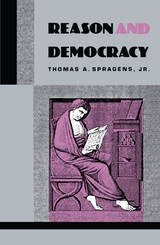
Drawing on recent work in the philosophy of science and the philosophy of language, combined with appropriate analogies in political thought and action, Spragens maintains that it is possible to discern the outlines of a philosophically cogent and morally beneficial concept of rational practice on the part of a political community. This possibility, he contends, provides a philosophical basis for liberal democratic politics that is superior to utilitarian and deontological accounts.
"This is a fascinating study of an apparently intractable problem. Gewirth has provided plenty of material for further discussion, and his theory deserves serious consideration. He is always aware of possible rejoinders and argues in a rigorous manner, showing a firm grasp of the current state of moral and political philosophy."—Mind
This is exactly what Reason and Wonder does. Eric Priest has brought together twelve of the leading thinkers in science and theology to discuss everything from the origins of the universe to evolution and evil. At the heart of each essay is an understanding that the best science—and the best theology— are both undergirded by an appeal to reason as well as a deep sense of wonder.
Each of these great scientific and theological thinkers offers a chapter on their area of expertise, and the book closes with a stimulating set of questions for group discussion or personal reflection.
- Contributors and their topics include:
- Eric Priest: Towards an integration of science and religion
- Keith Ward: God, science and the New Atheism
- Eleonore Stump: Natural law, reductionism and the Creator
- David Wilkinson: The origin and end of the universe: A challenge for Christianity
- Jennifer Wiseman: Universe of wonder, universe of life
- Kenneth R. Miller: Evolution, faith and science
- Michael J. Murray and Jeff Schloss: Evolution and evil
- Pauline Rudd: Is there more to life than genes?
- David G. Myers: Psychological science meets Christian faith
- John Wyatt: Being a person: Towards an integration of neuroscientific and Christian perspectives
- John Swinton: From projection to connection: Conversations between science, spirituality and health
- Mark Harris: Do the miracles of Jesus contradict science?
- N. T. Wright: Can a scientist trust the New Testament?
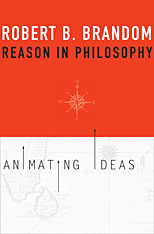
Transcendentalism never came to an end in America. It just went underground for a stretch, but is back in full force in Robert Brandom’s new book. Brandom takes up Kant and Hegel and explores their contemporary significance as if little time had expired since intellectuals gathered around Emerson in Concord to discuss reason and idealism, selves, freedom, and community. Brandom’s discussion belongs to a venerable tradition that distinguishes us as rational animals, and philosophy by its concern to understand, articulate, and explain the notion of reason that is thereby cast in that crucial demarcating role.
An emphasis on our capacity to reason, rather than merely to represent, has been growing in philosophy over the last thirty years, and Robert Brandom has been at the center of this development. Reason in Philosophy is the first book that gives a succinct overview of his understanding of the role of reason as the structure at once of our minds and our meanings—what constitutes us as free, responsible agents. The job of philosophy is to introduce concepts and develop expressive tools for expanding our self-consciousness as sapients: explicit awareness of our discursive activity of thinking and acting, in the sciences, politics, and the arts. This is a paradigmatic work of contemporary philosophy.
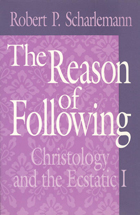
Scharlemann presents a christological phenomenology of the self, tracing the connections between the "I am" of the God who spoke to Moses, the "I am" of Christ, and the "I am" of autonomous self-identification. How, he asks, can the self that spontaneously responds to Jesus' "Follow me!" be compared with the everyday, autonomous self? What is the nature of "following" on the part of those who answer the summons of one whose name is "I am"? Pursuing these questions, Scharlemann develops a christological phenomenology of the self—an account in which following means not the expression of the self in action or reflection but rather self-discovery in another person.
With a deep sense of both culture and philosophy, Scharlemann distinguishes the forms of reason involved in "following" from those in ethics, aesthetics, and other modes of religious philosophic thought. His penetrating readings of nineteenth- and twentieth-century German theological and philosophical traditions provide an introduction to lesser-known thinkers such as Hermann and Picht as well as a profound critique of major figures such as Descartes, Heidegger, Fichte, and Kant.
Finally Scharlemann outlines a program for a more systematic and rounded presentation of what Christian doctrine might mean in the contemporary world. His work will be of interest to students of theology and philosophy alike.
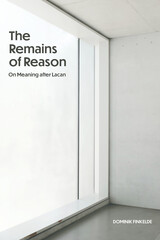
Unpacking the central role of the unconscious in the relationship between mind and world
Over a series of careful readings and accessible discussions, prefaced by a foreword from Eric Santner, Dominik Finkelde analyzes the central role of the unconscious in the relationship between mind and world. Moving beyond Freud, Kant, and Hegel and toward the contemporary work of the Ljubljana School, he explores how humans relate to facts and the influence of the unconscious on questions regarding truth, perception, and meaning.
Aspects of recognition and unconscious processes of transference are at stake in these fundamental questions of perception and knowledge, though these have been widely ignored in epistemological and ontological debates in contemporary philosophy. Finkelde draws on both the continental and analytic traditions, ultimately building from the work of current-day interlocutors to interrogate questions concerning the influence of enigmatic signifiers, the role of sublime objects of ideology, the importance of fantasy cultivation and transgression, and the power of jouissance as an ontological factor.
The turmoil and brutality of the twentieth century have made it increasingly difficult to maintain faith in the ability of reason to fashion a stable and peaceful world. After the ravages of global conflict and a Cold War that divided the world's loyalties, how are we to master our doubts and face the twenty-first century with hope?
In Return to Reason, Stephen Toulmin argues that the potential for reason to improve our lives has been hampered by a serious imbalance in our pursuit of knowledge. The centuries-old dominance of rationality, a mathematical mode of reasoning modeled on theory and universal certainties, has diminished the value of reasonableness, a system of humane judgments based on personal experience and practice. To this day, academic disciplines such as economics and professions such as law and medicine often value expert knowledge and abstract models above the testimony of diverse cultures and the practical experience of individuals.
Now, at the beginning of a new century, Toulmin sums up a lifetime of distinguished work and issues a powerful call to redress the balance between rationality and reasonableness. His vision does not reject the valuable fruits of science and technology, but requires awareness of the human consequences of our discoveries. Toulmin argues for the need to confront the challenge of an uncertain and unpredictable world, not with inflexible ideologies and abstract theories, but by returning to a more humane and compassionate form of reason, one that accepts the diversity and complexity that is human nature as an essential beginning for all intellectual inquiry.
To those who have lost faith in the abilities of people to reach reasoned mutual agreements, and to others who have attacked the right-or-wrong model of formal logic, this book offers the reminder that the rhetorical tradition has always viewed argumentation as a dialogue, a response to changing situations, an exchange of persuading, listening, and understanding. Crosswhite’s aim is to give new purpose to writing instruction and to students’ writing, to reinvest both with the deep ethical interests of the rhetorical tradition. In laying out the elements of argumentation, for example, he shows that claiming, questioning, and giving reasons are not simple elements of formal logic, but communicative acts with complicated ethical features. Students must learn not only how to construct an argument, but the purposes, responsibilities, and consequences of engaging in one.
Crosswhite supports his aims through a rhetorical reconstruction of reason, offering new interpretations of Plato and Aristotle and of the concepts of reflection and dialogue from early modernity through Hegel to Gadamer. And, in his conclusion, he ties these theoretical and historical underpinnings to current problems of higher education, the definition of the liberal arts, and, especially, the teaching of written communication.
Julia Tanney offers a sustained criticism of today’s canon in philosophy of mind, which conceives the workings of the rational mind as the outcome of causal interactions between mental states that have their bases in the brain. With its roots in physicalism and functionalism, this widely accepted view provides the philosophical foundation for the cardinal tenet of the cognitive sciences: that cognition is a form of information-processing. Rules, Reason, and Self-Knowledge presents a challenge not only to the cognitivist approach that has dominated philosophy and the special sciences for the last fifty years but, more broadly, to metaphysical-empirical approaches to the study of the mind.
Responding to a tradition that owes much to the writings of Davidson, early Putnam, and Fodor, Tanney challenges this orthodoxy on its own terms. In untangling its internal inadequacies, starting with the paradoxes of irrationality, she arrives at a view these philosophers were keen to rebut—one with affinities to the work of Ryle and Wittgenstein and all but invisible to those working on the cutting edge of analytic philosophy and mind research today. This is the view that rational explanations are embedded in “thick” descriptions that are themselves sophistications upon ever ascending levels of discourse, or socio-linguistic practices.
Tanney argues that conceptual cartography rather than metaphysical-scientific explanation is the basic tool for understanding the nature of the mind. Rules, Reason, and Self-Knowledge clears the path for a return to the world-involving, circumstance-dependent, normative practices where the rational mind has its home.
Sexual drives are rooted in biology, but we don’t act on them blindly. Indeed, as the eminently readable judge and legal scholar Richard Posner shows, we make quite rational choices about sex, based on the costs and benefits perceived.
Drawing on the fields of biology, law, history, religion, and economics, this sweeping study examines societies from ancient Greece to today’s Sweden and issues from masturbation, incest taboos, date rape, and gay marriage to Baby M. The first comprehensive approach to sexuality and its social controls, Posner’s rational choice theory surprises, explains, predicts, and totally absorbs.
Isaac Royall (1677-1739) was the largest slave owner in Massachusetts in the mid- eighteenth century, and in this book the Royall family and their slaves become the central characters in a compelling cultural-historical narrative. The family's ties to both Massachusetts and Antigua provide a comparative perspective on the transcontinental development of modern ideologies of individualism, colonialism, slavery, and race.
Alexandra A. Chan examines the critical role of material culture in the construction, mediation, and maintenance of social identities and relationships between slaves and masters at the farm. She explores landscapes and artifacts discovered at the site not just as inanimate objects or “cultural leftovers,” but rather as physical embodiments of the assumptions, attitudes, and values of the people who built, shaped, or used them. These material things, she argues, provide a portal into the mind-set of people long gone-not just of the Royall family who controlled much of the material world at the farm, but also of the enslaved, who made up the majority of inhabitants at the site, and who left few other records of their experience.
Using traditional archaeological techniques and analysis, as well as theoretical per- spectives and representational styles of post-processualist schools of thought, Slavery in the Age of Reason is an innovative volume that portrays the Royall family and the people they enslaved “from the inside out.” It should put to rest any lingering myth that the peculiar institution was any less harsh or complex when found in the North.
Alexandra A.Chan currently works in cultural resource management as an archaeolog- ical consultant and principal investigator. As assistant professor of anthropology at Vassar College, 2001-2004, she also developed numerous courses in historical archaeology, archaeological ethics, comparative colonialism, and the archaeology of early African America. She was the project director of the excavations at the Isaac Royall House and Slave Quarters in Medford, Massachusetts, 2000-2001, and continues to serve on the Academic Advisory Council of the museum.
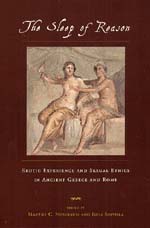
The Sleep of Reason brings together an international group of philosophers, philologists, literary critics, and historians to consider two questions normally kept separate: how is erotic experience understood in classical texts of various kinds, and what ethical judgments and philosophical arguments are made about sex? From same-sex desire to conjugal love, and from Plato and Aristotle to the Roman Stoic Musonius Rufus, the contributors demonstrate the complexity and diversity of classical sexuality. They also show that the ethics of eros, in both Greece and Rome, shared a number of commonalities: a focus not only on self-mastery, but also on reciprocity; a concern among men not just for penetration and display of their power, but also for being gentle and kind, and for being loved for themselves; and that women and even younger men felt not only gratitude and acceptance, but also joy and sexual desire.
Contributors:
* Eva Cantarella
* Kenneth Dover
* Chris Faraone
* Simon Goldhill
* Stephen Halliwell
* David M. Halperin
* J. Samuel Houser
* Maarit Kaimio
* David Konstan
* David Leitao
* Martha C. Nussbaum
* A. W. Price
* Juha Sihvola

How can human beings, who are liable to error, possess knowledge? The skeptic finds this question impossible to answer. If we can err, then it seems the grounds on which we believe do not rule out that we are wrong. Most contemporary epistemologists agree with the skeptic that we can never believe on grounds that exclude error. Sources of Knowledge moves beyond this predicament by demonstrating that some major problems of contemporary philosophy have their roots in the lack of a metaphysical category that is fundamental to our self-understanding: the category of a rational capacity for knowledge.
Andrea Kern argues that we can disarm skeptical doubt by conceiving knowledge as an act of a rational capacity. This enables us to appreciate human fallibility without falling into skepticism, for it allows us to understand how we can form beliefs about the world on grounds that exclude error. Knowledge is a fundamental capacity of the human mind. Human beings, as such, are knowers. In this way, Sources of Knowledge seeks to understand knowledge from within our self-understanding as knowers. It develops a metaphysics of the human mind as existing through knowledge of itself, which knowledge—as the human being is finite—takes the form of a capacity.
Regaining the concept of a rational capacity for knowledge, Kern makes a powerful and original contribution to philosophy that reinvigorates the tradition of Aristotle and Kant—thinkers whose relevance for contemporary epistemology has yet to be fully appreciated.
Sallis focuses on certain operations of "spacing" in metaphysics—textual lapses and leaps in which reason is displaced or suspended or abridged. In the project of establishing priority of reason, such operations can appear only in disguise, and Sallis reveals the play of imagination and metaphor that masks them. Concentrating on what has been called the closure of metaphysics, he examines texts in which the suppression of spacing would be carried out most rigorously, texts in which even metaphysics itself is seen as only an errant roaming, a spacing that must still be secured, to be replaced by a pure space of truth. And yet, in these very texts Sallis identifies outbreaks of spacing that would disrupt the tranquil space of reason. Rather than closure, he finds an opening of reason to imagination.
Sallis's reading of a metaphorical system in the Critique of Pure Reason reveals a fissuring and historicizing of what would otherwise be called pure reason. Next he traces in Fichte's major work as well as in several lesser-known texts a decentering from reason to imagination, which he characterizes as a power of hovering between opposites and beyond being. Sallis then returns to the Critique of Pure Reason to expose, in relation to the famous question of the common root of reason and sensibility, a certain eccentricity of reason. Proceeding to the Critique of Judgment, he traces a divergence of sublime nature away from that supersensible space of reason to which Kant would otherwise assimilate it—a withdrawal toward an abyss. Finally, Sallis turns to Hegel's Encyclopedia, supplementing his reading with previously unknown notes from Hegel's lectures on those sections dealing with imagination; his reading of those sections serves to expose, within the most rigorous reduction of spacing in the history of metaphysics, an irrepressible and disseminative play of imagination.
In a confrontation with today’s fatalistic milieu, principal emphasis is given to Hegel’s idea of infinity as the intrinsic dimension of negativity within all finitude. Against the modern era’s paradigmatic tendency to externalize social problems in the form of antagonism and Otherness, Daly argues for a renewal of utopian thought based on Hegelian reconciliation and the affirmation of excess as the essence of all being. On these grounds, he advances a new kind of political imagination that in speculative terms centers on uncompromising notions of truth and reason.
Hayek argues that the vast number of elements whose interactions create social structures and institutions make it unlikely that social science can predict precise outcomes. Instead, he contends, we should strive to simply understand the principles by which phenomena are produced. For Hayek this modesty of aspirations went hand in hand with his concern over widespread enthusiasm for economic planning. As a result, these essays are relevant to ongoing debates within the social sciences and to discussion about the role government can and should play in the economy.
Suffering for Science reveals more than the passion evident in many scientific vocations; it also illuminates a nation's changing understandings of the purposes of suffering, the limits of reason, and the nature of freedom in the aftermath of slavery.
We live in a world of technical systems designed in accordance with technical disciplines and operated by personnel trained in those disciplines. This is a unique form of social organization that largely determines our way of life, but the actions of individuals and social protest still play a role in developing and purposing these rational systems. In Technosystem, Andrew Feenberg builds a theory of both the threats of technocratic modernity and the potential for democratic change.
Feenberg draws on the tradition of radical social criticism represented by Herbert Marcuse and the Frankfurt School, which recognized the social effects of instrumental rationality but did not advance a convincing alternative to the new forms of domination imposed by rational systems. That is where the fine-grained analyses of Science, Technology, and Society (STS) studies can contribute. Feenberg uses these approaches to reconcile the claims of rationality with the agency of a public increasingly mobilized to intervene in technically based decisions. The resulting social theory recognizes emerging forms of resistance, such as protests and hacking, as essential expressions of public life in the “rational society.”
Combining the most salient insights from critical theory with the empirical findings of STS, Technosystem advances the philosophical debate over the nature and practice of reason in modern society.
This provocative meditation on the turn of the millennium explores the significance that a celebration of Christ's birth can have beyond the Christian community.
Writing from the perspective of Christian philosophy, David Walsh ponders the emergence of modern civilization from the medieval Christian past, concluding that Christian theology grounds the dominant ideas of modern society. He professes the importance and promise of Christianity while rejecting the Gnosticism, advocated by Harold Bloom and others, that places the divine within the self.
Affirming Christ's place at the heart of civilization, Walsh argues that the Christian faith has relevance beyond its own boundaries for all traditions that find their common ground in reason. This contemplative book asserts that the Christian millennial jubilee has meaning for all and that it points the way toward the fullness of life in this world as well as in eternity.
Kant holds a key position in the history of modern philosophy as the last great figure to belong fully to both the Anglo-American analytic tradition and the Continental tradition. As the world's foremost scholar of Kant and German Idealism, Dieter Henrich combines an encyclopedic knowledge of Kant's texts with an equally profound understanding of the philosophers of preceding and succeeding centuries. In this collection comprising four of his most influential essays, Henrich proves himself unique in the conjunction of philosophical acumen, insight, and originality that he brings to Kant interpretation.
Henrich's distinctive contribution has been to break through the entrenched stereotypes of the ontological and neo-Kantian schools of Kant interpretation in order to place Kant's major ideas in their historical and developmental context, demonstrating their enduring philosophical significance. Henrich has shown how Kant's attempt to overcome the dichotomy between rationalism and moral-sense philosophy led to a lifelong struggle to establish the unity of theoretical and practical reason and the inseparability of the motivational force of the principle of ethics from its function as a principle for ethical judgment. But Henrich has also shown how Kant's project of unification contained fundamental tensions that called forth the projects of such post-Kantians as Schiller, Fichte, and Hegel, which explored new approaches within the Kantian framework.
The heart of Henrich's interpretation of Kant, the essays in this book present a persuasive picture of the development of Kant's moral philosophy and give an account of the argumentative strategies determining all the aspects of Kant's philosophy. They reflect Henrich's general interest in the unity of reason as well as his special interest in self-consciousness as both a key concept of modern philosophy and the key to the highly disputed interpretation of Kant's transcendental deduction of categories.
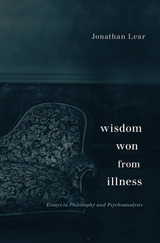
Wisdom Won from Illness brings into conversation two fields of humane inquiry—psychoanalysis and moral philosophy—that seem to have little to say to each other but which, taken together, form a basis for engaged ethical thought about how to live.
Jonathan Lear begins by looking to the ancient Greek philosophers for insight into what constitutes the life well lived. Socrates said the human psyche should be ruled by reason, and much philosophy as well as psychology hangs on what he meant. For Aristotle, reason organized and presided over the harmonious soul; a wise person is someone capable of a full, happy, and healthy existence. Freud, plumbing the depths of unconscious desires and pre-linguistic thoughts, revealed just how unharmonious the psyche could be. Attuned to the stresses of modern existence, he investigated the myriad ways people fall ill and fail to thrive. Yet he inherited from Plato and Aristotle a key insight: that the irrational part of the soul is not simply opposed to reason. It is a different manner of thinking: a creative intelligence that distorts what it seeks to understand.
Can reason absorb the psyche’s nonrational elements into a whole conception of the flourishing, fully realized human being? Without a good answer to that question, Lear says, philosophy is cut from its moorings in human life. Wisdom Won from Illness illuminates the role of literature in shaping ethical thought about nonrational aspects of the mind, offering rich readings of Shakespeare, Kierkegaard, J. M. Coetzee, Marilynne Robinson, and others.
READERS
Browse our collection.
PUBLISHERS
See BiblioVault's publisher services.
STUDENT SERVICES
Files for college accessibility offices.
RECENTLY PUBLISHED



UChicago Accessibility Resources
home | accessibility | search | about | contact us
BiblioVault ® 2001 - 2024
The University of Chicago Press